The best MP3 player for audiobooks makes it easy to carry a book, find your place and keep listening without using your phone. Physical buttons, a useful resume function and the right file support matter more than a long list of music-player extras.
These four established players suit compatible downloaded audiobooks, but they are older designs rather than current app-based alternatives to a smartphone. The SanDisk Clip Jam remains the overall pick here for a small, clip-on player. Before choosing any of them, distinguish ordinary audio files from books locked to an app: Libby does not transfer its audiobooks to standalone MP3 players, and the old iPods should not be bought for today’s Audible app.
Top 4 Best MP3 Players for Audiobooks
| Model | Price |
|
|---|---|---|
| SanDisk Clip Jam (Editor's Choice) | Check Price |
 | Creative ZEN 2GB | Check Price |
 | Apple iPod touch (6th generation) | Check Details |
 | Apple iPod nano (7th generation) | Check Details |
SanDisk Clip Jam (Editor’s Choice)
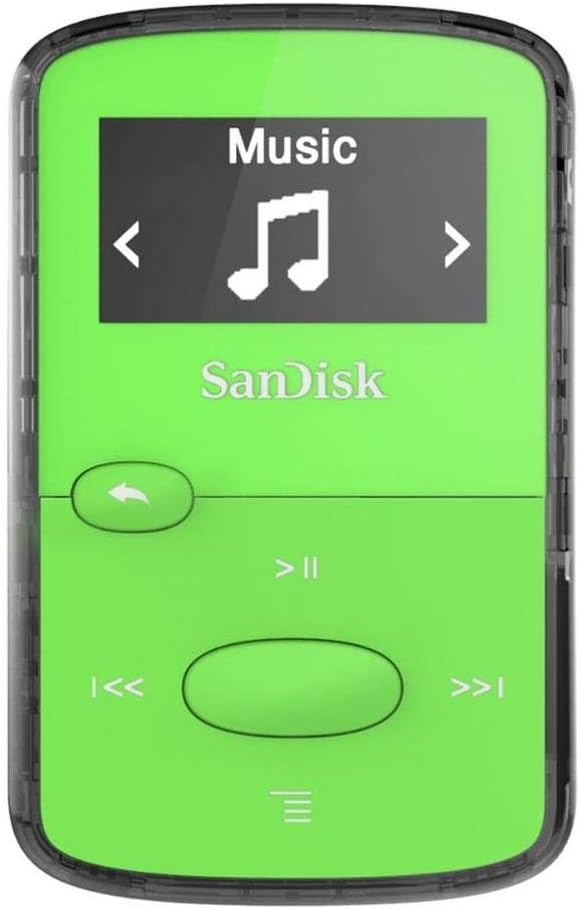
The Clip Jam earns the overall choice for keeping the job simple: a tiny player clips to clothing, leaving a phone free for other tasks. Its physical controls are useful when reaching into a pocket, and the small screen provides a basic way to browse a book collection without the distractions of a general-purpose touchscreen device.
It has 8GB of internal storage and a microSDHC slot for additional files. The Books menu separates audiobooks and podcasts, with normal, fast and slow playback options. For audiobook files, the player saves a resume position; that is useful for continuing a long chapter, although it is not the same as a set of manually named bookmarks across several books.
Ordinary compatible MP3 files can be transferred from a computer over USB. Audible also lists the ClipJam in MSC mode among devices supported by AudibleSync on Windows. Protected books require the supported activation and transfer process, so the presence of an audio file alone does not establish compatibility. There is no Wi-Fi or Bluetooth: listening uses wired headphones.
SanDisk’s original battery claim was up to 18 hours under its test conditions; an older unit’s actual endurance depends heavily on battery condition. Manufacturer support for the MP3-player range has ended. The Clip Jam still makes sense for a compact file-based library, but it is a less suitable choice for someone who wants wireless headphones or books downloaded directly inside a modern app.
Pros
- Lightweight clip-on design with physical controls
- 8GB storage plus a microSDHC expansion slot
- Audiobook resume and three playback-speed settings
Cons
- No Bluetooth or Wi-Fi
- Discontinued manufacturer support and an aging non-user-replaceable battery
Creative ZEN 2GB
The original ZEN’s strongest audiobook feature is its bookmarking system. It can store up to ten points within tracks, making it easier to return to a passage or keep several listening positions than relying only on the last paused track. The Seek To function also lets you jump to a specified point instead of holding a fast-forward button through a long recording.
A 2.5-inch color screen gives the menus more room than the Clip Jam’s small display, while a directional pad and separate buttons handle navigation. It is still a pocketable, credit-card-width player rather than a miniature tablet. The linked version has 2GB of internal memory; the SD-card slot provides a separate way to carry more compatible content.
The ZEN supports formats including MP3, WMA and unprotected AAC, but file support is not a promise that a current audiobook service can authorize it. Its original software and protected-audio workflows belong to an older Windows ecosystem. For a new purchase, a dependable way to load and play your own compatible files is more relevant than historical Audible or library-service logos.
This is an appealing legacy player for someone who values tactile controls and actual bookmarks. Its weakness is the age of the supporting software and hardware, not a shortage of entertainment features. There is no Wi-Fi or Bluetooth, and its card library is handled separately from internal content rather than behaving like one seamless modern app library.
Pros
- Up to ten track bookmarks plus a Seek To function
- 2.5-inch display with physical navigation controls
- SD-card expansion alongside internal storage
Cons
- Old software and protected-content workflows limit current-service use
- No Wi-Fi or Bluetooth; card browsing is separate from internal content
Apple iPod touch (6th generation)
The sixth-generation iPod touch is the roomier, touchscreen-led option for an existing collection of compatible audiobooks. Its 4-inch Retina display gives book artwork and playback controls more space than the Nano or Clip Jam. Wi-Fi and Bluetooth are built in, and the headphone socket also keeps ordinary wired listening possible.
Apple offered 16GB, 32GB, 64GB and 128GB capacities, all without a memory-card slot. The larger versions are useful for a substantial local library, but the capacity is fixed once the device is chosen. Its 88-gram body is still easy to carry, although it is much closer to a small phone than a clip-on player.
The important limitation is software age. This model cannot run the operating system required by the current Audible app, so its App Store access must not be confused with access to every present-day audiobook service. It is better understood as a legacy device for compatible content already supported by its built-in playback and computer-syncing workflow.
For someone who already owns one, the large screen and wireless-headphone support remain useful qualities. As a purchase specifically for current streaming or library apps, it is the wrong starting point. Apple’s original up-to-40-hour audio rating describes a new battery under test conditions, not a realistic guarantee for a used unit many years later.
Pros
- 4-inch Retina touchscreen
- Bluetooth plus a wired headphone socket
- Storage options up to 128GB
Cons
- Too old for the current Audible app
- No expandable storage; battery condition varies with age
Apple iPod nano (7th generation)
The seventh-generation Nano is the compact Apple option: a 31-gram player with a 2.5-inch touchscreen, 16GB of storage and Bluetooth 4.0. It offers wireless-headphone listening in a much smaller body than the iPod touch, while keeping a conventional headphone socket for a simple wired setup.
It is a file-based player, not a tiny iPhone. There is no Wi-Fi or App Store, so audiobooks must be transferred through a compatible computer-syncing setup. That makes it attractive for a settled collection of supported files, but a poor match for someone who expects to browse a subscription catalog and download a new book directly on the player.
The storage is fixed and the screen is small. Both are reasonable compromises for the size, but browsing a large library and selecting a precise playback point take more care than on a larger touchscreen. Its audiobook controls are more useful when files have been organized as audiobooks rather than left among shuffled music tracks.
The Nano is worth keeping in service when its size and Bluetooth are exactly what the listener needs. Apple’s original battery claim was up to 30 hours of audio, but the condition of an older battery matters more now. Choose it as a compact legacy player for compatible files, rather than a route into modern audiobook apps.
Pros
- Very light 31-gram body
- Bluetooth and a wired headphone socket
- 16GB of storage in a small standalone player
Cons
- No Wi-Fi, app installation or storage expansion
- Small touchscreen and aging battery are practical compromises
How to Pick a Good MP3 Player for Audiobooks
Start with the books you actually listen to. A player that handles your own MP3 files may still be unable to play a protected download or run the app that supplies your library.
Battery Life
Long playback time is useful for travel and extended listening sessions, but manufacturer ratings describe controlled tests on new hardware. On these older players, battery condition is especially important. Check charging behavior and real listening time before relying on one for a trip.
Storage Capacity
Book sizes depend on duration, codec and bitrate. For example, 20 hours encoded at 64kbps takes roughly 576MB before allowing for minor file overhead. An expandable player gives more room for a changing collection, while an iPod’s built-in capacity cannot be increased.
Size & Weight
A clip-on player is convenient for walking and jobs where a device would otherwise move around in a pocket. A larger screen can make browsing easier, but brings more bulk. Pick the controls you can comfortably use, rather than treating the smallest body as automatically best for everyone.
Connectivity
Bluetooth connects compatible headphones; it does not transfer a subscription library by itself. Wi-Fi is useful only when the device also supports the required app or service. For USB players, confirm that your computer can recognize the player and load the intended files.
Screen Size: Touchscreen or Physical Buttons?
Physical controls are easy to locate by touch and can help keep a listening session simple. A touchscreen offers more room for artwork and navigation, but a very small one can be fiddly. Neither control style guarantees a better audiobook experience without suitable playback features.
Bookmarking Capability
A resume point remembers where playback stopped; a bookmark stores a point you deliberately want to revisit. These are different functions. If you switch among books, check how the player handles several positions and whether its behavior changes between internal memory and a card.
File Compatibility
MP3, AAC and WMA describe audio formats; DRM describes restrictions on access. A player supporting a codec does not necessarily support a protected file using it. Audible requires a supported device and activation workflow, while Libby does not transfer audiobooks to standalone MP3 players. Use a supported Libby app or its web player for that service.
For an app-based library, check the app’s current operating-system requirements before buying hardware. Old App Store access and historical service compatibility are insufficient. For your own files, try a representative long book and confirm chapter order, resume behavior and seeking before loading the whole collection.
The Best MP3 Player for Audiobooks: Our Verdict
The SanDisk Clip Jam is the overall choice among these four for a small, straightforward audiobook player. Its clip, physical buttons, expandable storage and audiobook playback controls make a useful combination for compatible downloads.
The Creative ZEN is interesting for its bookmarks, while the iPod touch and Nano remain useful legacy choices for an existing file-based library. For a purchase centered on current audiobook apps, choose supported modern hardware instead of expecting these older devices to behave like a new smartphone.