Looking for the best small bass practice amp? A useful home combo should make the bass easy to hear, offer enough tone adjustment and fit the space where you actually play. These five options range from a battery-powered mini amp to larger mains-powered practice combos.

If you are searching for the best bass amp under $100, use that as a firm spending limit when comparing current prices. This is a broader shortlist of compact practice amps, and the larger models may require a higher budget. The right choice depends on portability, clean volume and the connections you need.
Top 5 Best Small Bass Practice Amps
Fender Rumble 25 V3 Bass Combo Amplifier (Editor’s Choice)
The Rumble 25 is the most rounded home-practice choice here. Its 25-watt solid-state amplifier drives an 8-inch Fender Special Design speaker in a ported enclosure. That is a more substantial format than a desktop mini amp, without requiring a large rehearsal combo.
Bass, Mid and Treble controls provide direct adjustment, while the Contour switch adds a scooped voice and the Overdrive switch brings in grit. The top-mounted controls are easy to reach during practice. An aux input supports backing tracks, and the headphone connection provides a quieter way to work.
It keeps the overall recommendation for its useful mix of speaker size, straightforward EQ and practice connections. The compromises are its roughly 21-pound weight and mains-power requirement. There is no effects loop or dedicated line output, so a player building a more elaborate recording or effects setup may prefer the older Ampeg’s connections.
Pros
- 25-watt design with an 8-inch speaker
- Three-band EQ, switchable Contour and Overdrive
- Aux input and headphone output
Cons
- Mains-powered and larger than a desktop mini amp
- No effects loop or dedicated line output
Blackstar FLY 3 Bass Combo Amplifier
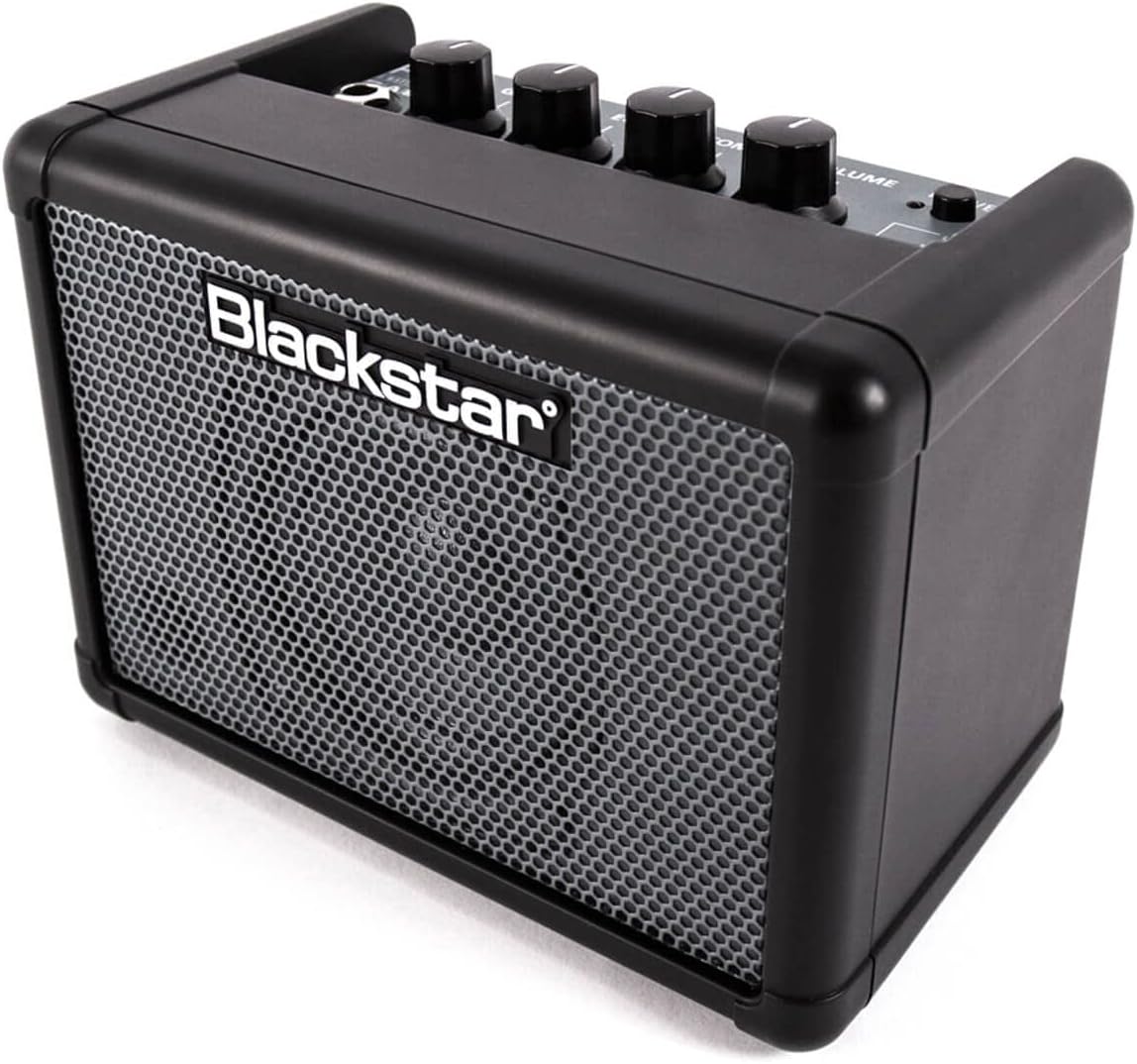
The FLY 3 Bass is the most portable choice in this group. Its 3-watt design and small speaker suit desk-side playing, travel and quiet practice. Six AA batteries allow it to work away from a socket, while a suitable Blackstar power supply offers an alternative for regular home use.
Clean and Overdrive modes provide two starting points. The EQ control varies a midrange cut, and the compressor smooths peaks in the playing level. A SUB control adds the impression of more low-end weight—a useful effect in a small cabinet, although it cannot create the physical scale of a larger speaker.
The aux input supports playing along with music, and the speaker-emulated headphone output is useful for quiet practice or recording. The clear compromise is limited output and bass extension. It is a convenient personal practice tool rather than a solution for keeping up with a drummer.
Pros
- Battery operation in a very small format
- Clean/Overdrive modes, compressor and SUB control
- Aux input and speaker-emulated headphone output
Cons
- Limited volume and low-end scale
- Needs batteries or a suitable external power supply
Peavey MAX 126 Bass Combo Amplifier

The MAX 126 is a simple 10-watt practice combo with a 6.5-inch speaker. Its modest size makes sense for a small room, where a clear note and accessible controls are more useful than a large stage feature list.
The Vintage control introduces Peavey’s TransTube character, with a separate switch to engage it. Turning it up adds a more driven, compressed feel, while the High and Low EQ controls provide basic tonal adjustment. That gives it more personality than a volume-only practice box without making it complicated to use.
An aux input allows a practice source to be connected, and plugging in headphones mutes the speaker. The main limitations are output and EQ flexibility: there is no dedicated midrange control, and the small speaker is not intended to deliver the scale of a larger bass combo. It is best treated as a focused solo-practice amp.
Pros
- Compact 10-watt combo with a 6.5-inch speaker
- Switchable Vintage circuit with its own control
- Aux input and speaker-muting headphone connection
Cons
- No dedicated midrange EQ control
- Limited clean output for ensemble playing
Ampeg BA-108 Bass Combo Amplifier

This 25-watt BA-108 pairs an 8-inch speaker with a useful set of connections for home practice. Its three-band EQ provides separate control over the bass, mids and treble, while the two instrument inputs accommodate different signal levels.
The stereo RCA practice input has its own level control, making it easier to balance recorded music against the bass. The headphone output mutes the speaker for quieter playing. For a player who practices with backing tracks, those separate controls are a practical advantage over relying entirely on the source device.
The effects loop and unbalanced line output broaden its usefulness with compatible processors, a mixer or recording equipment. The line connection allows the signal to be sent onward without miking the speaker. The trade-off is portability: this is a substantial, mains-powered combo, not a battery mini amp. Its connections are more useful than expecting 25 watts to cover every rehearsal.
Pros
- 25 watts and an 8-inch speaker
- Three-band EQ and separately adjustable practice input
- Effects loop and unbalanced line output
Cons
- Substantial cabinet compared with a mini amp
- Mains power required; limited volume for loud rehearsals
VOX Pathfinder Bass 10 Combo Amplifier
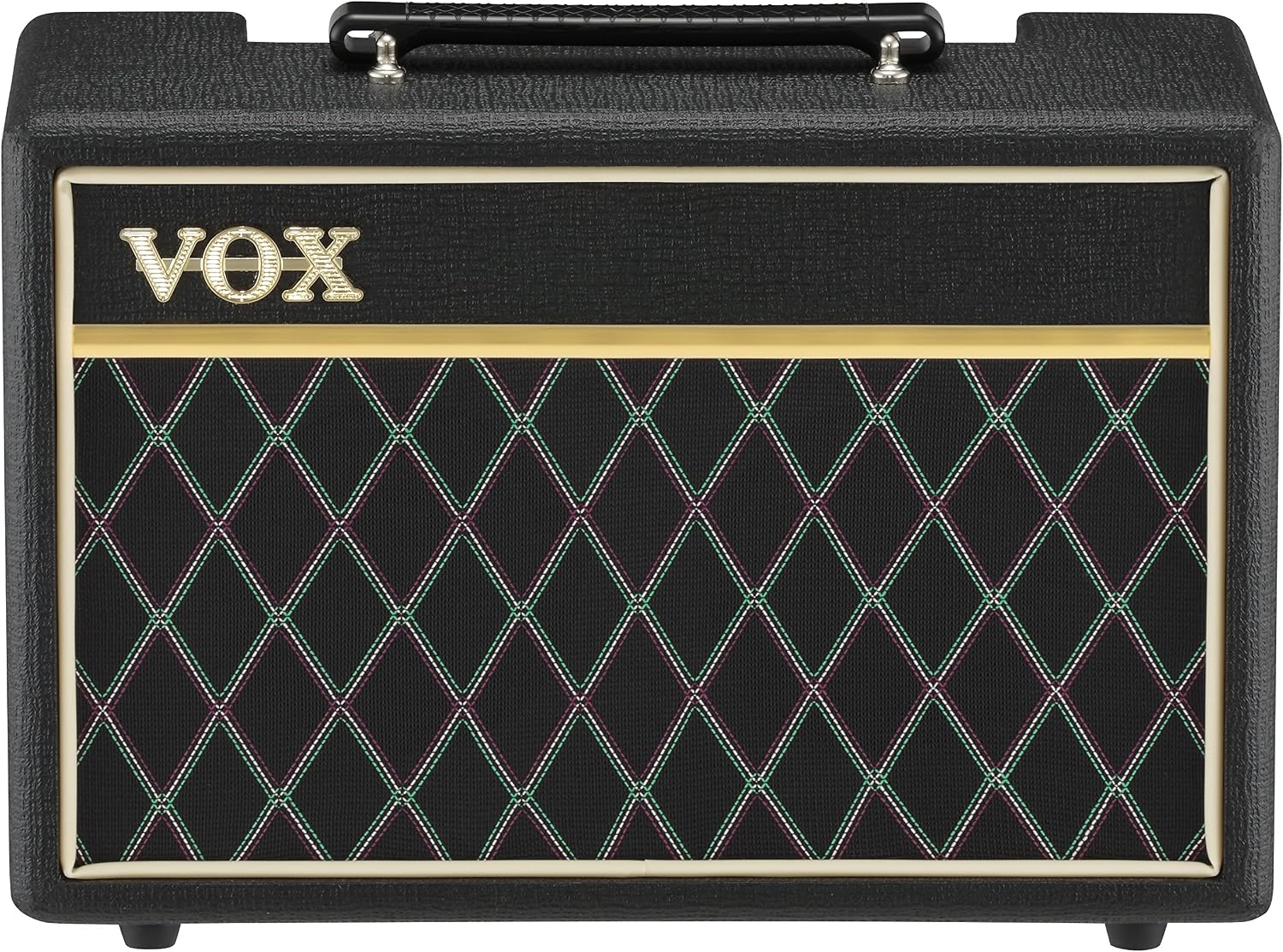
The Pathfinder Bass 10 combines familiar VOX styling with controls designed for bass. Its 10-watt solid-state design drives two 5-inch Bulldog speakers, giving it a different speaker arrangement from the single-driver practice combos here.
Drive and Volume controls allow the amount of grit and the overall level to be adjusted separately. Bass and Treble handle the basic EQ, and the Bright switch adds a sharper edge when the attack needs more definition. The controls remain simple enough for a quick practice session without navigating menus.
The combined headphone/line output mutes the speakers when connected, providing a quiet practice route. Its limitations are the modest output and absence of an aux input, which makes playing along less convenient than on the Fender, Blackstar, Peavey or Ampeg. Choose it for the straightforward controls and compact twin-speaker format.
Pros
- 10-watt bass design with two 5-inch speakers
- Separate Drive and Volume controls
- Bright switch and headphone/line output
Cons
- No aux input for a backing-track source
- Limited output for louder group playing
How to Choose the Best Cheap Bass Amps
Is Power Important?
Power matters, but the useful question is how much clean volume the playing situation needs. Quiet solo practice makes different demands from playing beside a drummer. A mini amp can be convenient at home while still running out of headroom in a group.
Speaker design, cabinet size and EQ also affect the result. Turning up the bass control asks more of a small speaker and amplifier, so avoid treating maximum bass boost as a substitute for a larger system. A more restrained setting can make notes easier to follow.
What Features Should You Look For?
A headphone output is valuable when the speaker needs to stay quiet. An aux input makes it easier to play along with music; confirm the connector and cable required by the amp and source. The VOX’s headphone/line connection is an output, so it cannot be used as an aux input.
An effects loop and a dedicated line output may matter for processors or recording, but they are not necessary for every practice routine. Choose the connections that will actually be used rather than assuming every small amp has the same rear panel.
Battery or Plug-in?
Battery operation is useful for travel and short sessions away from mains power. The FLY 3 Bass offers that convenience, with a smaller speaker and less output than the larger combos. Account for batteries or the correct power supply when planning the whole setup.
A mains-powered combo is usually less convenient to move from place to place, but can provide a more substantial speaker format for a regular practice room. Check the dimensions and weight as well as the wattage.
What About Controls?
A three-band EQ gives independent midrange adjustment, while a two-band design keeps the panel simple. Drive, contour and compression controls provide different ways to change the response; none is automatically a substitute for the others.
Start with moderate settings and balance the bass with any backing track. For a cleaner sound, reduce the input drive before turning down the overall listening level. A small practice combo can be useful for years without being expected to replace a louder rehearsal system.
What’s the Best Small Bass Practice Amp?
The Fender Rumble 25 remains the overall choice for a conventional home-practice setup. The Blackstar FLY 3 Bass prioritizes portability, the Peavey MAX 126 keeps things simple, the Ampeg BA-108 adds useful connections, and the VOX Pathfinder Bass 10 offers direct controls with twin speakers.
For a strict budget, compare the current price of the exact model and include any necessary accessories. Choose enough clean volume for the room, a convenient quiet-practice option and controls that make the instrument enjoyable to play.