Looking for the best guitar practice amp with a headphone jack? These ten options range from small practice combos to larger rehearsal amps and compact hybrid heads. There is also a tube amp with headphone output for players who prefer a valve power stage.

A headphone connection makes personal practice more convenient, but the details differ: some outputs mute the speaker automatically, while others can work alongside a connected cabinet. Compare the controls, size and connections as well as the wattage to find the right amp for the space and the music.
The Best Amps with a Headphone Jack – Comparison Table
Fender Champion 100 (Editor’s Choice)
The Champion 100 remains the overall choice for a guitarist who wants one straightforward combo for headphones at home and amplified playing with other musicians. Its 100-watt output and two 12-inch speakers give it a substantially different brief from the small desktop practice amps here. The familiar black panel and rotary controls keep that capability approachable.
Channel one supplies the clean Fender starting point, while channel two adds selectable amp voices and its own gain control. Reverb, delay, chorus and other onboard effects make it easy to add space or movement without building a pedalboard. The headphone output automatically mutes the speakers, and the auxiliary input lets a backing track join the practice session.
The trade-off is size: at about 40 pounds, this is a full-sized combo rather than a lightweight bedside amp. Players who only need headphones may prefer something smaller. For someone who also wants two channels, an effects loop and a useful rehearsal setup, its uncomplicated layout makes a persuasive all-round package.
Pros
- Headphone output automatically mutes the speakers
- Two channels with selectable voices and onboard effects
- Two 12-inch speakers and an effects loop
Cons
- Large and heavy for headphones-only practice
- More amplifier than a small practice corner requires
Luvay 000059

The Luvay 000059 takes the opposite approach: a small 10-watt amp with a 6.5-inch speaker and a short list of controls. Volume, bass and treble cover the basic adjustments, while a drive switch adds a more distorted voice. It suits a player who wants to plug in and work through a part without navigating presets or an editor.
The back support stand is a useful detail for a compact practice amp, helping angle the cabinet toward the player. A headphone output provides another way to listen when the speaker is not the preferred option. The simple front panel also makes it easy to hear what each adjustment changes.
Its limits are the ones to expect from this format: there is no expansive effects section, and a small speaker cannot provide the scale of a larger combo. It is designed for an electric guitar or another suitable pickup-equipped instrument. Choose it for uncomplicated electric-guitar practice rather than a complete rehearsal rig.
Pros
- Compact 10-watt format with a back support stand
- Simple bass, treble and drive controls
- Headphone output for personal listening
Cons
- Limited tone shaping and no onboard effects section
- Small speaker is less suitable for full-band use
BOSS Katana-50 MkII
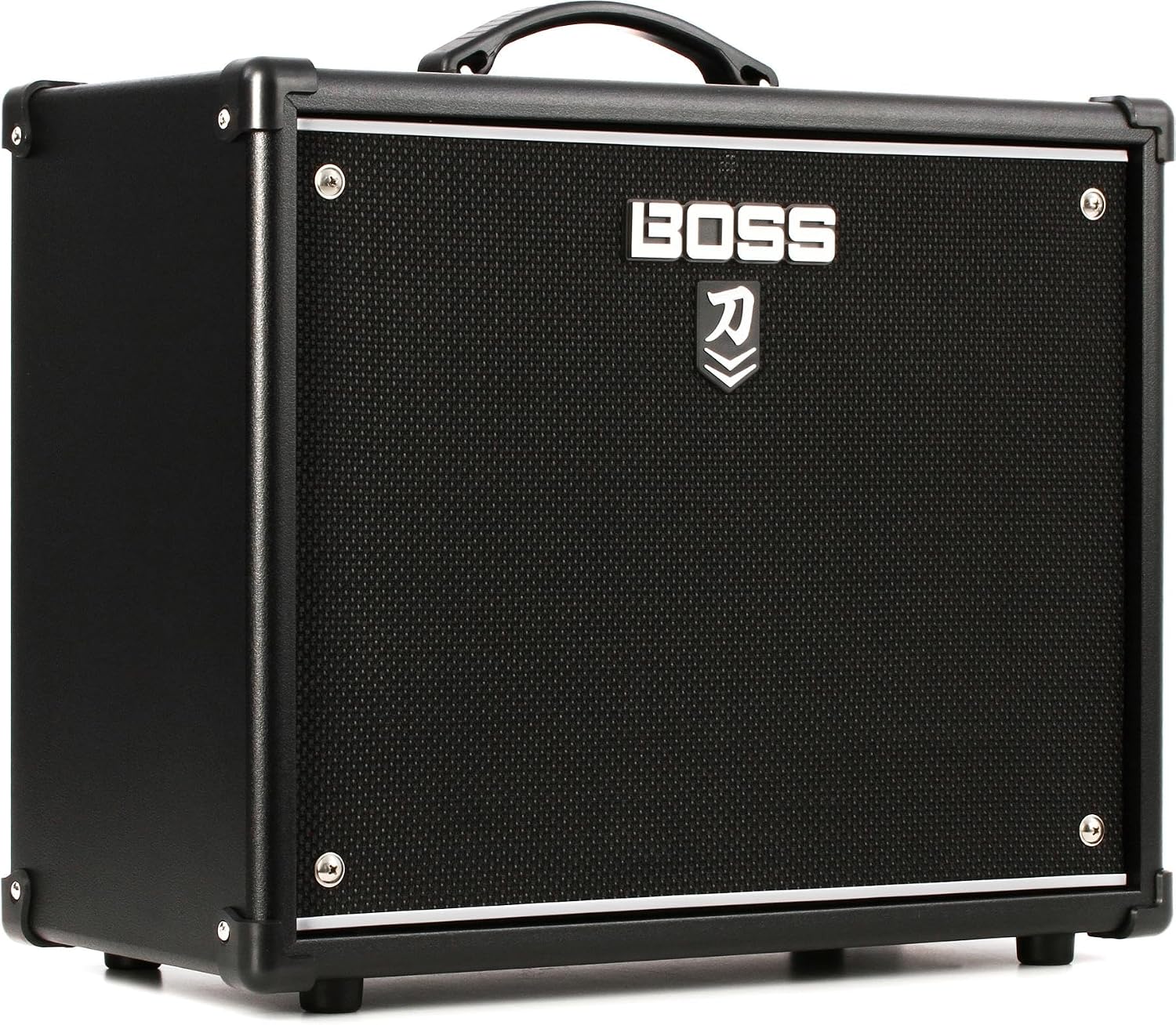
The Katana-50 MkII is the strongest fit here for a player who enjoys shaping several sounds in one combo. Five amp characters, each with a variation, cover clean playing, crunch and more saturated lead sounds. Separate booster, modulation, FX, delay and reverb sections provide a much broader palette than a basic practice amp.
Its 12-inch speaker and selectable 50-, 25- and 0.5-watt settings let it move between different playing situations without abandoning the same controls. Plugging into PHONES/REC OUT mutes the internal speaker. An auxiliary input supports backing tracks, while USB recording adds another useful connection beyond the practice-room essentials.
There is more to learn than with a volume-and-tone amp, particularly when using the editor. This specific 50 MkII also lacks the effects loop and GA-FC connection found on larger models in the range. It is a versatile choice when the built-in sounds will get used, rather than simply a way to collect features.
Pros
- Five amp characters with variations and five effects sections
- Headphone connection mutes the internal speaker
- Power control, auxiliary input and USB recording
Cons
- No effects loop or GA-FC connection on this model
- Deeper editing adds a learning curve
Rockburn BC-10S-BK

The Rockburn BC-10S-BK is a compact 10-watt practice amp built around a five-inch speaker. Volume, bass and treble controls keep the layout easy to understand, with a distortion option for moving away from a clean sound. It is a sensible format for learning chord changes or keeping an electric guitar ready beside a desk.
A headphone jack provides a personal listening option, and the carry handle is convenient when moving it between rooms. The small cabinet is its main practical advantage: it asks for less space than the larger rehearsal combos in this selection.
The same small speaker limits the weight and fullness of the amplified sound, particularly for low notes. There are no built-in delay or reverb controls to explore, and this is not a substitute for a band-ready amp. Its appeal is a direct, modest practice setup with fewer distractions.
Pros
- Compact cabinet with a carry handle
- Simple bass, treble and distortion controls
- Dedicated headphone connection
Cons
- Small speaker limits low-end fullness
- No onboard delay or reverb
Sawtooth ST-AMP-10

The ST-AMP-10 gives a small practice amp a useful amount of front-panel control. Its 10-watt output drives a 6.5-inch speaker, while bass, middle and treble adjustments let the player shape more than just the overall brightness. That middle control is particularly useful when deciding how prominent a guitar part should sound.
Gain, volume and the drive switch provide a straightforward route between cleaner practice sounds and overdrive. The quarter-inch stereo headphone socket is handy for private listening, with a suitable adapter needed for headphones that use a smaller plug. The manufacturer specifies this version for 120-volt, 60 Hz power.
There are no built-in time-based effects, so delay and reverb need separate equipment if they are important to the sound. The small speaker also keeps its ambitions firmly in the practice category. For a player who values an uncomplicated three-band EQ over a menu of presets, that focus can be an advantage.
Pros
- Three-band EQ includes a dedicated middle control
- Gain and drive controls for distorted sounds
- Quarter-inch stereo headphone output
Cons
- No built-in delay or reverb
- Small combo format is aimed at practice
Orange Micro Terror MT20

The Micro Terror is an amplifier head with a pleasingly direct personality. A 12AX7/ECC83 preamp valve feeds a solid-state power section, providing a 20-watt hybrid platform in a compact steel enclosure. Gain, tone and volume are the only sound-shaping controls, so finding a useful setting does not involve a menu.
An auxiliary input makes backing-track practice possible, and the headphone connection provides a personal listening option. For speaker use, the head needs a separate suitable cabinet; it has no built-in speaker. That distinction matters when comparing its small footprint with the complete combo amps elsewhere in this list.
The simplicity is attractive, but it also means no onboard reverb, no multi-band EQ and no effects loop. The Micro Dark adds a different set of features, including a CabSim headphone circuit, so the two should not be treated as interchangeable. Choose the Micro Terror when a small hybrid head and a few intuitive controls are more appealing than extensive editing.
Pros
- Compact hybrid head with a 12AX7/ECC83 preamp valve
- Simple gain, tone and volume layout
- Auxiliary input and headphone connection
Cons
- Separate cabinet needed for amplified speaker use
- No onboard reverb or effects loop
Monoprice 611800
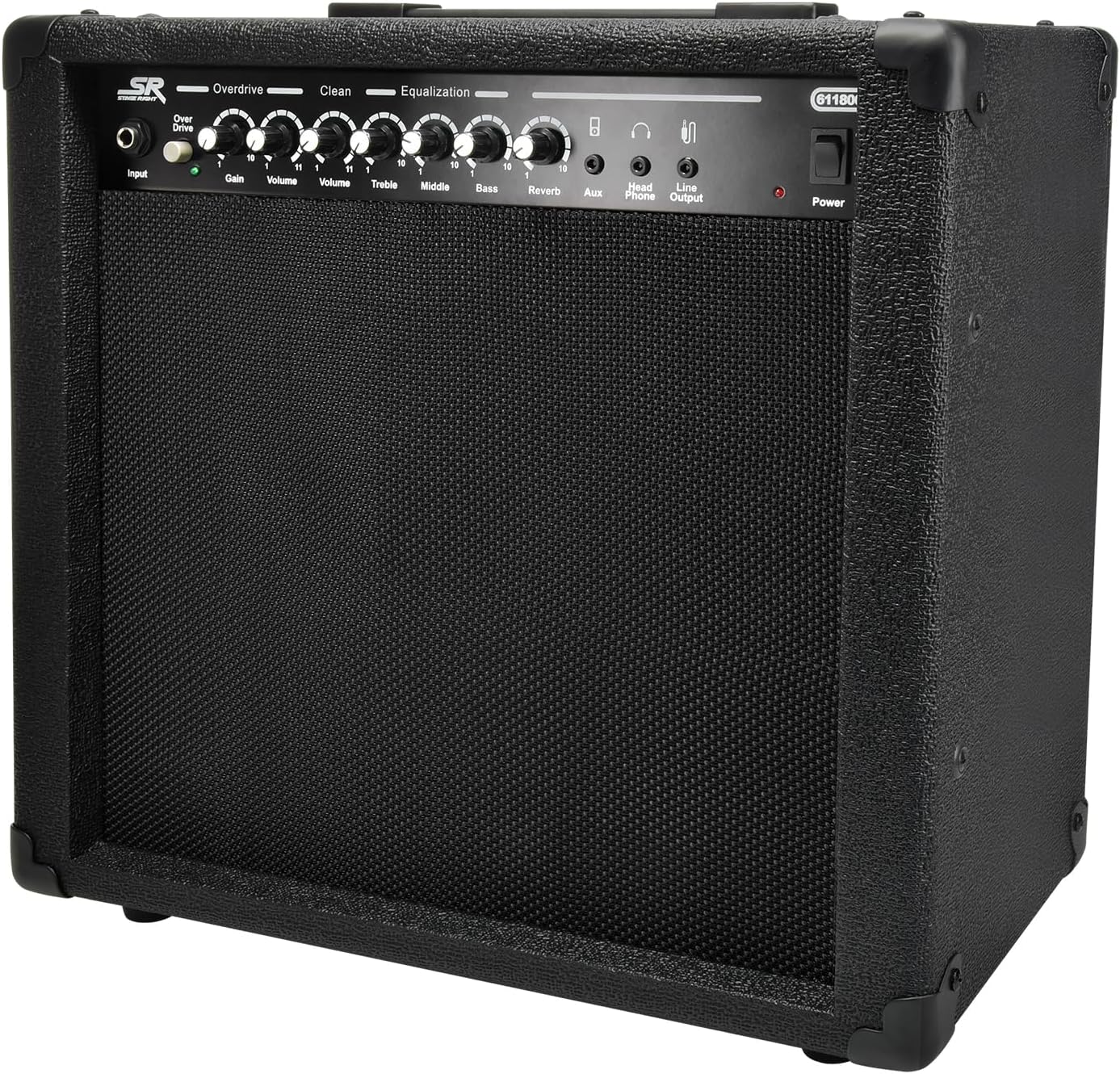
The Monoprice 611800 offers a traditional combo layout with more useful connections than its plain appearance suggests. A 40-watt amplifier drives a 10-inch speaker, and separate clean and overdrive volume controls make it easier to balance the two sounds. Bass, middle and treble controls provide familiar tone shaping.
Reverb adds space without requiring an extra pedal. Around the back, an effects send and return allow external processing between the preamp and power section, while a separate line output provides another connection for recording equipment. The headphone jack disconnects the internal speaker for quiet practice.
At roughly 20 pounds, it is portable in the ordinary combo sense rather than a tiny desktop unit. It also lacks the saved voices and extensive effects of the Katana. Its attraction is a practical collection of conventional amp controls and connections, especially for someone who already uses a few pedals.
Pros
- Clean and overdrive sounds with separate volume controls
- Three-band EQ, reverb and an effects loop
- Headphone jack disconnects the internal speaker
Cons
- Larger than a small desktop practice amp
- No preset system or extensive onboard effects
Bugera V5 INFINIUM (Tube Option)

The V5 INFINIUM brings a genuine valve power stage to this selection. A 12AX7 preamp valve and EL84 output valve feed an eight-inch Turbosound speaker, with gain, tone, volume and reverb controls keeping the front panel pleasantly uncluttered. It is a good match for players drawn to a simple clean-to-crunch setup.
The built-in attenuator selects 5, 1 or 0.1 watts, making it easier to explore driven sounds at lower speaker levels. That is a separate benefit from the quarter-inch headphone connection, which automatically mutes the internal speaker. Digital reverb adds some ambience without turning the amp into an effects workstation.
The single tone knob cannot shape bass, mids and treble independently, and there is no separate clean channel to switch to. Valve maintenance is also part of ownership. Those are reasonable trade-offs when the appeal is a compact valve combo with low-power options, rather than the broadest range of preset sounds.
Pros
- 12AX7 preamp and EL84 valve power stage
- Selectable 5-, 1- and 0.1-watt operation
- Reverb and a headphone connection that mutes the speaker
Cons
- Single tone control instead of three-band EQ
- Valve maintenance and no separate switchable clean channel
Orange Micro Dark
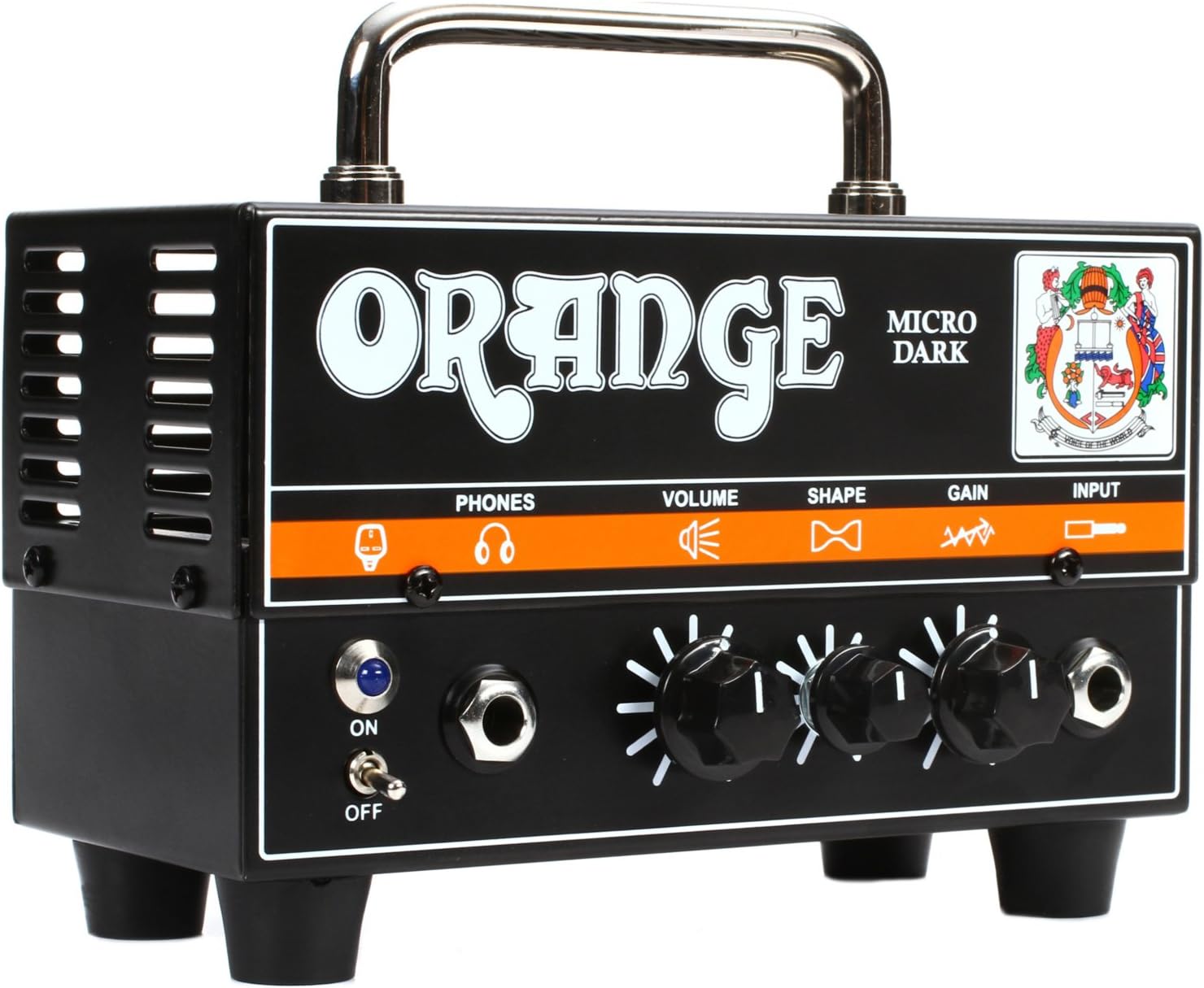
The Micro Dark takes the compact Orange hybrid format toward more aggressive sounds. Its ECC83 preamp valve works with a solid-state 20-watt output section, while gain, shape and volume keep the interface quick to use. Turning the shape control changes the midrange emphasis, making the move from fuller mids to a scooped sound particularly direct.
The CabSim headphone output is a meaningful distinction from the simpler Micro Terror: it adds speaker-cabinet simulation for headphone listening or a recording connection. A buffered effects loop is another welcome feature for placing delay or reverb after the preamp distortion, instead of feeding everything into the guitar input.
One practical detail matters for quiet use: connecting headphones does not automatically mute a connected cabinet, because both outputs can operate together. It is also a head with no internal speaker, and there is no built-in reverb. The Micro Dark makes sense for a compact high-gain setup whose extra connections will earn their place.
Pros
- CabSim-equipped headphone output
- Buffered effects loop for external pedals
- Compact hybrid head with a useful shape control
Cons
- Headphones do not automatically mute a connected cabinet
- No internal speaker or onboard reverb
Monoprice 611720
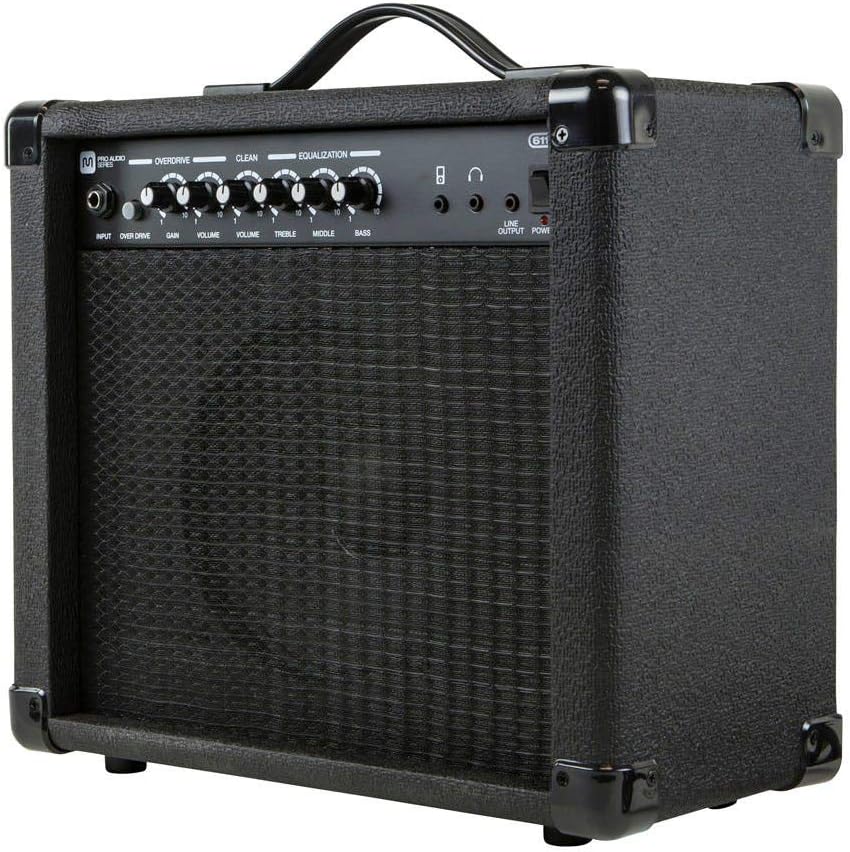
The Monoprice 611720 sits between the smallest practice boxes and the larger combos here. Its eight-inch speaker gives it a conventional practice-amp format, with a channel switch, separate clean and overdrive volumes and three-band EQ. The manufacturer rates it at 20 watts in overdrive mode and 14 watts on the clean channel.
A 3.5 mm auxiliary input makes it easy to bring in a backing track, and the 3.5 mm headphone socket disables the internal speaker. There is also a separate line output for connecting suitable recording or amplification equipment. These are useful everyday features without the extra complexity of a modeling interface.
It lacks onboard reverb and delay, so the sound-shaping options are fairly traditional. Players who want several ready-made sounds may prefer the more flexible Katana. Choose it for its practical connections and familiar controls, especially when a smaller headphone plug is more convenient than a quarter-inch socket.
Pros
- Auxiliary input and a separate line output
- Headphone socket disables the internal speaker
- Separate clean and overdrive volumes with three-band EQ
Cons
- No onboard reverb or delay
- Clean-channel power rating is lower than the overdrive rating
Frequently Asked Questions about Guitar Amps with Headphone Jacks
Do All Amps Have Headphone Jacks?
No. Look for an output specifically labeled Phones, Headphones or a documented combined recording/headphone output. An auxiliary input, line output and speaker output serve different purposes. A stereo plug adapter can solve a 3.5 mm versus 6.35 mm size mismatch on a genuine headphone output; it cannot turn a speaker output into one.
Are There Tube Amps with a Headphone Jack on the Market?
Yes. The Bugera V5 INFINIUM is a valve combo with a headphone connection. Hybrid amps such as the Orange Micro Terror and Micro Dark use a preamp valve with a solid-state power section. That is a different design from an amp with valves in both stages, and neither design automatically guarantees a better headphone sound.
Can You Plug Headphones Into a Tube Amp?
Use a dedicated headphone output and follow that model’s instructions. Never connect headphones directly to a speaker output, and do not disconnect a valve amp’s speaker merely to make it quiet. The amplifier must retain the correct speaker or load arrangement specified by its manufacturer.
How to Use Headphones with an Amp Without a Headphone Jack?
A compatible load box with the necessary headphone monitoring facilities can be an option, but it must match the amp’s power and impedance requirements. A line output alone is not necessarily a headphone output, and cabinet simulation may also be needed for a more familiar guitar sound. For straightforward practice, a dedicated headphone amp or amp-modeling device may be the simpler route.
Best Headphones to Use with an Amp
Comfort and the correct connection matter more than a single universal winner. Closed-back headphones reduce sound leakage, while a comfortable fit helps during longer practice sessions. The guide to headphones for guitar amps explores suitable listening options. Start with the amp’s headphone level low and raise it gradually. With an amplifier head, also check whether headphone use mutes a connected cabinet; the Micro Dark, for example, can feed both outputs together.
The Best Amp with a Headphone Output: Our Verdict
The Fender Champion 100 remains the overall choice for someone who wants a straightforward two-channel combo for headphones and amplified playing. Its size makes less sense for headphones alone, where a smaller practice amp may be easier to live with.
The Katana-50 MkII offers the broadest onboard sound-shaping toolkit in this selection, while the Bugera V5 INFINIUM brings a valve power stage and useful low-power settings. The Orange heads suit players who want a compact separate head. Choose around the way the amp will actually be used, not simply the largest wattage figure.