Looking for the best cheap tube amps? A compact valve combo can be an appealing way to explore cleaner tones and overdrive without moving a large stage amp. The useful differences are the controls, speaker, recording connections and how comfortably the amp works at the volume you actually need.
These five budget tube amps take different approaches, from the simple Monoprice and Vox to the Fender Super Champ X2 with digital voices and effects. The Monoprice remains the overall choice for a direct, compact valve setup; the others add useful options for particular playing and practice needs.
Top 5 Best Cheap Tube Amps
| Image | Model | Price |
|---|---|---|
| Monoprice Stage Right 611705 (Editor's Choice) | Check Price |
 | Fender Super Champ X2 | Check Price |
 | Blackstar HT-1R | Check Price |
 | Vox AC4TV | Check Price |
 | Laney CUB10 | Check Price |
Monoprice Stage Right 611705 (Editor’s Choice)
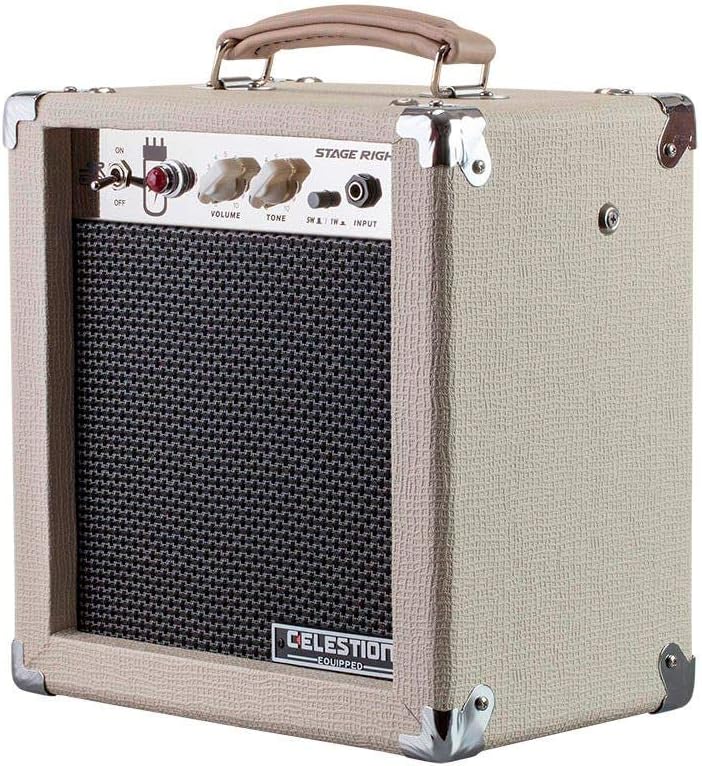
The Stage Right 611705 is an appealing starting point for a player who wants a small valve combo with very little between the guitar and the sound. Its 5-watt design uses a 12AX7 preamp valve and a 6V6GT output valve, with an 8-inch Celestion Super 8 speaker. Volume and Tone are the main controls, so finding a starting sound takes little explanation.
The front panel also has a 5W/1W input-selection setting. Together with the volume control, it provides another way to adjust the response to the guitar. The simple layout encourages using the instrument’s volume and picking dynamics rather than selecting a bank of programmed voices.
There is a clear musical trade-off to that simplicity. Without a separate gain and master-volume pair, driving the amp harder also affects listening level. It can be a satisfying way to explore cleaner and more driven valve sounds, but five watts should not be mistaken for guaranteed whisper-quiet distortion.
The Monoprice keeps the overall recommendation for its straightforward controls, compact format and conventional valve design. It offers none of the headphone or USB conveniences found on more feature-rich practice amps. Choose it when that direct approach is the attraction, and plan a different solution if silent practice is essential.
Pros
- Simple Volume and Tone controls
- 12AX7 and 6V6GT valve design
- Compact combo with an 8-inch Celestion speaker
Cons
- No headphone or USB recording connection
- No independent gain/master-volume controls
Fender Super Champ X2
The Super Champ X2 combines a 15-watt valve power section with digital amp voicing and effects. Two 6V6 output valves and a 10-inch Fender Special Design speaker give it a more substantial format than the smallest practice combos here. It is especially appealing to someone who wants several sounds without assembling a large pedalboard.
Channel 1 supplies a Fender Black Panel-style clean voice. Channel 2 adds Gain, Volume and a selector for 16 amp voicings, covering several cleaner and more driven characters. Shared Bass and Treble controls shape the result. That is much more tonal variety than a single-channel Volume-and-Tone amp, though it also means more settings to explore.
The effects section provides 15 effects, with an adjustment control and tap tempo for relevant delay or modulation settings. A line output and speaker-emulated USB recording connection extend its usefulness beyond the built-in speaker. The optional two-button footswitch handles channel selection and effects bypass.
The X2’s strength is the combination of onboard variety and a valve output stage. Its older Fender FUSE editing ecosystem deserves checking before depending on a modern computer workflow; the amp’s physical controls are the more dependable basis for choosing it. Shared EQ and a separately purchased footswitch are the other practical compromises.
Pros
- Two channels and 16 amp voicings
- 15 effects with tap-tempo control
- Line output and speaker-emulated USB recording
Cons
- Older computer-editing ecosystem
- Shared EQ and optional footswitch
Blackstar HT-1R
The original HT-1R brings valve-driven practice into a small 1-watt combo with an 8-inch speaker. An ECC83 and ECC82 form its valve complement, while the Overdrive switch offers a more saturated direction without needing a separate distortion pedal. The compact scale of the amp is part of its appeal for a desk-side or small-room setup.
Gain and Volume provide control over drive and level, with Blackstar’s ISF control changing the overall tonal character. This is a different approach from separate bass, middle and treble knobs: there is less independent adjustment, but moving across the ISF range is a quick way to find a useful voicing.
The R version includes reverb, and the speaker-emulated headphone output offers a route to quiet practice or recording equipment. Connecting there disconnects the internal speaker. An MP3/line input supports backing tracks, while a speaker output allows a compatible external cabinet to be used.
The HT-1R is a useful choice when a small valve combo also needs headphone convenience. Its 1-watt output and small speaker limit clean level beside louder instruments, and the ISF control is less precise than a full three-band EQ. The benefit is a focused practice amp with drive and reverb close at hand.
Pros
- Compact 1-watt valve combo
- ISF voicing control and onboard reverb
- Emulated headphone output and backing-track input
Cons
- Limited clean headroom for louder group playing
- No separate bass, middle and treble controls
Vox AC4TV
The AC4TV offers a particularly direct take on a small valve combo. A single 12AX7 preamp valve and EL84 output valve work with a 10-inch Celestion VX10 speaker, while the TV-front styling gives the cabinet a distinctive vintage look. Tone and Volume are the core sound controls.
Its most useful extra is the three-position output-level control: 4 watts, 1 watt or a quarter watt. That gives the player more room to balance drive against listening level than a fixed-output design. The reduced settings can make an overdriven sound easier to manage at home, although the room and speaker still determine how loud it feels.
A 16-ohm external-speaker connection allows a compatible cabinet to replace the internal speaker. That can change the playing experience, but it does not increase the amplifier’s rated power. The appeal remains a small, hands-on amp whose sound follows the volume setting and the guitar’s own controls.
Choose the AC4TV for its simple layout and useful output-level options. There is no built-in reverb, effects loop or headphone output, so it is less self-contained for silent practice or heavily effected sounds. A player who values a direct valve-amp setup may regard that restraint as part of the attraction.
Pros
- 4W, 1W and quarter-watt output settings
- 10-inch Celestion speaker
- Simple controls and distinctive TV-front styling
Cons
- No headphone output or onboard reverb
- No independent gain/master-volume controls
Laney CUB10
The CUB10 is a straightforward 10-watt valve combo with a 10-inch speaker. Its Class A/B output stage uses a pair of 6V6GT valves, driven by two ECC83 preamp valves. That gives it a different foundation from the single-output-valve Monoprice and Vox, while keeping the front panel refreshingly simple.
Gain, Tone and Volume offer a useful balance between adjustment and immediacy. Separate gain and volume controls let the player change preamp drive and overall level without relying on a preset system. The single Tone control provides a broad balance rather than the detailed shaping of a three-band EQ.
High and low inputs accommodate different input levels, and an extension-speaker socket provides a route to a compatible cabinet. There is no onboard reverb, effects loop or headphone connection. Those omissions keep the rig direct, but they matter if the amp is expected to cover recording and quiet practice without additional equipment.
The Laney is appealing for someone who wants a conventional valve combo with a little more speaker area and output than the smallest models. It is not automatically louder or cleaner than every alternative, and ten watts can still be substantial in a domestic room. Choose it for its controls and response rather than a promise of limitless clean headroom.
Pros
- 10-watt Class A/B design with two 6V6GT output valves
- Separate Gain and Volume controls
- High/low inputs and an extension-speaker connection
Cons
- No headphone output, reverb or effects loop
- Single broad Tone control
How to Choose the Best Cheap Tube Amp
Choose a budget valve combo for the way it will be used, rather than treating the smallest price or largest wattage as a shortcut to the best sound. The speaker, gain controls, output connections and preferred playing level all affect how useful the amp will be.
Wattage
Low output power can help make valve drive more manageable, but a small amp can still be loud in a home. A 100-watt amp is not simply twice as loud as a 50-watt model, and cabinet efficiency also affects the result. The Vox’s output-level control and the Blackstar’s headphone route solve different practice problems; compare the features that fit the room.
Types of Tubes
Valve type is one part of the complete circuit. The 6V6-based Monoprice, Fender and Laney differ substantially in controls and architecture, while the Vox uses an EL84 and the Blackstar an ECC82 output stage. Those names alone do not guarantee bass response, a genre or usable volume. Use the valve type specified for the amp and leave internal servicing to a qualified technician.
Multiple Channels and Other Features
Separate gain and volume controls can offer more flexibility than a single Volume control, while switched channels or digital voicings provide another route to variety. They are useful when several sounds are needed, but a simple single-channel amp can work well with the guitar’s controls and pedals.
Check headphone, line and USB connections individually; a speaker output is not a substitute for them. External cabinets need the correct impedance and a proper speaker cable, and a valve amp must have the load its design requires. Built-in effects can keep a rig compact, while reverb and an effects loop remain separate features worth checking for the particular setup.
The Verdict: Best Budget Tube Amp
The Monoprice 611705 is the overall choice for a simple, compact valve combo with a Celestion speaker. The Fender Super Champ X2 offers the widest onboard variety here, the Blackstar adds a practical headphone route, and the Vox provides useful output-level settings. The Laney CUB10 is an appealing alternative for players who prefer separate Gain and Volume controls with a conventional 10-inch combo.