Looking for the best P90s that fit in humbucker slots? The useful choice depends on the sound and controls you want: a direct single-coil conversion, a quieter P90-inspired design or a pickup with several selectable voices. These eight options cover those approaches in housings intended for standard humbucker routes.
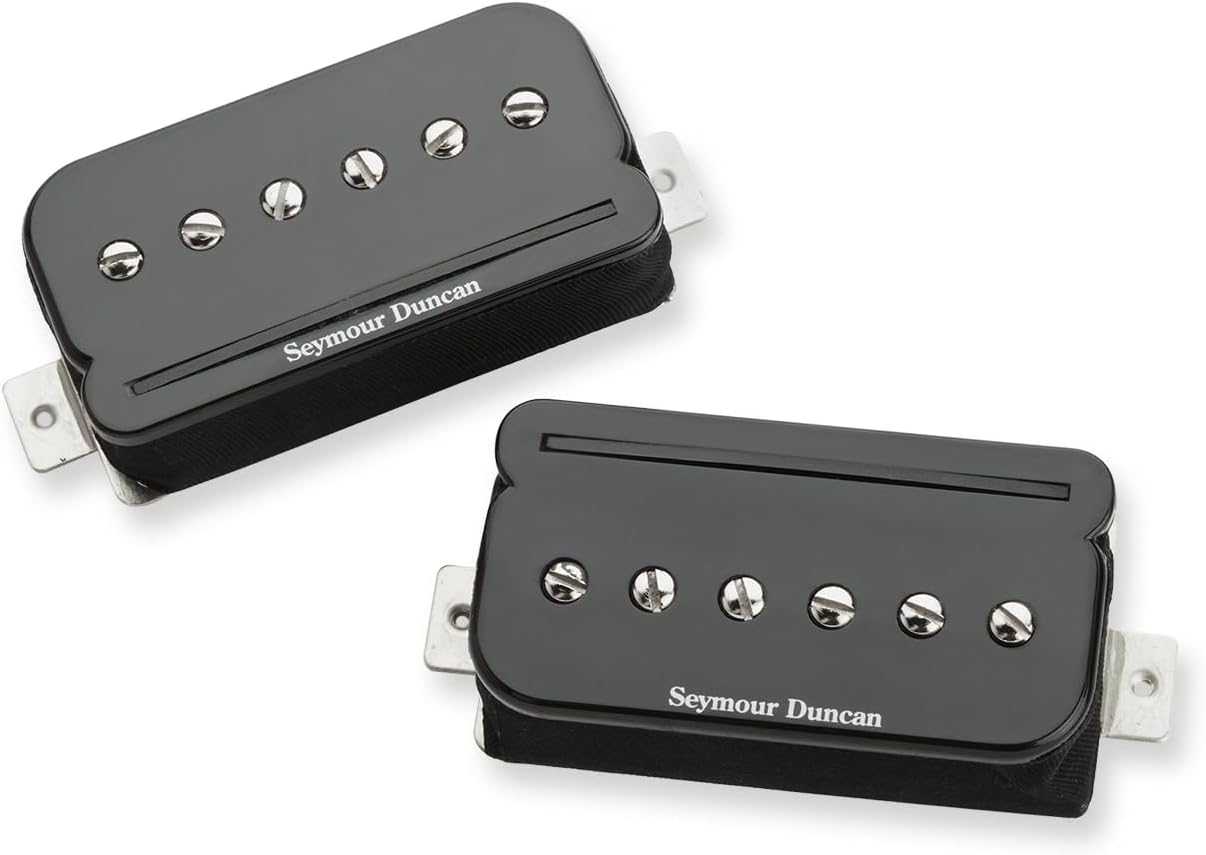
The P-Rails set remains the overall choice for versatility. The Phat Cat and Rebel 90 keep a more traditional single-coil approach, while the Bluesbucker and newer Phat Cat Silencer designs address hum in different ways. The reviews explain those differences, including whether each product is one pickup, a pair or a pickup-and-control system.
Best P90s That Fit in Humbucker Slots – Comparison Table
| Image | Model | Price |
|---|---|---|
| Seymour Duncan P-Rails Set (Editor's Choice) | Check Price |
 | Seymour Duncan SPH90-1N Phat Cat | Check Price |
 | Seymour Duncan SHPR-1n P-Rails | Check Price |
 | Seymour Duncan P-Rails with Triple Shot Flat Set | Check Price |
 | Tonerider Rebel 90 Set | Check Price |
 | DiMarzio DP163 Bluesbucker | Check Price |
 | Seymour Duncan Vintage Phat Cat Silencer Set (Best for Quiet Vintage Tones) | Check Price |
 | Seymour Duncan Hot Phat Cat Silencer Set (Best for High-Gain Playing) | Check Price |
1. Seymour Duncan P-Rails Set (Editor’s Choice)
The P-Rails set remains the overall choice for a player who wants more than one useful voice from a humbucker-routed guitar. Each pickup combines a P90 coil with a narrower Rail coil, giving the set a clear reason to exist: P90 bite, a leaner single-coil option and a fuller humbucker sound from the same pair of pickups.
Alnico 5 bar magnets and four-conductor wiring support that flexibility. With suitable switching, the guitar can move between broader rhythm sounds and more focused single-coil textures without replacing the pickups again. The matching neck and bridge also allow hum-canceling combinations when both corresponding single coils are selected together.
The extra sounds require the right controls. A conventional selector alone will not expose every mode, and a P90 coil used on its own retains normal single-coil hum. For a versatile rewiring project, that is a worthwhile trade; for one simple, permanently selected P90 voice, the dedicated models below are easier to approach.
Features
- P90 and Rail coils in a humbucker-sized housing
- Alnico 5 magnets and four-conductor leads
- Matched neck-and-bridge set
Pros
- Several genuinely different sounds from one guitar
- Flexible choice for a planned switching upgrade
Cons
- Extra switching is needed to access the full range
- Individual single-coil modes can hum
2. Seymour Duncan SPH90-1N Phat Cat
The Phat Cat neck is the direct route to a traditional P90-style neck sound in a humbucker opening. This SPH90-1N is a true single-coil design under a humbucker-sized cover, rather than a conventional humbucker being described as a P90 substitute.
Two Alnico 2 bar magnets give it a gentler attack, while the single-coil layout keeps the upper detail and focused midrange that make P90 neck sounds attractive. The nickel-silver construction and wax potting are practical details too: the pickup is designed for normal gigging use, rather than relying on an unpotted vintage-style construction.
This is the neck model, so it makes sense when you already like the bridge pickup or are building a pair deliberately. The metal cover helps with shielding, but the individual pickup is not noiseless. A matching reverse-wound/reverse-polarity Phat Cat pair can cancel hum together; the neck pickup alone cannot promise that result.
Features
- True single-coil SPH90-1N neck design
- Two Alnico 2 bar magnets
- Braided-shield lead and wax potting
Pros
- Straightforward P90 neck conversion
- Useful clarity and midrange character without extra mode switches
Cons
- Single-coil hum remains when used alone
- One neck pickup rather than a complete pair
3. Seymour Duncan SHPR-1n P-Rails
The SHPR-1n is useful when the neck position is the part of the guitar you want to change. It brings the P-Rails arrangement to that one position: a P90 coil for a broader single-coil voice, a Rail coil for a leaner sound and both coils together for the fuller humbucker option.
That makes it an interesting partner for an existing bridge humbucker. You can keep the bridge sound you already use and add more variety at the neck, instead of treating every pickup upgrade as a complete rebuild. The four-conductor lead gives the installer access to the individual coils.
The controls remain part of the project. A push-pull, mini-switch or suitable switching ring needs to be wired for the modes you want, and levels will differ between configurations. The value here is position-specific flexibility; players who only want one uncomplicated neck P90 sound should also compare the Phat Cat.
Features
- Neck-position P-Rails SHPR-1n
- Separate P90 and Rail coils
- Four-conductor lead
Pros
- Adds several neck voices while retaining an existing bridge pickup
- Useful building block for a custom control layout
Cons
- Requires suitable wiring and switching
- Single-coil modes are not individually noiseless
4. Seymour Duncan P-Rails with Triple Shot Flat Set
The difference with this P-Rails configuration is the control system. The Triple Shot mounting rings put two small slider switches beside each pickup, making coil selection, series operation and parallel operation available at the pickup itself.
That is useful when you want P-Rails flexibility without filling the guitar with additional mini-toggles or replacing the whole control layout. The 11303-03-B2 configuration shown here includes the P-Rails pair with flat Triple Shot rings. You are choosing a way to operate the same versatile pickup design, rather than a separate P90 voicing.
The flat-ring version suits the corresponding flat mounting surface; it should not be assumed to match every carved top or ring height. The connections still require installation work, and the small switches favor deliberate adjustments over large, easy-to-grab stage controls. For an experiment-friendly guitar, though, having the modes directly beside each pickup is an appealing arrangement.
Features
- P-Rails pair with flat Triple Shot rings
- Coil selection plus series and parallel operation
- Two small switches on each ring
Pros
- Convenient access to the P-Rails modes
- Keeps mode controls beside the pickups
Cons
- Flat-ring fit and height must suit the guitar
- Small switches and solder connections still need attention
5. Tonerider Rebel 90 Set
The Rebel 90 set is the straightforward matched-pair option for players who want the P90 approach without a switching project. Tonerider uses twin Alnico 2 bar magnets in a humbucker-sized housing, aiming for a solid low end with enough upper detail to keep the sound open.
The neck and bridge are wound as a pair, with opposite winding directions and magnetic polarities. That gives the combined position a useful hum-canceling relationship when correctly wired, while each pickup retains the behavior of a conventional single coil. Two-conductor leads keep the circuit relatively simple.
This makes the Rebel 90 appealing for a guitar that should remain familiar to operate: normal pickup selection, volume and tone controls, and a consistent pair of voices. The compromise is noise when either pickup is used alone. If quiet operation in every position matters more than a traditional single-coil design, compare the Silencer sets below.
Features
- Matched humbucker-sized neck-and-bridge pair
- Twin Alnico 2 bar magnets
- Two-conductor hookup
Pros
- Direct approach with normal pickup selection
- Opposite winding and polarity support a quieter combined position
Cons
- Individual pickups retain single-coil hum
- No separate Rail or full-humbucker modes
6. DiMarzio DP163 Bluesbucker
The Bluesbucker is the quiet P90-inspired option that looks most like a conventional open-coil humbucker. DiMarzio designed the DP163 to sense a narrower string area and deliver a P90-like response while canceling mains hum, so its appearance does not tell the whole story.
Its four-conductor wiring also allows a split sound, which DiMarzio describes as closer to a Strat-style voice. The intended P90-like sound comes from the pickup’s normal hum-canceling configuration; coil splitting is an additional option. Ceramic magnets and the pickup’s internal geometry are part of that design, rather than a claim that every ceramic pickup sounds the same.
It is a useful choice when you want an open-coil look and quieter operation without relying on a pickup cover. The trade-off is conceptual but important: this is a hum-canceling P90-inspired design, rather than a traditional single-coil P90. Judge it for that brief.
Features
- DP163 hum-canceling P90-inspired design
- Ceramic magnet and four-conductor lead
- Suitable for neck or bridge applications per DiMarzio
Pros
- P90-style aim with hum reduction
- Additional split-coil option
Cons
- Different construction from a traditional P90
- One pickup rather than a matched set
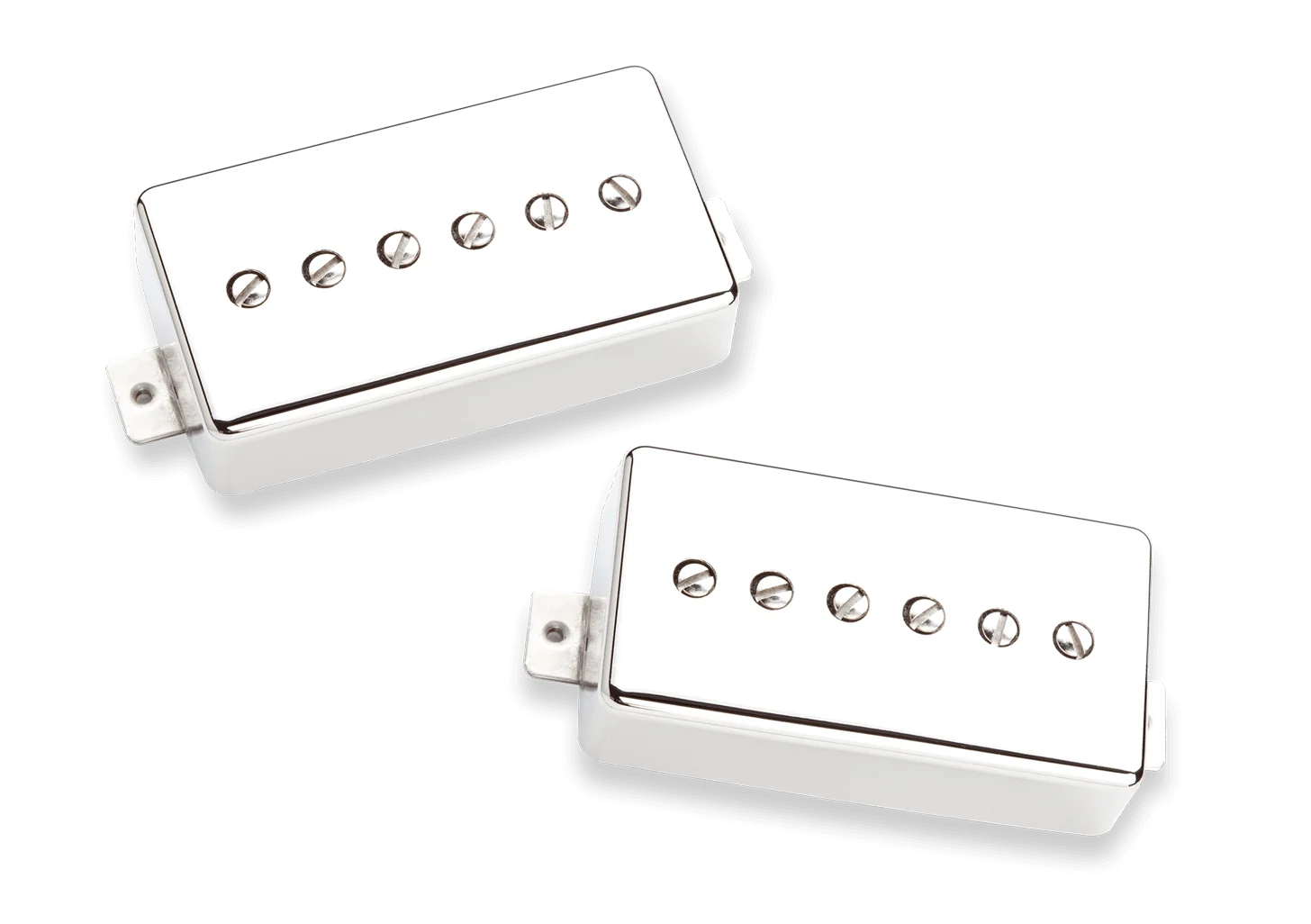
7. Seymour Duncan Vintage Phat Cat Silencer Set (Best for Quiet Vintage Tones)
The Vintage Phat Cat Silencer set is the most direct answer here to players who like the classic P90 brief but want quiet operation in every pickup position. Seymour Duncan combines its Phat Cat-sized housing with the Vintage P90 Silencer design, so the guitar keeps a familiar covered-pickup appearance.
The output is intended to follow a vintage P90 response rather than make the bridge as hot as possible. The passive design also avoids adding a battery to the guitar. With a matched neck and bridge and two-conductor shielded leads, the emphasis is a coherent pair of voices and a relatively straightforward control circuit.
This is a strong choice for cleaner passages, edge-of-breakup playing and situations where single-coil hum would be distracting. It does not add the selectable Rail and humbucker modes of P-Rails, and its noise-canceling construction differs from a conventional one-coil P90. Those are sensible compromises when quiet, vintage-oriented playing is the priority.
Features
- Vintage-voiced Phat Cat Silencer pair
- Humbucker-sized, passive design
- Two-conductor shielded leads
Pros
- Hum reduction without adding a battery
- Matched pair aimed at classic P90 response
Cons
- Fewer selectable voices than a P-Rails setup
- Different internal design from a traditional single-coil P90
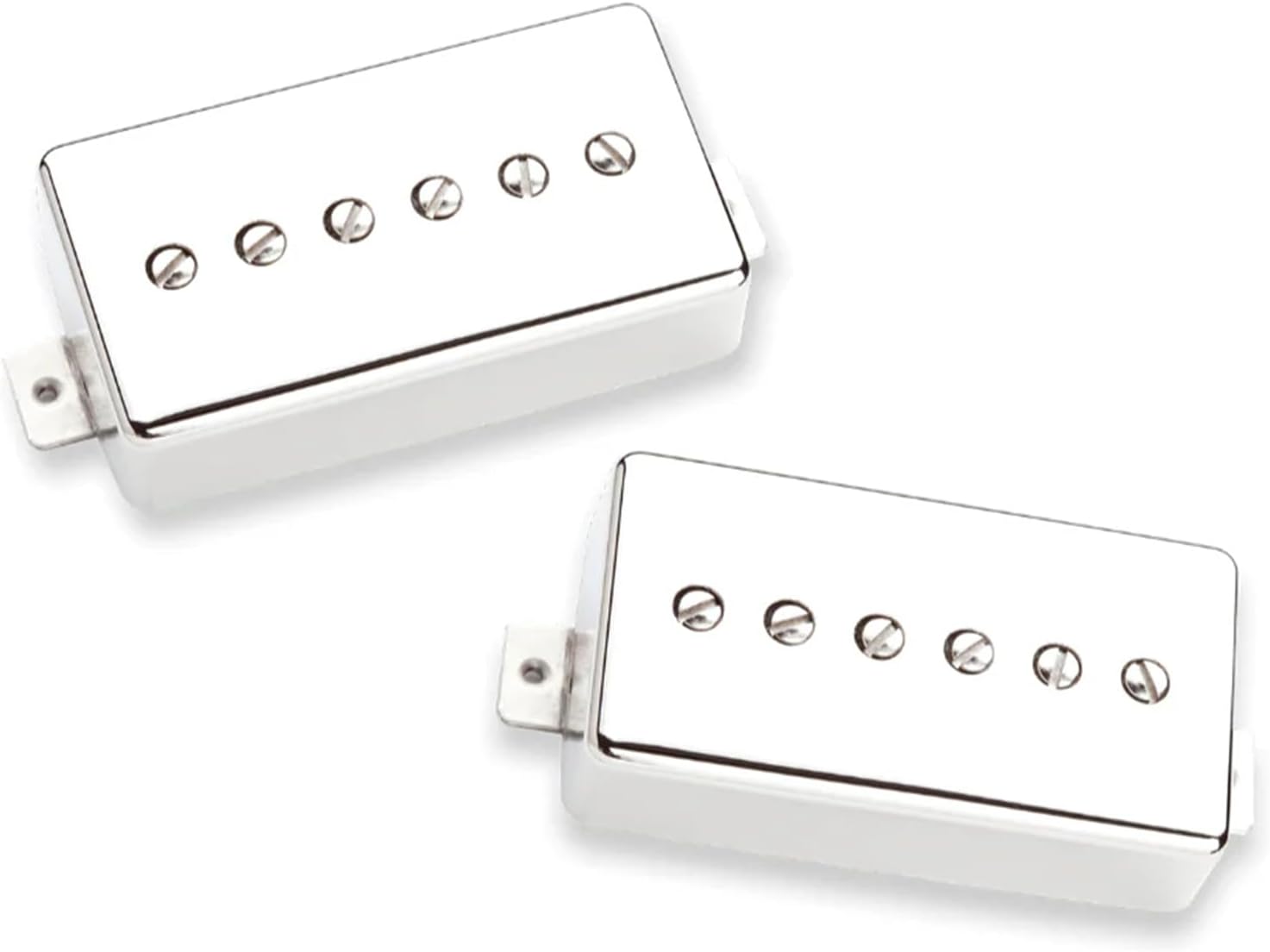
8. Seymour Duncan Hot Phat Cat Silencer Set (Best for High-Gain Playing)
The Hot Phat Cat Silencer set takes the same useful idea toward a more forceful bridge sound. Its higher-output bridge version is designed for players who want P90-style grit and punch with overdrive or heavier gain, while keeping the noise-reducing Silencer construction.
The set pairs that bridge with the Phat Cat Silencer neck. Both remain passive and fit the intended standard humbucker-format opening, so the attraction is the combination of a stronger bridge voice and quieter operation, rather than an active-electronics conversion. The nickel-covered pair also keeps the visual change modest.
The decision between Hot and Vintage is mainly about the bridge character you want. The Hot version is the more targeted choice for a harder-driving sound; the Vintage version is the calmer starting point when output restraint matters. As with the other covered sets, check mounting depth and the surrounding circuit rather than assuming every humbucker-equipped guitar is identical.
Features
- Higher-output Hot Silencer bridge with Silencer neck
- Passive humbucker-sized pair
- Noise-reducing P90-oriented design
Pros
- Stronger bridge emphasis for driven playing
- Quiet operation without active power
Cons
- Hotter bridge is less focused on vintage-output restraint
- No P-Rails-style mode switching
Frequently Asked Questions about P90s in Humbucker Slots
Do P90s Fit in a Humbucker Slot?
A traditional soapbar or dog-ear P90 has different dimensions and mounting arrangements from a standard humbucker. Choose a model specifically made for a humbucker-sized opening, then compare its drawing with the guitar. Cavity depth, mounting tabs, ring shape and height, and string spacing can all affect the installation.
P90-Sized Humbucker: Possible Solutions
A humbucker-sized P90 and a P90-sized humbucker describe opposite conversions. The first brings a P90-oriented design to a humbucker route; the second puts a hum-canceling design into a P90-shaped opening. Start with the route already in the guitar.
For the sound itself, the Phat Cat and Rebel 90 are direct single-coil choices. P-Rails adds separately selectable coils, while the Bluesbucker and Phat Cat Silencers provide hum-canceling approaches. A conventional P90 can hum on its own even when a correctly matched pair cancels hum in the combined position.
Check the wiring plan before buying controls. P-Rails and the Bluesbucker offer four-conductor connections for additional options; the simpler covered designs do not provide the same menu of modes. Triple Shot rings add their own switching, and the flat version still needs the correct mounting surface and height.
Pickup height, pole adjustment, pot values and the amplifier influence the result. DC resistance alone cannot rank the output or quality of different pickup designs, especially when the coil arrangements differ. Noise reduction at the pickup does not fix a noisy pedal, amplifier or wiring fault.
So, What’s the Best P90 That Fits in a Humbucker Slot?
The P-Rails set remains the overall choice for a versatile guitar with suitable switching. For a direct neck-position single coil, the Phat Cat SPH90-1N is the simpler route; the Rebel 90 provides a conventional matched pair. The Vintage Phat Cat Silencers are worth choosing for quieter classic-oriented playing, while the Hot set gives the bridge a stronger emphasis.
Choose the design that matches the job and the controls you want to use. Confirm the physical dimensions and exact pickup position, then compare the character and noise behavior that matter to your playing.