The best waterproof headphones let you enjoy a swim without depending on a phone at the poolside. A waterproof MP3 player stores the audio locally, while some modern swimming headphones add Bluetooth for use on land. Water-resistant workout earbuds are a different category and should not be assumed suitable for immersion.
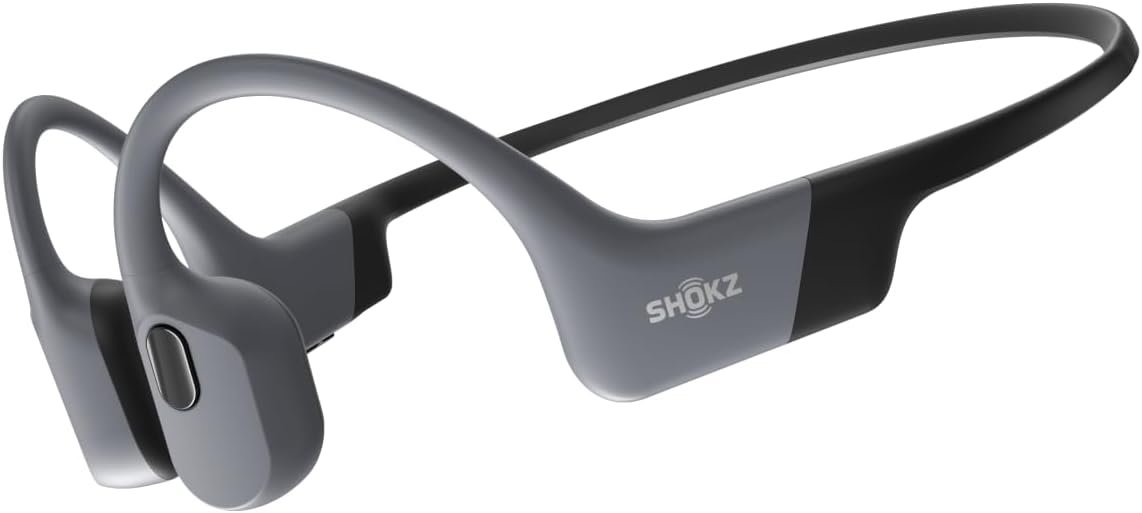
The Shokz OpenSwim Pro is the overall choice here for combining substantial onboard storage with Bluetooth for dry-land use. Sony and Pyle offer self-contained in-ear players, H2O Audio adds PLAYLIST+ recording, and FINIS takes a goggle-mounted approach. Below are the practical differences, followed by a guide to IP ratings and underwater playback.
Top 5 Best Waterproof MP3 Players & Headphones
| Image | Model | Price |
|---|---|---|
 | Shokz OpenSwim Pro (Editor's Choice) | Check Price |
 | Sony Walkman NWZ-W273S | Check Price |
 | Pyle PSWB4BL | Check Price |
 | H2O Audio TRI 2 PRO | Check Price |
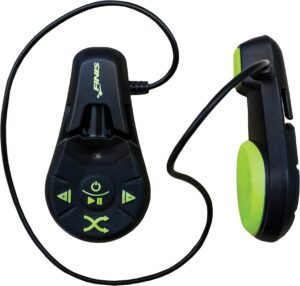 | FINIS Duo | Check Price |
Shokz OpenSwim Pro (Editor’s Choice)
The OpenSwim Pro earns the overall choice by bringing two different routines into one headset: stored audio for swimming and Bluetooth playback on land. Its open-ear bone-conduction design avoids an in-ear audio seal, while the wraparound frame is designed to work with goggles and a swim cap. That makes it a versatile option for someone who trains both in and out of the pool.
The 32GB storage is a substantial advantage for keeping music and spoken audio ready to play. Files transfer through the supplied magnetic cable; Bluetooth is for playback on land, not for sending files or streaming underwater. Shokz specifies IP68 protection and submersion up to 2m for two hours. Published battery life differs by mode: up to six hours for MP3 playback and nine hours over Bluetooth.
The compromise is preparation and fit. Audio needs loading before a swim, and the single-size frame should sit comfortably with the actual goggles and cap. Bone conduction also gives a different presentation from sealed earbuds. Choose the OpenSwim Pro for its storage and dual-mode flexibility, with the charging contacts fully dry before connection.
Pros
- 32GB storage for phone-free underwater playback.
- Bluetooth mode adds dry-land versatility.
- Bone-conduction design avoids an in-ear audio seal.
Cons
- Music files need loading before swimming.
- Frame fit and a dedicated magnetic cable matter.
Sony Walkman NWZ-W273S
The NWZ-W273S is the compact, all-in-one in-ear option. Its player and headphones form a single wearable unit, so there is no separate box to clip to the goggles. The 4GB memory keeps the music on the device, removing the need for an underwater wireless connection.
Sony specifies up to eight hours of playback and a three-minute quick charge for approximately an hour of listening under its stated conditions. Swimming earbuds are part of the design: the correct size and seal are important for both fit and sound. Use the swimming instructions and the specified pool-use limits rather than treating the enclosure as suitable for unrestricted diving.
The trade-off is the older design and its dedicated USB cradle. There is no Bluetooth streaming, and a poorly seated earbud can change the sound as water reaches the ear area. Choose the Sony for a self-contained in-ear player, checking that the required cradle and suitable swimming tips are available.
Pros
- Integrated player and headphones need no separate clip-on unit.
- 4GB local storage for phone-free listening.
- Quick-charge function is useful for a short session.
Cons
- Dedicated USB cradle is needed for charging and transfer.
- A good swimming-earbud seal is important.
Pyle PSWB4BL
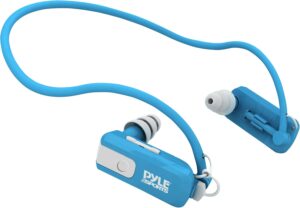
The blue PSWB4BL is a straightforward neckband player with built-in in-ear headphones. Its 4GB storage and MP3/WMA support suit someone who wants a simple local music library without a phone connection. The physical controls keep operation focused on tracks, playback and volume.
Pyle specifies an IPX8 rating with a maximum submersion depth of 1m for this model. That product-specific limit is important even when comparing it with other IPX8 devices. The maker also lists up to ten hours of playback, with separate ear-tip options for water and land use.
The compromise is the limited depth allowance and the need to prepare compatible files. It is not a Bluetooth streaming headset, and the ear tips need fitting carefully for swimming. Choose the Pyle for a basic all-in-one player when its stated water limits suit the activity, rather than for advanced app or playlist features.
Pros
- 4GB player integrated into the neckband.
- Supports MP3 and WMA audio files.
- Separate water-use and land-use ear-tip options.
Cons
- Manufacturer limits submersion to 1m.
- Basic file playback without Bluetooth streaming.
H2O Audio TRI 2 PRO
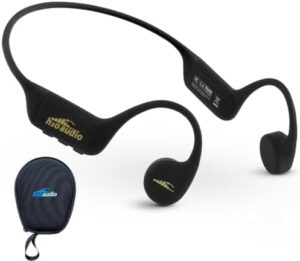
The TRI 2 PRO is the flexible choice for a swimmer who also wants a way to prepare streaming audio for offline listening. Its PLAYLIST+ feature records audio from a Bluetooth connection into onboard memory for later playback. That is a different workflow from relying only on a folder of music files.
The bone-conduction design leaves the ear canal open, and the neckband supports use across swimming and dry-land exercise. H2O Audio specifies IPX8 protection with submersion to 3.6m. Bluetooth is for use on land; swimming uses stored MP3 or PLAYLIST+ audio. The maker lists six to nine hours of playback depending on mode and volume.
The trade-off is the time spent preparing audio and learning the controls. PLAYLIST+ recording is a process to complete before entering the water, not live underwater streaming. Choose the TRI 2 PRO for that recording flexibility and its multi-sport format, while checking comfort with the intended goggles and swim cap.
Pros
- PLAYLIST+ records Bluetooth audio for later offline playback.
- Stored-audio and Bluetooth modes serve water and land.
- Bone-conduction format with a multi-sport neckband.
Cons
- Offline audio preparation takes time.
- Fit and controls need checking with swimming equipment.
FINIS Duo
The Duo is the most swim-focused design here. Its two bone-conduction speaker units attach to the goggle straps, placing the audio hardware alongside the head instead of using in-ear buds or a conventional neckband. That makes it especially interesting for swimmers who dislike maintaining an earbud seal.
FINIS provides 4GB storage with MP3 and WMA playback, plus physical controls for tracks, volume and random play. Its technical sheet states an IPX8 test at 3m for 30 minutes, and battery life is rated at up to seven hours. The supplied magnetic USB dock handles charging and file transfer.
The compromise is dependence on the goggle setup and a relatively basic file workflow. It is designed around swimming rather than phone calls or Bluetooth listening, and unsupported files need converting appropriately before transfer. Choose the Duo for a dedicated pool routine when its strap-mounted fit suits the goggles.
Pros
- Goggle-mounted bone conduction avoids in-ear audio buds.
- 4GB storage with straightforward physical controls.
- Designed specifically for underwater playback.
Cons
- Fit depends on the goggle straps and speaker position.
- MP3/WMA playback without Bluetooth or phone-call features.
Water-Resistant vs. Waterproof Headphones
The useful question is what the manufacturer permits, not whether the product name includes “waterproof.” A device intended for splashes is different from one designed for swimming. Even a swimming model has limits on depth, exposure and care.
What Is the Difference Between Water-Resistant and Waterproof Headphones?
Both descriptions need context. Water-resistant workout earbuds may tolerate sweat or splashes without being approved for immersion. Waterproof swimming headphones should have explicit instructions for that activity, including the permitted water conditions. Neither label means unlimited protection.
What Are IP and IPX Ratings?
An IP code describes protection against solid objects and water under specified tests. The first position concerns solids; the second concerns water. An X means that protection for that position is not specified. IP68 includes a dust rating, while IPX8 states a water rating without a declared solids rating.
IPX4 and IPX5 do not establish swimming suitability. For immersion-rated devices, read the exact depth, duration and usage instructions. A laboratory rating does not automatically cover hot showers, soap, salt water or every water sport.
IPX Rating Chart for Waterproof Headphones
These are common water-protection levels. Use the device manual for the actual permitted activity and limits.
| IPX Code | Water Resistance |
|---|---|
| 0 | No declared water protection. |
| 1 | Protection against vertically dripping water. |
| 2 | Dripping-water protection with the enclosure tilted under test conditions. |
| 3 | Protection against spraying water. |
| 4 | Protection against splashing water. |
| 5 | Protection against water jets. |
| 6 | Protection against powerful water jets. |
| 7 | Temporary immersion under specified conditions, commonly 1m for 30 minutes. |
| 8 | Continued immersion under product-specific conditions; check the manufacturer’s stated depth and duration. |
What Are the Best Bluetooth Waterproof Headphones?
Bluetooth and a waterproof enclosure can coexist, but ordinary Bluetooth streaming is not a reliable underwater listening method. Swimming models such as the OpenSwim Pro and TRI 2 PRO use locally stored audio in the water and Bluetooth on land. The wireless connection and the water rating describe different capabilities.
Waterproof Headphones vs. Waterproof MP3 Player: What to Choose?
Choose an integrated player for a self-contained music library without a phone. The Sony and Pyle combine the player with in-ear headphones. The FINIS Duo uses goggle-mounted bone conduction, while the Shokz and H2O Audio models combine stored playback with dry-land Bluetooth.
Choose the fit first. In-ear models depend on suitable swimming tips. Bone-conduction models avoid that audio seal but still need correct contact and stable positioning. Check how the equipment sits with goggles and a cap before planning a long swim.
How to Use Waterproof Headphones and MP3 Players in the Right Way?
- Load and test the audio before entering the pool. A streaming app’s offline downloads are not necessarily ordinary music files that a standalone player can read.
- Follow the exact manufacturer’s depth, duration and water-type limits. Do not infer diving, salt-water or shower approval from the IP code alone.
- Use the specified swimming tips or speaker position, and check fit with the goggles and cap.
- Follow the cleaning procedure after swimming. Allow charging contacts and connectors to dry fully before attaching a cable or dock.
- Keep listening levels moderate and follow pool rules. Open ears do not guarantee awareness of every sound around the swimmer.