Looking for the best beginner mandolin? Start with an instrument that makes fretting, tuning and practicing feel manageable. These mandolins take different routes, from straightforward A-style designs to a carved solid-wood instrument with more room to grow.

The Stagg, Ibanez and Rogue keep the design simple, while the Guitar Works GWMA-2 offers an oval soundhole and a distinctive wineburst finish. The Kentucky KM-150 is the overall pick for its carved solid spruce top and solid maple body. Whichever approach appeals, a good setup matters as much as an attractive finish.
Top 5 Best Mandolins for Beginners:
Stagg M20 Beginner Mandolin
The Stagg M20 gets the traditional mandolin look right without adding decorative scrollwork or electronics. Its rounded A-style body, paired f-holes and violinburst finish make it an appealing starting point for a player drawn to bluegrass or folk. The compact, straightforward design puts the emphasis on learning the instrument.
Stagg uses basswood for the top, back and sides, with a nato neck and rosewood fingerboard. The black-stained maple bridge is height-adjustable, giving a technician a way to refine the string action. Open-geared nickel tuning machines and an engraved nickel tailpiece finish the familiar acoustic layout.
The M20 makes most sense as a simple first mandolin rather than an attempt to reproduce the carved solid-wood construction of the Kentucky. Its useful adjustment is at the bridge, but comfortable action still depends on the nut, frets and neck relief working together. For a beginner who likes the classic f-hole appearance, that uncomplicated design is its main attraction.
Pros
- Traditional A-style body with paired f-holes
- Height-adjustable maple bridge
- Rosewood fingerboard and open-geared tuners
Cons
- Basswood construction lacks the Kentucky’s carved solid spruce and maple specification
- No built-in pickup for direct amplification
Ibanez M510DVS Beginner Mandolin

The M510DVS pairs a dark violin sunburst finish with a familiar A-style body and f-holes. It is a purely acoustic mandolin, making it a sensible choice for a beginner who wants to concentrate on picking, chord changes and clean doubled-string notes without paying attention to onboard controls.
The current M510 specification combines a spruce top with sapele back and sides, an okoume neck and a purpleheart fingerboard and bridge. Its 350 mm scale, 30 mm nut and 20 frets give it the compact reach expected of this style. A shorter reach does not remove the need for precise finger placement: paired mandolin strings still reward a relaxed, accurate fretting hand.
This is the straightforward M510, not the M510E acoustic-electric version. That distinction matters for a player planning to plug directly into an amplifier. For lessons, home practice and acoustic playing, the M510 keeps the essentials clear; the Kentucky is the more substantial option when carved solid-wood construction is the priority.
Pros
- Spruce top with sapele back and sides
- Compact 350 mm scale and 20-fret fingerboard
- Uncluttered acoustic design
Cons
- No onboard electronics
- Spruce top is not specified as solid
Rogue RM-100A Beginner Mandolin

The Rogue RM-100A offers the recognizable ingredients of a first bluegrass-style mandolin: a sunburst A-style body, f-holes and an uncomplicated acoustic layout. Its appeal is that it gives a newcomer the standard instrument to learn on, without a scroll-shaped body or an electronics system to complicate the choice.
A maple neck carries a rosewood fingerboard, with a neck joint at the 12th fret. Chrome tuning machines, nickel-plated frets and a gloss finish provide the traditional hardware and appearance. The bridge is adjustable, but it is described as simulated rosewood rather than a solid rosewood component. That is a useful distinction when comparing the instrument’s materials.
The RM-100A is best approached as an introduction to the mandolin rather than a promise of flawless playability straight from the box. Bridge position, string height and tuning need to be right for chords to sound convincing. A beginner who wants a plain, familiar design has a clear starting point here; a player already committed to the instrument may prefer the Kentucky’s more ambitious body construction.
Pros
- Familiar A-style body and f-hole layout
- Maple neck and rosewood fingerboard
- Adjustable bridge
Cons
- Bridge uses simulated rosewood
- No onboard pickup
Guitar Works GWMA-2 Beginner Mandolin
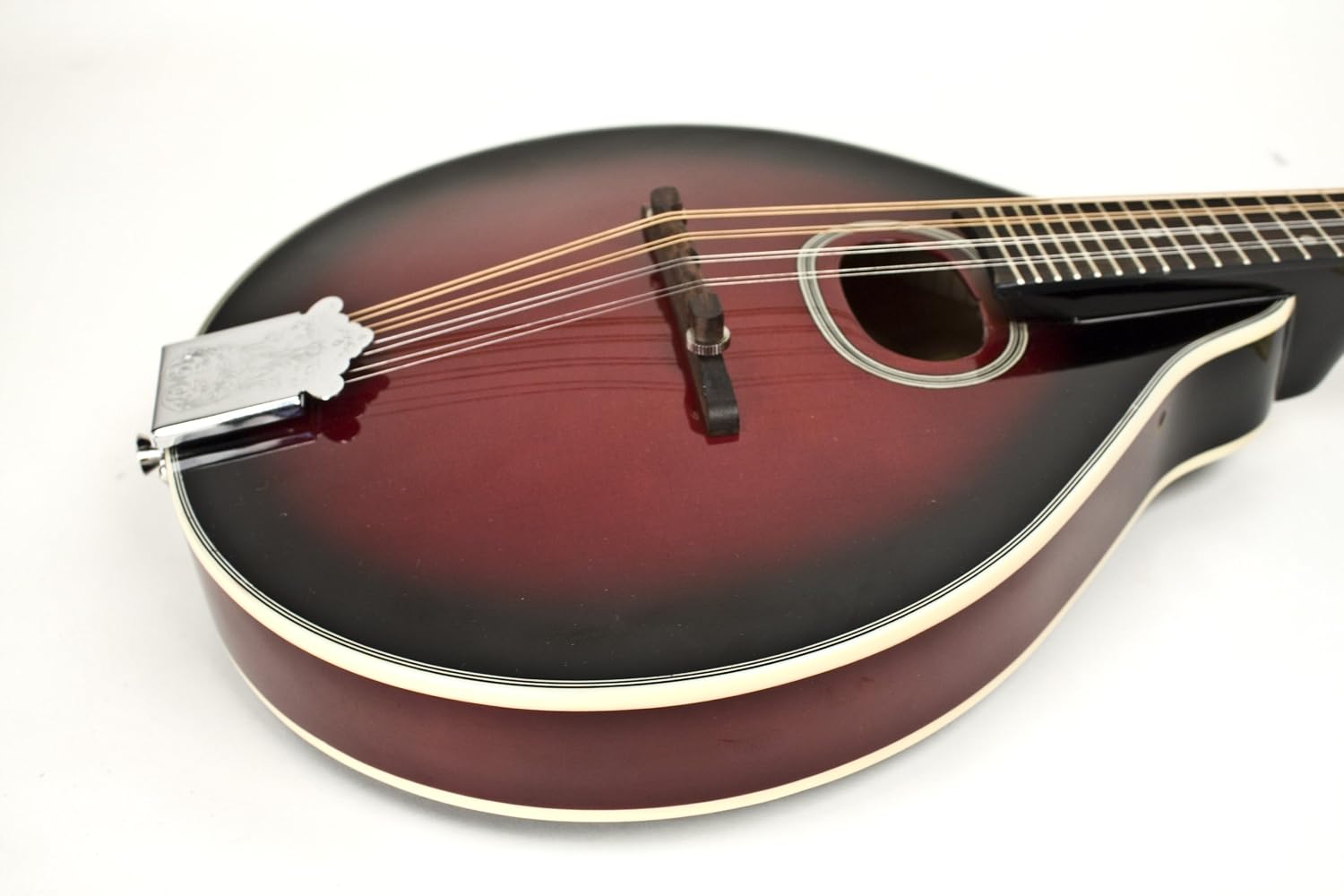
The Guitar Works GWMA-2 stands apart visually through its oval soundhole and deep wineburst finish. The bound A-style body and contrasting pickguard give it a different character from the f-hole mandolins in this group. It is an appealing direction for someone who likes a traditional, restrained outline with a rich finish.
The neck includes an adjustable truss rod, a useful provision for correcting neck relief as the instrument’s setup requires. That adjustment works alongside the bridge and nut; it is not a guarantee against every form of neck damage or a substitute for a proper setup. The eight strings retain the familiar four paired courses of a standard mandolin.
The attraction here is the oval-hole design and adjustable neck relief, rather than an elaborate specification. This remains an acoustic instrument without onboard controls. For a beginner choosing between body styles, it offers a distinctive alternative to the f-hole look; for carved solid-wood construction, the Kentucky is the stronger choice in this comparison.
Pros
- Oval soundhole and deep wineburst finish
- Adjustable neck truss rod
- Traditional eight-string A-style design
Cons
- No onboard electronics
- Truss-rod adjustment does not replace a complete setup
Kentucky KM-150 (Editor’s Choice)
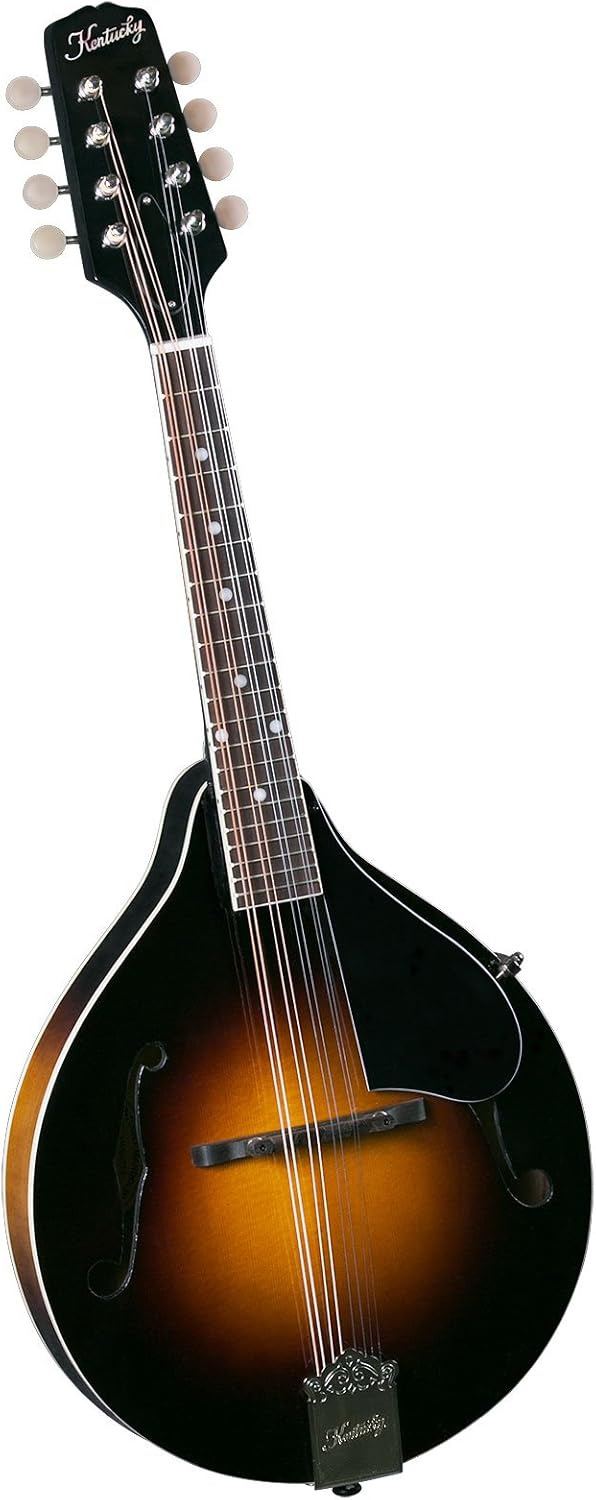
The Kentucky KM-150 is the pick for a beginner who wants a serious acoustic instrument to grow with. Its strongest feature is the body: a hand-carved, graduated solid spruce top paired with solid maple back and sides. That puts the emphasis on the working acoustic structure, rather than ornate trim or a decorative F-style scroll.
The slim maple neck joins the body with a modified dovetail joint, and the open-geared tuners and adjustable bridge follow the traditional mandolin format. The sunburst finish, bound edges and f-holes give it a classic look. This combination makes it especially appealing for learning clear single-note lines and the short, percussive chord strokes associated with bluegrass, while remaining useful for folk melodies and other acoustic styles.
The KM-150 is still a fully acoustic instrument, so plugging directly into a sound system requires a separate pickup or microphone. Its solid-wood body also deserves sensible humidity care, and setup remains important even with better materials. The included padded ProTour gig bag is useful for lessons and rehearsals. For a committed newcomer, the carved body and conventional, serviceable design make this the most compelling long-term starting point of the group.
Pros
- Hand-carved solid spruce top and solid maple back and sides
- Slim maple neck and adjustable bridge
- Includes a padded ProTour gig bag
Cons
- No built-in pickup
- Solid-wood body needs sensible humidity care
Best Mandolin for Beginners: Buying Guide Basics
A good first mandolin should make it possible to hear clean notes and form chords without fighting the setup. Body construction, neck feel and adjustment matter more than decorative details.
What are Mandolins Exactly?
A standard mandolin has eight strings arranged in four paired courses, usually tuned G-D-A-E from low to high. Each pair is normally tuned in unison. That doubled-string arrangement gives melodies their characteristic shimmer and makes accurate tuning particularly important.
A-style instruments have a rounded outline, while F-style designs add a scroll and more elaborate body shaping. The shape alone does not establish quality. Oval soundholes and f-holes offer different traditional approaches, but construction and the individual instrument’s response matter too.
List of Qualities to Pay Attention To…
Tone and Clarity
Listen for a clear note on both strings of each course, including the higher frets. A useful mandolin should separate melody notes rather than turn them into a blurred rattle. Picking technique, strings, setup and body construction all contribute; a sunburst finish does not tell you how an instrument will sound.
Ring and Resonance
Ring describes how a note continues after the pick leaves the string. Resonance concerns the way the instrument responds to that vibration. Longer sustain is not automatically better for every style: bluegrass rhythm often calls for short, controlled chord strokes, while a melody may benefit from more lingering notes.
Action and Intonation
Action is the height of the strings above the frets. Excessive height makes fretting harder; too little clearance can produce buzzing. An adjustable bridge helps set string height, while bridge position affects intonation. A qualified repairer can balance these adjustments with the nut and neck relief.
Solid Wood and Laminated Construction
A solid top is made from solid wood rather than layers bonded together. Laminated construction and a gloss finish are different things: lamination describes the material, while gloss describes the surface. The Kentucky’s carved solid spruce and maple body is a meaningful specification, but wood names alone cannot guarantee tone or comfortable playability.
What Does a Truss Rod Do?
An adjustable truss rod helps control neck relief. It cannot guarantee that a neck will never warp, and it does not correct every problem with string height or fretwork. If the adjustment is unfamiliar, have a technician assess the instrument instead of turning the rod at random.
The Best Beginner Mandolin: Final Thoughts
The Kentucky KM-150 is the overall choice for its carved solid-wood body and traditional construction. The Stagg M20, Ibanez M510DVS and Rogue RM-100A offer simpler routes into the familiar f-hole A-style format, while the Guitar Works GWMA-2 takes a different visual direction with an oval soundhole. Choose a design that appeals, then make sure the action and intonation encourage regular practice.