Looking for the best router for Chromecast streaming? A dependable connection near the TV matters more than the largest speed figure on the box. These six routers cover straightforward home streaming, expandable mesh networks and systems with more demanding wired devices.
A router cannot increase the Wi-Fi capabilities built into your Chromecast. Newer Wi-Fi standards can help compatible devices elsewhere in the home, while placement, network congestion and the connection between your phone and streaming device remain central to casting.
The 6 Best Routers for Chromecast Streaming – Comparison Table
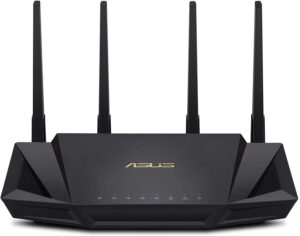
ASUS RT-AX3000 (Editor’s Choice)
The RT-AX3000 is the balanced choice for a home that needs dependable streaming and useful network controls without moving to a more elaborate multi-gigabit setup. Its dual-band Wi-Fi 6 design, four Gigabit LAN ports and AiMesh support cover the everyday needs of a TV, phones, laptops and other connected devices.
ASUS rates the two wireless bands at up to 574Mbps on 2.4GHz and 2,402Mbps on 5GHz. Those are separate maximum link rates, not a single Chromecast download speed. Support for 160MHz channels benefits compatible clients, while Adaptive QoS lets the household prioritize traffic when the internet connection is busy.
The useful extras are practical rather than theatrical: USB storage sharing, AiProtection and the option to expand coverage with compatible AiMesh equipment. Its Gigabit WAN port limits the appeal for a multi-gigabit internet plan, and there is no 6GHz radio. For a conventional home connection and an existing Chromecast, that is often a sensible balance rather than a serious omission.
Pros
- Dual-band Wi-Fi 6 with Adaptive QoS.
- Four Gigabit LAN ports and USB connectivity.
- AiMesh support for compatible network expansion.
Cons
- Gigabit WAN rather than a multi-gigabit internet port.
- No 6GHz band.
Synology RT2600ac
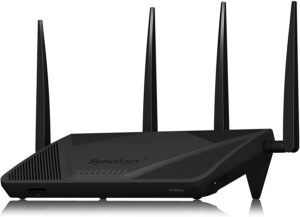
The RT2600ac earns its place through software control. Synology Router Manager provides a browser-based interface for managing devices, traffic and access rules, making this an interesting choice for a household that wants to understand what is happening on the network rather than simply leave everything on automatic.
Its Wi-Fi 5 hardware uses simultaneous 2.4GHz and 5GHz bands, four external antennas and four Gigabit LAN ports. Traffic Control can assign device priorities, while Safe Access adds profiles and schedules. USB connections and an SD card slot provide storage options, and compatible Synology Wi-Fi points can extend the network.
The trade-off is older wireless hardware: there is no Wi-Fi 6, Wi-Fi 7 or multi-gigabit Ethernet. It remains useful for existing streaming devices and a Gigabit-class network, particularly when its management tools are the attraction. Choose it for that control, rather than expecting the newest radio features or an automatic improvement over every simpler router.
Pros
- Detailed SRM browser interface and traffic controls.
- Safe Access profiles and scheduling.
- USB storage connections and compatible mesh expansion.
Cons
- Older Wi-Fi 5 radio design.
- Gigabit ports limit multi-gigabit use.
NETGEAR Nighthawk RS200
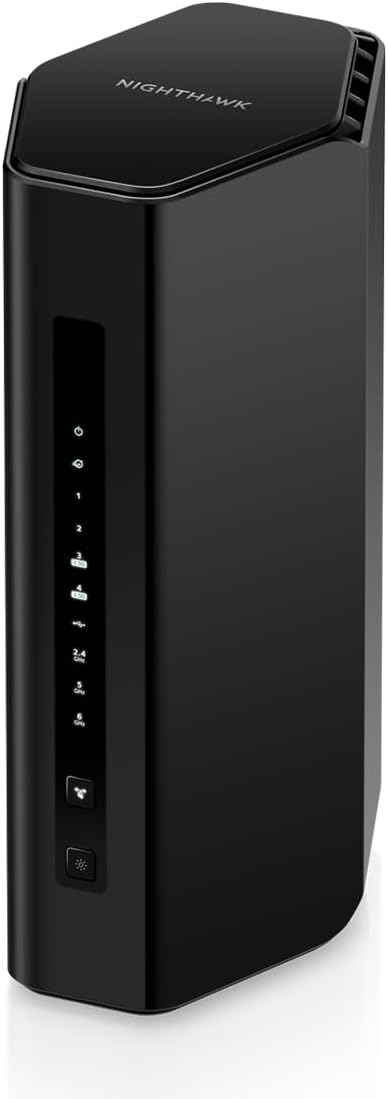
The RS200 brings newer networking hardware into a tidy upright enclosure with internal antennas. It suits a mixed home where a Chromecast shares the connection with newer laptops, game consoles and a wired computer or NAS, without requiring a large router covered in adjustable aerials.
This dual-band Wi-Fi 7 model works on 2.4GHz and 5GHz. A 2.5Gbps internet port and separate 2.5Gbps LAN port give a compatible wired device more room than a Gigabit connection, alongside three Gigabit LAN ports and USB 3.0. Automatic firmware updates and the Nighthawk app simplify routine management.
The distinction to understand is dual-band: there is no 6GHz radio, and the advertised 6.5Gbps figure combines maximum wireless rates rather than describing a single stream. NETGEAR Armor is an optional subscription beyond its trial. The RS200 is appealing for its compact shape and useful wired connections, not because a Chromecast needs all of its Wi-Fi 7 features.
Pros
- 2.5Gbps WAN and LAN connections plus three Gigabit LAN ports.
- Upright enclosure with internal antennas.
- Automatic firmware updates and app-based management.
Cons
- No 6GHz radio despite Wi-Fi 7 support.
- Optional Armor service requires a subscription after the trial.
ASUS RT-BE86U
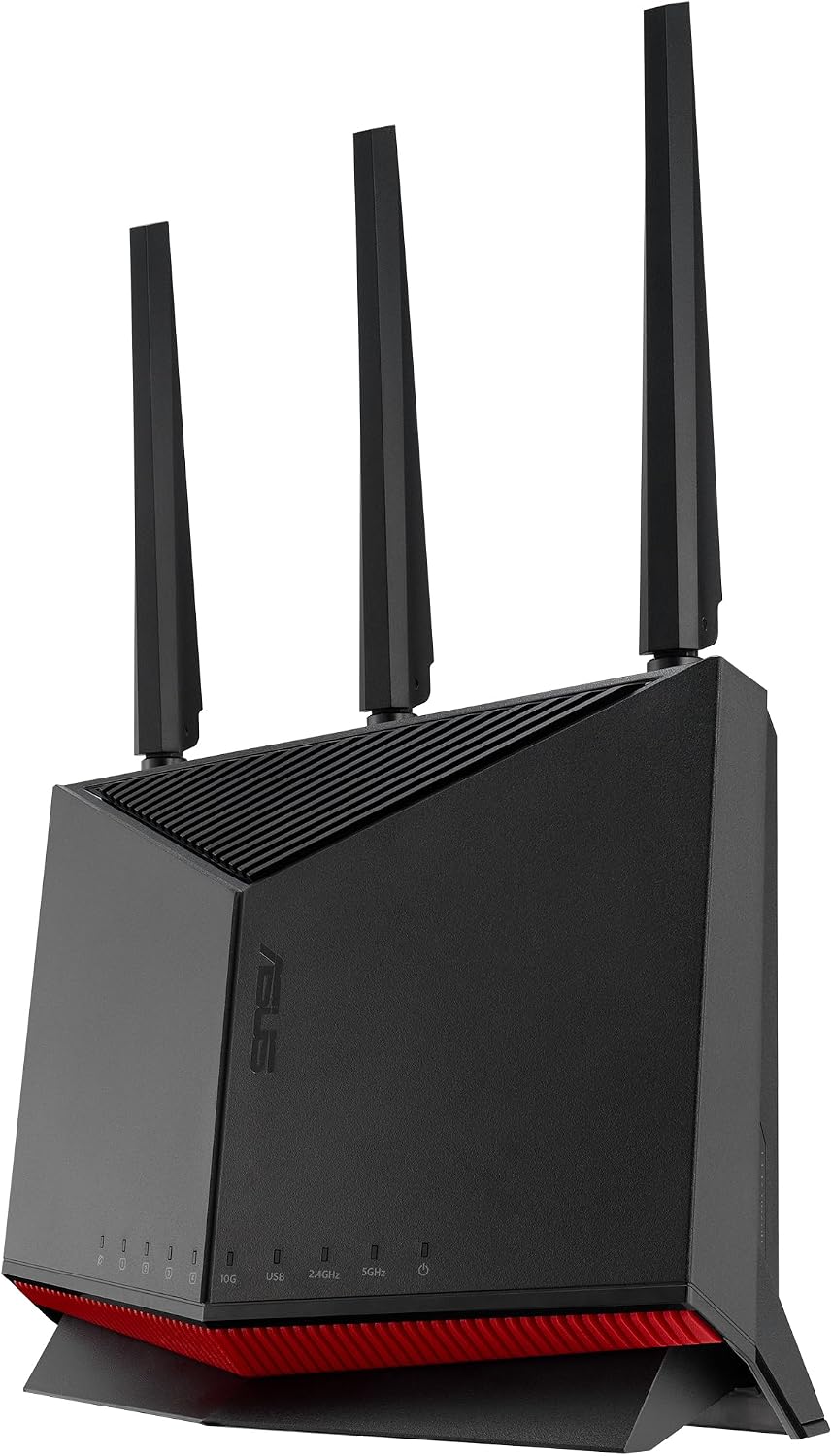
The RT-BE86U is the choice for a more ambitious wired network around the TV room or home office. It gives a fast internet connection, NAS or workstation room to grow, while its dual-band wireless network continues to serve older streaming devices alongside newer clients.
Its standout feature is the port selection: one 10Gbps WAN/LAN port, one configurable 2.5Gbps WAN/LAN port and three further 2.5Gbps LAN ports. Wi-Fi 7 operates across 2.4GHz and 5GHz, with a 2.6GHz quad-core processor, Adaptive QoS and AiMesh support. Guest Network Pro provides separate networks for different device groups.
That flexibility is useful when the whole network needs an upgrade, but excessive for a single Chromecast on an ordinary broadband connection. There is no 6GHz band, and dividing devices into isolated networks requires care if the phone must discover the TV. Choose it for the combination of wired capacity and configuration options, rather than a promise that every video will suddenly look better.
Pros
- 10Gbps port and four 2.5Gbps ports.
- AiMesh, Adaptive QoS and extensive network controls.
- Dual-band Wi-Fi 7 for compatible clients.
Cons
- No 6GHz band.
- More hardware and configuration than a simple streaming setup needs.
GL.iNet Flint 3 (GL-BE9300)
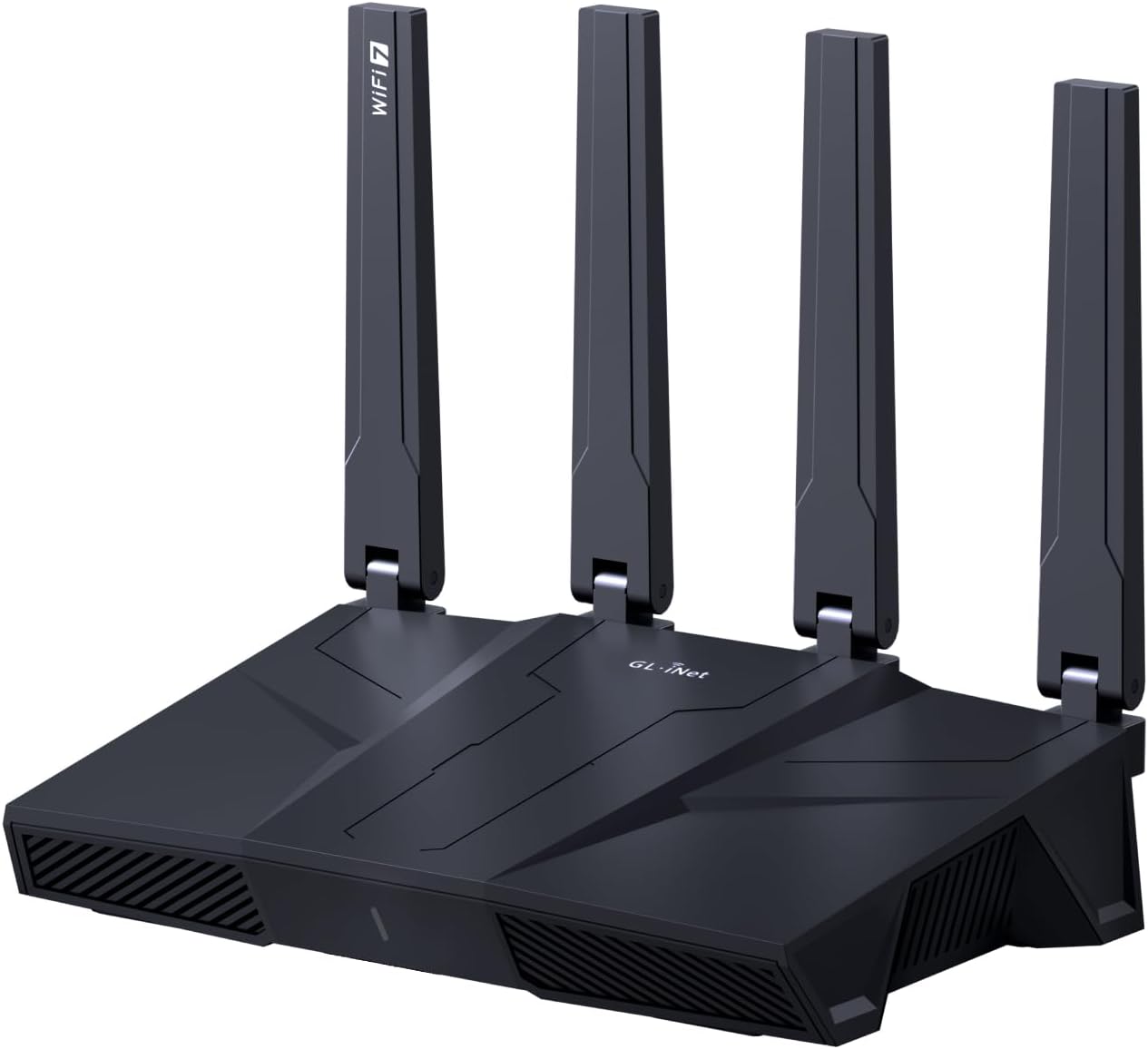
The Flint 3 is the enthusiast option for someone who wants more than a basic internet gateway. It combines a tri-band wireless design with a generous set of multi-gigabit ports and configurable networking tools, making it useful for a home with streaming devices, computers and local storage.
Unlike the dual-band Wi-Fi 7 routers here, it includes a 6GHz radio as well as 2.4GHz and 5GHz. All five Ethernet ports support 2.5Gbps, with one WAN port, one configurable WAN/LAN port and three LAN ports. OpenVPN and WireGuard client/server support, AdGuard Home and the web administration interface offer substantial room for customization.
Those tools are the reason to choose it, but they also invite more setup work than a simple app-led mesh system. Existing Chromecast models do not gain a 6GHz radio just because the router has one. VPN routing and filtering can also affect streaming services, so its extra controls are best treated as tools to configure deliberately rather than switches that always improve playback.
Pros
- Tri-band Wi-Fi 7, including 6GHz for compatible devices.
- Five 2.5Gbps Ethernet ports.
- VPN client/server support and configurable filtering tools.
Cons
- Advanced options require more attention to configuration.
- Older streaming devices cannot use its newer radio features.
Amazon eero 7
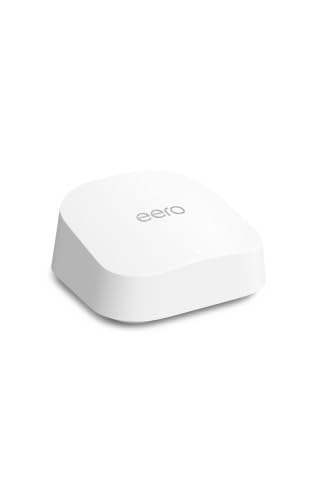
The eero 7 is the simpler route into an expandable home network. Its small, low-profile enclosure is easier to place in a living space than a conventional router with tall antennas, and the guided app setup is well suited to someone who wants to get connected with fewer manual adjustments.
Each unit has two auto-sensing 2.5Gbps Ethernet ports and dual-band Wi-Fi 7 on 2.4GHz and 5GHz. A single unit can act as the main router, while additional compatible eeros extend coverage. That makes the design useful when the TV room needs a better-positioned access point rather than a more imposing router in the same distant corner.
The compact design brings compromises. Once one port connects to the modem or ONT, only one remains for wired equipment unless a switch is added. There is no 6GHz radio, and setup depends on the eero app and account. Choose it for straightforward management and mesh expansion, rather than the breadth of manual controls offered by the more configurable routers here.
Pros
- Compact enclosure and guided app setup.
- Two auto-sensing 2.5Gbps Ethernet ports.
- Expandable with compatible eero units.
Cons
- Only one spare Ethernet port when used as the gateway.
- App/account-based setup and no 6GHz radio.
FAQs: Picking the Best Router for Chromecast
Do You Need a Router for Chromecast?
For a normal home setup, Chromecast needs a working local network and internet access for online streaming. The device connects to a TV or suitable display through HDMI; the router provides the network connection. An internet plan, modem or fiber ONT may also be required, depending on the service.
A router does not replace the TV’s HDMI connection or add surround decoding. For a separate audio system, our small 5.1 receiver guide covers that part of the setup.
Can I Cast to Chromecast without Wi-Fi?
A compatible Chromecast can use Ethernet with the appropriate adapter or power accessory. Your phone can remain on Wi-Fi if both devices are on the same local network and can communicate. The exact accessory depends on the Chromecast model; a generic USB adapter is not automatically compatible.
The former Chromecast Guest Mode is no longer supported. For ordinary app casting, connect the phone to the host’s network rather than relying on the old PIN-based guest feature. Supported casting functions also depend on the app and receiving device.
How Much Internet Does Chromecast Use?
Data use depends on the service, video quality and viewing time. A higher-resolution stream generally needs more bandwidth and data than a lower-resolution version, but there is no single monthly allowance that applies to every Chromecast. Check the streaming app’s quality settings and your internet provider’s usage meter if the plan has a cap.
A faster router cannot remove a slow internet connection or a data limit. If playback stalls, compare the connection near the TV with the rest of the home before assuming that the advertised router speed is the problem.
How Do I Enable Casting On My Router?
Keep the phone and Chromecast on the same local network. Google’s setup guidance identifies AP or client isolation as a common obstacle because it prevents devices from communicating. An isolated guest network may provide internet access while still blocking discovery.
Start with the main home network, current router firmware and a sensible router position. Avoid hiding the router in a cabinet or placing it behind the TV. If coverage remains weak, a compatible mesh node or supported Ethernet connection can be more useful than replacing a capable router with a higher headline speed.
There is no need to weaken Wi-Fi security or expose the Chromecast through internet-facing port forwarding for ordinary local casting. A newer Wi-Fi standard benefits only the features supported by each connected device.
Conclusion: The Best Router for Chromecast Streaming
The ASUS RT-AX3000 remains the balanced choice for an ordinary home streaming network, while the Synology RT2600ac appeals to someone who values detailed software control. The NETGEAR RS200 adds convenient multi-gigabit connections in an upright enclosure, and the ASUS RT-BE86U goes further for a demanding wired setup.
The Flint 3 offers tri-band wireless and extensive configuration tools; the eero 7 takes the simpler, expandable mesh approach. Match the router to the whole home and the location of the TV. A stable connection and working local discovery matter more to Chromecast than the largest speed number on the box.