What’s the best cheap Telecaster? A good choice should deliver the bright attack, straightforward controls and comfortable feel that make this design so useful for country, blues and rock. These six guitars take different approaches, from simple two-single-coil Squiers to a humbucker-equipped Deluxe and Fender’s three-pickup Modern Player.
The most useful differences are in the pickups, neck feel and bridge. Start with the sound you want: traditional Tele bite, a fuller humbucker voice or a wider selection of pickup combinations. Several models here belong to earlier series, so compare the exact version rather than relying on the family name alone.
Top 6 Best Cheap Telecaster Guitars
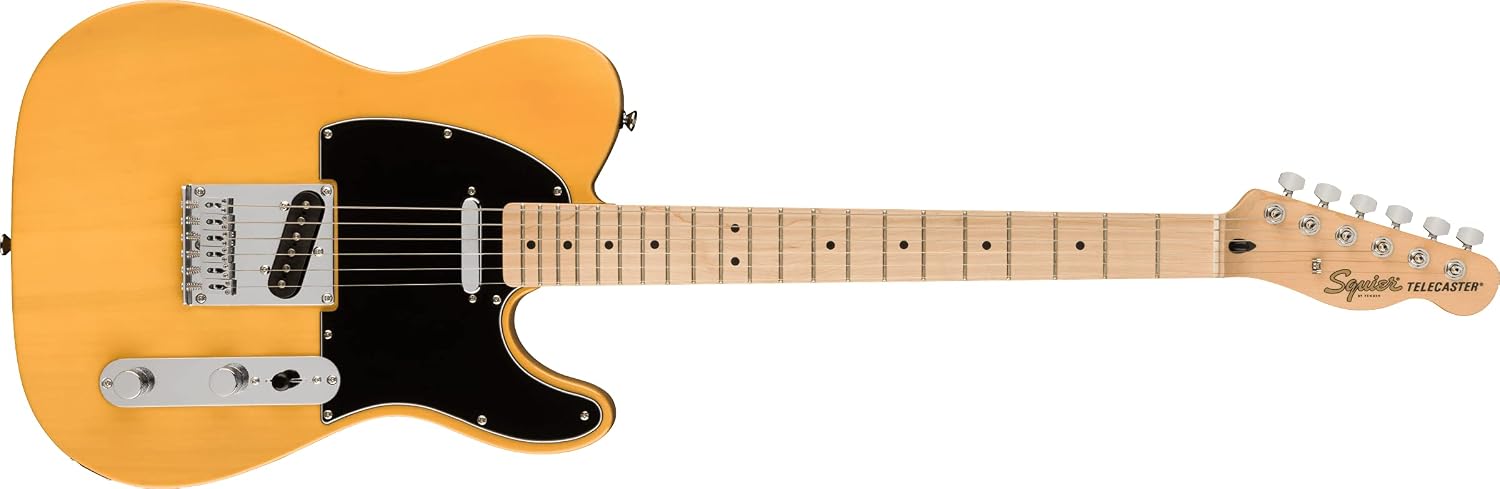
Squier Affinity Series Telecaster, Butterscotch Blonde (Editor’s Choice)
The Affinity keeps the overall recommendation because it gets the essentials right without complicating the instrument. Two Squier single-coil pickups, a three-way selector and master volume and tone controls provide the familiar Tele layout. The bridge pickup supplies the sharper edge, while the neck position offers a rounder starting point for cleaner parts.
This Butterscotch Blonde version pairs a poplar body with a maple fingerboard and a slim C-shaped neck. The thin body is useful for longer practice sessions, while six individually adjustable saddles give each string its own intonation adjustment. Its string-through-body bridge and split-shaft tuners are practical details rather than decorative upgrades; the tuner design also keeps the cut string ends neatly contained.
It is a particularly sensible starting point for players who want a traditional-looking Tele that leaves room to develop their own sound. The limitation is the familiar single-coil trade-off: electrical hum can become more noticeable with gain, and there is no humbucker or coil-split option. Choose the Deluxe or Modern Player below when that broader pickup palette matters more than simplicity.
Pros
- Straightforward traditional Tele pickup layout
- Slim C-shaped neck and thin body
- Individual saddle adjustment and split-shaft tuners
Cons
- Single coils can pick up electrical hum
- Fewer pickup combinations than the Modern Player
Squier Bullet Telecaster, Black

The Bullet is the uncomplicated choice in this lineup. Its thin, lightweight body, satin-finished C-shaped neck and laurel fingerboard put the emphasis on getting comfortable with the instrument. There is no tremolo system to manage, and the controls are easy to understand before the first rehearsal.
Two single-coil pickups and a three-way switch cover the familiar Tele positions. They favor crisp articulation and a direct attack, useful for chord work, clean riffs and brighter overdriven parts. The string-through-body hardtail bridge uses six saddles, allowing individual intonation adjustments rather than pairing strings on shared barrels.
Sealed die-cast tuners round out a practical specification. The appeal is the simple format, not an elaborate electronics package: there is no humbucker voice, switching expansion or vibrato bridge. Players who already know they want heavier, fuller pickup sounds may find the Deluxe a closer match; for a straightforward first Tele, the Bullet makes clear sense.
Pros
- Thin body and satin neck finish
- Simple controls and familiar single-coil sounds
- Six-saddle hardtail bridge
Cons
- No humbucker option
- Single-coil noise can become more apparent with gain
Squier Classic Vibe ’70s Telecaster Deluxe

The Telecaster Deluxe is the clear departure from the two-single-coil formula. Its pair of Fender-Designed Wide Range humbuckers gives it a fuller starting voice, making it an appealing choice for players who want stronger chord weight and a different response from a traditional Tele bridge pickup.
A slim C-shaped neck, 9.5-inch fingerboard radius and narrow-tall frets combine a familiar feel with room for expressive bends. The string-through-body hardtail bridge has six individual steel saddles. Each string can be adjusted separately, which is useful when setting intonation for a preferred string gauge.
The larger headstock, vintage-tinted gloss neck and nickel-plated hardware give the guitar a distinctly seventies character. That gloss finish is a matter of taste beside the Bullet’s satin neck, and the humbucker layout will not reproduce the sharper character of the standard single-coil models exactly. Choose it because that different voice appeals, rather than treating it as a universally better Tele.
Pros
- Two Fender-Designed Wide Range humbuckers
- Individual steel saddles
- Distinctive seventies styling and narrow-tall frets
Cons
- Gloss neck feel will not suit everyone
- Different tonal emphasis from a traditional single-coil Tele
Squier Classic Vibe ’50s Telecaster, Vintage Blonde

This Vintage Blonde Classic Vibe leans into the blackguard Tele look: a pine body, black pickguard and vintage-tinted maple neck. Its custom Alnico III single-coil pickups give it a strong traditional identity, with the articulation and bridge-pickup bite that draw many players to this style in the first place.
The maple fingerboard has a 9.5-inch radius and 21 medium-jumbo frets, balancing vintage presentation with a more accommodating playing surface. The three brass barrel saddles and string-through-body bridge preserve another part of the classic recipe. They also mean that pairs of strings share saddles, so intonation adjustment involves more compromise than the six-saddle designs above.
It is an attractive choice when the appeal lies in a fairly traditional Tele rather than extra switching or a heavier pickup voice. The gloss neck and shared saddles are its main practical trade-offs. For players who enjoy that older-style character, those details are part of the appeal; those prioritizing separate adjustment for every string may prefer the Affinity.
Pros
- Traditional blackguard styling with a pine body
- Alnico III single-coil pickups
- 9.5-inch radius and medium-jumbo frets
Cons
- Shared barrel saddles involve intonation compromises
- Gloss neck finish differs from satin alternatives
Fender Modern Player Telecaster Plus HSS, Honey Burst

The Modern Player Telecaster Plus HSS is the most adventurous instrument here. A Tele-style neck pickup, Strat-style middle pickup and bridge humbucker give it three distinct ingredients. A five-way selector and a mini-toggle coil split for the bridge pickup make it useful when a set moves between cleaner rhythm parts and more substantial driven sounds.
Its pine body, C-shaped maple neck and maple fingerboard retain a recognizable Fender feel, while 22 jumbo frets provide a different touch from the narrow-tall Deluxe. The six-saddle, Strat-style hardtail bridge lets each string be intonated separately without adding a tremolo mechanism to the setup.
That flexibility is the reason to choose it. The bridge humbucker and middle pickup change the instrument’s character, so it is less focused on the standard two-pickup Tele experience. There are also more switching combinations to learn. For a player who wants several useful textures from one guitar, however, the HSS arrangement is a meaningful feature rather than a cosmetic variation.
Pros
- HSS layout with five-way switching
- Bridge humbucker has a coil-split mini-toggle
- 22 jumbo frets and individually adjustable saddles
Cons
- More switching to learn
- Less traditional than a standard two-single-coil Tele
Squier Affinity Telecaster, Brown Sunburst, Rosewood Fingerboard

The Brown Sunburst Affinity offers a different take on the same straightforward formula as the overall pick. Its rosewood fingerboard and sunburst finish create a warmer visual contrast than the Butterscotch model’s maple board. The 21 medium-jumbo frets and familiar three-way pickup switch keep the playing layout approachable.
Two single-coil pickups, master volume and master tone provide the expected Tele positions without additional modes to manage. This version uses a six-saddle top-loading bridge: the strings load through the bridge rather than the body, while each saddle still has its own intonation adjustment. It is a useful distinction for players who prefer that restringing arrangement.
Its appeal is the combination of the rosewood-board look and simple, recognizable controls. Single-coil hum remains a consideration with higher gain, and the electronics offer fewer contrasting voices than the Modern Player. Neither makes it unsuitable for experienced players; the better question is whether this particular neck, finish and pickup layout suit the music.
Pros
- Rosewood fingerboard and Brown Sunburst finish
- Simple two-pickup control layout
- Top-loading bridge with individual saddle adjustment
Cons
- Single-coil hum can be noticeable with gain
- Fewer tonal combinations than the HSS model
Things to Consider When Buying a Telecaster Guitar
The Telecaster’s familiar outline covers a surprisingly wide range of instruments. Two single coils, two humbuckers and an HSS layout produce different starting points, even when the body shape looks similar. Choose the pickup arrangement before deciding which finish or series name appeals most.
Models of Telecaster
Squier offers several accessible interpretations of the design. Affinity and Bullet models keep the controls straightforward, while Classic Vibe models emphasize particular period details. Fender’s Modern Player Telecaster Plus takes a different route with three pickups and additional switching. A series name does not establish a universal ranking of quality, price or player ability.
Neck feel matters as much as specifications. A satin surface feels different from a gloss finish, and fret size can affect how firmly the strings need to be fretted. If possible, compare the neck profiles and balance in person. A suitable setup and string gauge can improve comfort without turning a fundamentally unsuitable neck into the right one.
Six individual saddles allow separate intonation adjustment for each string. Traditional three-barrel bridges share saddles between string pairs and involve a different adjustment compromise. Top-loading and string-through-body bridges also use different string paths; neither label by itself guarantees better tone or tuning.
Single-coil pickups can pick up electrical interference, particularly with high gain. Humbuckers reduce that type of noise, though they do not eliminate every source of hum in a rig. Consider the sound and gain levels you actually use rather than assuming one pickup type suits every style.
Compare current prices for the exact model and finish. Earlier and current versions can share a family name while using different pickups, fingerboards or bridges. Leave room in the budget for a suitable amp, cable and an initial setup if needed, rather than choosing solely by the guitar’s headline price.
If the guitar itself feels right, learn how Telecaster pickups affect its voice before considering upgrades. Our guides to Les Paul pickups and Strat middle pickups explore the other pickup formats represented by these less traditional designs.
For a different playing priority, see our guide to electric guitars for small hands. Players comparing electric and nylon-string instruments can also explore these classical guitars.
Conclusion
The Butterscotch Blonde Squier Affinity is the overall choice for a straightforward Tele with useful modern hardware. The Bullet keeps the formula simple, while the Classic Vibe ’50s puts traditional styling and barrel saddles first. The Deluxe provides a fuller humbucker voice, and the Modern Player offers the widest range of pickup combinations. The Brown Sunburst Affinity remains an appealing option for players who prefer its rosewood fingerboard and top-loading bridge.
Match the pickups and neck feel to the music you want to play. Those differences are more useful than assuming the most elaborate model will automatically be the most enjoyable guitar.