Looking for the best humbucker pickups for Les Paul? A good match can change the balance between warmth, attack and clarity while keeping the guitar’s familiar playing feel. These four vintage-inspired designs offer different ways to approach that sound.
The selection includes a neck-position ’59, a flexible DiMarzio PAF design, a Seth Lover bridge pickup and Wolfetone’s Dr. Vintage family. Compare the intended position and wiring as well as the tonal character: a neck pickup, a bridge pickup and a matched pair are different purchases.
Top 4 Best Humbuckers for Les Paul:
Seymour Duncan SH-1n ’59 Neck Pickup (Editor’s Choice)
The ’59 neck remains the overall recommendation for a Les Paul player seeking a full neck sound with a clear attack. Its Alnico 5 magnet and vintage-output winding give it a useful balance: warmth for sustained lines, with enough definition to keep chord notes from disappearing into one another.
Seymour Duncan describes a slightly lifted top end and gently scooped mids. In practical terms, that makes it an appealing starting point when the neck position feels too congested, especially for clean chords and blues-rock lead work. Pickup height and the guitar’s volume and tone settings still play an important part in the final balance.
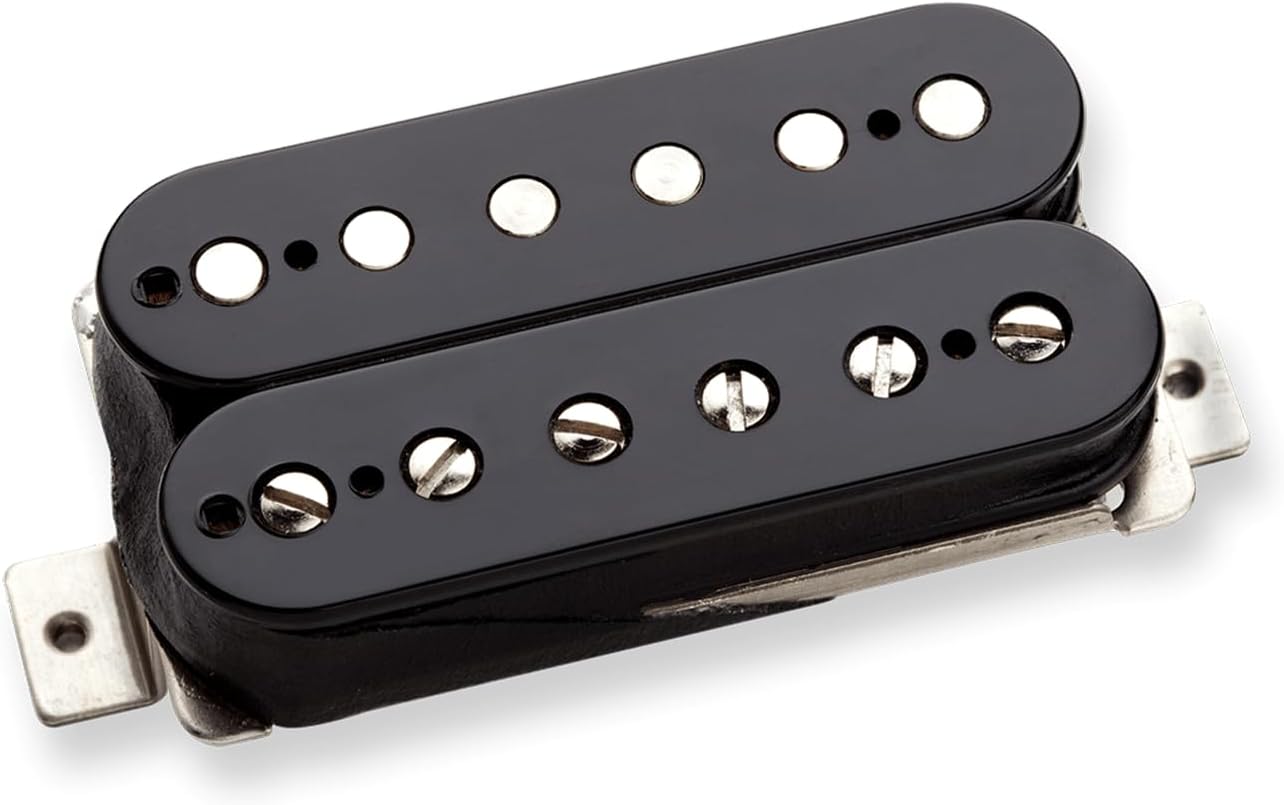
This is the black neck-position model with a braided single-conductor lead. It can pair with a ’59 bridge or a higher-output bridge pickup, giving the two switch positions distinct roles. The traditional lead suits conventional wiring; players planning coil-split switching should choose an appropriate four-conductor version instead.
Pros
- Warm neck-position voice with a clear attack
- Alnico 5 vintage-inspired design
- Can complement either a matching or higher-output bridge pickup
Cons
- Neck-position model rather than a complete pickup set
- Braided single-conductor lead limits coil-split options
DiMarzio DP103 PAF 36th Anniversary Pickup

The DP103 is an appealing choice for a player who wants a vintage-output humbucker with a responsive feel. DiMarzio combines an Alnico 5 magnet with a softened magnetic field and a carefully controlled winding approach. The aim is a balance of warmth and articulation, rather than maximum output into the front of an amp.
Although its current name includes “Neck,” DiMarzio recommends the DP103 for either neck or bridge use. That flexibility is useful in a Les Paul project: it can provide a lower-output bridge voice or serve as part of a more traditional neck-and-bridge pairing. The cream bobbins also offer a distinct uncovered look.
The practical attraction is how much room a vintage-output design leaves for changes in picking and guitar-volume settings. It can still be used with an overdriven amp; lower output does not make a pickup unsuitable for aggressive playing. Choose a hotter design if the main goal is more input drive, and check spacing and mounting before deciding where this DP103 will go.
Pros
- Suitable for neck or bridge use according to DiMarzio
- Vintage-output design with Alnico 5 magnet
- Uncovered cream-bobbin appearance
Cons
- Less output than an intentionally overwound high-output design
- Mounting and string spacing still need to suit the guitar
Seymour Duncan SH-55 Seth Lover Bridge Pickup

The Seth Lover bridge pickup is the most explicitly traditional Seymour Duncan option here. Its Alnico 2 bar magnet, plain-enamel winding wire and PAF-inspired construction aim for an open, rounded response rather than a heavily wound, forceful bridge sound. It is a natural candidate for blues and classic-rock playing.
The gold-covered version here has four-conductor wiring. That adds switching possibilities beyond a traditional braided lead, including coil-splitting when the guitar is wired appropriately. The covered appearance gives it a different visual character from the exposed-bobbin ’59 and DiMarzio.
The unpotted construction is part of its vintage approach, but it deserves consideration in a very loud, high-gain rig where microphonic feedback can be harder to manage. The softer attack and open response are the reasons to choose it for a traditional bridge voice, with the amp and stage volume in mind.
Pros
- Alnico 2 vintage-output bridge design
- Four-conductor wiring for additional switching options
- Traditional covered appearance
Cons
- Unpotted construction needs care in loud, high-gain setups
- One bridge pickup rather than a matched neck-and-bridge set
Wolfetone Dr. Vintage Humbuckers

The Dr. Vintage family suits a Les Paul player who wants a lower-output, PAF-inspired pickup with choices over the final specification. Wolfetone uses Alnico 2 magnets and offers separate neck and bridge versions, making it possible to build a matched pairing rather than adapt one pickup to every position.
The neck and bridge windings are differentiated, with nominal DC resistance figures of 7.5k and 8.05k respectively. Those numbers describe the windings rather than guaranteeing a particular loudness. The useful point is the intended balance between positions: a vintage-output approach that leaves room for the player’s attack and the amp’s response.
Vintage braided or four-conductor leads, several bobbin colors and a choice of covers let the specification suit the guitar and wiring plan. Choose the lead type with any coil-split or other switching in mind. It is an appealing route for a carefully planned vintage-style upgrade, while a deliberately hotter bridge design is the more direct choice when increased output is the main objective.
Pros
- Dedicated neck and bridge versions
- Alnico 2 vintage-output design
- Choice of lead type, bobbin color and covers
Cons
- Lower-output approach may not suit a request for more amp drive
- Specification and wiring choices need to be settled before installation
Characteristics of the Les Paul and Its Pickups
A traditional humbucker-equipped Les Paul combines two pickup positions with individual volume and tone controls. The neck position can provide a fuller sound, while the bridge offers a different balance of attack and brightness. Pickup height, control settings, amplifier and playing technique all affect how those positions work together.
Les Paul models vary, and some use P-90s, mini-humbuckers or other arrangements. A full-size humbucker is not a universal drop-in replacement for every guitar bearing the name. Check the routes, mounting rings, screw clearance and wiring before choosing a replacement.
How to Pick the Best Humbucker for Les Paul
Start with the Position and the Problem
Decide whether the goal is a clearer neck sound, a different bridge response or a better balance between the two. A new pickup is not automatically an upgrade simply because it costs more. Try sensible height and control adjustments first, then choose a design that addresses the sound you want to change.
Vintage Output and Higher-Output Designs
Vintage-inspired pickups can work well with clean and overdriven amps. Higher output can drive the amp’s input harder, but it does not by itself establish better clarity, sustain or suitability for a particular genre. Magnet type, winding, pickup position and the rest of the rig work together.
DC resistance is useful for identifying a specification, but it is not a universal output scale. Comparing resistance alone can be misleading when wire gauge and construction differ. Treat the maker’s tonal description as a starting point and listen to demonstrations made with a relevant style of amp.
Wiring, Spacing and Installation
A four-conductor lead provides more switching options than a traditional braided single-conductor lead, but the guitar must be wired to use them. Check the selected pickup’s actual lead type, pole spacing and dimensions. Some guitars use connector systems that require an adapter or a wiring change.
A humbucker reduces the common hum that its paired coils are designed to cancel. It does not remove all hiss, grounding faults or feedback. Good installation, appropriate grounding and sensible gain settings remain important; an unpotted vintage-style pickup can be a less convenient choice for very loud, high-gain use.
Conclusion: What’s the Best Pickup for Les Paul?
The Seymour Duncan SH-1n ’59 keeps the overall recommendation for a warm neck voice with clear attack. It is a useful choice when the aim is a versatile neck-position replacement, rather than a high-output bridge sound.
The DiMarzio DP103 offers flexibility across neck and bridge positions, the Seth Lover bridge combines a traditional Alnico 2 approach with four-conductor wiring, and Wolfetone’s Dr. Vintage provides specification choices for a more tailored vintage-style pairing. Choose the position, fit and response that suit the guitar you already enjoy.