Looking for the best short-scale electric guitars? A shorter scale can bring the frets closer together and make longer stretches more manageable. The useful choice depends on the whole instrument: neck width, body size, pickups and bridge design all matter alongside the distance from nut to saddle.
If instrument weight is another part of your choice, see our separate guide to lightweight Electric Guitars for Kids and Beginners.
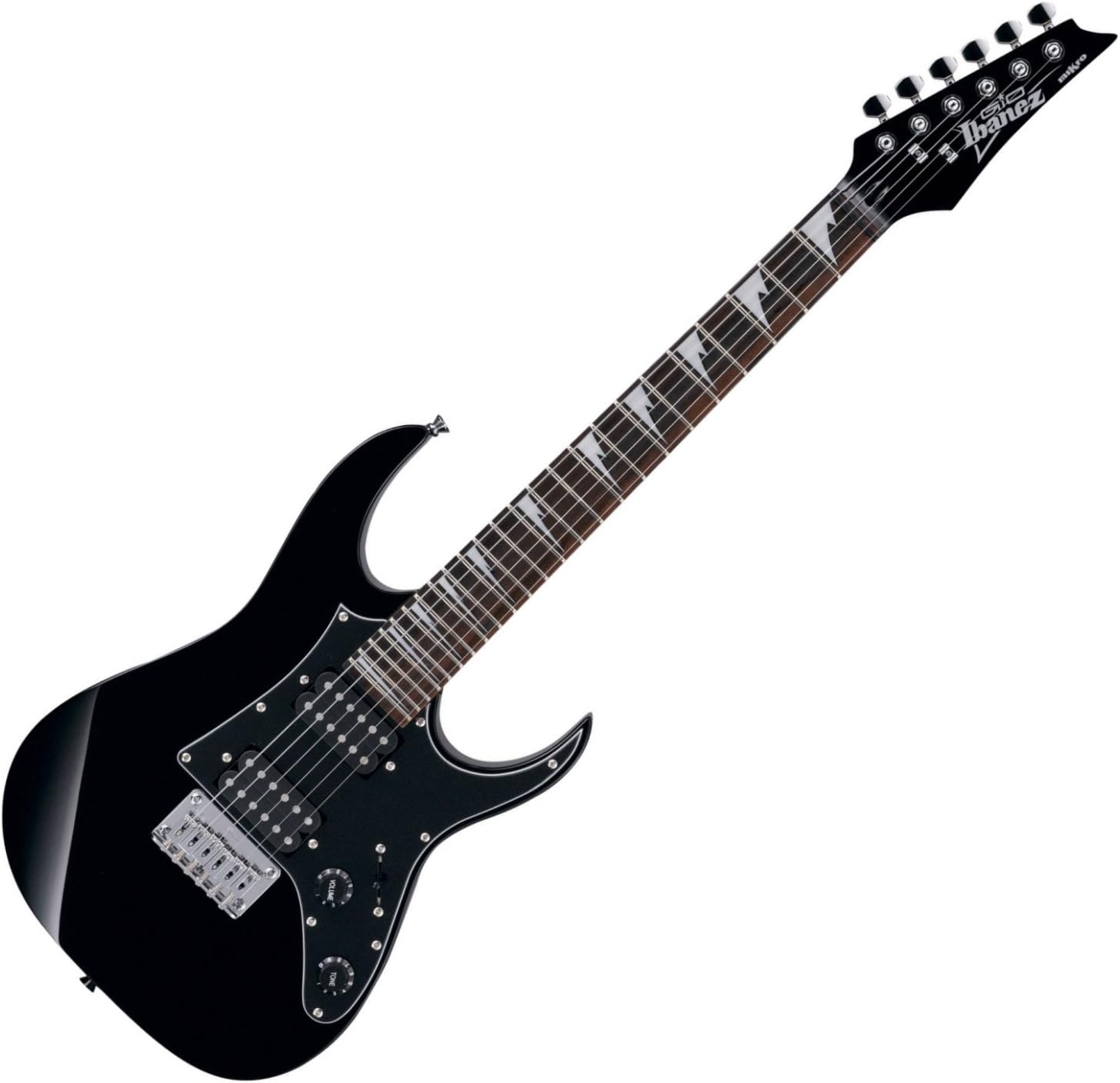
These five six-string guitars range from compact models such as the Ibanez miKro and Squier Mini Stratocaster to 24-inch designs with a more familiar full-size body. All use standard guitar tuning. The miKro is the overall choice for a particularly compact setup, while the other models offer different pickup sounds and playing styles.
Top 5 Best Short Scale Electric Guitars
Ibanez GRGM21 miKro (Editor’s Choice)
The GRGM21 puts the familiar RG outline into a genuinely compact six-string guitar. Its 22.2-inch scale brings the frets closer together than the 24-inch instruments here, making it particularly appealing for a shorter reach or a small travel setup. The double cutaway leaves the upper end of its 24-fret neck accessible.
Two humbuckers give this little Ibanez a clear reason to exist beyond its size. They suit thicker rhythm sounds and overdriven leads, while the pickup selector and tone control offer useful changes without a complicated control panel. Players after the brighter, more open character of a traditional Strat may prefer the Mini Stratocaster instead.
The fixed bridge keeps the mechanics straightforward: there is no floating vibrato to balance when changing strings or setting the action. The maple neck and compact body make a purposeful combination for practice.
The miKro takes the overall recommendation for combining the shortest scale here with 24 frets, dual humbuckers and uncomplicated hardware. That compactness is also its trade-off: very close fret spacing can feel cramped to larger hands, and string gauge and setup deserve attention when choosing the preferred tension.
Pros
- Compact 22.2-inch scale
- Dual humbuckers and 24 frets
- Fixed bridge keeps setup straightforward
Cons
- Close fret spacing will not suit every hand
- Less of the traditional single-coil character
Laguna LE50

The LE50 takes a compact, twin-humbucker approach to the short-scale electric guitar. Its understated black finish and double-cutaway shape give it a more conventional rock-guitar appearance than some miniature instruments. The useful attraction is a small six-string platform with familiar controls, rather than an entirely different way to play.
Laguna’s three-way pickup switching selects the neck or bridge humbucker, with a combined setting between them. Master volume and tone keep adjustments simple. That arrangement makes it easy to move between fuller rhythm sounds and a more focused bridge voice without learning an elaborate switching system.
The fixed bridge is another practical feature for a first electric guitar: string changes and action adjustments do not involve balancing a floating tremolo. The LE50’s appeal is this straightforward combination of compact dimensions, humbucker sounds and conventional hardware.
As an older model, its value depends heavily on the individual instrument’s condition. Worn frets, stiff controls or a poorly cut nut can outweigh the attraction of a smaller body. A clean example with a sensible setup can still be useful, but the current Ibanez and Squier models offer a clearer starting point for someone buying new.
Pros
- Compact six-string design with two humbuckers
- Simple volume, tone and three-way switching
- Fixed bridge
Cons
- Older examples vary in condition
- Less pickup variety than a three-single-coil design
Squier Classic Vibe ’70s Jaguar
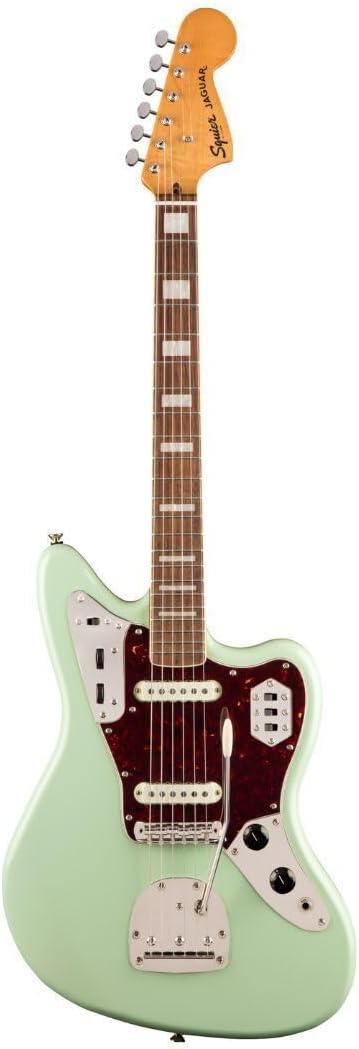
The Classic Vibe Jaguar offers a shorter reach without turning the whole instrument into a miniature guitar. Its 24-inch scale sits between the compact miKro and a standard 25.5-inch Stratocaster, while the offset body retains the distinctive Jaguar shape. It is the most characterful choice here for someone drawn to vintage-style controls and vibrato.
Two Fender-designed alnico single-coil pickups provide the foundation. Separate rhythm and lead circuits, pickup switches and the tone-circuit switch give it more ways to shape a part than the simpler guitars in this comparison. The reward is flexibility; the cost is a control layout that takes longer to learn.
The C-shaped neck has a 9.5-inch fingerboard radius and 22 narrow-tall frets. A floating bridge and non-locking vibrato allow pitch movement that the hardtail models cannot provide. That hardware is part of the Jaguar’s appeal, but it also makes careful setup more important.
Choose the Jaguar for its distinctive playing experience rather than for the smallest possible body. The full offset outline is bulkier than a Mini Strat, and single-coil hum can be audible with gain. For a compact, mechanically simple first guitar, the miKro or Mini is easier to understand.
Pros
- 24-inch scale with a full offset-guitar feel
- Alnico single coils and separate rhythm/lead circuits
- Vintage-style vibrato
Cons
- More complicated switching and setup
- Full body is less compact than the miniature options
Squier Sonic Mustang
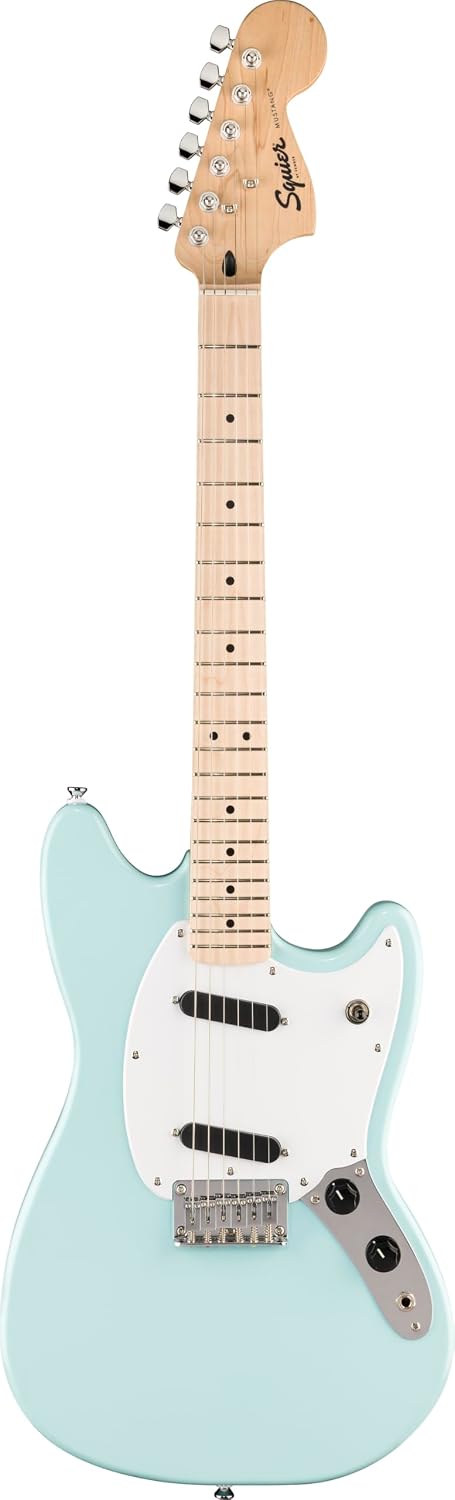
The Sonic Mustang makes a strong case for keeping things simple. Its 24-inch scale reduces the distance between frets compared with a standard Strat, while the thin poplar body and slim C-shaped neck keep the design approachable. It is a good middle ground for someone who wants a shorter scale without the tight spacing of a miniature guitar.
Two ceramic single-coil pickups, a three-position selector and master volume and tone provide an uncluttered set of sounds. The arrangement lends itself to clear chord work and sharper rhythm parts. It is less varied than the Mini Strat’s three-pickup layout, but there is little to distract from playing.
A six-saddle hardtail bridge allows individual string-height and intonation adjustments without a floating vibrato mechanism. The Daphne Blue version shown has a maple fingerboard, 22 narrow-tall frets and sealed-gear tuners. Its satin neck finish is another useful detail for players who prefer that feel to a glossy neck.
The Mustang is particularly appealing as a straightforward everyday electric. It cannot offer vibrato-arm effects, and its single coils can pick up electrical hum in noisy environments. Those are clear trade-offs for a compact-feeling guitar whose controls and hardware stay refreshingly direct.
Pros
- 24-inch scale and slim C-shaped neck
- Simple two-pickup controls
- Six-saddle hardtail bridge
Cons
- No vibrato system
- Fewer pickup combinations than the Mini Strat
Squier Mini Stratocaster
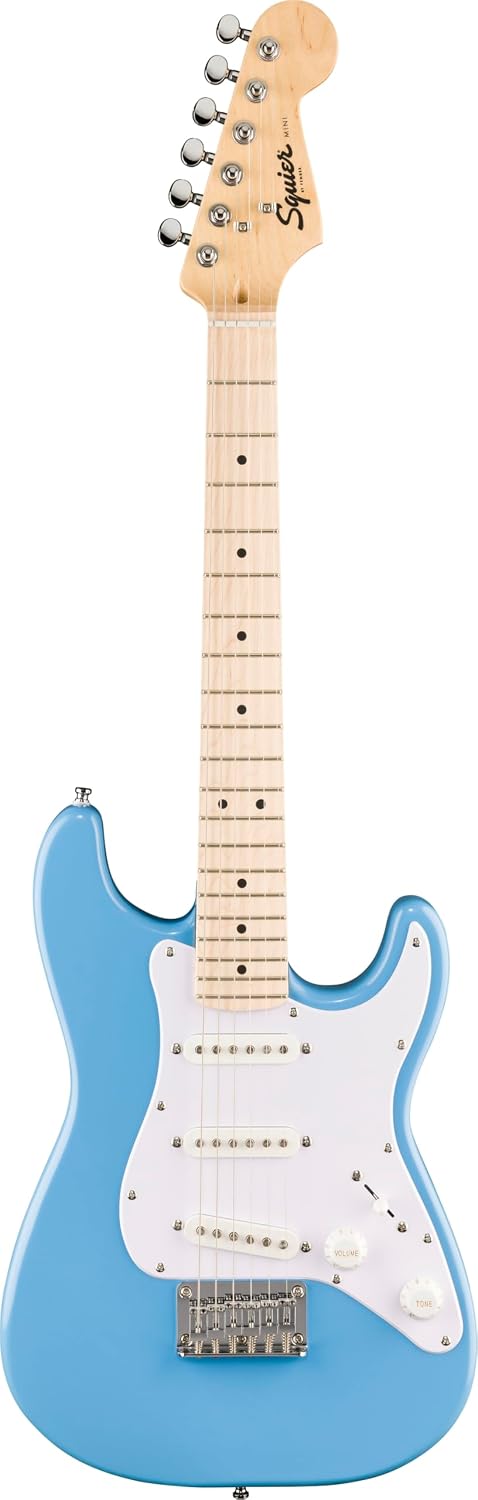
The Mini Stratocaster brings a familiar three-pickup layout to a reduced-size body and 22.75-inch scale. The California Blue model shown pairs that small format with a maple fingerboard. It is an appealing alternative to the miKro when clear single-coil sounds matter more than humbucker weight.
Three single coils and a five-way selector make the Mini unusually versatile for such a compact instrument. The separate pickup positions and blended settings provide useful changes for clean chords, lighter rhythm parts and brighter leads. Master volume and tone keep the control layout easy to follow.
Its hardtail bridge removes the moving vibrato system of a traditional Stratocaster. The C-shaped maple neck has 20 narrow-tall frets and a 9.5-inch fingerboard radius, while the 40.6 mm nut makes this a notably narrow-necked option. Trying that width matters as much as choosing by scale length alone.
The Mini is a strong choice for players who specifically want a small body and Strat-style pickup variety. Larger hands may find the close spacing restrictive, and single coils are not silent under every lighting or gain condition. It also has fewer frets than the 24-fret Ibanez.
Pros
- Small body with a 22.75-inch scale
- Three single coils and five-way switching
- Simple hardtail bridge
Cons
- Narrow neck and close spacing may feel cramped
- 20 frets rather than the Ibanez’s 24
How to Find the Best Short Scale Electric Guitars
Sound
Choose the pickup layout for the music you want to play. Humbuckers generally offer a fuller sound with less of the electrical hum associated with single coils; single coils bring a different attack and useful clean textures. Scale length alone does not determine tone. A suitable guitar amp and its settings make a substantial difference too.
Setup
A comfortable setup balances string height, neck relief and intonation. With the same strings and tuning, a shorter scale reduces string tension; the preferred gauge therefore deserves attention. A fixed bridge is simpler to adjust than a floating vibrato. A setup tailored to the player can make a substantial difference, even on a new instrument.
Range
A short-scale guitar in standard tuning uses the same open-string notes as a longer-scale six-string. Fret count determines how far the upper register extends: the Mini Strat has 20 frets, the Mustang and Jaguar have 22, and the miKro has 24. Consider that musical range separately from the variety offered by the pickups.
Weight
A shorter scale does not automatically mean a lighter body. The Mini and miKro reduce the overall format, while the Jaguar keeps a larger offset outline. Try the balance seated and on a strap, and consider neck width and body depth as well as fret spacing when choosing for small hands.
So, Which Short Scale Electric Guitar Is the Best?
The Ibanez GRGM21 miKro is the overall choice for its 22.2-inch scale, two humbuckers, fixed bridge and 24-fret neck. The Mini Stratocaster is an appealing small-bodied alternative for single-coil variety. Choose the Sonic Mustang for simpler controls with a little more room between frets, or the Classic Vibe Jaguar for its distinctive circuits and vibrato. The older Laguna remains worth considering when its compact twin-humbucker design and condition suit the player.