Looking for a lightweight electric guitar? Start by deciding whether you want a full-scale instrument with less bulk or a smaller guitar with a shorter reach. These five models include compact headless, short-scale and familiar full-sized designs. Compare the actual instrument’s weight and balance alongside its size and scale length.

For less bulk without a shorter playing scale, the Ibanez Q54 stands out. The miKro suits players who want a smaller instrument overall, while the other models offer more traditional shapes and controls. Compare the design and playing feel rather than assuming every guitar of one model weighs exactly the same.
Best Lightweight Electric Guitars – Comparison Table
Ibanez JEMJR Steve Vai Signature Electric Guitar
The JEMJR is for players who want the familiar Steve Vai look and a full-sized performance-oriented guitar. The Monkey Grip handle and Tree of Life inlay make it immediately recognizable, while the Wizard III maple neck and twenty-four jumbo frets give the design a clear lead-playing focus. The distinctive looks are backed by hardware geared toward expressive rock lead playing.
Two Quantum humbuckers flank a Quantum single-coil pickup, with five-way switching offering several useful textures. The bridge humbucker suits driven riffs and lead lines, while the middle pickup and combined settings add different colors for cleaner parts. A double-locking tremolo is the key attraction for players who use wide pitch changes.
The compromise is setup complexity. Changing tuning or string gauge takes more work on a floating double-locking system than on a fixed bridge, and the locking nut adds another step to restringing. The JEMJR is a conventional full-sized guitar rather than an ultralight headless design. Choose it for the neck, pickup range and tremolo, with the weight of the individual guitar checked before making it a comfort purchase.
Pros
- Slim Wizard III neck and twenty-four jumbo frets
- HSH Quantum pickup layout with five-way switching
- Double-locking tremolo for expressive pitch effects
Cons
- Floating tremolo makes tuning changes more involved
- Full-sized design is not the most compact option here
Epiphone Les Paul Special-II Electric Guitar

The Les Paul Special-II gives a simpler route to a dual-humbucker electric. Its flat single-cutaway body, bolt-on neck and straightforward controls keep the design approachable. That combination puts the focus on straightforward rock tones and easy control changes.
The 650R neck and 700T bridge humbuckers provide a clear contrast between fuller rhythm sounds and a more assertive bridge voice. Master volume, master tone and a three-way selector keep adjustments simple. The Tune-o-matic bridge and stopbar tailpiece also make string changes and alternate tunings more straightforward than a floating tremolo does.
The 24.75-inch scale is shorter than the Ibanez JEMJR’s, though reach and comfort still depend on the player and setup. There is no tremolo or built-in coil-splitting arrangement, and a full-sized single-cut body is not automatically the lightest option. It is a useful choice for a simple rock-oriented instrument when the actual example feels comfortable, rather than a guaranteed low-weight purchase based on the model name alone.
Pros
- Simple dual-humbucker layout
- Fixed Tune-o-matic bridge and stopbar tailpiece
- Shorter 24.75-inch scale than the full-scale Ibanez models
Cons
- No tremolo or coil-splitting controls
- Actual weight still depends on the individual instrument
Squier Vintage Modified ’72 Telecaster Thinline

The Vintage Modified ’72 Telecaster Thinline brings a different feel to this selection: a semi-hollow Telecaster body with an f-hole and a pair of Wide Range humbuckers. The chambered construction is the feature to consider when comparing carrying comfort, while the natural finish and pearloid pickguard give it a distinctive seventies-inspired appearance.
The two humbuckers offer fuller pickup voices than the traditional single-coil Telecaster layout. A three-way selector, master volume and master tone keep operation uncomplicated, and the fixed six-saddle bridge allows individual intonation adjustment without a floating tremolo to balance. The maple fingerboard adds to its clean, understated look.
This is still a full-scale guitar, and semi-hollow construction does not guarantee a particular weight for every example. It is also better chosen for its dual-humbucker character than for an exact vintage single-coil Telecaster sound. For players who prefer a conventional headstock and body outline, it offers a more traditional alternative to the compact Q54.
Pros
- Semi-hollow body with an f-hole
- Two Wide Range humbuckers and simple controls
- Fixed six-saddle bridge with individual intonation adjustment
Cons
- Full scale may feel large to some younger players
- Dual humbuckers differ from a traditional single-coil Telecaster
Ibanez Q54 (Editor’s Choice)
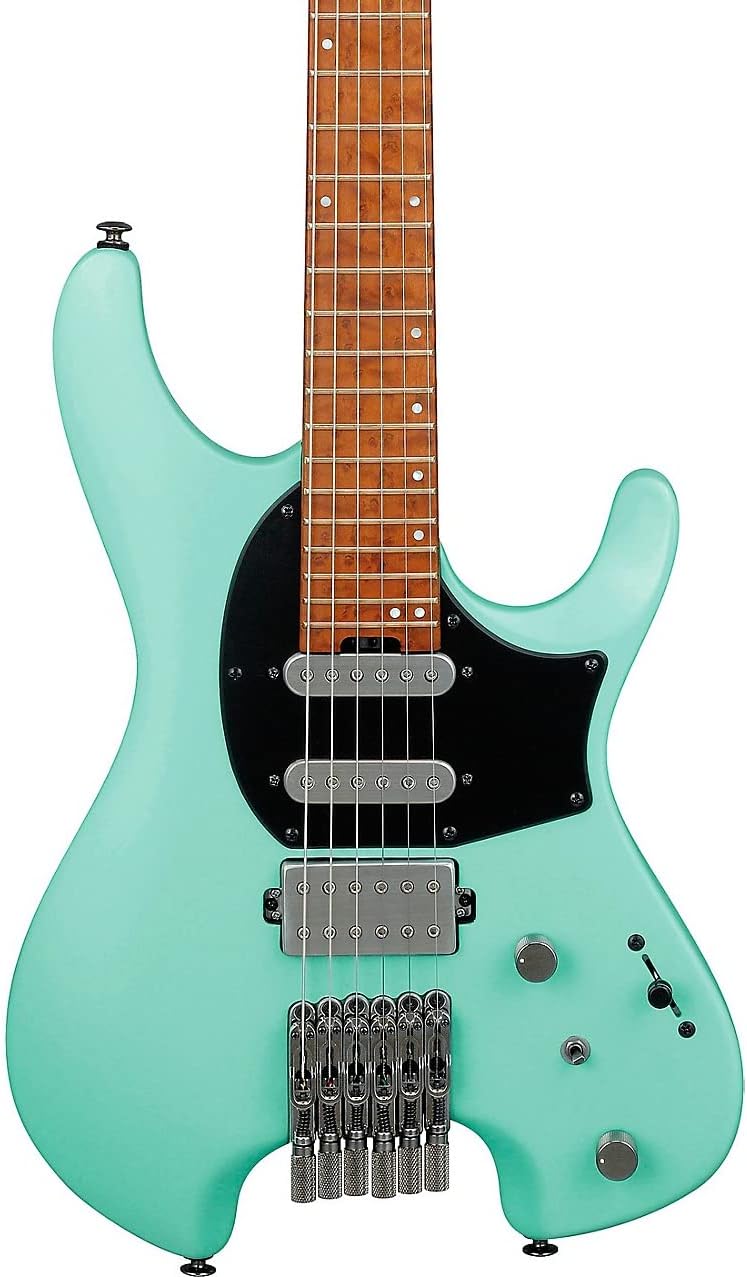
The Q54 is the overall choice when a compact, deliberately lightweight design matters more than a traditional outline. Its headless layout removes the large headstock, while the contoured body is shaped for comfortable contact with the player. It retains a full 25.5-inch scale and twenty-four frets, so compact dimensions do not require the shorter playing length of a children’s guitar.
An R1 single-coil in the neck and middle positions joins a Q58 bridge humbucker. Ibanez’s dyna-MIX9 system adds an Alter switch to the five-way selector, providing nine combinations rather than a single familiar set of pickup positions. That makes the Q54 useful for moving between clear rhythm textures and a fuller bridge sound without changing guitars.
The individual Mono-Tune bridge units put tuning adjustments at the body end, and the string-lock system accepts ordinary guitar strings. The main trade-offs are an unfamiliar tuning position and the absence of a tremolo. It is an appealing solution for players who want less bulk while keeping a full-scale neck; the exact weight still varies between individual instruments.
Pros
- Compact headless design with a contoured body
- Full 25.5-inch scale and twenty-four frets
- Nine pickup combinations and standard-string compatibility
Cons
- No tremolo for pitch effects
- Body-end tuning takes some adjustment
Ibanez miKro GRGM21M
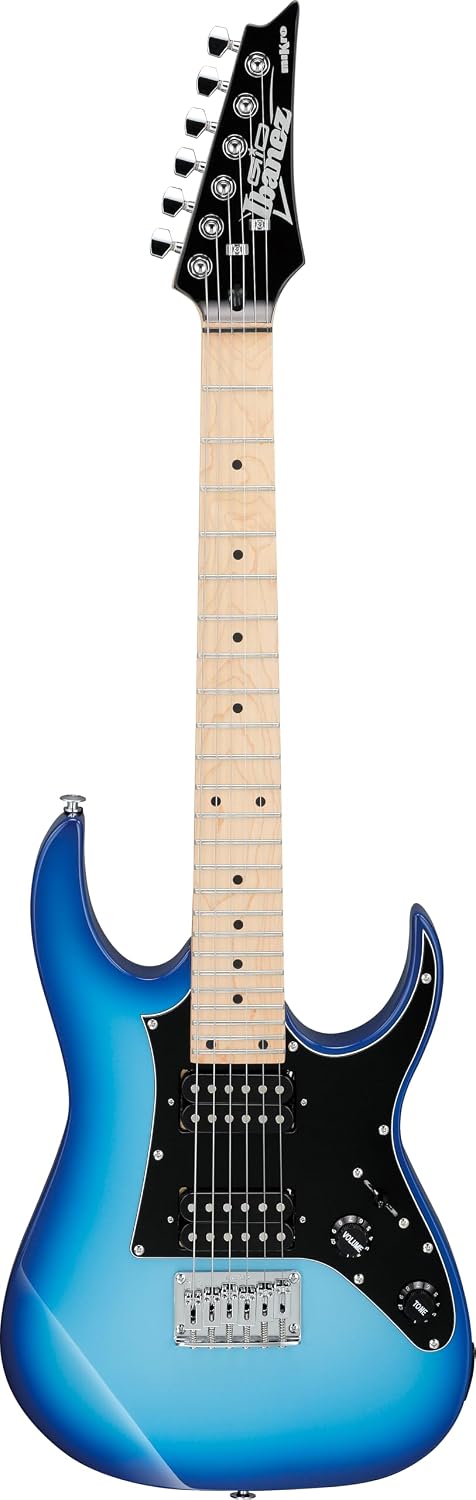
The miKro GRGM21M makes a more substantial reduction in playing size than the other guitars here. Its 22.2-inch scale shortens the distance between frets, and the smaller RG-style body reduces bulk. That can be helpful for a player who finds a conventional full-scale guitar awkward, while keeping a familiar electric-guitar layout.
A maple neck and fingerboard, twenty-four frets and two humbuckers give it a familiar starting point for riffs and chords. The fixed bridge keeps setup simpler than a floating tremolo, and the volume and tone controls make basic sound changes easy. Through a suitable amplifier, the dual-humbucker arrangement can cover clean practice and driven rock parts.
The shorter scale changes the feel: with comparable strings and tuning, the tension is lower than on a full-scale guitar. Setup and string choice therefore matter, particularly if a player picks hard or wants lower tunings. It is a sensible compact option for the right hands, but it is worth checking reach and balance rather than assuming every child or adult needs the same guitar size.
Pros
- Compact body and short 22.2-inch scale
- Fixed bridge keeps basic setup straightforward
- Two humbuckers and a full twenty-four-fret fingerboard
Cons
- Shorter scale produces a different string feel
- Small body will not suit every player’s preferred posture
How to Pick the Best Lightweight Electric Guitar for a Beginner or Kid?
Start with comfort and the kind of music the player wants to make. A guitar that feels balanced, stays in position and allows an easy reach is more useful than one chosen from a weight figure alone. Adults may prefer a compact full-scale model, while some younger players benefit more from a shorter scale and smaller body.
Inspection and Playability
Check the action, fret edges, tuning stability and basic intonation. A modestly priced guitar with a good setup can be rewarding to learn on; a poorly adjusted instrument can make even simple chords unnecessarily difficult. Allow for an initial setup if the action or string gauge does not suit the player.
Bridge choice affects day-to-day convenience. A fixed bridge is usually easier for a beginner who wants to change tunings. A floating double-locking tremolo offers expressive pitch effects, but requires more patience when changing strings or adjusting the setup. The guide to guitar tremolo systems explains related bridge options. Neither design is inherently the right answer for every player.
Size of the Guitar
Scale length, body depth and balance all matter. The guides to short-scale electric guitars and electric guitars for smaller hands offer related comparisons. The Q54 is compact but full scale; the miKro has a shorter scale as well as a smaller body. Sit and stand with the guitar, check the reach to the first fret, and use a comfortable strap when comparing how the instrument feels.
Guitar weight varies with the individual pieces of wood and hardware. A shipping weight or a bundle weight is not the weight carried on a strap. Ask for the weight of the actual instrument when this is a deciding factor; the table uses “Varies” where a reliable fixed instrument weight is not specified.
A Consistent Weight and Comfort Comparison
Use the same short routine for each guitar so that its weight is not confused with the strap, posture or the way it has been presented:
- Record the instrument-only weight. Exclude its case, packaging and bundled equipment. If a seller cannot supply the weight of the particular guitar, leave that entry unknown rather than copying a shipping figure.
- Keep the strap comparison consistent. Use the same strap and playing height where possible. Check whether the neck stays in a usable position without being held up by the fretting hand.
- Repeat the comparison seated. Reach the first-position chords and the controls in a normal playing posture. Note whether the body edge or neck position makes you change that posture.
- Write three separate notes. Record weight, fretting-hand reach and balance. A guitar can do well on one measure without being the most comfortable choice on the others.
This gives a full-scale Q54 and a short-scale miKro a fairer comparison than a single headline weight. The useful result is a guitar that suits the player’s reach and playing position, with its actual mass recorded when available.
Select a Guitar the Player Likes
Appearance and musical preference can make practice more inviting. Dual humbuckers may appeal to a player focused on heavier riffs, while a mixed pickup layout offers several contrasting textures. A suitable practice amp matters too; the guide to guitar amps in a lower budget range covers several options. Choose an instrument the player is excited to pick up, with the practical size and setup that make that enthusiasm easier to sustain.
So, What’s the Best Lightweight Electric Guitar?
The Ibanez Q54 is the overall recommendation for its compact headless design, full-scale playing length and versatile switching. The miKro GRGM21M is the more relevant option when the player specifically needs a shorter reach.
The JEMJR emphasizes lead playing and a double-locking tremolo, the Les Paul Special-II keeps the dual-humbucker format simple, and the Squier Thinline offers a more traditional semi-hollow alternative. Compare the actual guitar’s comfort and balance before deciding that a model name or headline weight tells the whole story.