Looking for the best amp for an Alpine Type-R 12-inch or 10-inch subwoofer? These four mono amplifiers offer different power levels, footprints and tuning controls. The right choice depends on the exact Type-R model and its final wired impedance.
A Class D design can be efficient and compact, but it still needs proper ventilation and wiring. Compare continuous RMS output at the intended load rather than assuming the biggest maximum-power number is the best match.
Best Amps for Alpine Type-R 12-Inch and 10-Inch Subwoofers
| Image | Model | Dimensions | Max | Price |
|---|---|---|---|---|
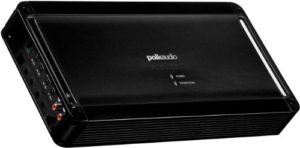
| Polk Audio PA D1000.1 (Editor's Choice) | 12.94 × 6.75 × 1.81 in | 1200W RMS at 1Ω | Check Price |
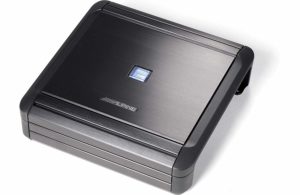 | Alpine MRV-M500 | 7.88 × 7.88 × 2.19 in | 500W RMS at 2Ω | Check Price |
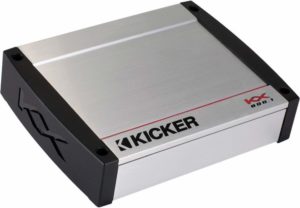 | Kicker 40KX8001 | 9.56 × 8.31 × 2.13 in | 800W RMS at 2Ω | Check Price |
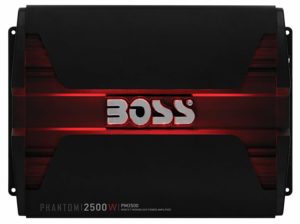 | BOSS Audio PM2500 | 14 × 10.31 × 2.25 in | 2500W MAX at 2Ω | Check Price |
Polk Audio PA D1000.1 (Editor’s Choice)
The PA D1000.1 is the overall choice for its combination of load flexibility and useful bass controls. Polk rates this Class D monoblock at 500 watts RMS into four ohms, 800 watts into two ohms and 1,200 watts into one ohm. That gives it more scope for different Type-R wiring arrangements than the two-ohm-minimum designs here, provided the output is set appropriately for the particular subwoofer.
A variable low-pass filter covers 40–220Hz, while the separate subsonic filter adjusts from 20–38Hz. These do different jobs: the low-pass filter blends the sub with the main speakers, and the subsonic filter can limit output below the useful range of a ported enclosure. A remote level control adds convenient bass adjustment from the front of the vehicle.
The low-profile chassis helps with installation, but its roughly thirteen-inch width still needs to be measured rather than assumed to fit. At one ohm, the available output may exceed what a single Type-R model should receive, so careful gain setting remains important. Its appeal is the combination of power options and enclosure tuning, not a promise that every Type-R can accept the full rated output.
Pros
- RMS ratings at one, two and four ohms
- Separate low-pass and adjustable subsonic filters
- Low-profile chassis and remote level control
Cons
- One-ohm output needs careful matching to the subwoofer
- Chassis and wiring still need adequate installation space
Alpine MRV-M500
The MRV-M500 suits a more restrained single-subwoofer installation. Alpine specifies 300 watts RMS at four ohms and 500 watts RMS at two ohms, rather than 500 watts from every possible wiring arrangement. A dual-four-ohm Type-R wired in parallel can present the two-ohm load that makes use of the higher rating.
Its roughly eight-inch-square footprint is a practical advantage in a tight mounting area. RCA and speaker-level input options help it work with different source units, and the variable low-pass filter adjusts over 50–400Hz. Variable bass EQ provides another tuning tool, while the snap-on terminal covers tidy up the finished installation.
This is a modest-output alternative to the Polk, not the choice for extracting the full rated capability of a high-power Type-R. It also should not be wired to a one-ohm load. For everyday listening with a suitable enclosure and sensible expectations, its compact size is compelling; a more demanding system may need greater continuous output and a different amplifier.
Pros
- Compact footprint for a space-conscious installation
- Published 300W/four-ohm and 500W/two-ohm RMS ratings
- Speaker-level inputs and variable low-pass filtering
Cons
- Not suitable for a one-ohm final load
- Less output than the higher-powered options here
BOSS Audio PM2500
The PM2500 offers a straightforward mono layout with a more conspicuous visual style. Its red backlighting and broad heatsink make it less discreet than the Alpine, which may suit an installation intended to be seen. High- and low-level inputs provide flexibility when connecting it to an existing head unit.
Variable low-pass filtering, bass boost and a remote subwoofer level control cover the main adjustments needed for a basic bass system. The important distinction is the power label: BOSS advertises 2,500 watts maximum at two ohms and 1,250 watts maximum at four ohms. Those figures are not directly comparable with the continuous RMS ratings used to assess the Polk, Alpine and Kicker.
Choose it for its input options, controls and appearance rather than assuming the largest printed wattage means the greatest usable output. Its two-ohm minimum also rules out a one-ohm final load. A Type-R installation needing a confidently specified amount of continuous power is better served by comparing clear RMS ratings at the exact load, while this model requires more conservative expectations.
Pros
- High- and low-level input options
- Variable low-pass filter and remote level control
- Distinctive red illuminated styling
Cons
- Advertised maximum power is not a continuous RMS comparison
- Two-ohm minimum limits some dual-voice-coil arrangements
Kicker 40KX8001
The 40KX8001, also identified as the KX800.1, is a useful middle ground between modest output and extensive bass tuning. Kicker specifies 400 watts RMS at four ohms and 800 watts RMS at two ohms, at 14.4 volts. That makes the two-ohm setting particularly relevant to a single dual-four-ohm Type-R wired in parallel.
The variable low-pass filter covers 40–160Hz, and the subsonic filter offers a broader 10–80Hz adjustment range. KICK EQ+ adds adjustable boost frequency and bandwidth, allowing a more focused change than a basic fixed-frequency bass-boost knob. High- and low-level input capability also gives it several integration options.
The extra controls reward a deliberate setup rather than indiscriminate boosting: adding bass boost reduces headroom and requires the gain setting to be reconsidered. Its minimum load is two ohms, so it does not suit a single dual-two-ohm sub wired in parallel to one ohm. Choose it when the wiring matches and more detailed enclosure tuning is useful.
Pros
- 800W RMS at two ohms and 400W at four ohms
- Adjustable subsonic filter and parametric bass EQ
- High- and low-level input capability
Cons
- Not rated for a one-ohm final load
- Extra bass controls need careful setup to avoid clipping
Consider the Size
Measure the mounting area before choosing an amplifier, including space for terminal covers, cable bends and ventilation. The dimensions in the comparison are approximate chassis measurements in inches; removable covers or terminal adapters can increase the installed footprint. A compact case helps, but even a Class D amplifier needs airflow and a secure mounting position.
Keep the controls accessible enough for initial setup without placing the amplifier where it interferes with passengers or vehicle equipment. Protection circuits and heatsinks are useful safeguards, not permission to overload the amplifier or block its cooling.
Do I Need an Amp for Alpine Type-R Subwoofers?
A passive Type-R subwoofer needs an appropriate amplifier; a typical receiver’s speaker outputs are not a substitute for a dedicated subwoofer power stage. The amplifier supplies the electrical power that moves the cone, while its filters help the sub blend with the rest of the system. Set the system for clean bass at the listening level required, with the amplifier’s filters matched to the enclosure.
Start with the exact subwoofer model and coil impedance, not just the ten- or twelve-inch diameter. A single dual-four-ohm subwoofer normally presents two ohms with its coils in parallel or eight ohms in series. A dual-two-ohm version can present one or four ohms instead. Multiple subwoofers change the calculation again; wire both coils correctly and respect the amplifier’s minimum load.
Then compare the amplifier’s RMS output at that final load with the subwoofer’s recommended operating range. Type-R generations differ. For example, the SWR-12D4 has a manufacturer-stated 300–1,000W power range and 1,000W RMS power handling; that does not mean every Type-R has the same requirement or that it must always receive 1,000W to be useful. Lower output can be appropriate for moderate listening, while excessive gain, clipping or an unsuitable enclosure can cause problems.
The Polk is the only one-ohm-rated option in this selection. The Alpine, BOSS and Kicker require at least a two-ohm final load, so none should be selected solely because the badge on the subwoofer says Alpine. For related comparisons, see the guides to affordable car amps, amps for Kicker L7 subs and amps for Rockford Fosgate subs; their recommendations still need to be matched to the actual wiring and power requirements.
So, What’s the Best Amp for Alpine Type-R 12-Inch and 10-Inch Subwoofers?
The Polk PA D1000.1 remains the overall recommendation for its load flexibility, useful filters and clearly stated RMS ratings. The Kicker is attractive for a two-ohm installation needing more detailed bass tuning, while the Alpine keeps the footprint and output more modest.
The BOSS offers straightforward controls and an illuminated design, but its maximum-power headline should not decide the comparison. Match the exact Type-R, enclosure and final load first; that produces a better result than choosing by the largest wattage number alone.