Looking for the best high efficiency speakers? These nine passive home-audio options cover stereo listening and home theater, from a compact bookshelf pair to larger horn-loaded floorstanders and dedicated surround speakers.
High-efficiency bookshelf speakers appeal to listeners who want useful output without a large cabinet, but a bigger speaker can offer more bass reach and room-filling scale. Choose the speaker’s role and size before comparing sensitivity figures: a surround speaker and a front stereo pair do different jobs.
Published sensitivity ratings are a starting point, not a universal ranking. Measurement conditions vary, and a room-based figure cannot be compared directly with an anechoic result. These speakers also need a suitable amplifier; higher sensitivity does not guarantee better sound or an easy electrical load at every frequency.
High-Efficiency Speakers – Comparison Table
Klipsch Heresy IV (Editor’s Choice)
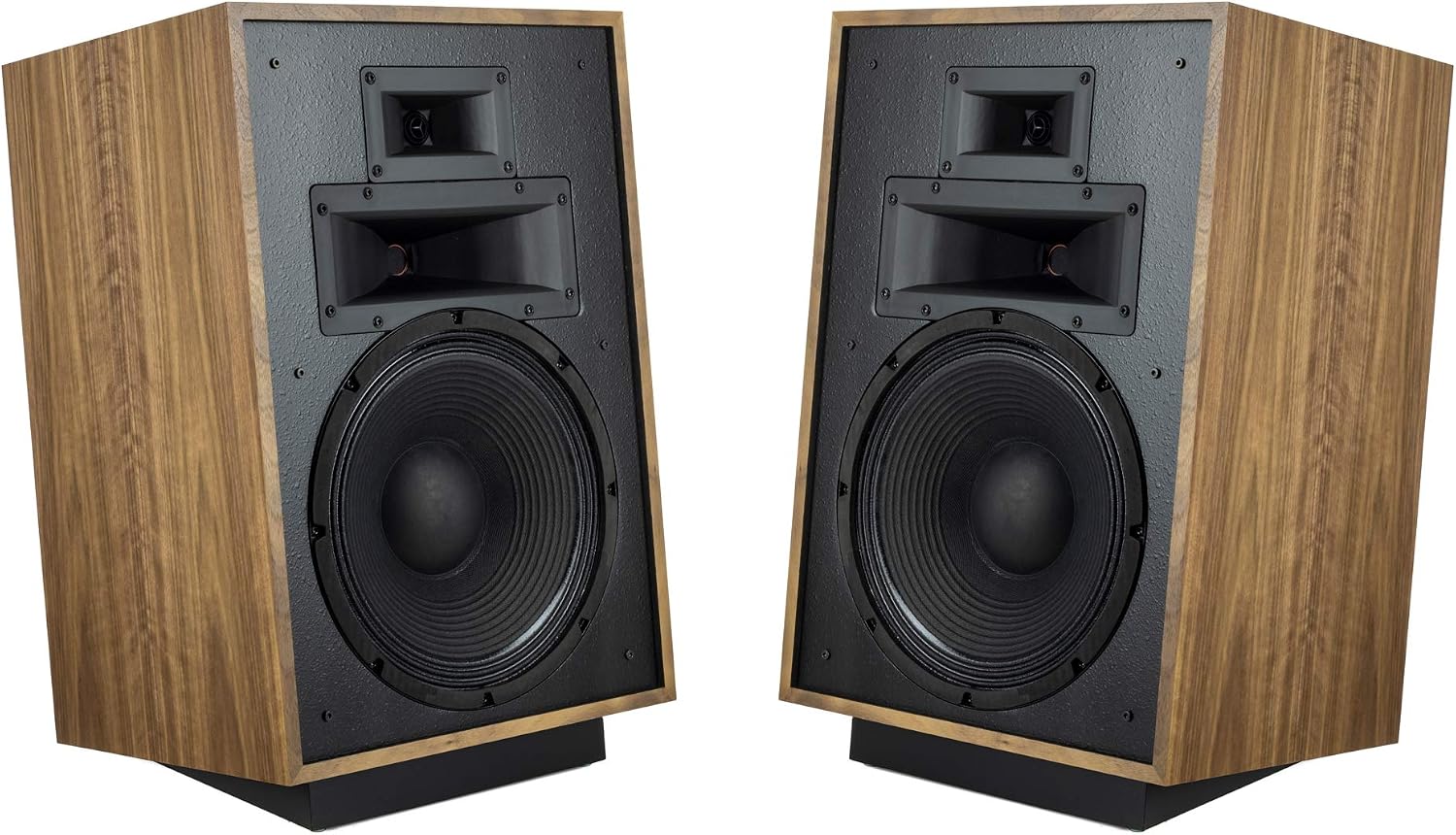
The Heresy IV is the overall choice for a listener who wants a genuinely high-output design without the height of a conventional tower. Its broad, low cabinet and slanted riser give it a distinctive presence, while horn-loaded midrange and treble make it more than a small bookshelf speaker with a generous sensitivity number.
A 12-inch woofer works with separate midrange and high-frequency compression drivers. This fourth version adds a rear port and an updated crossover. Klipsch quotes 99dB in an average listening room; an independent lab report measured 95.4dB using its own method, still a notably sensitive result.
The appeal is dynamic scale from a relatively short three-way speaker. Its width and rear port still need room, and its bass extension is not the same as a larger tower or subwoofer. Choose it for a focused stereo system where the horn-loaded presentation and manageable height fit the room, rather than expecting cabinet size to disappear from the equation.
Pros
- High sensitivity with horn-loaded midrange and treble.
- 12-inch woofer in a relatively short three-way cabinet.
- Rear port and updated crossover in the IV version.
Cons
- Wide cabinet still needs meaningful floor space.
- Deepest bass may call for a subwoofer.
Klipsch RP-6000F II
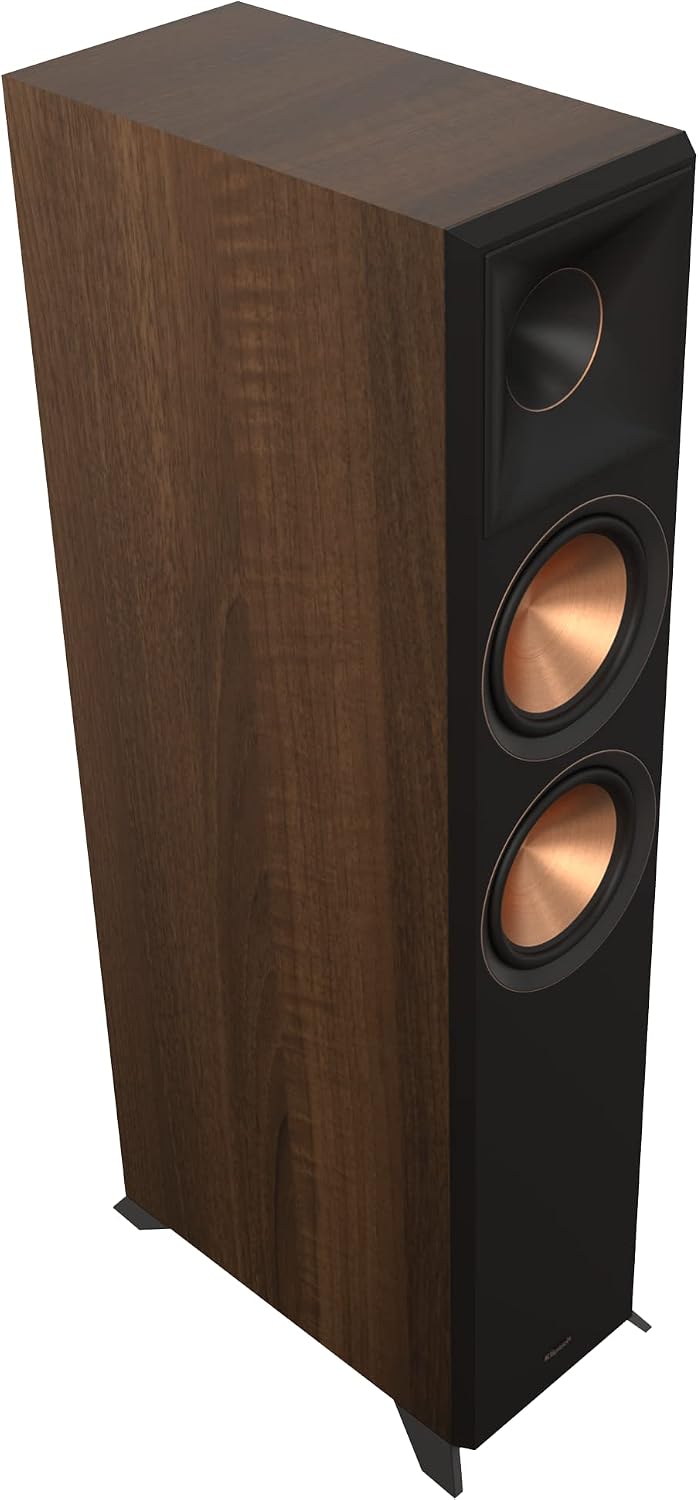
The RP-6000F II is the slimmer conventional tower for someone who wants a larger stereo or front-channel sound without moving to the widest cabinets here. It combines a horn-loaded tweeter with two woofers, keeping the familiar Reference Premiere balance of a compact horn section and copper-colored cones.
The II version uses dual 6.5-inch Cerametallic woofers, a 1-inch titanium tweeter and an expanded 90-degree Tractrix horn. Its internally braced cabinet has rear ports and dual binding posts. Klipsch lists 96dB using its specified in-room/half-space method, so that number should stay attached to those measurement conditions.
The practical strength is getting a substantial floorstanding format with a narrower baffle than the RP-8000F II. The trade-off is less woofer area and slightly less rated bass extension than that larger model. It is also a deep, rear-ported cabinet, so leave room for placement rather than choosing solely from its front width.
Pros
- Slimmer tower with dual 6.5-inch Cerametallic woofers.
- Expanded Tractrix horn and titanium tweeter.
- Braced cabinet with rear ports and dual binding posts.
Cons
- Deep cabinet needs placement space.
- Less woofer area than the larger RP-8000F II.
Klipsch Synergy Black Label B-100

The B-100 is the compact bookshelf choice for a small stereo system or surround duty. It makes sense when cabinet size matters more than deep bass or the scale of the larger horn-loaded speakers. Klipsch positions the Synergy Black Label range around efficient output and straightforward home integration.
Each passive two-way speaker pairs a 4-inch woofer with a 0.75-inch tweeter and Tractrix horn. The small enclosure is easier to place on a stand or suitable shelf, and the black ash vinyl finish gives it a restrained appearance. It can serve front or surround channels when matched to an appropriate amplifier.
The compromise is physical scale. A small woofer and cabinet cannot supply the low-frequency reach of the floorstanders here, so a subwoofer is useful when fuller bass is part of the goal. Choose it for compact placement and a simple passive setup, not as a substitute for a large high-output room system.
Pros
- Compact passive two-way bookshelf pair.
- Tractrix horn with a 4-inch woofer.
- Useful for small stereo systems or surround channels.
Cons
- Limited low-bass reach compared with larger cabinets.
- Less room-filling scale than the floorstanders.
Klipsch RP-502S
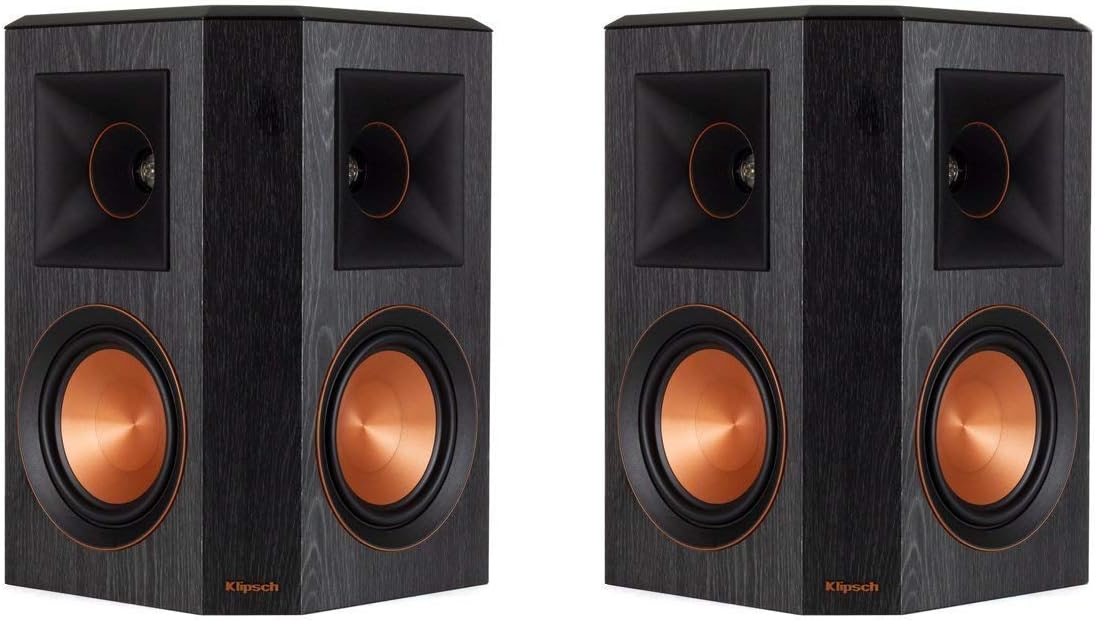
The RP-502S is the surround specialist for a home theater where effects should spread around the seating area. Its angled faces send sound in different directions, using Klipsch’s Wide Dispersion Surround Technology to create broader coverage than a forward-facing bookshelf speaker aimed at one seat.
The sealed cabinet uses dual 5.25-inch Cerametallic woofers and horn-loaded titanium tweeters. The design includes vented tweeter housings, while magnetic grilles keep the appearance tidy. Klipsch publishes a 95dB sensitivity rating for this original RP-502S generation.
The benefit is a purpose-built surround presentation, particularly when several seats need coverage. It is not intended to replace the front left/right stereo pair, and its size and mounting position need to work with the room. Use receiver calibration and an appropriate bass-management crossover rather than expecting the surround cabinets to reproduce the deepest effects alone.
Pros
- Angled wide-dispersion design for surround coverage.
- Dual 5.25-inch woofers in a sealed cabinet.
- Titanium horn tweeters and magnetic grilles.
Cons
- Dedicated surround role rather than front stereo duty.
- Placement and receiver calibration remain important.
Klipsch RP-250S

The RP-250S offers a similar wide-coverage surround approach in an earlier Reference Premiere design. It is useful when building around an existing compatible theater system and wanting effects to spread across a seating area instead of drawing attention to a single small source.
Two 5.25-inch Cerametallic woofers and two 1-inch titanium tweeters sit on the angled front faces. Each tweeter uses a hybrid Tractrix horn, and the sealed MDF cabinet has a removable magnetic grille. The manufacturer specifies 95dB sensitivity and 100-watt continuous power handling; these describe different aspects of the speaker.
Its strength is the dedicated surround layout, not a promise to improve every stereo system. The roughly 12-inch-wide cabinet needs suitable mounting space, and bass management is still useful for cinema effects. Choose it when its surround role and system matching make sense, rather than treating it as an ordinary bookshelf speaker for music in front of the listener.
Pros
- Dual woofer/tweeter layout for broad surround coverage.
- Sealed cabinet with magnetic grille.
- Useful for a compatible Reference Premiere theater setup.
Cons
- Not a conventional front stereo speaker.
- Wide enclosure needs appropriate placement space.
Klipsch RP-8000F II
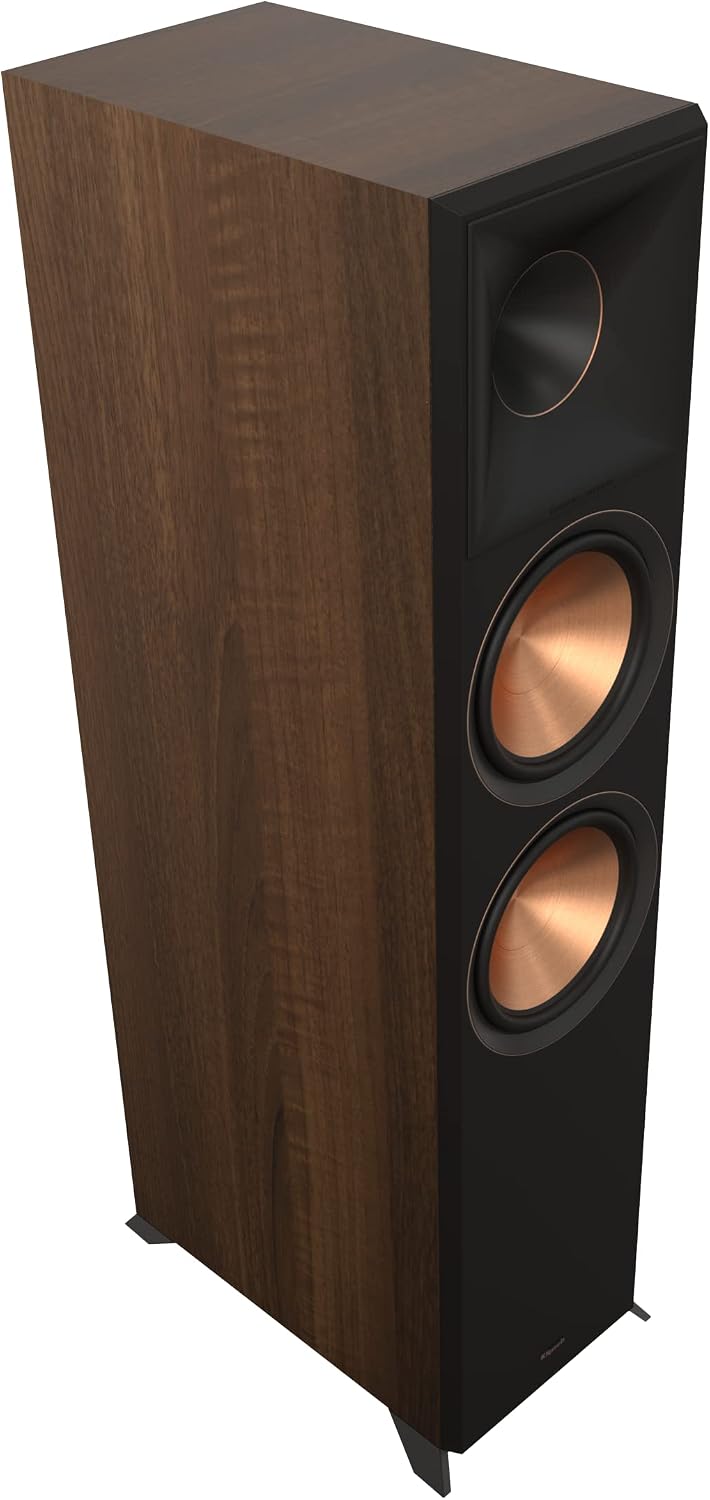
The RP-8000F II is the larger tower for a room and listening level that justify more woofer area. Compared with the RP-6000F II, its dual 8-inch drivers make it the more substantial choice for full-range stereo listening or front channels in a larger home theater.
The second-generation design combines Cerametallic woofers with a vented 1-inch titanium tweeter and expanded Tractrix horn. A braced, divided cabinet and rear ports support the bass system, while aluminum feet and magnetic grilles complete the enclosure. Klipsch quotes 98dB under its stated in-room/half-space conditions.
The appeal is scale without moving to a separate horn-loaded midrange design. Its practical cost is size: the cabinet is about 43 inches tall and weighs roughly 61 pounds. Placement near walls can also change the bass balance. Choose it when the larger drivers and cabinet fit the room, not simply because its published sensitivity number is higher.
Pros
- Dual 8-inch woofers for a larger floorstanding format.
- Expanded horn with vented titanium tweeter.
- Braced cabinet, aluminum feet and magnetic grilles.
Cons
- Large, heavy cabinet is less convenient to move.
- Rear ports and bass output need careful room placement.
Klipsch Forte IV
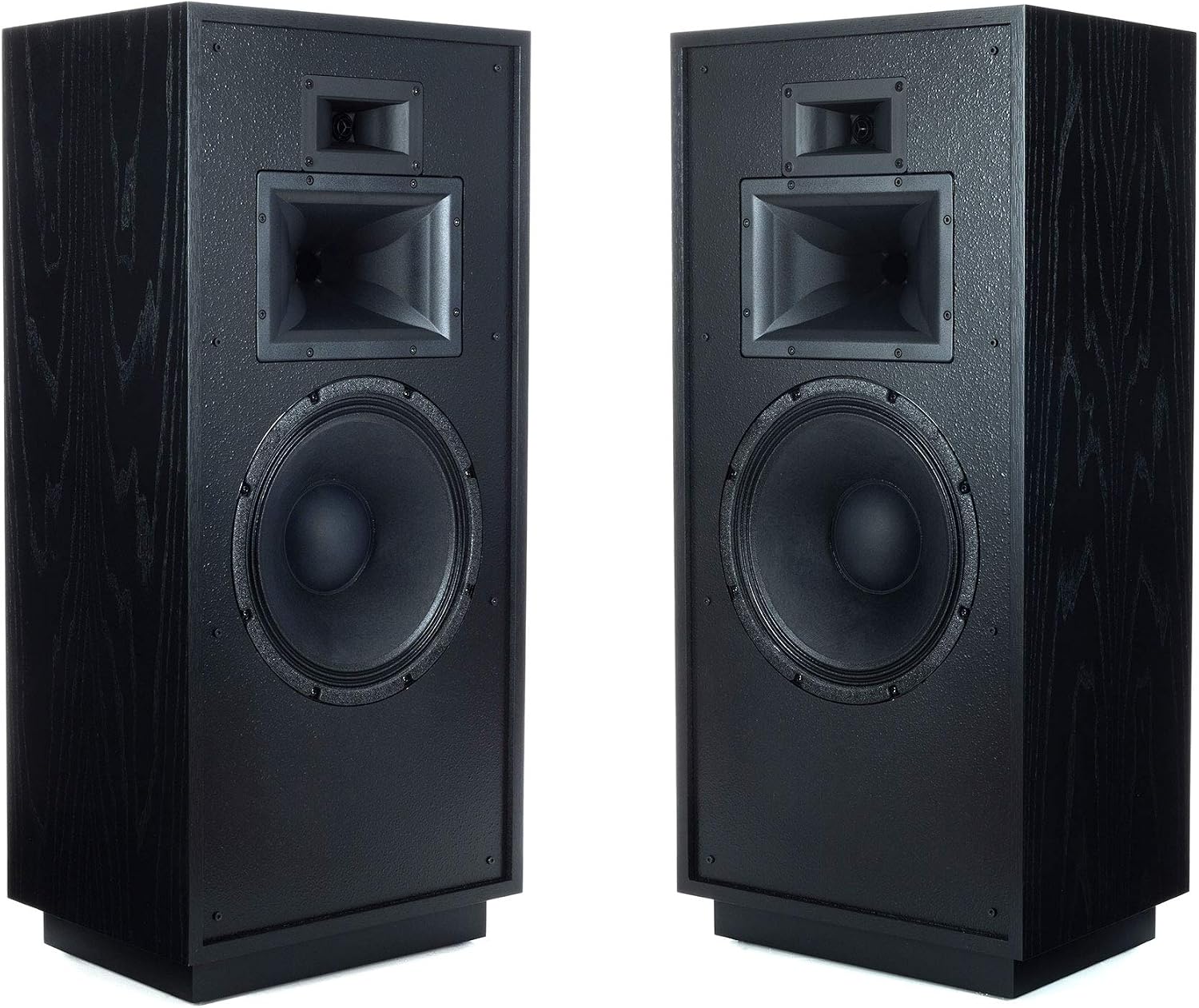
The Forte IV is the Heritage choice for someone who likes the Heresy’s horn-loaded approach but wants a taller speaker with more bass extension. Its dedicated midrange horn and large bass system make it an appealing design for listeners who want the scale of a traditional three-way speaker.
A 12-inch front woofer works with a 15-inch passive radiator on the rear. The midrange uses a polyimide compression driver and a Tractrix horn with Mumps shaping, while the titanium tweeter handles the top end. Klipsch lists 99dB in an average listening room and bass response extending lower than the Heresy IV under the respective published specifications.
The attraction is a substantial three-way system with a relatively broad, traditional cabinet. The rear radiator needs breathing room, and each speaker weighs about 72 pounds. It is a deliberate room-and-system choice rather than a compact upgrade. Give it suitable placement and amplification instead of assuming high sensitivity removes every demand on the rest of the system.
Pros
- Separate horn-loaded midrange and titanium tweeter.
- 12-inch woofer with a rear 15-inch passive radiator.
- Greater published bass extension than the Heresy IV.
Cons
- Rear radiator needs placement space.
- Broad, heavy cabinet is difficult to move casually.
Klipsch R-625FA

The R-625FA combines a main floorstanding speaker with a separate upward-firing height section. It is the home-theater choice for a listener who wants front-channel scale and the option of reflected Dolby Atmos height effects within the same cabinet.
The main section uses dual 6.5-inch IMG woofers and a horn-loaded aluminum tweeter, with a published sensitivity of 96dB. The top section has its own 5.25-inch woofer, tweeter and connections. The main-channel rating does not describe the height section, whose response is specified for its Atmos role.
The convenience is keeping two channel roles in one footprint. Height playback still requires the corresponding receiver channels, wiring and a suitable reflecting ceiling; the tower does not create decoded Atmos on its own. Choose it when that integrated layout fits the room. For stereo-only listening, the extra height hardware may be less useful than a conventional tower.
Pros
- Main tower and separate upward-firing height section.
- Dual 6.5-inch main woofers with horn tweeter.
- Combines two theater-channel roles in one cabinet.
Cons
- Height effects depend on receiver setup and ceiling conditions.
- Extra height hardware adds little for stereo-only use.
JBL Stage 280F
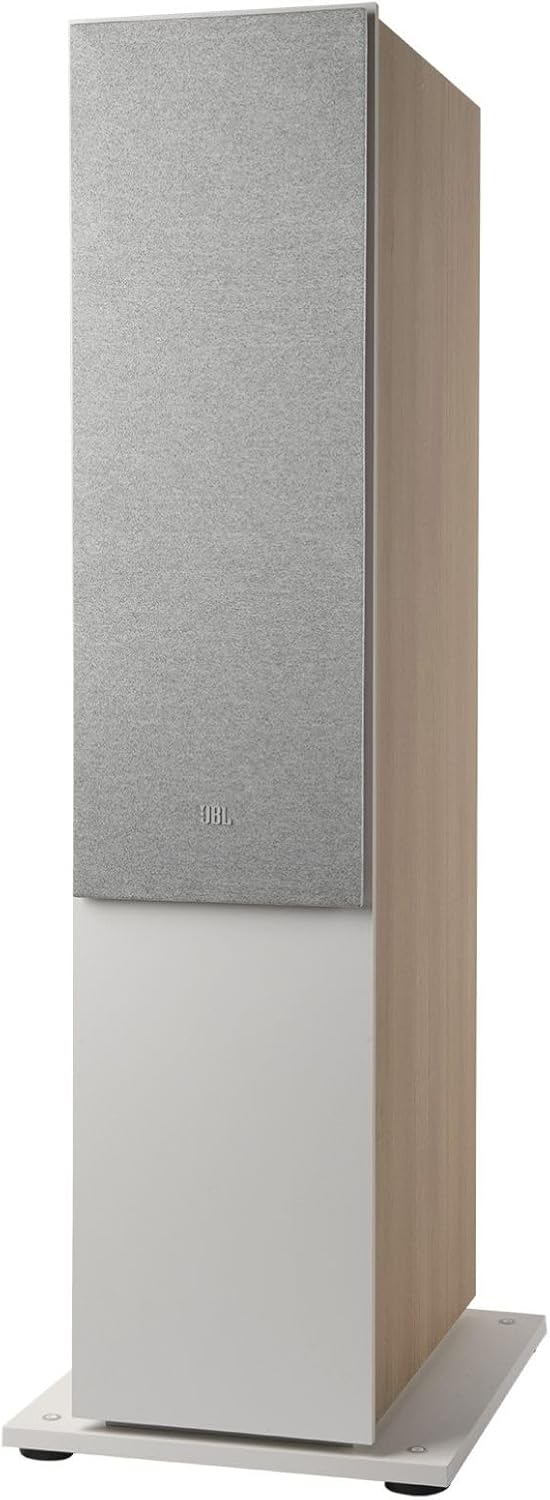
The Stage 280F puts JBL’s waveguide approach into a substantial two-woofer tower. It is the flagship floorstander in the Stage 2 range, making it a useful foundation for stereo or a matching multichannel system.
Dual 8-inch polycellulose woofers work with a 1-inch anodized aluminum tweeter in an HDI waveguide. Its 2.5-way crossover divides the work between the drivers, and two flared rear ports tune the bass system. JBL specifies 91dB at 2.83V/1m and a 6-ohm nominal impedance, so that voltage-based figure should not be read as a one-watt measurement.
The benefit is a full-sized tower with straightforward passive connections and room to develop a larger sound. The trade-off is a cabinet weighing about 55 pounds and requiring space around its rear ports. It can accommodate the optional 240H height module, but the main speaker is not an active system and still needs an appropriate amplifier.
Pros
- Dual 8-inch woofers with an HDI-waveguide tweeter.
- 2.5-way crossover and flared rear ports.
- Fits a matching Stage 2 stereo or theater system.
Cons
- Large, heavy cabinet needs floor space.
- 6-ohm load still requires suitable amplification.
FAQs: Best High Sensitivity Speakers
What Is Considered an Efficient Speaker?
Speaker sensitivity describes acoustic output at a stated input and distance, usually in dB at one meter. Electrical-to-acoustic efficiency is a different quantity, normally expressed as a percentage. The terms are often mixed in shopping language, but neither tells the whole story about sound quality.
There is no universal cutoff that makes every speaker above one number “high efficiency.” Figures around 90dB or higher can be useful starting points, but only when the methods are understood. Several Klipsch specifications here explicitly use room or half-space conditions; they should not be compared as though they were identical to another maker’s free-field measurement.
A 2.83V test corresponds to one watt only into an 8-ohm resistive load. Into 4 ohms it represents two watts, and real speaker impedance changes with frequency. With otherwise comparable one-watt measurements, roughly 3dB more sensitivity means about half the amplifier power for the same sound level within the speaker’s operating range.
Are High-Efficiency Speakers Better?
They can produce a useful listening level with less power, but greater sensitivity does not guarantee a smoother frequency response, deeper bass or better imaging. Room placement, distortion, directivity and amplifier compatibility still matter. A speaker’s power-handling rating is a limit or operating guideline, not the amount it constantly consumes.
Choose the role first. The RP-502S and RP-250S are dedicated surrounds, while the R-625FA combines separate main and height channels. A stereo system normally needs two suitable front speakers. A compact B-100 pair trades bass reach and scale for size; the larger floorstanders need more physical space.
For more compact options, the bookshelf speaker guide covers a wider selection. A suitable subwoofer can add low bass without asking the main speakers to do everything. For an older receiver, also consider the guidance in our Marantz 2270 speaker guide; high sensitivity alone does not establish a safe impedance match.
Conclusion: Most Efficient Speakers
The Heresy IV is the overall choice for a compact-height, high-sensitivity stereo design with dedicated midrange and treble horns. The Forte IV extends that approach into a larger cabinet with more bass reach. The RP-6000F II and RP-8000F II provide two conventional tower sizes, while the JBL Stage 280F offers another large, waveguide-equipped option.
The B-100 suits compact placement, the RP-502S and RP-250S cover surround duties, and the R-625FA integrates a height channel for an appropriate theater setup. Match the speaker to its job, then compare sensitivity using the stated conditions rather than treating a wattage rating or one large dB figure as a complete verdict.