Looking for the best 15-inch guitar speakers? The right driver can bring a broad low end, a different midrange character and a fresh response to a compatible combo or cabinet. The useful comparison is between speakers voiced for guitar, rather than assuming any 15-inch bass or PA driver will provide the same result.

The Celestion Fullback remains the overall pick for a warm, substantial guitar voice. The other choices span vintage-style Jensen designs, WGS alternatives and higher-power Eminence models. Match impedance, power handling and the cabinet’s physical dimensions before choosing; a larger cone is a tonal option, not an automatic improvement.
Best 15-Inch Guitar Speakers – Comparison Table
Celestion G15V-100 Fullback (Editor’s Choice)
The Fullback is the overall choice for a guitarist who wants a warm, broad voice without losing an expressive midrange. Its 15-inch cone extends the low-end character, while the familiar Celestion approach keeps driven sounds complex and musical. It is a useful direction for giving a compatible combo more weight and a softer-edged presence.
The design uses a ceramic magnet, a two-inch voice coil and a pressed-steel chassis with eight mounting holes. Celestion rates it at 100 watts and offers 8- and 16-ohm versions; the T5948 here is the 8-ohm model. The published response is 65 Hz–4 kHz, which describes a guitar-focused voice rather than a full-range hi-fi driver.
Its substantial low end is most useful when the amplifier and cabinet can keep it controlled. Check the cutout, mounting pattern and roughly six-inch overall depth before installation. Choose it for warm cleans and weighty overdrive, accepting that a brighter, more cutting speaker may suit a darker rig better.
Pros
- Warm, substantial guitar voice with expressive mids.
- 100-watt handling and ceramic construction.
- Eight-hole chassis for compatible 15-inch installations.
Cons
- Depth and mounting must suit the cabinet.
- Warm character may be too rounded in an already dark rig.
Eminence Legend 1518
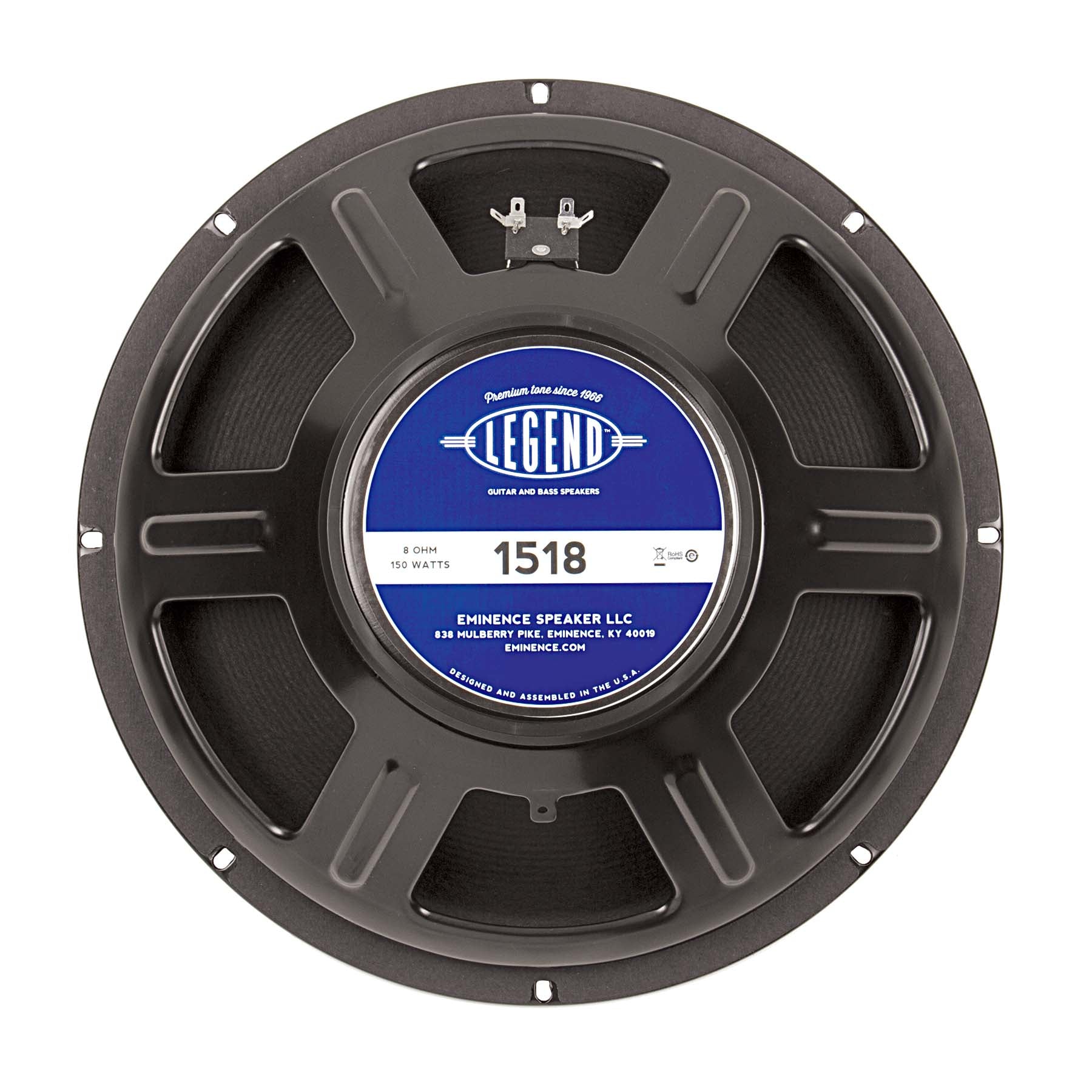
The Legend 1518 is the punchy, higher-power choice for a guitarist who wants strong lows with a mellow, singing top end. Its broad response makes it attractive for clear rhythm parts and rounded lead tones, especially when the rig needs body without an especially sharp treble edge.
Eminence specifies 150 watts, an 8-ohm load and a 60 Hz–4 kHz usable range. A ferrite magnet, paper cone and two-inch voice coil form a dedicated lead/rhythm guitar design. Its published sensitivity is high, which can be useful when output level matters without assuming that wattage alone determines loudness.
Choose it for a firm, full-bodied response in a compatible cabinet, including an appropriate open-back setup. The 8-ohm specification needs to match the amplifier’s requirement, and its efficient output may reach the desired room level before a player gets much speaker drive. It favors useful clean capacity over an assumption that a speaker must be pushed hard to sound good.
Pros
- 150-watt guitar design with strong lows and a smooth top.
- High published sensitivity.
- Useful for compatible open-back guitar cabinets.
Cons
- 8-ohm load must suit the amplifier.
- Efficient output can be less convenient for very quiet playing.
WGS G15C
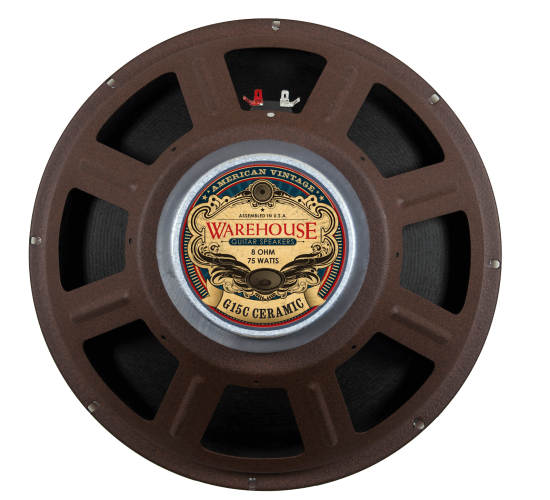
The G15C is the ceramic-magnet WGS option for a player who wants a quick attack with plenty of body. WGS voices it with an aggressive midrange and fat low end, giving it a useful balance for chord work that needs both weight and definition. It is a guitar speaker rather than a general-purpose low-frequency woofer.
Its 75-watt rating provides a different point of comparison from the higher-powered Eminence choices. WGS offers several impedance versions, so the same model name does not imply the same electrical load. The mounting information also matters: the speaker has an approximately six-inch depth and an eight-slot mounting pattern.
Choose it when the rig needs a lively, articulate response and a substantial midrange. That forward character can be too much for a system that already emphasizes the same frequencies. The goal is a useful balance with the amplifier and cabinet, rather than selecting it solely because it is larger than a 12-inch driver.
Pros
- Quick response with a full low end and assertive mids.
- 75-watt guitar-focused ceramic design.
- Several impedance versions are available.
Cons
- Forward mids may be excessive in some rigs.
- Six-inch depth and mounting pattern need checking.
Jensen C15N
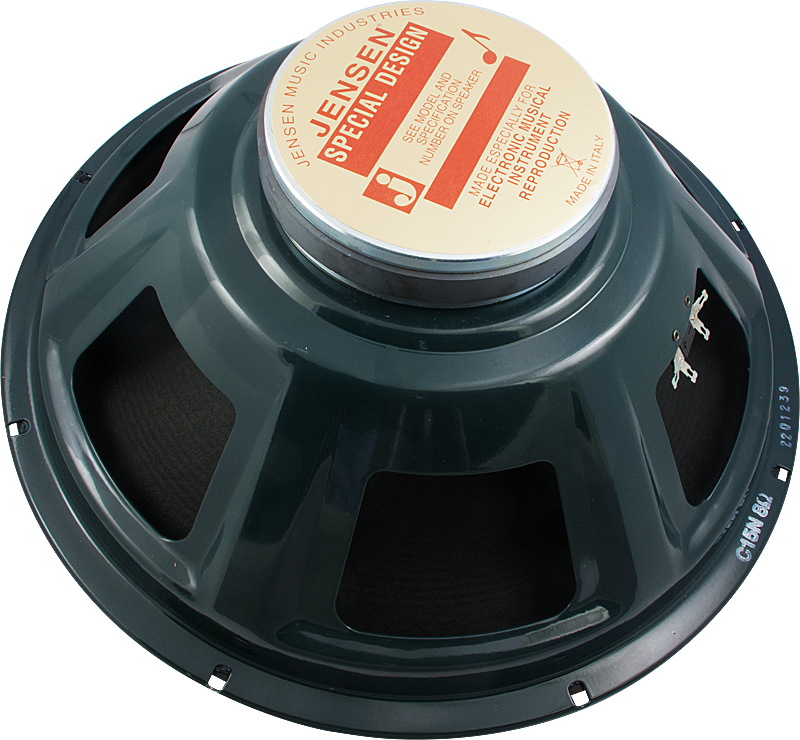
The C15N is the bright, open vintage-style choice in this group. Its ceramic design brings a cutting presence across the guitar’s range, making it appealing for clean parts that need definition and blues tones that should retain an audible attack. A large cone does not make this a dark-sounding speaker by default.
Jensen specifies a 50-watt rating with 8- and 16-ohm versions. A ferrite magnet, paper cone and one-and-a-half-inch voice coil form the design. The combination offers a useful alternative to the Fullback’s warmer direction, particularly when an amplifier benefits from a more prominent top end.
The brighter character is also the trade-off. It may expose an already sharp rig rather than soften it, and its lower power rating needs more attention beside the 100-, 150- and 400-watt models here. Choose it for vintage-style clarity in a suitably powered guitar cabinet, with the exact impedance matched to the amplifier.
Pros
- Bright, open response with a defined attack.
- Vintage-style ceramic guitar design.
- 8- and 16-ohm versions.
Cons
- 50-watt rating limits the appropriate amplifier pairing.
- Cutting presence may be too bright for some rigs.
Jensen C15K
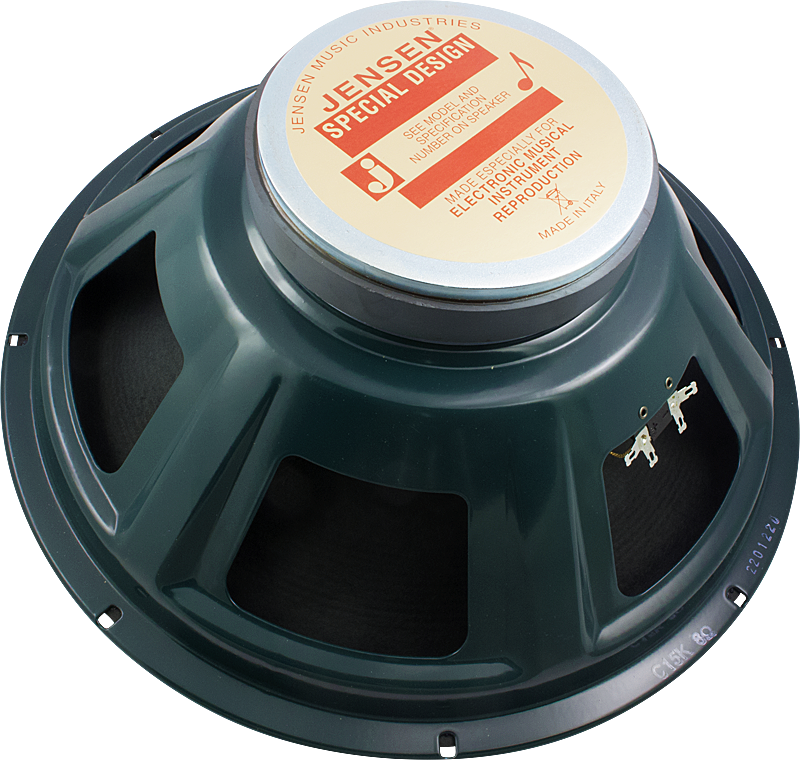
The C15K is the fuller, higher-power ceramic Jensen alternative. It pairs powerful lows with a rich midrange and smooth, extended treble, making it an inviting direction for rounded jazz lines, fusion parts and roots-oriented playing. Those are tonal starting points, not restrictions on what the speaker can handle musically.
Its 100-watt rating and two-inch voice coil distinguish it from the 50-watt C15N. Jensen offers 8- and 16-ohm versions, with a ferrite magnet and paper cone. It gives a player another way to seek a broad, substantial guitar sound without choosing the brightest model in the range.
At about 11.7 pounds, it also adds meaningful weight to a combo. Check mounting and clearance as well as the amplifier’s power and impedance requirements. Choose it when fullness and clean capacity are more useful than a light cabinet or a more pointed vintage-style edge.
Pros
- Full lows, rich mids and a smoother treble direction.
- 100-watt rating with a two-inch voice coil.
- 8- and 16-ohm versions.
Cons
- Adds substantial weight to a combo.
- Full response may need bass adjustment in a warm cabinet.
Jensen P15N No Bell
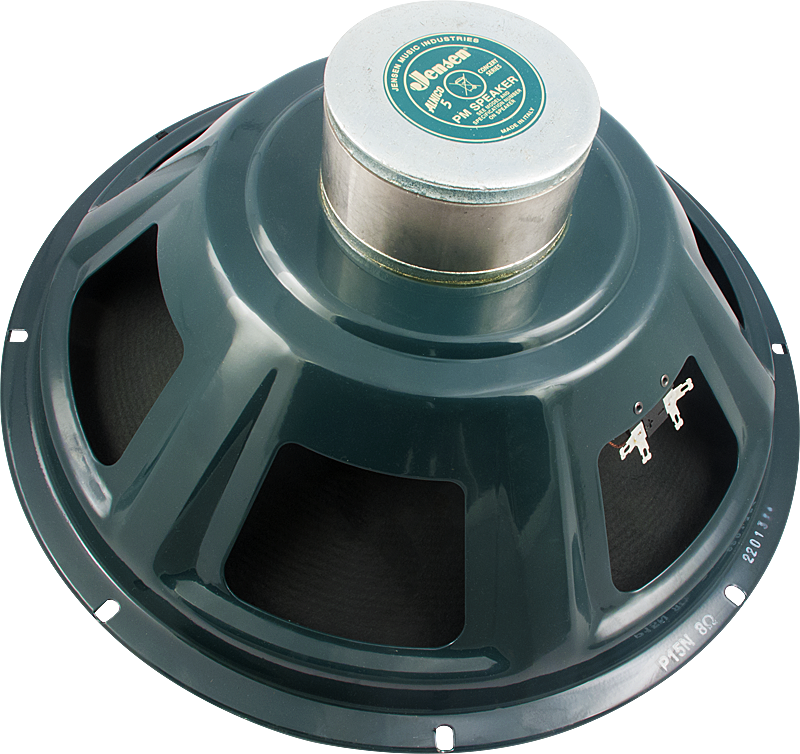
The P15N is the vintage-alnico direction for a player who enjoys warm, full-bodied cleans and a bright edge as the sound is pushed. Its deep low-end character and extended top make it a contrasting choice to the ceramic Jensens, particularly when the goal is a lively clean or pushed-clean guitar voice.
The No Bell version uses an alnico magnet, a paper cone and a one-and-a-half-inch voice coil. Jensen rates it at 50 watts and offers 8- and 16-ohm versions. Its roughly 8.6-pound weight is lower than the C15K’s, although dimensions and magnet clearance still need checking.
Choose it for that vintage-inspired response, not because alnico automatically makes every rig better. Its 50-watt rating is a real limit, and a player requiring much greater power capacity should look elsewhere in the comparison. The amplifier, enclosure and chosen level determine how its clean-to-driven character fits the music.
Pros
- Warm, full-bodied vintage-style response.
- Alnico construction with 8- and 16-ohm options.
- Lighter than the C15K in this comparison.
Cons
- 50-watt rating needs an appropriate amplifier pairing.
- Vintage character is different from a high-power clean design.
WGS G15A
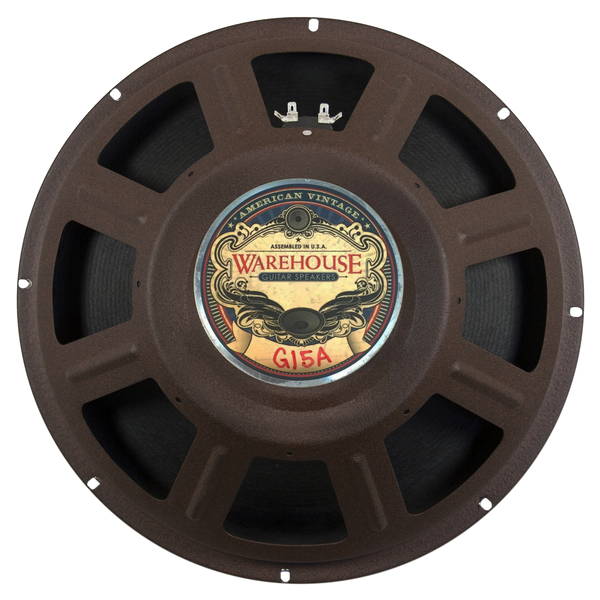
The G15A brings WGS’s articulate 15-inch approach to an alnico-magnet design. The stated tonal direction combines a quick response, assertive mids and a fat low end. It is useful for a guitarist who wants a substantial voice while keeping the initial attack clear enough for detailed rhythm playing.
Its 75-watt rating sits between the 50-watt Jensen options and the higher-powered models here. WGS offers 4-, 8- and 16-ohm versions, making the exact choice important for the amplifier’s output. The physical format also needs checking against the cabinet rather than assuming every 15-inch cutout is interchangeable.
Choose the G15A when its voicing and alnico construction suit the rig. The ceramic G15C remains a separate alternative, and magnet material alone is not a guarantee of a better sound. Its forward midrange can be an advantage in a mix or an excess in an already mid-heavy setup.
Pros
- Articulate attack with a substantial low end.
- 75-watt alnico guitar design.
- 4-, 8- and 16-ohm versions.
Cons
- Assertive mids will not suit every amplifier.
- Alnico material alone does not determine the best match.
Eminence PF-400 Paul Franklin
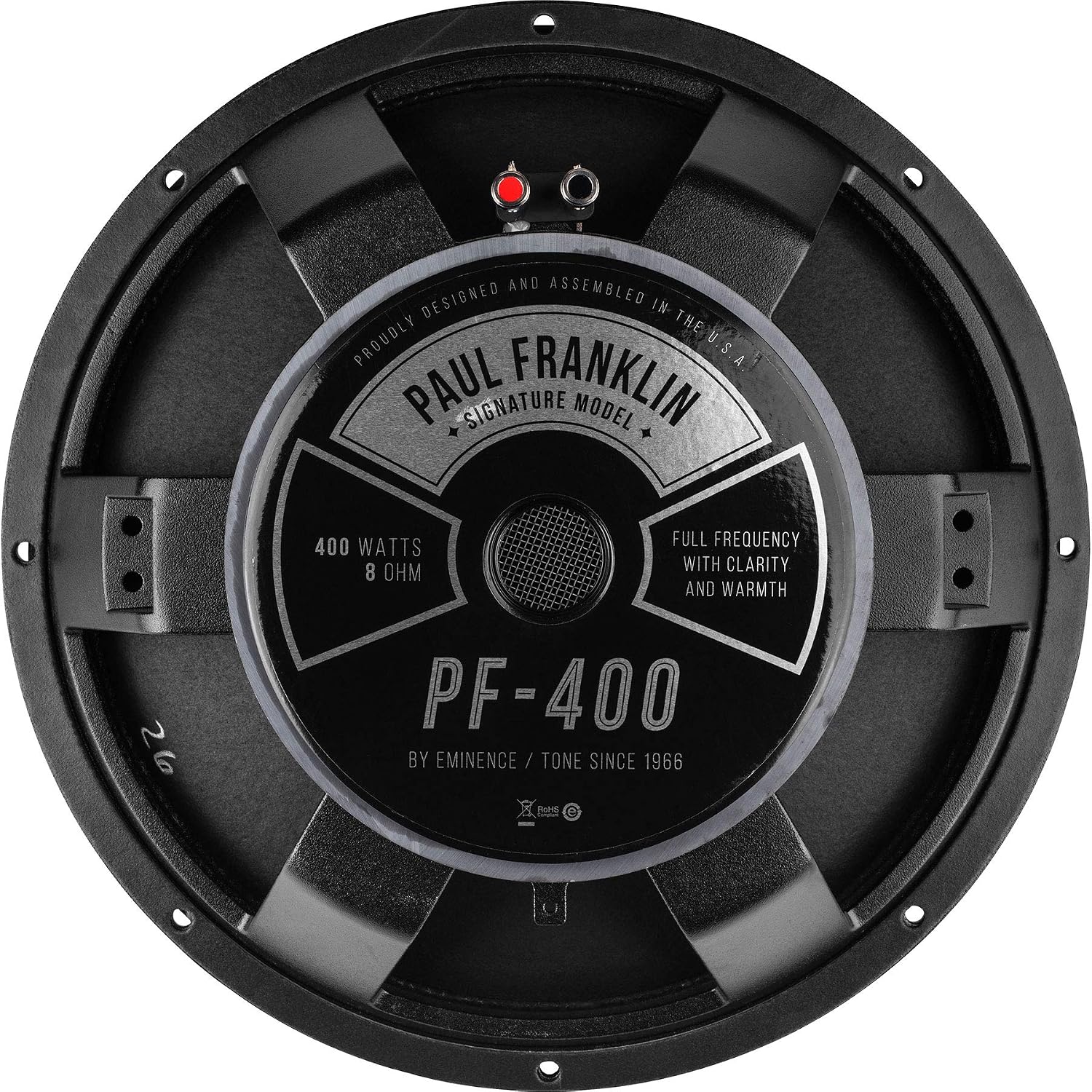
The PF-400 is the high-power specialist for pedal steel and six-string guitar. Co-developed with Paul Franklin, it aims for warmth, clarity and a balanced response as volume rises. That makes it appealing when keeping notes clear is more important than seeking early speaker breakup.
The factory specification lists 400 watts, an 8-ohm load and a 60 Hz–3.6 kHz usable range. Its four-inch edge-wound aluminum voice coil, ferrite magnet and die-cast aluminum basket support a physically substantial design.
The main compromise is size and weight: it weighs about 22.6 pounds and needs approximately six inches of depth. That is a considerable addition to a portable combo. Choose it when the system genuinely benefits from high power capacity and a clear, controlled voice, rather than treating its wattage as an automatic tonal advantage.
Pros
- High-power design for pedal steel and six-string guitar.
- Warm, clear response aimed at substantial clean capacity.
- 400 watts at 8 ohms with a four-inch voice coil.
Cons
- About 22.6 pounds adds considerable cabinet weight.
- Large power capacity is unnecessary for many smaller rigs.
Is a 15-Inch Speaker Good for Guitar?
It can be an excellent tonal option when the driver is voiced for guitar and the amplifier and cabinet suit it. A 15-inch cone does not automatically mean slower attack, more useful bass or better power handling than every smaller speaker. The motor, cone, suspension and enclosure all contribute to the response.
Guitar drivers also serve a different job from many PA woofers and bass drivers. A larger low-frequency specification does not by itself produce the midrange character or driven response a guitarist wants. Compare the actual design and application rather than choosing by diameter alone.
Pay Close Attention to the Frequency Response Range
A published range is a useful reference, but the shape of the response within that range matters too. Two speakers with similar endpoints can have quite different mids and treble. The cabinet, microphone position and amplifier settings also change what reaches the listener.
Match the impedance to the amplifier’s requirements and allow an appropriate power-handling margin for the intended use. For multi-speaker cabinets, calculate the combined load and power sharing. Check the baffle cutout, bolt circle, depth and clearance around transformers or tubes before installation; a nominal 15-inch size does not guarantee a physical fit.
Make wiring changes with the amplifier switched off and disconnected. Use suitable speaker cable, maintain the intended polarity and follow the amplifier manufacturer’s load instructions. A speaker swap should improve the rig’s voice while preserving a sound electrical and mechanical installation.
Conclusion: The Best 15-Inch Guitar Speakers
The Fullback remains the overall choice for a warm, substantial guitar sound. The Legend 1518 and PF-400 offer different levels of power capacity, the Jensen models provide distinct vintage-style and fuller voices, and the WGS options emphasize articulate attack with strong mids. Choose the response, load and physical fit that suit the existing rig rather than chasing the largest wattage number.