The best speaker for Marshall DSL40C depends on what the amp needs: more midrange bite, a warmer crunch, firmer lows or a smoother attack. A replacement also needs the right diameter, power handling and impedance, with enough clearance for its magnet and basket.

The Vintage 30 remains the overall choice for a strong, defined rock voice. The G12M-65 Creamback favors woody warmth, the G12H-75 adds tighter punch, the Alnico Cream offers a smoother approach with substantial power capacity, and the Gold brings a lively alnico character. These are 12-inch options for the original 40W DSL40C; check the actual speaker version and output connection before installation.
The 5 Best Speakers for Marshall DSL40C
Celestion Vintage 30 (Editor’s Choice)
The Vintage 30 is the strongest all-round recommendation when the DSL40C needs a defined rock voice. Its prominent, vocal mids give distorted riffs a clear center, while the warm low end and upper detail help single notes retain shape. It is a useful direction for a player who wants the amp to cut through without relying only on extra treble.
The 12-inch ceramic design is rated at 60W with 100dB sensitivity, and the linked version is 16 ohms. That impedance follows the original combo’s nominal speaker arrangement. Its power rating gives more capacity than the amp’s nominal 40W output, although the full installation and operating level still need sensible attention.
The trade-off is its assertive midrange. A bright guitar or aggressive distortion pedal can make that character more pronounced, so it may need different EQ from the stock speaker. Players who want softer edges may prefer the G12M-65 or Alnico Cream. For a purposeful, recognizable rock sound, the Vintage 30 remains a convincing place to start.
Pros
- Vocal mids help distorted guitar retain definition.
- 60W handling and 100dB published sensitivity.
- Linked 16-ohm version suits the original nominal load arrangement.
Cons
- Forward mids may need EQ with a bright rig.
- Magnet and basket clearance still need checking.
Celestion G12M-65 Creamback

The G12M-65 Creamback is the warmer, woodier alternative. It draws on the G12M character, with vocal mids, crunchy upper mids and a more rounded presentation than a speaker chosen mainly for bite. That makes it appealing for blues-rock and classic crunch sounds from the DSL40C.
It is a 65W ceramic-magnet speaker. Its 97dB sensitivity is lower than the 100dB rating of the Vintage 30, so the larger wattage number should not be read as a louder result. The appeal is the balance and texture of the sound, with enough rated capacity for this amp’s intended single-speaker use.
The exact version linked here is eight ohms. For a single-speaker installation it must use an appropriate eight-ohm output according to the Marshall manual, rather than leaving the lead in the stock 16-ohm socket. A qualified technician can check the wiring and clearances. Tonally, players seeking the firmest low end or strongest attack may prefer the G12H-75 instead.
Pros
- Woody G12M-style voice with warm, vocal mids.
- 65W power handling.
- Lower sensitivity offers a different loudness balance.
Cons
- Linked eight-ohm version requires the correct amp output.
- Less focused on tight lows and attack than the G12H-75.
Celestion G12H-75 Creamback
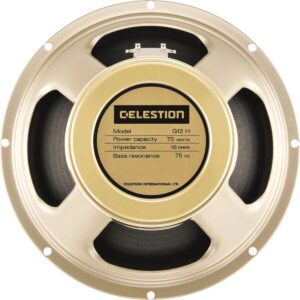
The G12H-75 is the punchier Creamback option. Its heavier ceramic magnet shifts the balance toward firmer lows and a more pronounced upper response than the G12M-65. That can suit a DSL40C that needs stronger definition on riffs and more body behind single-note leads.
The 12-inch driver is rated at 75W and 100dB sensitivity. The linked T5891 is the 16-ohm version, keeping the impedance choice straightforward for the original single-speaker arrangement. Compared with the M65, its main attraction is a tighter, more forceful feel rather than simply a larger number on the specification sheet.
The compromise is weight and brightness. The larger magnet adds load to an already substantial combo, and the more energetic top end may need balancing with a sharp guitar or bright settings. Its roughly 5.4-inch overall depth also needs checking against the actual chassis and tube clearance. Choose it when punch and articulation are the main goals.
Pros
- Firmer low end and punchier response than the M65.
- 75W handling with 100dB sensitivity.
- Linked version is 16 ohms.
Cons
- Heavy magnet adds to combo weight.
- Pronounced upper response and depth need consideration.
Celestion Alnico Cream (Highest Power Handling)
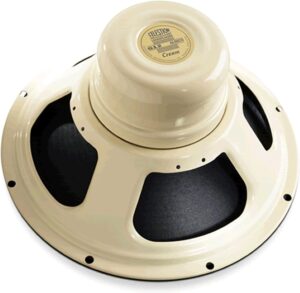
The Alnico Cream takes a smoother route to a vintage-flavored sound. Celestion voices it around warm lows, a relaxed attack and bell-like upper detail. In the DSL40C, that makes it a useful candidate for a player who wants expressive cleans and overdrive with less emphasis on a hard, immediate edge.
Its 90W rating provides the greatest power capacity in this selection, while the alnico magnet distinguishes it from the ceramic Creambacks. The exact version here is 16 ohms, with a 12-inch diameter and 100dB sensitivity. The higher rating is useful capacity; it does not mean the amp must be turned up to make the speaker worthwhile.
The substantial rear magnet cover makes clearance especially important: Celestion specifies a 6.5-inch overall depth. Measure the actual cabinet and tube space before installation. Its softer attack may also feel less direct than a ceramic option when the goal is hard-edged rhythm work. Choose it for its smooth alnico character and generous power allowance, with the fit checked carefully.
Pros
- 90W rating gives the most power capacity in this group.
- Warm lows and a relaxed alnico attack.
- Linked 16-ohm version with 100dB sensitivity.
Cons
- Deep rear assembly requires careful clearance measurement.
- Softer attack may not suit a sharply percussive sound.
Celestion Gold

The Gold is the lively alnico option. It combines classic chime with a responsive feel, detailed upper tones and a warm, settled presentation. It is an attractive choice when the DSL40C’s cleaner sounds and touch response matter as much as its higher-gain channel.
The 12-inch speaker is rated at 50W with 100dB sensitivity. Its capacity is above the amp’s nominal 40W rating, but the margin is smaller than with the Cream or either Creamback. Players who regularly drive the power stage hard may prefer the additional allowance of a higher-rated model.
The linked version is nominally 15 ohms; Celestion treats 15- and 16-ohm speakers as the same impedance class for matching purposes. Its alnico rear assembly still needs a real clearance check before fitting. The Gold makes sense when a responsive alnico voice is the main priority and its power capacity suits the intended use.
Pros
- Responsive alnico character with detailed upper tones.
- 50W handling is higher than the amp’s nominal output.
- 100dB published sensitivity.
Cons
- Less power margin than the other options here.
- Rear magnet assembly needs a clearance check.
Is Marshall DSL40C Reliable?
The DSL40C is a valve combo, so condition, ventilation and maintenance matter. Tube wear, damaged speaker wiring or an incorrect load can affect operation. A replacement speaker changes the sound; it should not be used to mask a fault in the amp. Have abnormal noise, overheating or intermittent output checked by a qualified technician.
What Kind of Speaker Is in the Marshall DSL40C?
The standard original DSL40C uses a 12-inch Celestion Seventy 80 with a nominal 16-ohm impedance. Individual special editions or previous owner modifications can differ, so check the installed driver and rear panel. The later DSL40CR is a different model.
The DSL40C manual identifies three speaker outputs: one dedicated 16-ohm socket and two sockets for an eight-ohm total load. It does not support a load below eight ohms, and using the dedicated 16-ohm socket disables the other speaker outputs. Follow the manual for the actual speaker arrangement; the eight-ohm M65 linked here needs a different output connection from the original 16-ohm setup.
How to Choose the Right Speaker for Marshall DSL40C?
Know Dimensions
Check the 12-inch cutout, mounting pattern, basket and magnet depth, with clearance from the chassis and tubes. Matching the nominal diameter does not guarantee every rear assembly fits. Keep the original hardware where appropriate, and let a qualified technician handle the installation if the wiring or internal clearances are uncertain.
Magnet Used
Ceramic and alnico designs can offer different response and tonal balances, but magnet material alone does not decide the sound. The Vintage 30 and Creambacks use ceramic magnets; the Cream and Gold use alnico. Compare the whole speaker design and the character it brings to the amp.
Power Requirements
Choose enough rated capacity for the amplifier and how it will be used, with a sensible margin for demanding operation. The DSL40C is nominally 40W at full power, and its reduced-power setting is not a reason to choose an under-rated driver for normal use. Sensitivity affects loudness separately from power handling, and a live performance does not impose one universal minimum speaker wattage.
Brand
Good technical data and appropriate construction are more useful than a brand name alone. Check the exact model, impedance and dimensions before ordering. These Celestion options cover different tonal directions, so the best choice is the one that addresses a real need in the current rig.
Conclusion: The Best Speakers for DSL40C Are…
The Vintage 30 remains the overall choice for defined rock tones. Choose the G12M-65 for woody warmth, the G12H-75 for tighter punch, the Alnico Cream for smoother attack with generous power capacity, or the Gold for a lively alnico response.
Confirm the exact impedance, correct output socket and physical clearance before fitting. A well-chosen speaker can make the amp more enjoyable, but the final sound still depends on the guitar, settings, room and player.