The best speakers for doom metal need to do more than produce a big low end. Slow riffs, fuzz and down-tuned chords also benefit from enough midrange definition to keep the guitar audible. This selection focuses on replacement drivers for guitar amplifiers and cabinets, with four different approaches to weight, attack and headroom.

The Celestion Vintage 30 is the overall choice for its prominent, detailed midrange. The G12T-75 offers a different high-gain balance, the G12K-100 emphasizes firm lows and power handling, and the Eminence Swamp Thang favors a thick, substantial voice. Match the chosen impedance, cabinet fit and total power handling to the actual amplifier.
The 4 Best Speakers for Doom Metal
| Image | Model | Price |
|---|---|---|
| Celestion Vintage 30 (Editor's Choice) | Check Price |
 | Celestion G12T-75 | Check Price |
 | Celestion G12K-100 | Check Price |
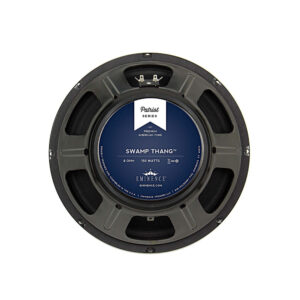 | Eminence Swamp Thang | Check Price |
Celestion Vintage 30 (Editor’s Choice)
The Vintage 30 earns the overall choice because heavy guitar needs a voice as well as weight. Its rich, vocal midrange helps riffs retain an identifiable center through fuzz and layered distortion, while the low end stays warm and the upper detail keeps the sound from becoming featureless. That balance makes it a versatile starting point across several shades of doom.
This is a 12-inch ceramic-magnet guitar speaker rated at 60W, with a published sensitivity of 100dB. It can work as a single driver in a suitable combo or as part of a multi-speaker cabinet. The 8-ohm version linked here should be selected only when it suits the amplifier and wiring arrangement.
The trade-off is its assertive voice. With an already bright amplifier or a sharp fuzz pedal, that midrange emphasis may need some EQ, and players seeking a softer, darker presentation may prefer another option. Its 60W rating also demands sensible headroom planning for loud amplifiers. The appeal is clarity and character within a heavy sound, rather than simply maximum bass.
Pros
- Vocal midrange gives dense riffs definition.
- 60W rating and 100dB published sensitivity.
- Useful in suitable single- and multi-speaker guitar cabinets.
Cons
- Assertive mids may need balancing with bright rigs.
- Power handling must suit the amp and cabinet configuration.
Celestion G12T-75
The G12T-75 suits a player who wants a broad, controlled low end with a softened upper response under distortion. Celestion designed it for high-gain amplifiers, and that combination can work well when a doom rig needs size without every upper harmonic becoming abrasive. It offers a different balance from the Vintage 30’s more vocal presentation.
The 12-inch ceramic design is rated at 75W with 97dB sensitivity. That lower sensitivity figure matters: a higher wattage rating does not automatically make it louder than the Vintage 30 at the same input. Its sound and usable volume should be judged in the actual cabinet, especially when mixing different drivers.
The linked version is 16 ohms, so it calls for the appropriate amplifier output and wiring. A player who relies on a pronounced midrange to stand out in a dense band mix may want to compare it carefully with the Vintage 30. Its strengths are a substantial low end and a more forgiving top-end character, rather than one universally ideal metal tone.
Pros
- Controlled low end suits high-gain guitar sounds.
- Softened top-end character can suit abrasive distortion.
- 75W power handling.
Cons
- Lower sensitivity than the other drivers here.
- Linked 16-ohm version must suit the amplifier and wiring.
Celestion G12K-100
The G12K-100 is the weight-and-control option. Celestion pairs a large ceramic magnet with a 100W rating and a voice built around substantial lows, firm mids and restrained treble. For down-tuned guitar, that can provide a useful foundation when the amplifier or fuzz pedal already supplies plenty of edge.
Its 99dB sensitivity and 12-inch format make it a strong candidate for a suitable high-output guitar cabinet. It can also work in an appropriately designed combo; the important distinction is whether its depth, mounting pattern and 8-ohm impedance suit the equipment. Its bigger power allowance is useful when a lower-rated driver would leave too little margin.
The compromise is physical weight and character. At roughly 10.4 pounds, it adds a noticeable load to a portable cabinet, and its restrained upper response may not provide the extra bite a dark amplifier needs. This is a good direction for thick, controlled guitar tones, especially when a loose low end has become the weak point in the rig.
Pros
- 100W power handling.
- Substantial low end with a restrained upper response.
- 99dB published sensitivity.
Cons
- Heavy driver adds to cabinet weight.
- May need more upper-mid presence with a dark amplifier.
Eminence Swamp Thang
The Swamp Thang is the choice for a thick, chunky guitar voice with considerable power capacity. Eminence designed it with heavier playing and down-tuned or seven-string guitars in mind. Its strong low-end character and sustain make it an attractive direction for slow riffs that need to feel broad and substantial.
The 12-inch, 8-ohm driver is rated at 150W and uses a ferrite magnet with a two-inch voice coil. Eminence lists open- and closed-back applications, so its usefulness extends beyond one cabinet format. The final bass response still depends on the enclosure, amplifier settings and placement; the speaker is one part of that result.
The same thickness can be a drawback when the rig already has excessive bass or low-mid buildup. Some EQ may be needed to preserve the space around bass guitar and drums, and the driver’s weight and mounting depth need checking before installation. Choose it for a full, sustained guitar sound with generous power capacity, rather than expecting it to make every amp sound the same.
Pros
- 150W rating provides generous power capacity.
- Voiced for thick guitar tones and demanding lower tunings.
- Suitable for appropriate open- or closed-back cabinets.
Cons
- Low-end weight can require careful EQ in a dense mix.
- Cabinet depth and the heavier driver need checking.
Do Expensive Speakers Make the Difference for Doom Metal?
A more expensive driver is not automatically a better match. Guitar speakers deliberately color the sound, and the right response matters more than a premium label. Decide what the existing rig needs: firmer lows, more midrange presence, a softer top end or greater power handling.
Extended Dynamic Range
Enough power handling helps the speaker cope with the intended amplifier, but wattage alone does not describe feel or loudness. Sensitivity, enclosure design and the way the amplifier responds all influence the result. Choose sufficient capacity without assuming that the largest rating produces the most expressive sound.
Minimal Distortion Even at Higher Volume Levels
Fuzz and amplifier distortion can be part of the music; an overloaded or mechanically stressed speaker is a different matter. Use an appropriate power margin and listen for unwanted strain. Some speaker coloration may be desirable, but excessive cone movement should not be treated as a shortcut to a heavier tone.
Detailed Sonic Imaging and Open Soundstage
For a guitar cabinet, focus on projection and how the sound sits in the band. Speaker direction, cabinet construction and microphone position can change what the audience or recording captures. A replacement guitar driver is not intended to reproduce a full-range stereo image like a hi-fi system.
Thumping Bass
Down-tuned guitar needs weight, but it also needs room beside the bass guitar and kick drum. Excessive low end can make a riff less distinct. Use cabinet choice and EQ to keep the bottom end controlled; a separate subwoofer is not a requirement for a guitar rig.
Clean, Crystal-Clear, and Crisp Audio
Useful clarity means hearing the attack and shape of a chord through the chosen distortion. It does not mean reproducing the entire audible frequency range. These guitar drivers shape and limit the upper response as part of their musical character.
How to Choose the Best Speakers for Heavy Metal?
When comparing speakers for heavy metal, start with the practical requirements:
- Match the amplifier’s required impedance and the complete cabinet wiring arrangement.
- Check the cutout, mounting pattern, depth and available clearance.
- Allow suitable power-handling headroom for the amplifier and intended use.
- Choose the tonal balance the rig needs, considering sensitivity as well as wattage.
- Assess low end, mids and treble in the context of the cabinet and band mix.
These four models are guitar drivers. A bass-guitar cabinet needs drivers and an enclosure designed for that application; a low tuning alone does not make the two categories interchangeable.
So, The Best Speaker for Doom Metal Is…
The Celestion Vintage 30 is the overall recommendation for a defined, vocal guitar sound that remains useful under heavy distortion. The G12T-75 offers a controlled alternative with softer upper character, the G12K-100 adds power handling and firm weight, and the Swamp Thang favors thick, sustained lows.
Choose for the complete rig rather than the wattage label. Correct impedance, suitable power capacity and a cabinet that fits the driver come first; the preferred tonal balance decides the rest.