Looking for the best single coil-sized humbucker? These pickups offer ways to reduce hum or add a fuller voice while keeping a single-coil-sized mounting format. The right choice depends on whether the guitar uses Strat-style or Tele-style pickups, and whether the goal is heavier drive or a more traditional clean sound.
If coil splitting is part of the planned wiring, compare Humbuckers for Coil Splitting; pickup dimensions alone do not establish the available wiring options.

A rail humbucker and a vintage-voiced noiseless pickup solve different problems. Some emphasize output and thick mids; others aim to preserve single-coil character with less hum. The options below include both approaches, with the correct guitar position and pickup format identified for each.
Best Single Coil-Sized Humbuckers – Comparison Table
Seymour Duncan Hot Rails SHR-1B, Black (Editor’s Choice)
The bridge Hot Rails is the overall choice when a Strat-style guitar needs a more forceful rock voice. It puts a high-output humbucker into a narrow housing, making it an appealing alternative to cutting the pickguard for a full-sized bridge pickup.
Two blades, overwound coils and a ceramic magnet give it the design ingredients for strong output and a thick midrange. Seymour Duncan voices this bridge version for aggressive crunch, full chords and prominent lead notes. Four-conductor wiring allows alternative switching arrangements, and wax potting helps control microphonic feedback.
The practical trade-off is a clear move away from a traditional Strat bridge sound. Its fuller voice can be welcome under gain, but a player seeking maximum glassy bite may prefer a lower-output design. It is a Strat-sized bridge model, not a universal replacement for a Tele bridge, bass or acoustic guitar pickup.
Pros
- High-output bridge voice for rock and heavier styles.
- Dual blades in a Strat-sized housing.
- Four-conductor wiring for flexible switching.
Cons
- Less traditional single-coil bite.
- Output balance may need adjustment alongside lower-output pickups.
Seymour Duncan Hot Rails SHR-1N, Black

The black neck/middle Hot Rails brings the same rail-humbucker approach to the other end of the guitar. Its appeal is a warm, substantial neck voice that can keep pace with a powerful bridge pickup, rather than a thin clean sound that disappears when the selector moves away from the bridge.
This version uses a ceramic magnet, overwound coils and two blades, but its winding is tailored for neck or middle use. Seymour Duncan describes a fat clean response and a fluid lead character. The continuous blades provide string coverage during bends without relying on each string staying directly above an individual pole piece.
It makes sense in a Strat-style guitar built around fuller clean tones and singing overdrive. The compromise is less airy, vintage-style neck sparkle than a conventional single coil. Height adjustment and the balance with the other pickups matter more than simply choosing the hottest model at every position.
Pros
- Full neck/middle voice suited to a hotter bridge pickup.
- Dual blades provide coverage during string bends.
- Four-conductor lead and wax-potted construction.
Cons
- Thicker voicing may be too far from a vintage Strat neck sound.
- Mixed pickup sets need careful level balancing.
Seymour Duncan Little ’59 ST59-1B for Tele

The Little ’59 for Tele is for a player who likes the Telecaster’s feel but wants a fuller bridge sound. It takes a PAF-inspired approach in a Tele bridge-sized housing, giving country-to-rock players another route to rounded chords and more substantial lead lines.
The passive ceramic design has adjustable pole screws, four-conductor wiring and wax potting. Seymour Duncan describes an even bass/treble balance with a slightly scooped midrange. Parallel and split wiring options add flexibility when the guitar has the appropriate switching.
Its strength is broadening the bridge voice without fitting a full-sized humbucker. That also changes the familiar Tele attack, so it is less compelling for someone whose priority is the sharpest traditional twang. This is the Tele bridge model; the similarly named Strat Little ’59 uses a different mounting format.
Pros
- PAF-inspired voice in a Tele bridge format.
- Adjustable poles and four-conductor wiring.
- Useful parallel and split wiring options.
Cons
- Changes the traditional Tele bridge character.
- Tele bridge format does not fit a standard Strat pickup opening.
Seymour Duncan Duckbuckers SDBR-1N, White

The Duckbucker is the option for a player who wants less hum while keeping a brighter, more buoyant Strat-style response. It is a useful counterpoint to the thick Hot Rails voice, especially for clean rhythm parts and the familiar combined-pickup sounds.
Its two coils use a distinctive split-pole layout, with three pole pieces on each coil. The intended parallel wiring produces the more single-coil-like sound. Four-conductor wiring also allows a series option for a hotter voice, while the ceramic magnet and wax-potted construction complete the design.
The neck/middle model works particularly well as a contrasting voice in a guitar with stronger-output pickups elsewhere. Its lighter parallel-wired character will not push an amplifier like the Hot Rails. Getting the intended sound also depends on following its wiring instructions rather than treating every four-conductor pickup as electrically identical.
Pros
- Bright, single-coil-like parallel-wired response.
- Useful neck/middle contrast to hotter pickups.
- Four-conductor wiring permits a series option.
Cons
- Lower-output character is not the strongest choice for maximum drive.
- Intended parallel wiring needs attention during installation.
Seymour Duncan Hot Rails SHR-1N, Cream

This cream SHR-1N is the same neck/middle Hot Rails design in a different finish. It belongs on the shortlist when a cream or aged-looking pickguard suits the guitar better than black; it is not a separate tonal upgrade over the black version above.
The ceramic magnet, overwound coils and twin rails provide the same warm, full clean voice and thick lead response. Four-conductor wiring supports alternative switching, and the wax-potted construction helps reduce microphonic feedback. It is intended for a Strat-style neck or middle position.
The decision is chiefly visual and system-related: choose the finish that suits the instrument, then balance its height against the bridge pickup. It still trades some traditional single-coil openness for a fuller humbucker character. Changing the cover color does not remove that trade-off or turn it into the hotter bridge winding.
Pros
- Cream finish for a matching visual theme.
- Same full neck/middle Hot Rails voice as the black version.
- Four-conductor wiring and dual blades.
Cons
- No tonal advantage over the equivalent black model.
- Thicker sound is less suited to a strictly vintage Strat brief.
Fender Vintage Noiseless Tele Pickup Set

The Vintage Noiseless Tele set takes a different direction from a high-output rail pickup. Its purpose is to keep a recognizable vintage Tele voice while reducing the hum associated with a conventional single coil, making it appealing for clean parts and lightly driven rhythm work.
The set uses Alnico 2 magnets, enamel-coated magnet wire and flush-mount pole pieces. Fender describes a warmer attack and a less aggressive midrange, with a clear neck voice and familiar bridge bite. Having the corresponding neck and bridge pickups together also makes this a coordinated change rather than a single-position experiment.
The attraction is the vintage-oriented balance, not maximum output or the thickest rock lead sound. A player looking for the Hot Rails effect should choose accordingly. These are Tele neck and bridge formats; they are not interchangeable with each other or with standard Strat pickups, and the noiseless label is not a promise to eliminate every source of noise in the rig.
Pros
- Coordinated Tele neck and bridge set.
- Vintage-oriented voicing with reduced pickup hum.
- Alnico 2 magnets and flush-mount poles.
Cons
- Not aimed at maximum-output rock tones.
- Tele-specific formats require the appropriate mounting layout.
Seymour Duncan Cool Rails SCR-1N, Black
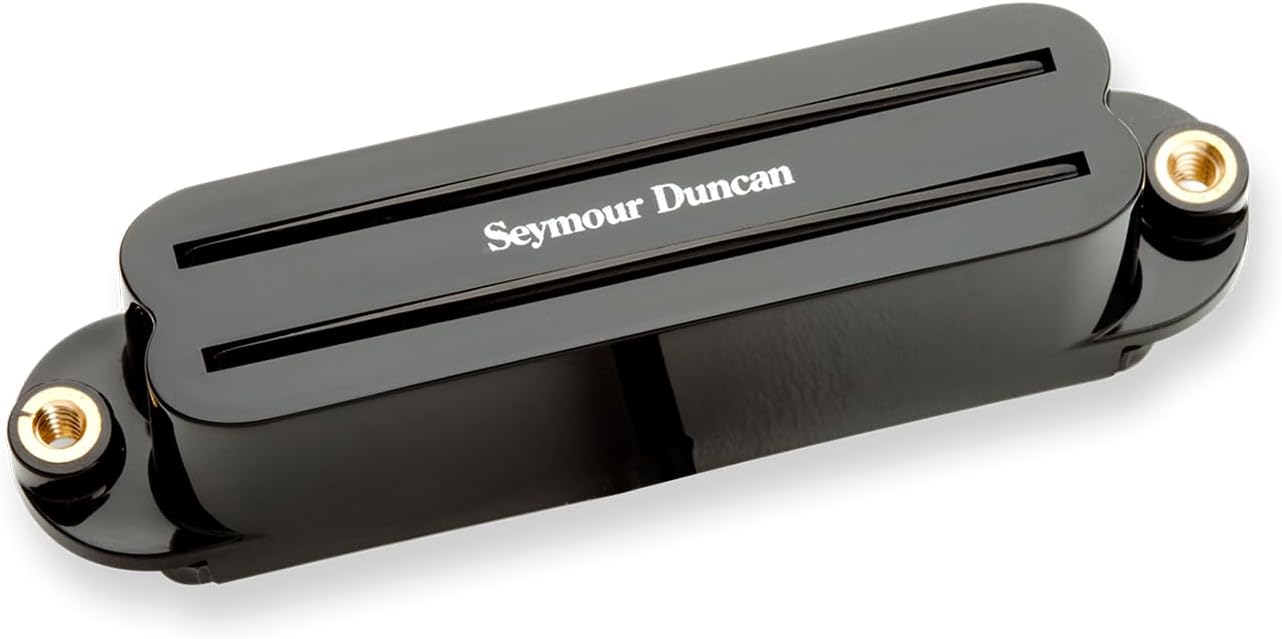
The neck/middle Cool Rails is a useful middle ground between vintage single-coil sparkle and the heavier Hot Rails sound. It offers a full humbucker-style neck voice with a more moderate output, making it attractive for clean chords, blues leads and guitars with a stronger bridge pickup.
The passive design combines a ceramic magnet, twin blades and four-conductor wiring. Seymour Duncan voices it with warm, articulate chords and a subtle midrange scoop. Wax potting helps control microphonic feedback, while the blades maintain string coverage during bends.
Its strength is a rounded neck sound that need not be as forceful as Hot Rails. The trade-off is still a departure from a traditional single-coil response, and it is less suited to someone who wants the greatest possible output. Choose it for that balance rather than expecting the name “Cool” to mean a weak or purely vintage pickup.
Pros
- Medium-output neck/middle voice with clear, full chords.
- Dual blades and four-conductor wiring.
- Pairs well with a stronger bridge humbucker.
Cons
- Still changes the character of a traditional single-coil neck pickup.
- Less output than Hot Rails for the most aggressive brief.
FAQs: Single Coil-Sized Humbuckers
Are Single Coil Humbuckers Good?
They are useful when the goal is hum cancellation or a fuller voice without installing a full-sized humbucker. Rail models such as Hot Rails and Cool Rails emphasize different levels of output and thickness; a Duckbucker aims for a more single-coil-like response in its intended parallel wiring.
Pickup choice does not restrict a guitar to a fixed list of genres. The amplifier, effects, playing style and pickup height all contribute. For other approaches, compare our guides to single-coil pickups and single-coil pickups for metal.
Who Makes the Best Single Coil Sized Humbuckers?
Seymour Duncan offers several distinct designs in this format, from the high-output Hot Rails to the brighter Duckbucker and medium-output Cool Rails. Fender’s Vintage Noiseless Tele set serves a more traditional Tele brief. The strongest choice is the one that matches the guitar’s mounting format and the sound the player wants; there is no useful universal winner for every instrument.
Strat and Tele pickup shapes are different. A neck model and a bridge model may also use different windings or mounting arrangements. Check the exact dimensions and wiring diagram before installation. A loaded Strat pickguard is another option when several pickups and the controls need changing together.
Can a Humbucker Sound Like a Single Coil and Vice Versa?
Parallel wiring or a coil split can make some humbuckers brighter and lower in output, but neither makes every design identical to a traditional single coil. Splitting usually gives up the hum cancellation supplied by the full humbucker. A parallel-wired Duckbucker is designed around a different balance from a series-wired high-output rail pickup.
EQ, gain and effects can shift the overall sound, but they do not change the pickup’s physical construction. Start with the right basic voice and use the amplifier controls to refine it. Different pickup brands may also use different wire color codes, so follow the diagram for the exact model.
Conclusion: The Best Single Coil-Sized Humbucker
The Hot Rails SHR-1B remains the overall choice here for adding a strong rock bridge voice to a Strat-style guitar. The black and cream SHR-1N options bring its fuller approach to the neck or middle, while Cool Rails offers a more moderate-output alternative and Duckbuckers favors brighter clean rhythm sounds.
For a Telecaster, the Little ’59 bridge model emphasizes a fuller PAF-inspired voice; the Fender Vintage Noiseless set stays closer to the traditional Tele direction. Choose the correct shape and position first, then decide how far the sound should move from a conventional single coil.