Looking for the best wireless headset microphone for singing live? First decide whether you need a complete wireless system or a headset for equipment you already own. This comparison also includes wired XLR models for singers who want hands-free operation with a simpler setup.

The six choices below cover different needs: focused wired vocals, a microphone for a compatible bodypack, a discreet earset and complete wireless sets. Audio-Technica’s PRO 8HEx remains the overall pick for straightforward wired use; the best wireless choice depends on the stage and the equipment required.
Best Headset Microphones for Singing Live – Comparison Table
Audio-Technica PRO 8HEx (Editor’s Choice)
The PRO 8HEx remains the overall choice for a singer who wants dependable hands-free pickup and can use a cable. Its dynamic capsule and hypercardioid pattern favor a close, focused vocal over a more room-inclusive sound. That makes it especially useful for a drummer, keyboard player or instrumentalist working near other sound sources.
A flexible boom can descend from either side, and cushioned support pads help keep the headset in position. The permanently attached cable ends in a standard three-pin XLR plug for a mixer or microphone interface. It does not need phantom power, although a suitable microphone preamp is still required; the USB connection belongs to the interface, not the headset.
The wired connection avoids transmitter batteries and radio-channel setup, at the cost of restricting movement. Hypercardioid pickup also has a rear lobe, so monitor placement still matters. Choose this XLR version for straightforward wired use; Audio-Technica’s differently terminated PRO 8HEcW is the version intended for a UniPak bodypack.
Pros
- Focused hypercardioid dynamic pickup
- XLR connection without phantom-power requirements
- Adjustable boom and stable support pads
Cons
- Cable limits freedom of movement
- Rear pickup lobe requires considered monitor placement
Shure SM35-TQG Performance Headset

The SM35-TQG is a performance headset microphone for a compatible wireless bodypack, rather than a complete radio system. Its electret condenser capsule uses a cardioid pattern to favor the singer over off-axis stage sound. The low-profile headband and flexible boom keep the microphone close while leaving both hands free.
Placing the capsule near the corner of the mouth helps maintain level while reducing breath blasts compared with positioning it directly in front of the lips. Snap-fit foam windscreens provide another useful layer of control. Its nominal 40Hz–20kHz response gives the design a broad vocal range without making feedback rejection automatic.
The TA4F/TQG connector needs the correct bodypack and bias supply. A compatible powered preamp can support a wired setup, but this is not a direct XLR-to-mixer microphone as supplied. It suits a performer building around an appropriate Shure wireless system; someone starting from scratch must also allow for the transmitter and receiver.
Pros
- Cardioid condenser capsule for focused stage vocals
- Adjustable boom and supplied windscreens
- Compact headset format for active performers
Cons
- Transmitter and receiver are separate
- TA4F connection requires matching wiring and power
Countryman E6OW6T2SL Vocal Earset
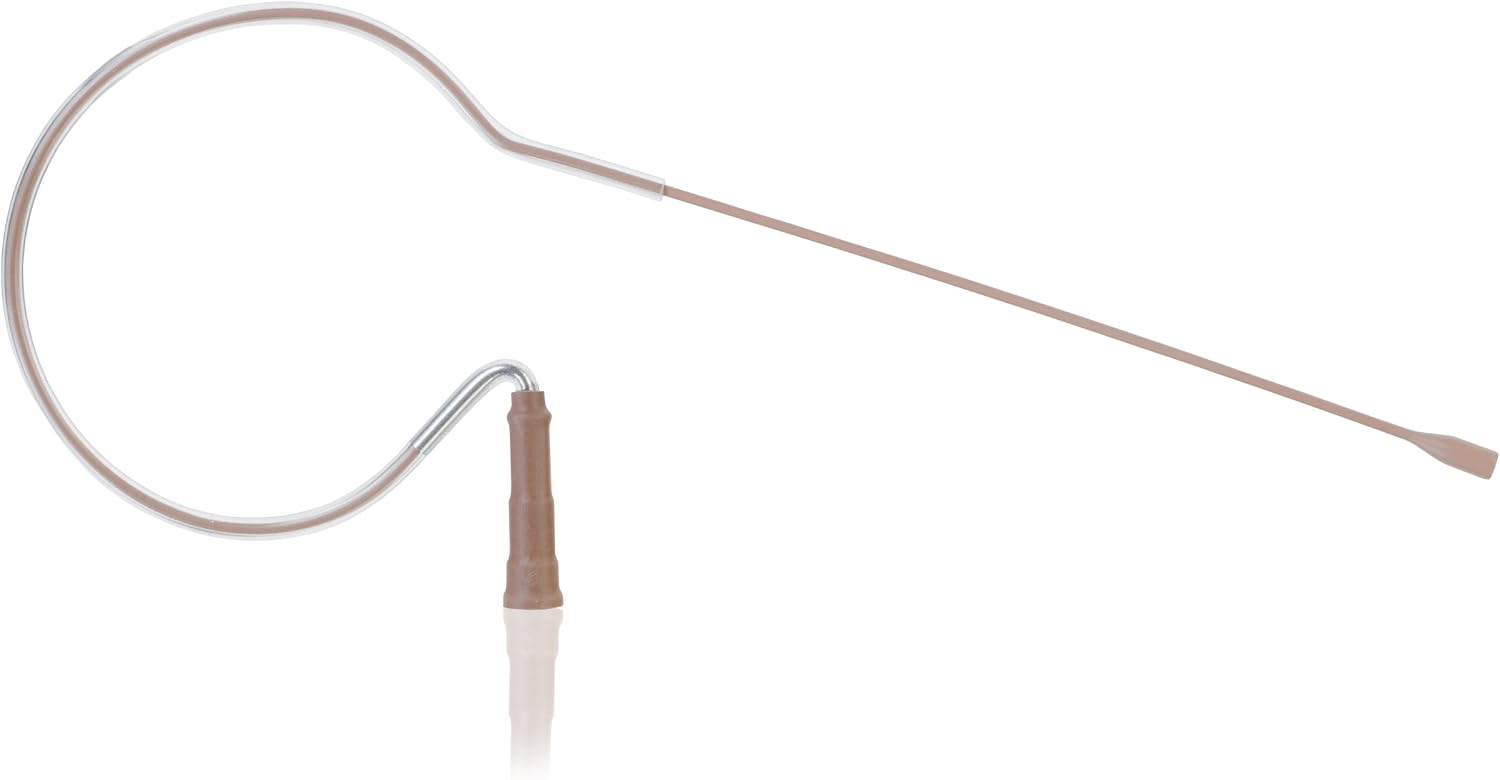
The E6OW6T2SL suits a performer who wants a discreet microphone rather than a visually prominent headband. Its thin, springy boom and tan finish keep the earset unobtrusive, while the omnidirectional condenser capsule allows a natural vocal balance without the strong directional changes of a tightly focused mic.
This W6 version is Countryman’s medium-gain sensitivity intended for most vocal performances. It offers more acoustic headroom than the higher-sensitivity speech version, which matters when moving from ordinary speaking to stronger singing. The two-millimeter replaceable cable is configured for compatible Shure-style TA4F bodypacks, so the microphone can remain in service when a cable needs replacement.
The trade-off is isolation. Omnidirectional pickup does not reject a loud wedge monitor like a directional headset, and careful placement and gain remain important. Use the supplied protective cap to keep sweat and debris away from the capsule. It is an appealing low-visibility vocal option when the stage environment and bodypack suit it, with the transmitter and receiver purchased separately.
Pros
- W6 sensitivity designed for vocal performance
- Discreet springy boom and tan finish
- Replaceable two-millimeter cable
Cons
- Omnidirectional pickup needs care around loud monitors
- Requires a compatible powered bodypack and receiver
Shure WH20XLR

The WH20XLR is the straightforward wired alternative for a performer who values a secure fit and a simple signal path. Its dynamic cardioid capsule is designed for close vocal use, with a shaped response that supports intelligibility and controls excessive low-frequency buildup near the mouth.
The wireframe and elastic headband adjust separately, and the boom folds for storage. A supplied clothing clip helps keep the attached cable from tugging on the headset as the performer moves. The three-pin XLR version connects to a suitable mixer or microphone interface without needing a wireless transmitter or phantom power.
Its dynamic output can require more preamp gain than a condenser headset, and the cable limits stage movement. Positioning the grille near the corner of the mouth and using the windscreen help control breath noise. It suits a singer or instrumentalist who wants practical wired hands-free operation rather than the added setup of a radio system.
Pros
- Dynamic cardioid design for close vocal use
- Adjustable wireframe, elastic band and folding boom
- Direct XLR connection to microphone equipment
Cons
- Less freedom of movement than a wireless system
- Needs adequate microphone-preamp gain
Audio-Technica System 10 ATW-1101/H92-TH

The ATW-1101/H92-TH provides the complete wireless path: an ATW-R1100 receiver, a UniPak bodypack and a beige PRO 92cW-TH headworn condenser microphone. Its 2.4GHz digital radio system handles frequency selection automatically, which makes a single-performer setup less involved than manually choosing a UHF channel.
Frequency, time and antenna diversity help maintain the link, while balanced XLR and unbalanced quarter-inch receiver outputs connect to common audio equipment. The bodypack runs on two AA batteries and includes an input-level adjustment. The lightweight omnidirectional earset favors discreet presentation and a natural voice balance, with less rejection of nearby stage sound than a directional headset.
One receiver recognizes one active transmitter at a time. Additional simultaneous performers need additional systems, even though several transmitters can be paired for separate use. It is a convenient complete option for presentations and restrained vocal performances, but loud singers should consider the earset’s headroom and busy Wi-Fi environments still call for sensible receiver placement.
Pros
- Complete receiver, bodypack and beige earset system
- Automatic 2.4GHz frequency selection
- Balanced XLR and quarter-inch audio outputs
Cons
- One active transmitter per receiver
- Omnidirectional earset and shared 2.4GHz spectrum require planning
Sennheiser XSW 1-ME3-A Wireless Headmic Set
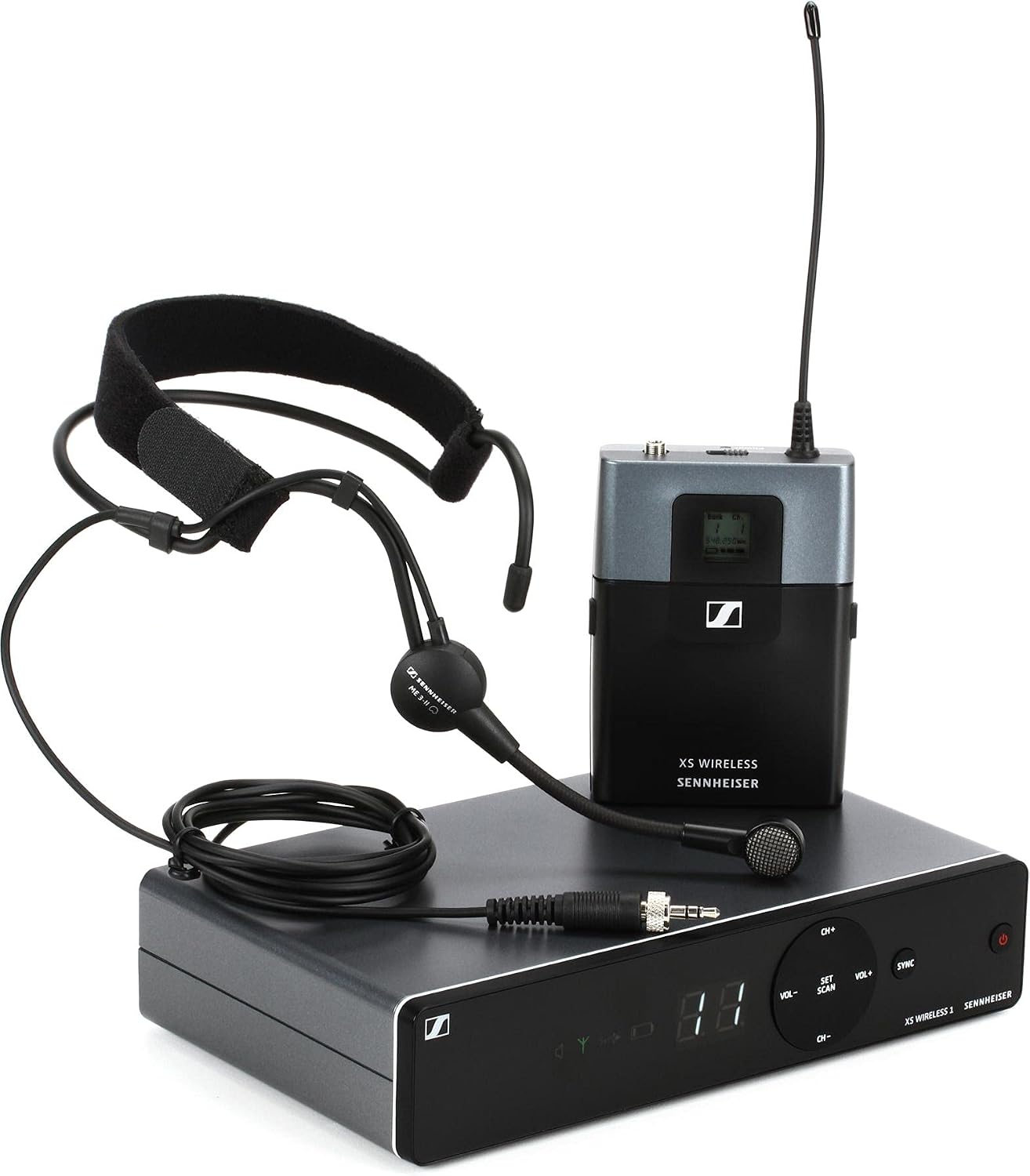
The XSW 1-ME3-A is the complete UHF choice here for a singer who wants to move freely without assembling separate radio components. It combines an EM-XSW 1 receiver, an SK-XSW bodypack and an ME 3 cardioid condenser headset. The A version operates in the 548–572MHz range.
Automatic scanning and synchronization simplify setup, while antenna-switching diversity uses the receiver’s internal antennas to help maintain reception. The cardioid headset gives a more focused stage approach than an omnidirectional earset. Balanced XLR and unbalanced quarter-inch outputs connect the receiver to a mixer or other suitable audio equipment.
It is appealing for singing and movement when a conventional headband is acceptable. The microphone is more visible than the smallest earsets, and a usable local frequency still has to be selected. Each performer needs an appropriate transmitter-and-receiver channel; the number of frequency presets is not the number of singers one receiver can mix.
Pros
- Complete headset, bodypack and receiver system
- Cardioid microphone and automatic scan/sync
- A-band 548–572MHz version with common audio outputs
Cons
- More visible headset than a miniature earset
- Requires suitable local frequencies and one radio channel per performer
How to Pick the Best Headset Microphones for Singing Live
Start by deciding whether a cable is acceptable. A wired XLR headset connects to a microphone input and avoids radio setup. A wireless-compatible headset needs a matching bodypack and receiver, while a complete wireless set includes those components. The connector and power requirements must match; a similar-looking plug is not enough.
Then consider the stage. A directional mic can reduce some surrounding sound, while a small omnidirectional earset can be easier to position naturally. Neither type guarantees freedom from feedback. The distance to the mouth, speaker placement and input gain all affect the result.
Standard Features of Headset Microphones
- Pickup pattern: Cardioid and hypercardioid designs offer directional control; an omni captures more sound around the capsule.
- Sensitivity and headroom: A version intended for speech may overload sooner with powerful singing. Choose the appropriate capsule sensitivity, not just the right connector.
- Fit: A stable boom keeps vocal level more consistent as the performer moves. Adjust the frame and use the cable clip rather than tightening everything excessively.
- Wind protection: A windscreen and mouth-corner positioning help reduce breath noise. A protective cap can also be necessary for a miniature capsule.
- Connections: XLR, TA4F and Audio-Technica’s UniPak termination have different roles. Check the actual model and its power supply before connecting it.
Wireless Systems and Multiple Performers
A receiver paired with several transmitters is not necessarily a multi-channel receiver. With the System 10 model here, only one paired transmitter is active at a time. Two singers performing together need two receiving channels and suitable coordination.
For UHF systems, choose a version permitted for the country of use and a locally usable channel. The Sennheiser A-band model here operates at 548–572MHz; another suffix can indicate a different frequency range. For 2.4GHz systems, consider nearby Wi-Fi and other radio equipment as well as line of sight.
Test the complete setup at the loudest intended singing level, then adjust transmitter and mixer gain. Listen for distortion and feedback before adding heavy EQ or effects. Wireless reliability depends on the environment as well as the equipment.
So, What’s the Best Headset Microphone for Singing Live?
The PRO 8HEx is the overall pick for focused wired hands-free vocals. The WH20XLR offers another practical dynamic XLR option. For an existing compatible bodypack system, the SM35-TQG favors directional stage pickup, while the Countryman W6 earset offers a discreet vocal-specific alternative.
For a complete wireless package, compare the System 10’s discreet omnidirectional earset and automatic 2.4GHz operation with the Sennheiser’s cardioid headset and UHF setup. Choose the fit, pickup pattern and complete connection path that suit the performance, then compare the current cost.
For the separate effects side of a vocal-performance setup, compare Vocal Harmonizer Pedals.