Looking for the best coaxial cables for HDTV? A good cable should carry the signal reliably, fit the connections and suit the installation. It will not add detail to a picture that is already being received correctly, but replacing a damaged or poorly shielded lead can resolve reception problems.
These four options use F-type connections for the RF inputs found on US televisions, antennas and related equipment. The useful differences are length, shielding, thickness and connector design—not promises of richer colors or faster-moving HD signals.
Top 4 Best Coaxial Cables for HDTV
Mediabridge RG6 Coaxial Cable (Editor’s Choice)
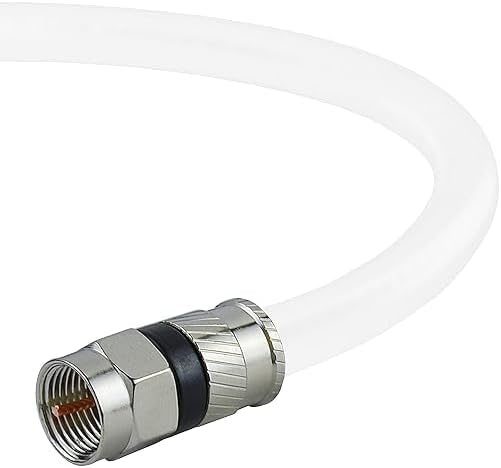
The Mediabridge RG6 is the overall choice for a straightforward TV connection. The six-foot white version combines triple shielding with pre-fitted compression connectors, giving it the useful essentials without turning a short patch lead into a complicated purchase.
The removable connector grips are a practical touch when the TV’s threaded socket is awkward to reach. They provide a larger surface to turn during installation, while the F-type ends connect directly to compatible antenna, cable-box and television sockets.
Mediabridge specifies indoor/outdoor use and an in-wall rating for this cable. Those are useful installation details, but the rating printed on the actual cable should suit the route. An outdoor rating does not remove the need to protect exposed connections appropriately.
The reason to choose it is convenient construction and an appropriate length, not a guaranteed picture upgrade over every other functioning RG6 cable. The six-foot lead is a sensible size for many equipment connections; measure the route so you do not end up pulling it tight behind the television.
Pros
- Triple-shielded RG6 construction
- Compression connectors with removable grip caps
- Manufacturer specifies indoor/outdoor and in-wall use
Cons
- Six-foot version may be too short or leave excess cable in some setups
- Not a remedy for a poorly positioned antenna or missing broadcast coverage
MPD Digital RG11 Coaxial Cable

The MPD Digital RG11 offers a heavier cable construction than the RG6 patch leads in this comparison. The selected version is a three-foot, 75-ohm assembly with F-type male connectors, intended for compatible RF connections rather than RCA digital-audio sockets.
RG11 is generally useful when keeping cable loss down matters, especially on a longer planned run. That does not make a three-foot RG11 lead automatically better than a sound three-foot RG6 lead: the practical benefit depends on frequency, total cable length and the rest of the installation.
The drawback is bulk. With a cable diameter around 0.4 inch, this is less convenient behind a wall-mounted TV or where the lead must bend sharply. Avoid using the stiffness of the cable to lever against the television’s socket; a good connection should not require force.
Choose it when a thicker RG11 assembly suits the installation or matches an existing plan. For an ordinary short connection in a cramped cabinet, the easier routing of RG6 will often be the more useful advantage. Thicker cable reduces certain losses; it does not make the television signal travel faster or create extra channels.
Pros
- 75-ohm RG11 assembly with F-type connectors
- Heavier construction for installations that call for RG11
- Selected three-foot length avoids a large spare coil for a short connection
Cons
- Thick cable is harder to route in tight spaces
- Little reason to choose RG11 solely for a short, already reliable TV connection
Monoprice 3031 RG6 Quad Shield Coaxial Cable
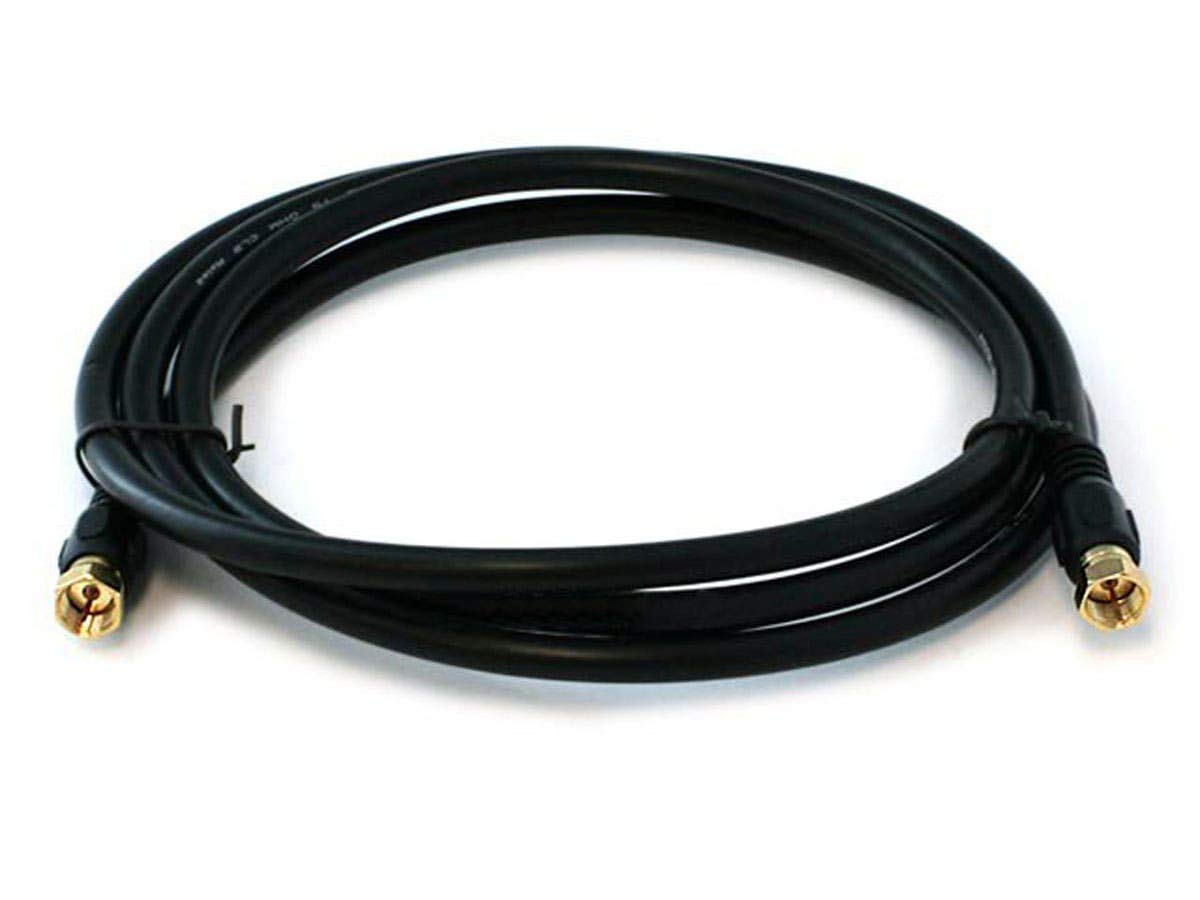
The Monoprice 3031 is a six-foot black RG6 cable with four shielding layers and F-type connectors. Its 75-ohm design and CL2 rating make it a practical option for an appropriate indoor TV or antenna connection, including suitable in-wall routes.
The additional shielding helps resist external interference, which is a useful construction feature rather than a promise of sharper pictures. If a digital TV signal is already arriving intact, switching to this cable will not unlock a higher resolution by itself.
The 18AWG RG6 construction gives it a more substantial feel than a very thin patch lead, so allow a gentle curve behind the equipment. Quad shielding is not the same as extreme flexibility, and the connector still needs enough room to sit squarely on the socket.
This is a sensible choice when you want a conventional indoor RG6 lead with a clearly identified length and shielding specification. Keep the application in mind: CL2 is an installation rating, not proof that the cable is suitable for direct burial or every outdoor exposure.
Pros
- Quad shielding and 75-ohm RG6 construction
- Six-foot length with F-type connectors
- CL2 rating for appropriate in-wall installation
Cons
- Bulkier than a very thin patch cable
- No basis for expecting better picture detail from an already intact digital signal
Channel Master CM-3701 RG6 Coaxial Cable
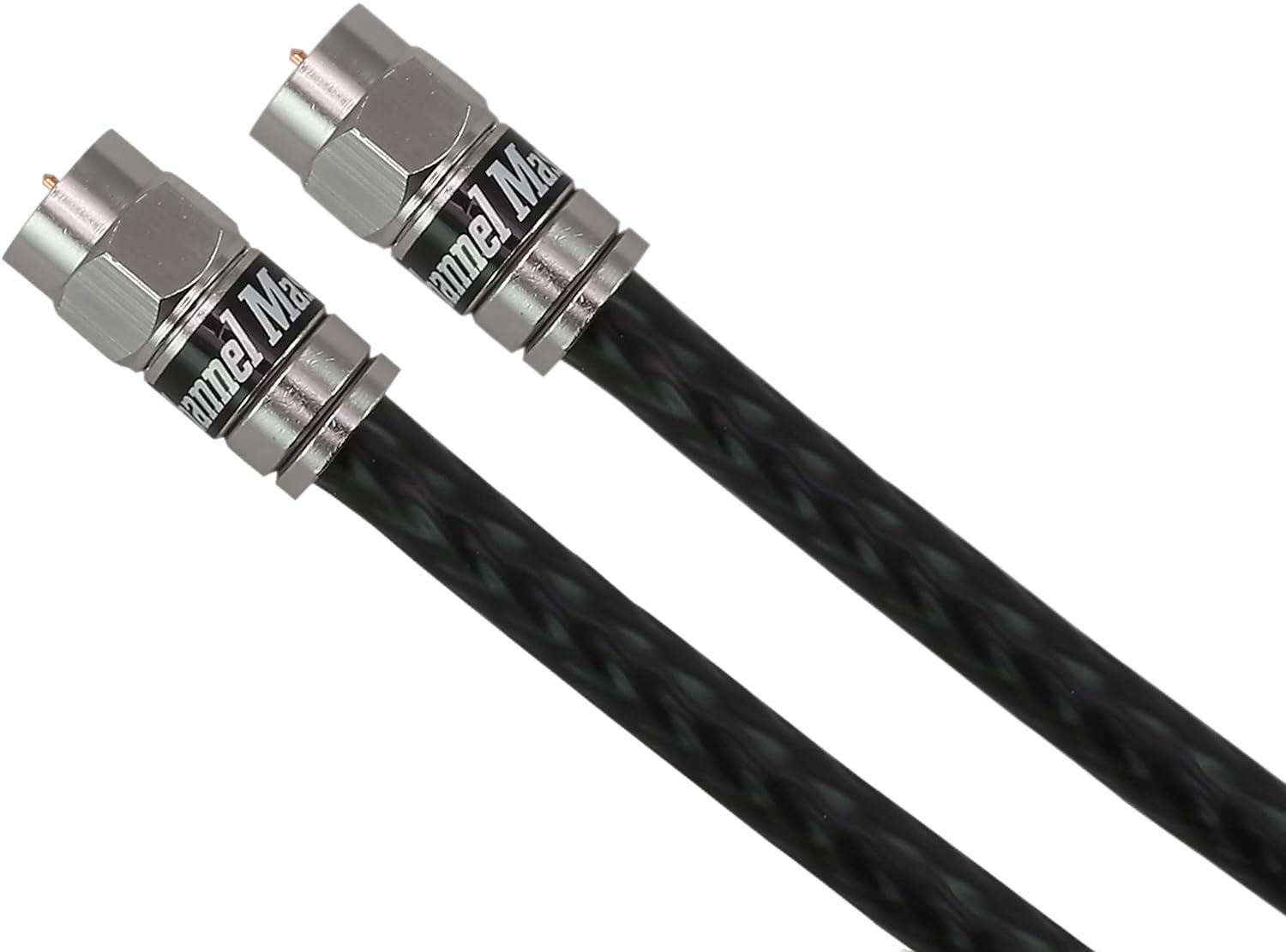
The Channel Master CM-3701 is a neat option for a short antenna-system connection. At three feet long, it avoids leaving a large coil behind the TV or between nearby components. Its tri-shielded, 75-ohm RG6 construction is designed for TV antenna signals.
The connectors are the distinctive feature. Channel Master specifies compression fittings with dual O-rings for weather resistance and a built-in lock washer intended to resist loosening. A UV-resistant jacket also makes the cable suitable for an appropriately installed outdoor connection.
Those details are useful around antenna equipment, but they do not replace a complete installation plan. Exposed joints still need proper weather protection, and the cable should be supported rather than left pulling on a socket.
The three-foot length is both the advantage and the limitation. It is tidy between nearby components but too short for many wall routes or antenna drops. Choose a longer version when the measured route needs it instead of stretching this one or adding unnecessary couplers.
Pros
- Short three-foot length for a tidy local connection
- Tri-shield RG6 with a UV-resistant jacket
- Weather-resistant compression connectors with anti-loosening hardware
Cons
- Too short for many room or antenna runs
- Outdoor connectors still require an appropriate installation
The Best Coaxial Cables for HDTV: Strength vis-à-vis Flexibility
Shielding, cable diameter and jacket construction affect how a coaxial lead behaves in an installation. More shielding can help reduce interference, but the number of layers alone does not establish which cable will work best. Connector quality, damage, length and routing also matter.
RG6 or RG11?
RG6 is the practical starting point for many domestic TV connections because it balances size, loss and ease of routing. RG11 is thicker and can offer lower attenuation in suitable longer runs, but the benefit needs to be weighed against cost, stiffness and connector clearance. Do not choose it simply because a three-foot lead is labeled “HD.”
Choose the right connector and length
These cables use threaded F-type connections. A coaxial cable with RCA plugs for digital audio or composite video will not connect directly to an F-type antenna input. Measure the route with enough slack for a gentle bend and access to the equipment, while avoiding unnecessarily long coils and extra joins.
What a new cable can—and cannot—fix
A damaged cable, loose connector or interference problem can cause pixelation or loss of reception. An appropriate replacement may help with those faults. It cannot amplify the signal, correct every antenna-positioning problem or guarantee reception where the incoming signal is inadequate. If reception remains poor, inspect the antenna, splitters and the complete cable run.
For outdoor, in-wall or other fixed routes, use cable rated for that environment and follow the equipment manufacturer’s installation guidance. Do not assume that an ordinary pre-made patch cable is direct-burial cable.
So, What Is the Best Coaxial Cable for HDTV Antenna?
The Mediabridge RG6 is the overall recommendation for a convenient everyday connection. The Monoprice 3031 offers quad shielding for an appropriate indoor route, the Channel Master CM-3701 is useful for short antenna-system links, and the MPD Digital RG11 suits a setup that specifically calls for thicker cable.
Choose the length and construction that fit the job. A reliable connection is the goal; spending more on a cable is not a substitute for addressing the actual cause of a weak TV signal.