Looking for the best 6×9 speakers for bass without an amp? A good pair can refresh worn factory speakers and add useful fullness to everyday listening. The key is matching them to the power and impedance your existing system supports, rather than choosing the biggest wattage printed on the box.
For a separate 6.5-inch component-speaker installation, see 6.5 Component Speakers for Your Car; component layout and mounting dimensions need their own checks.
For a wider budget car-speaker comparison beyond the 6×9 format, see Cheap Car Speakers – Under $100; check the installation dimensions for your vehicle.
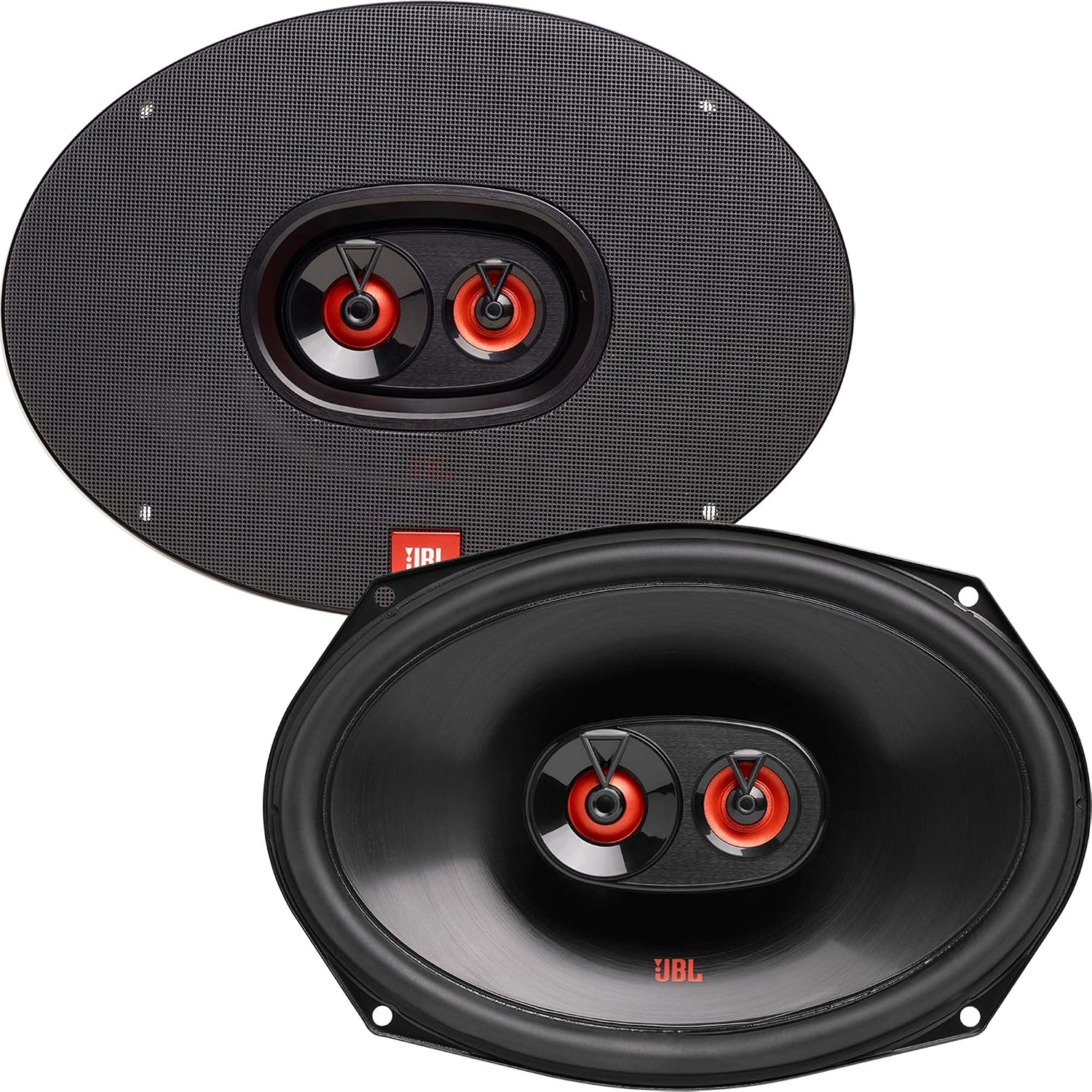
Here, “without an amp” means without adding a separate amplifier: the head unit or factory system still supplies amplified power. The Polk DB691 remains the overall pick for its conventional 4-ohm design and weather-conscious construction. The JBL Club 9632 uses a lower 3-ohm load and needs a compatible source. None of these full-range speakers is a substitute for a dedicated subwoofer when deep bass is the priority.
Top 5 Best 6×9 Speakers for Bass Without an Amp
| Image | Model | Price |
|---|---|---|
 | Polk Audio DB691 (Editor's Choice) | Check Price |
| JBL Club 9632 | Check Price |
 | Rockford Fosgate Prime R169X3 | Check Price |
 | Pioneer TS-A6991F | Check Price |
 | BOSS Audio CH6930 | Check Price |
Polk Audio DB691 (Editor’s Choice)
The DB691 remains the most rounded starting point here for a conventional 6×9-inch replacement. Its 4-ohm impedance is a familiar match for many aftermarket head units, while the three-way layout combines a large oval woofer with a tweeter and supertweeter. The point is broad musical coverage from one mounting position, not simply collecting more drivers.
A polymer/mica woofer cone and butyl-rubber surround provide a sensible structure for a speaker exposed to changing cabin temperatures. The silk/polymer high-frequency drivers are a distinctive part of the design, and marine certification adds interest for suitable freshwater and powersports installations. The wiring and exposed connections still need protection; this is not a submersible speaker or a blanket saltwater recommendation.
The attraction is a balanced specification for a practical upgrade without adding separate component tweeters. The limitation is that it still relies on the existing system for usable output and bass control. Confirm the mounting clearance and source compatibility, then install it securely with a good seal rather than expecting the speaker alone to transform a weak or heavily processed factory signal.
Pros
- Conventional 4-ohm three-way design
- Polymer/mica woofer with a butyl-rubber surround
- Marine-certified construction for suitable protected installations
Cons
- Needs adequate rear and grille clearance
- Cannot provide subwoofer-style deep bass
JBL Club 9632
The Club 9632 is the more distinctive option when the head unit or factory amplifier supports a 3-ohm speaker load. Its three-way arrangement uses a Plus One polypropylene woofer and an edge-driven silk-dome tweeter, putting a substantial cone and dedicated high-frequency drivers into a familiar oval opening.
JBL rates the driver at 85 watts RMS and publishes 93dB sensitivity at 2.83 volts. That voltage-based figure is not directly interchangeable with a one-watt sensitivity rating on a speaker of a different impedance. The practical appeal is useful output from modest power, provided the source is compatible; the continuous rating is a handling limit, not a requirement to feed it 85 watts.
The lower impedance is both a design choice and the important qualification. Do not assume that every radio rated for 4-ohm speakers is approved for this load. For a supported system, the Club offers a purposeful woofer and silk-dome design without a separate tweeter installation. For an uncertain factory system, establish the permitted load before choosing it over one of the conventional 4-ohm alternatives.
Pros
- Plus One polypropylene woofer
- Edge-driven silk-dome tweeter
- 85W RMS handling in a three-way assembly
Cons
- 3-ohm load requires source compatibility
- Sensitivity uses a voltage reference, so simple cross-model comparisons can mislead
Rockford Fosgate Prime R169X3
The R169X3 is a straightforward factory-speaker replacement with a useful set of installation basics. Rockford supplies the pair with grilles and mounting hardware, while integrated high-pass filtering keeps the three-way assembly self-contained. That is convenient when the aim is replacing a damaged or tired speaker without finding room for separate crossover boxes.
A polypropylene cone works with the rubber surround, while the centrally mounted high-frequency assembly handles the upper part of the range. The exact model is rated at 65 watts RMS per speaker at 4 ohms, with a mounting depth of approximately 2.85 inches. Those details make amplifier planning and clearance checks more useful than the larger peak number alone.
Its strength is a simple, conventional installation concept, not a guarantee of a direct fit in every 6×9 opening. Check the cutout, screw positions and clearance beneath the factory grille. With head-unit power, use sensible bass settings; pushing the low end until the radio clips will not turn a full-range speaker into a dedicated bass system.
Pros
- Grilles and mounting hardware included
- Integrated high-pass crossovers
- 65W RMS per speaker at 4 ohms
Cons
- Vehicle-specific adapters or wiring may still be needed
- Bass output remains limited by the enclosure and available power
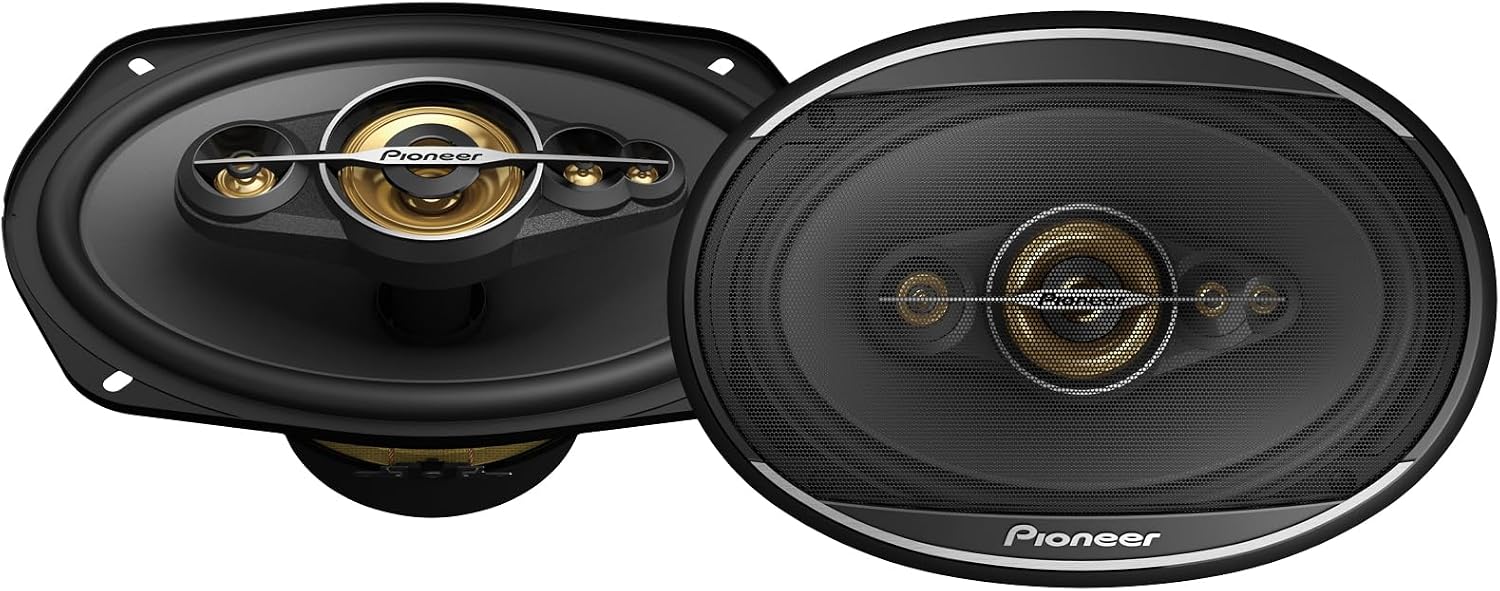
Pioneer TS-A6991F
The TS-A6991F is a five-way 6×9-inch design with a clear emphasis on full-range coverage. A carbon- and mica-reinforced IMPP woofer is joined by a 57mm PEI midrange and three small PET high-frequency drivers. The extra drivers divide the frequency work; their number alone does not establish better sound than a well-designed two- or three-way speaker.
Pioneer specifies 120 watts nominal handling at 4 ohms and includes grilles. The approximately 3-3/8-inch mounting depth is worth noticing before ordering, especially in a rear deck or door with limited clearance. Its construction leaves room for a more capable amplifier later, while a head-unit installation remains dependent on the clean power already available.
This is an interesting choice for a full-range upgrade with a reinforced woofer and a substantial midrange driver. The trade-off is a deeper assembly than the Rockford and the space occupied by the high-frequency structure above the cone. Measure both sides of the mounting surface, and choose it for the design and fit rather than the peak-power headline.
Pros
- Carbon- and mica-reinforced IMPP woofer
- Dedicated 57mm midrange and PET high-frequency drivers
- 4-ohm design with included grilles
Cons
- Approximately 3-3/8-inch mounting depth needs space
- Five-way layout does not guarantee better sound in every installation
BOSS Audio CH6930
The CH6930 keeps the factory-replacement idea simple: a pair of three-way 6×9-inch speakers with a red poly-injection woofer cone, rubber surround and stamped-steel basket. The bright appearance is a matter of taste, but the self-contained driver arrangement makes it a straightforward alternative to a separate woofer-and-tweeter component system.
Its nominal impedance is 4 ohms. BOSS advertises 400 watts maximum for the pair, which should not be read as continuous power handling for each speaker. For a head-unit-powered system, the more relevant questions are whether the load is supported, the speaker fits and the radio can deliver the desired volume without clipping.
This is worth considering for a basic replacement when elaborate installation hardware and separate electronics are not part of the plan. Its role is a usable full-range refresh, with limited deep-bass capability. Check mounting depth and keep the installation tidy; a secure fit and clean signal matter more than the largest number in the marketing.
Pros
- Self-contained three-way layout
- Poly-injection cone and rubber surround
- Conventional 4-ohm impedance
Cons
- Advertised pair maximum is not per-speaker RMS power
- Not a dedicated low-bass solution
Choosing the Best 6×9 Speakers for Bass Without an Amp
Feel the Bass
A 6×9-inch woofer can add useful midbass, but the result depends on the mounting enclosure, door seal and existing electronics. Replacing a damaged speaker may make a clear improvement; replacing a well-matched factory driver with a different load can also create problems. The larger oval shape alone does not guarantee stronger bass than a smaller speaker.
A separate amplifier can provide more clean output when correctly matched. A subwoofer for the car does a different job, handling the lowest frequencies. Neither becomes unnecessary simply because a full-range speaker has a large peak-power rating.
Design and Installation
Measure the cutout, mounting depth, screw pattern and clearance under the grille. Check for glass, mechanisms and wiring behind a door opening. A 6×9 speaker is not automatically a direct replacement for a 6×8 opening; the 6×8 speaker options may be the more practical fit when retaining the original location.
Confirm the impedance the head unit or factory amplifier supports. Four-ohm replacements are common, but a factory system may use a different load or active filtering. The JBL Club 9632 is a 3-ohm design, so its compatibility needs particular attention. Preserve polarity and use a secure, well-sealed mounting surface to avoid losing bass through leaks or cancellation.
Frequency Response
A quoted frequency range does not show how evenly or loudly a speaker plays in your car. Sensitivity can help describe output from a given input, but compare the same measurement reference: 2.83 volts is not one watt into every impedance. Peak power, continuous power handling and the radio’s actual clean output are also different quantities.
Keep bass boost sensible. Audible distortion is a reason to turn the system down and correct the setup, not a sign that the speaker needs more time to break in. If deep bass remains the priority, build that part of the system around a suitable subwoofer rather than asking the main speakers to do everything.
The Best 6×9 Speakers Without Amp Upgrades: Our Verdict
The Polk Audio DB691 remains the overall choice for a conventional full-range replacement, combining a 4-ohm load, three-way layout and weather-conscious construction. The Rockford R169X3 offers a particularly straightforward installation package, while the Pioneer TS-A6991F adds a reinforced woofer and dedicated midrange.
For a system approved for its 3-ohm load, the JBL Club 9632 is another useful option. The BOSS CH6930 keeps the focus on a basic replacement. Choose the speaker that fits the car and its electronics, then judge the upgrade with realistic expectations about what head-unit power and a full-range woofer can deliver.