Are you looking for the best treble booster pedals? A focused boost can give a darker or overdriven amp more bite, tighten the low end and help a guitar part come forward in the mix.
The result depends on what follows the pedal. A Rangemaster-style booster adds its own character and can drive an amp harder; an EQ/boost offers a more adjustable way to reshape frequencies. These three options cover both approaches, with different strengths for classic rock and everyday tone shaping.
Top 3 Best Treble Booster Pedals:
| Image | Model | Price |
|---|---|---|
| Catalinbread Naga Viper MkII (Editor's Choice) | Check Price |
 | Keeley Java Boost | Check Details |
 | EarthQuaker Devices Tone Job EQ and Boost | Check Price |
Catalinbread Naga Viper MkII (Editor’s Choice)
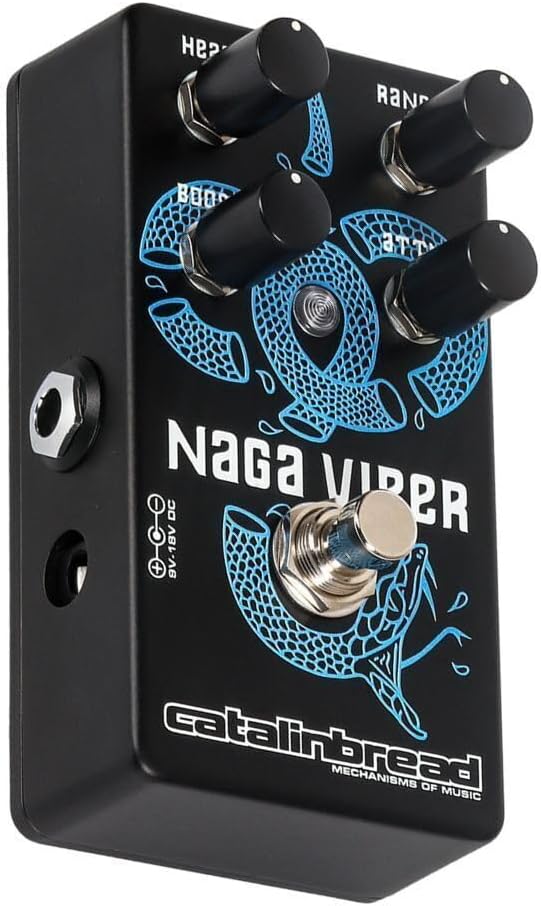
The Catalinbread Naga Viper MkII remains the overall choice for players who want the focused push of a treble booster with more room to adapt it to a modern pedalboard. Its Rangemaster-inspired circuit is not limited to one fixed bright voice: Range adjusts the low frequencies entering the boost, while Heat controls how much grit the pedal contributes.
The MkII’s useful extra is Attenuate. It reduces the incoming signal before the booster processes it, giving more control when another pedal or a strong signal is driving the input too hard. Boost then sets the output sent to the amp. Keeping those jobs separate makes it easier to find an assertive lead sound without relying on output volume alone.
It is still a characterful boost, not a neutral fix for every rig. Into an already bright setup, a narrow range and high boost can be excessive; into an amp near breakup, the same approach can add focus and urgency. Choose it for that interaction between guitar, booster and amp, with the wider Range and Heat settings available when a fuller or dirtier sound is needed.
Pros
- Range and Heat vary the frequency emphasis and grit
- Input attenuation helps manage pedals placed before it
- Separate Boost control sets the output level
Cons
- Needs careful matching to the amp’s brightness and gain
- No independent three-band EQ
Keeley Java Boost
The Keeley Java Boost is the more vintage-oriented choice: a germanium treble booster designed to work with an amp that is already breaking up, or with another overdrive pedal. Its appeal is the way that focused push becomes part of the drive sound, rather than the expectation of a perfectly clean volume increase.
The three-way switch selects classic treble boost, a mid-focused setting or a fuller-range response. Level controls the push, and the Tone knob rolls off upper frequencies when the guitar or amp is too bright. Those controls make the Java more adaptable than a one-knob booster while keeping the basic approach direct and musical.
It is a discontinued design, but the specific features still give it a clear place in this comparison. It is less convincing as a general solution for a very clean, high-headroom rig than as a partner for an amp or drive pedal with some breakup. Choose it for a colored, responsive push and simple frequency options, rather than for transparent EQ or a bank of presets.
Pros
- Germanium-based, vintage-oriented boost character
- Three frequency-range settings
- Tone control can soften an overly bright response
Cons
- Discontinued model
- Best suited to an amp or drive stage with some breakup
EarthQuaker Devices Tone Job EQ and Boost
The EarthQuaker Devices Tone Job EQ and Boost serves a broader purpose. Its active Bass, Middle and Treble controls make it useful when the guitar needs a targeted high-end lift together with a low-end or midrange adjustment. It is an EQ/boost alternative to a vintage treble booster, rather than another version of the same transistor-driven sound.
Each band can cut or boost, and the Level control comes after the EQ. That arrangement is practical: remove some low-end congestion, add enough treble to restore definition, then set the overall volume to suit the part. The bands interact, so small adjustments and a level-matched comparison are more useful than treating every knob as an isolated correction.
Placement changes the job. Before a drive pedal, the Tone Job reshapes the signal that hits the clipping stage; later in the chain, it can adjust the balance and output of the preceding effects. It does not supply the same built-in gain character as the Naga Viper or Java Boost, but that is an advantage when the aim is to keep the existing drive sound and refine it.
Pros
- Active bass, middle and treble cut or boost
- Post-EQ Level control separates tone shaping from output
- Useful before or after other drive pedals
Cons
- Does not recreate a Rangemaster-style gain character
- Interactive EQ takes some adjustment to balance
How to Find the Best Treble Booster Pedal
Match the Boost to the Amp
A treble booster does more than turn up the highest frequencies. By changing which frequencies hit the next gain stage hardest, it can tighten a drive sound and give single notes more bite. The amp’s headroom and EQ determine whether that becomes extra volume, more distortion or both.
Start with a modest boost and compare the engaged sound at a similar level. A darker tube amp near breakup is a useful starting point for the classic approach, but no pedal guarantees one famous player’s tone. A bright clean setup may need a fuller Range setting, less treble or a different type of boost.
Input Level, Gain and Output Are Different Jobs
The Naga Viper MkII’s Attenuate control reduces the signal entering its circuit. Heat changes the pedal’s grit, and Boost changes what it sends out. Thinking of those separately makes it easier to avoid a hard, overloaded sound when stacking pedals.
The Java Boost’s frequency switch changes the part of the signal being emphasized, while its Tone control can reduce brightness. The Tone Job gives a different kind of flexibility by cutting and boosting three EQ bands. Choose the controls that solve the actual problem in the rig.
Try More Than One Position
Before another drive, a boost can change the way that pedal distorts. After it, the available headroom determines how much level lift remains. Test the order with the guitar’s volume control as well as with the boost on and off.
Use the supply specified for the particular model and revision. Voltage support is not universal across treble boosters, even when their controls look similar. For choosing a matching amplifier, our tube amp guide is a useful starting point.
Conclusion: What’s the Best Treble Booster Pedal?
The Catalinbread Naga Viper MkII is the overall pick for a characterful treble boost with practical control over input level, grit and frequency range. Its added attenuation makes it especially relevant when other pedals already feed the boost.
The Java Boost keeps the more traditional germanium approach with three frequency settings. The Tone Job is the useful EQ/boost alternative when the goal is to refine an existing sound across bass, mids and treble. Choose between vintage-style drive interaction and broader tone shaping rather than expecting them to do exactly the same thing.