Looking for the best pickups for fretless Jazz Bass? A good match brings out the singing midrange, rounded low notes and expressive slides that make a fretless bass so rewarding. These six options offer different routes to that sound, from traditional passive single coils to quieter active designs.

The right choice depends on the instrument as much as the music. Four-string and five-string housings are not interchangeable, and an active conversion involves more than swapping two pickups. The EMG J Set remains the overall choice here for a clear, modern voice with low-noise operation, while the passive options suit players who prefer traditional controls and no pickup battery.
The 6 Best Fretless Jazz Bass Pickups (Comparison)
EMG J Active Bass Guitar Pickup Set (Editor’s Choice)
The EMG J Set suits a fretless bass that needs a more focused, modern voice. Its ceramic bar magnets and active electronics emphasize a firm low end, punchy mids and clear upper harmonics. That combination gives slides and sustained notes definition without making a traditional single-coil hum part of the performance.
The appeal is consistency as well as clarity. Low-noise operation is useful for exposed bass passages and recording, where a singing note can otherwise trail into an audible buzz. The supplied solderless system includes 25k volume and tone controls, a battery connection and an output jack, making it a coordinated active conversion rather than a pair of passive replacements.
The trade-off is the conversion itself: the bass needs room for a 9V battery and the correct controls, and the pickup dimensions must match its routes. Players who love the softer edge and familiar loading of passive Jazz Bass pickups may prefer the Fender or Tonerider options. Choose the J Set for clean articulation and a strong, quiet voice, rather than the closest possible recreation of a vintage passive bass.
Pros
- Clear, modern response with firm lows and defined harmonics.
- Low-noise active design suits exposed passages and recording.
- Coordinated solderless wiring system and controls.
Cons
- Needs a 9V battery and appropriate active controls.
- A different character from a traditional passive Jazz Bass.
Fender Custom Shop ’60s Jazz Bass Pickup Set

Fender’s Custom Shop ’60s set takes the traditional route: open-sounding passive Jazz Bass pickups with a little extra push. The overwound design adds output and midrange presence, while Alnico 5 magnets and Formvar wire keep the construction rooted in the classic recipe. It is an appealing match for players who want fretless growl without abandoning the instrument’s familiar character.
The bridge pickup gives the tone a more pointed, vocal center; blending in the neck adds body beneath it. That contrast is useful on a fretless, where the same instrument may need to carry a melodic line and then settle into a supportive low register. Flush pole pieces, cloth-covered leads and fiber bobbins round out the conventional construction.
These remain single-coil pickups, so soloing one can expose hum that the quieter designs here are intended to avoid. They also offer a less overtly modern response than the EMGs. Choose this set for a lively, recognizable Fender voice and straightforward passive operation, accepting the normal noise trade-off of that design.
Pros
- Overwound design adds output and midrange presence.
- Alnico 5 magnets and traditional Formvar construction.
- Passive operation needs no pickup battery.
Cons
- Single-coil hum can be audible when one pickup is favored.
- Less suited to players seeking an overtly modern active voice.
Fender Gen 4 Noiseless Jazz Bass Pickup Set

The Gen 4 Noiseless set is the middle ground for players who want Fender-style definition with less background hum. Its Alnico 5 magnets support a tight low end, clear highs and a punchy middle register. On a fretless, that makes it an attractive choice when the bass needs to stay articulate through a melodic passage without the noise of a conventional soloed single coil.
Unlike the EMG sets, these are passive pickups: noise cancellation does not automatically mean a battery-powered system. Shielded wiring helps complete the low-noise approach. The result is a more familiar passive setup for players who want quieter operation without committing to an active conversion.
The housings and cavity depth still need checking before installation; a Jazz Bass name alone does not establish a drop-in fit. Nor should noiseless operation be confused with eliminating every possible source of electrical noise in a rig. Choose Gen 4 for a practical balance of familiar Fender voicing and reduced pickup hum.
Pros
- Noise-cancelling design with Alnico 5 magnets.
- Defined highs, tight lows and useful midrange presence.
- Passive operation without a pickup battery.
Cons
- Housing depth and dimensions need checking against the bass.
- Does not remove noise originating elsewhere in the rig.
DiMarzio DP123 Model J Bass Pickup Set

The Model J is the choice for a fuller, more forceful passive voice. DiMarzio specifically positions it as adding warmth and power to fretless basses, which suits players who want a melodic bridge sound with more substance behind it. It can give the bass a stronger center without turning the instrument into an active system.
Each pickup uses a split-coil hum-cancelling design rather than a conventional single coil or stacked arrangement. That matters when favoring the bridge pickup: hum cancellation does not depend on balancing it equally with the neck. Ceramic magnets and four-conductor wiring complete a design that combines a traditional-looking footprint with a different internal approach.
The added weight in the sound is not the same as the airy response of a vintage-style single coil, so players seeking that particular texture may prefer the Custom Shop set. The standard DP123 also uses different neck and bridge lengths; measure both routes before ordering. Choose it for passive warmth and punch, especially when a soloed bridge pickup is central to the sound.
Pros
- Each pickup cancels hum independently.
- Warm, powerful passive voice suits fretless lines.
- Four-conductor wiring provides installation flexibility.
Cons
- Less vintage-single-coil character than a traditional set.
- Standard neck and bridge housings are different lengths.
Tonerider TRJ1B Jazz Plus Bridge Pickup

The TRJ1B is a focused upgrade for the player who already likes the neck pickup but wants more from the bridge position. This is one passive bridge pickup, not a complete neck-and-bridge set. Its Alnico 5 design fits the Jazz Plus approach: enough clarity and harmonic detail for an open sound, with a rounder, vocal character available as the tone control is rolled back.
That makes it especially relevant to fretless playing. A bridge-focused sound can bring out the nasal edge of a sustained note without requiring every phrase to be bright and thin. Keeping the existing neck pickup also preserves a familiar source of low-end body when the two are blended, though the final balance depends on that particular pairing.
The single-coil construction is the limitation. This individual bridge pickup is not independently hum-cancelling, and combining it with an arbitrary neck pickup does not guarantee a noise-free result. Choose it for a targeted passive bridge upgrade rather than treating it as a complete set or a noiseless conversion.
Pros
- Focused replacement for the bridge position.
- Alnico 5 design with useful harmonic clarity.
- Passive operation retains a conventional control arrangement.
Cons
- Only one bridge pickup, not a matched set.
- Not independently hum-cancelling; results depend on the neck pairing.
EMG J5 Active 5-String Jazz Bass Pickup Set
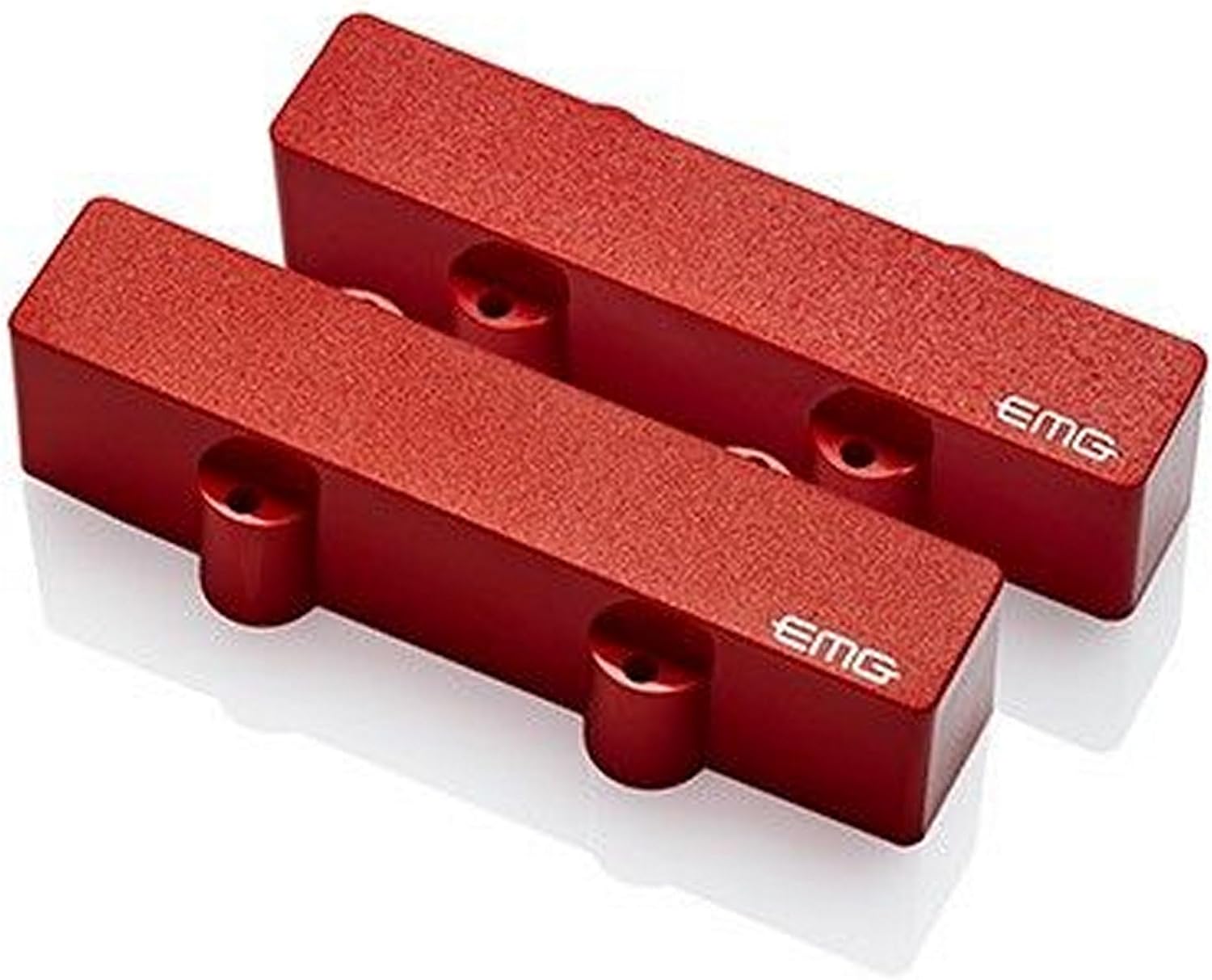
The J5 brings the active EMG approach to a five-string Jazz-style bass. Ceramic bar magnets and active electronics give it a firm, clear voice with broad harmonic detail, making it an appealing option when the low string needs definition and the upper register needs to sing. The linked red version adds a distinctly different visual finish to the same J5 concept.
Low-noise operation is useful when a fretless part leaves plenty of space between notes. The supplied solderless wiring system includes the appropriate 25k controls and battery connections, so the pickups work as part of a coordinated active circuit. This is the five-string choice in the selection rather than a substitute for the smaller four-string housings.
As with the J Set, the bass needs room for a 9V battery and the correct electronics. J5 neck and bridge dimensions must be checked against the actual routes, especially on instruments that use nonstandard five-string pickup sizes. Choose it for an articulate active five-string voice, provided the larger housings and red finish suit the instrument.
Pros
- Active clarity and harmonic detail for a five-string bass.
- Low-noise design with a coordinated solderless system.
- Distinctive red covers on the linked version.
Cons
- Needs battery space and appropriate active controls.
- Five-string housing dimensions and finish may not suit every bass.
How to Choose Pickups for a Fretless J-Bass
The absence of frets gives the player direct control over pitch and slides, but the pickup does not need a special mechanism to detect those changes. Its job is to translate string movement into a useful electrical signal. Pickup position, string choice, setup, playing technique and amplification all help shape the familiar fretless voice.
Decide What the Existing Bass Is Missing
A bridge-focused tone emphasizes the vocal midrange that many players associate with fretless bass. The neck pickup supplies a fuller foundation, and blending the two can be just as expressive. Replace only the bridge pickup if that is the weak point; choose a matched set when both voices need changing or their balance is unsatisfactory.
Choose Between Passive Character and Active Clarity
Traditional passive single coils offer a familiar Jazz Bass response, with the usual hum trade-off when one pickup dominates. Hum-cancelling passive models reduce that compromise without adding a battery. Active EMGs offer their own clear, modern character but require the appropriate controls and battery provision. None of these approaches is automatically more expressive; choose the response that supports the music.
Check the Physical and Electrical Fit
Measure the neck and bridge routes separately, including depth and mounting position. A four-string set, a five-string set and an individual bridge pickup solve different problems. Compare wiring requirements as carefully as dimensions, and use a qualified technician if an active conversion or cavity work is needed.
Conclusion: The Best Pickups for a Fretless Jazz Bass
The EMG J Set remains the overall pick for a clear, modern fretless voice with low-noise operation. Fender’s Custom Shop ’60s set is the more traditional passive route, while Gen 4 and the DiMarzio Model J offer two different ways to reduce hum without a pickup battery. Tonerider suits a bridge-only upgrade; the EMG J5 is the specific five-string option. Start with the sound the bass is missing, then choose a model that actually fits its routes and electronics.