Looking for the best pickups for Squier P Bass? A replacement can bring more punch, a warmer vintage response or a different feel under the fingers. The right choice starts with the pickup format: most modern P-style basses use a two-part split coil, while early-style single-coil models need a different shape.

The Seymour Duncan SPB-3 Quarter Pound remains the overall pick for a forceful passive upgrade. The Fender and DiMarzio options offer contrasting split-coil voices, the SCPB-3 serves the early single-coil format, and the two EMGs provide passive and active routes. Match the dimensions and electronics to the particular Squier rather than assuming every P Bass takes the same pickup.
Best Pickups for Squier Precision Bass
Seymour Duncan SPB-3 Quarter Pound (Editor’s Choice)
The SPB-3 Quarter Pound is the overall choice for a modern split-coil P Bass that needs a more forceful voice. Its quarter-inch Alnico 5 rod magnets and hot winding produce a full, punchy response with plenty of midrange presence. It is especially appealing when bass lines need weight and attack beside a dense guitar arrangement.
The two offset halves work together as one hum-cancelling pickup. Black covers, Forbon flatwork and vacuum wax potting complete the familiar P-style construction. The hum reduction comes from the coil arrangement, while potting helps manage microphonic squeal; neither feature removes every possible source of noise or distortion.
This four-string SPB-3 is the split-coil model, distinct from the single-coil SCPB-3 below. Its assertive character makes it a purposeful change from a softer vintage voice. Choose it for punch and presence, then balance pickup height and amplifier gain so that the stronger signal stays useful rather than overwhelming the sound.
Pros
- Full, punchy passive response with strong midrange presence.
- Quarter-inch Alnico 5 poles.
- Split-coil hum cancellation and vacuum wax potting.
Cons
- More assertive than a restrained vintage-style pickup.
- Split-coil format must match the bass’s route.
Fender Original ’62 Precision Bass Pickup (Close Runner-Up)

The Fender Original ’62 is the natural alternative when the aim is a more traditional P Bass voice. Its split-coil design favors a warm foundation with clear high-end detail, making it useful for a bassist who wants the instrument to sit solidly in a mix without an especially hot replacement pickup.
Alnico 5 magnets, enamel-coated magnet wire, a fiber bobbin and cloth-covered leads follow the vintage-style approach. Flush pole pieces provide a consistent physical profile beneath the strings. The attraction is the combination of familiar P character and a moderate response, rather than a promise that a pickup alone transforms a Squier into another instrument.
The exact model here is 0992046000. Check the housing and mounting dimensions against the Squier, especially if it has an unusual pickguard or route. Choose it when a rounded, traditional voice matters more than the extra drive of the Quarter Pound; players looking for a more aggressive push may prefer the Duncan or Model P.
Pros
- Warm, traditional split-coil P Bass direction.
- Alnico 5 magnets with vintage-style wire and bobbin construction.
- Moderate response offers an alternative to hotter models.
Cons
- Less forceful than the hottest choices here.
- Unusual routes or pickguards still require a fit check.
DiMarzio Model P DP122

The Model P is the punchy passive choice for a bass that needs a more pronounced midrange growl. DiMarzio’s two-piece design aims to cut through a band without giving up bottom-end weight. That makes it a useful direction for busy arrangements where simply adding more deep bass would not make the line easier to hear.
Ceramic magnets and a hum-cancelling split-coil arrangement provide the foundation, with four-conductor wiring available for suitable circuit options. The two housings form one P-style pickup, rather than two independently voiced neck and bridge pickups. The black DP122BK here keeps the familiar split-P footprint.
Its midrange emphasis is the distinguishing feature: choose it for definition and a gutsier response rather than the gentlest vintage tone. The instrument and amplifier still determine how much edge reaches the mix. A PJ bass can pair it with a compatible bridge pickup, but adding a J pickup to a P-only body is a separate installation project.
Pros
- Punchy passive voice with a pronounced midrange.
- Hum-cancelling two-piece P design.
- Four-conductor wiring permits suitable circuit options.
Cons
- Midrange emphasis may be stronger than a vintage purist wants.
- Adding a separate J pickup requires the appropriate instrument and wiring.
Seymour Duncan SCPB-3 Quarter Pound

The SCPB-3 is the specialist choice for a Squier with an early-style, single-coil P Bass route. It brings a more assertive attack to that format, with quarter-inch Alnico 5 poles and a hot coil wind. Strong lows and mids give the bass a substantial foundation, while the more articulate treble helps the attack remain audible.
This is a true single coil in one elongated housing. Forbon flatwork and vacuum wax potting support the traditional construction, but potting does not turn it into a hum-cancelling split coil. Some single-coil hum is part of the trade-off for keeping this physical layout and tonal direction.
Choose it only when the bass has the matching early-style route and mounting. It is not a drop-in substitute for the two offset halves found on most modern Squier Precision models. Within the correct format, it is appealing for players who want extra punch while retaining the character of a single-coil P design.
Pros
- Hot single-coil voice with strong lows and mids.
- Quarter-inch Alnico 5 poles and articulate treble.
- Preserves the early-style single-coil format.
Cons
- Not a replacement for a modern split-coil P route.
- True single-coil construction can pick up hum.
EMG Geezer Butler GZR P
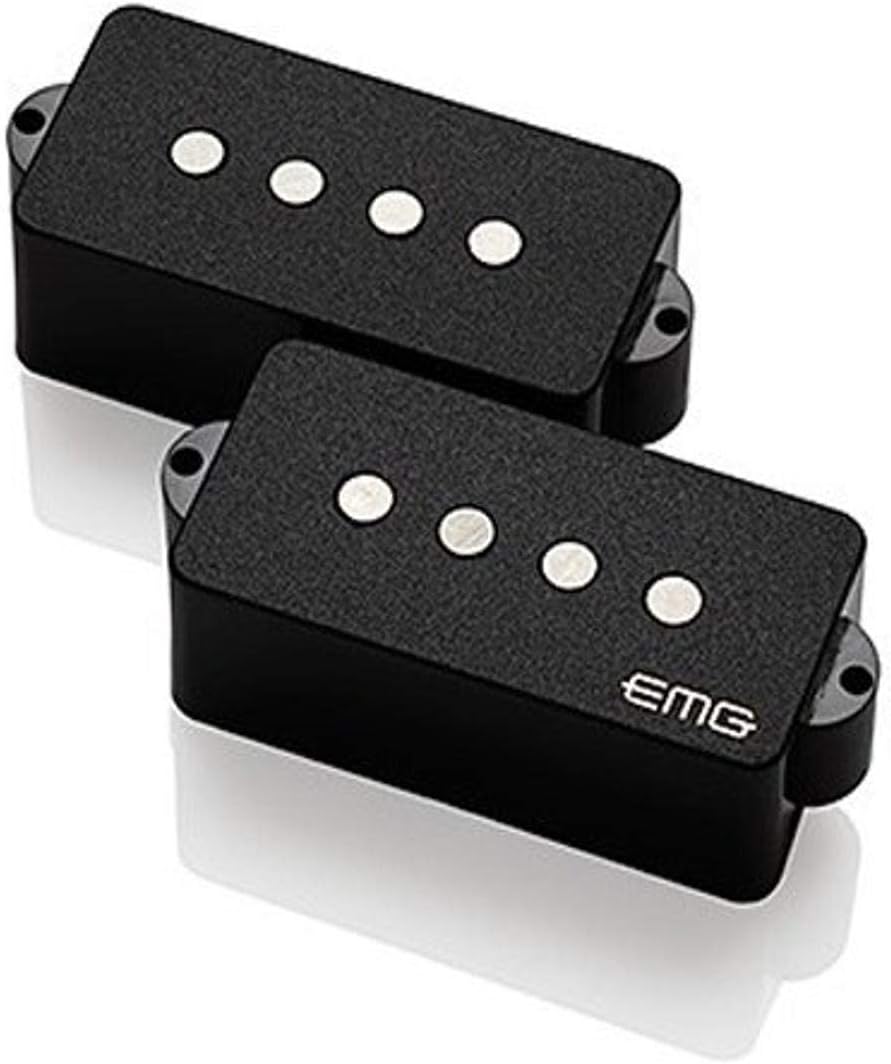
The GZR P offers a vintage-style passive direction with enough punch and grit for heavier bass lines. Developed with Geezer Butler, it uses Alnico 5 pole pieces and custom-wound coils to build a firm low end and a characterful attack. Its appeal is that combination of weight and edge, without converting the bass to active pickups.
The two split-coil housings work as one P pickup, and the included connector-based system uses passive volume and tone controls. That is a useful practical difference from the active PA below: the GZR does not need pickup battery space. The design is straightforward to live with while still giving the player control over how much brightness reaches the amplifier.
Its signature character is a starting point rather than a guarantee of a particular Black Sabbath recording. Match the dimensions, pot mounting and output jack to the bass, and retain the correct bridge-ground connection. Choose it for a substantial, vintage-inspired passive sound with a convenient wiring system.
Pros
- Passive Alnico 5 design needs no pickup battery.
- Vintage-style punch with a characterful edge.
- Connector-based volume/tone system simplifies compatible installations.
Cons
- Control and jack fit still need planning.
- Signature tone remains dependent on the bass and rig.
EMG PA-V2 Active Pickup Set

The PA-V2 is the active alternative for a player who wants a warmer, more vintage-leaning voice within EMG’s powered system. The PA design uses Alnico 5 magnets in place of the ceramic magnets of the original EMG P. Its open, rich response offers a different direction from simply choosing the hottest passive replacement.
The pickup’s active electronics work with the appropriate EMG controls and output wiring. A compatible connector installation can reduce soldering, and the supplied system brings the essential circuit components together. It is an active pickup assembly; a separate onboard EQ preamp is not required just to make it function.
The practical cost is battery space and an active-system conversion if the bass currently uses passive wiring. It should not be attached to the old pots without considering the complete circuit. Choose it for a warm active response and reduced noise, while the passive GZR is the simpler direction when keeping the bass battery-free matters more.
Pros
- Warmer Alnico 5 active P voice.
- Connector system supports compatible installations.
- Includes the appropriate active-system approach to controls and wiring.
Cons
- Needs battery space and suitable active controls.
- More involved than a basic passive pickup replacement.
FAQ: How to Choose Between P-Bass Pickups for Squier
What Is the Difference Between P Bass and J Bass Pickups?
A typical modern P Bass uses two offset coil housings that function together as one hum-cancelling pickup. A traditional Jazz Bass uses two separate single-coil pickups in different positions, allowing their outputs to be blended. These layouts create useful tonal differences, but neither confines the player to particular genres.
The early P Bass single-coil format is different again. Before choosing a replacement, identify the actual pickup shape and compare the manufacturer’s dimensions, mounting points and cavity depth. The single-coil SCPB-3 in this list serves that early format; the split-coil models serve the two-part P layout.
For a PJ Squier, also consider how the P replacement will balance with the existing bridge pickup. A hotter P is not automatically a better blend, and a noiseless P does not remove hum from a conventional single-coil J when that pickup is used on its own.
Should You Choose Active or Passive?
Passive pickups do not require a battery by themselves. An active pickup such as the EMG PA needs power, suitable controls and output-jack wiring. A bass with passive pickups and an active EQ is another arrangement, so check the whole circuit rather than relying on whether the instrument has a battery.
After installation, set pickup height and check string balance before judging the sound. The strings, setup, amplifier and EQ all influence the result. A replacement can change the voice of a sound instrument, but it does not correct poor intonation, worn strings or unsuitable action.
So, the Best Pickup for Squier P-Bass Is…
The SPB-3 Quarter Pound remains the overall choice for a forceful split-coil upgrade. The Fender Original ’62 favors a traditional voice, the Model P emphasizes midrange punch, and the SCPB-3 serves an early-style single-coil route. Choose the GZR P for a vintage-inspired passive EMG approach or the PA-V2 for a warmer active direction. Start with the correct format, then choose the character that suits the music.