Looking for the best classical guitar under $1000? This budget gives you a useful choice of solid-top nylon-string instruments, from traditional classical shapes to slimmer crossover guitars built with amplified playing in mind.

The Córdoba C5-CE remains the overall pick here for its combination of a solid cedar top, cutaway and straightforward stage electronics. The alternatives offer different neck widths, body shapes and pickup systems. Compare those practical differences first, then check the current price against your budget, especially when considering an older model.
Best Classical Guitars Under $1000: Comparison Table
Córdoba C5-CE (Editor’s Choice)
The C5-CE gets the overall choice by combining a traditional solid-top foundation with the features that make a nylon-string guitar convenient to amplify. Its solid cedar soundboard and mahogany back and sides keep the acoustic side of the design familiar, while the soft cutaway opens up the upper register without radically changing the body shape.
A 50mm nut sits between the broadest classical spacing here and the narrower crossover designs. That makes it an appealing middle ground for a player who wants room for fingerstyle work without the full width of a 52mm neck. A 650mm scale, bone nut and saddle, and adjustable neck relief complete a purposeful specification.
The current Presys II preamp adds volume, bass, treble, phase switching and a tuner. Those controls cover the essentials for plugging into suitable amplification without a complicated onboard mixing system. The compromise is that there is no internal microphone to blend with the pickup, unlike the C7-CE’s Presys Blend setup. For straightforward practice, accompaniment and occasional gigs, that simplicity is a useful strength.
Pros
- Solid cedar top with a soft cutaway
- 50mm nut offers a middle ground in string spacing
- Fishman Presys II electronics with tuner and tone controls
Cons
- No internal-microphone blend in the Presys II system
- Case sold separately in the standard guitar-only specification
Yamaha NTX1
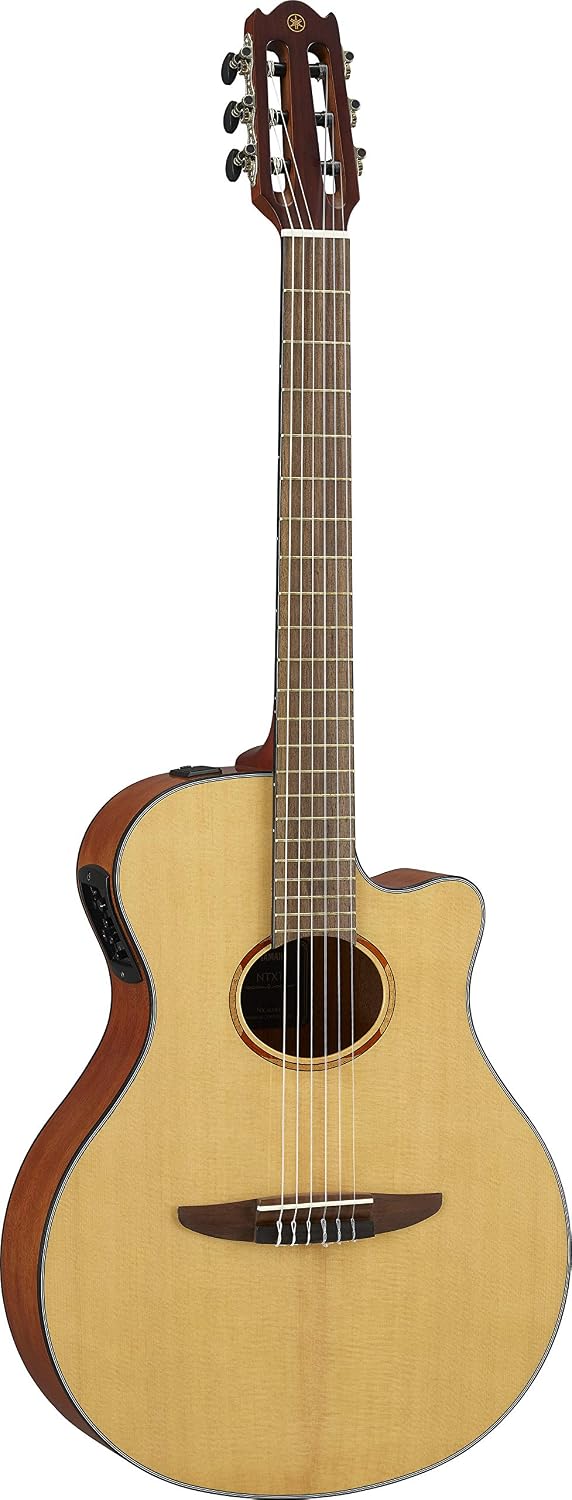
The NTX1 is the current crossover option for a player who wants nylon strings without adopting a traditional classical neck. Its 48mm nut and contemporary NTX body make it a natural candidate for electric or steel-string players exploring nylon-string accompaniment. The cutaway is useful for upper-register phrases and chord shapes.
A solid Sitka spruce top is paired with a walnut fingerboard and bridge. Yamaha specifies nato or okume for the back and sides, depending on production, rather than an all-solid body. The 650mm scale keeps a full-length playing surface, so the slimmer feel comes from the neck and body design rather than a shortened scale.
The undersaddle pickup feeds a preamp with a tuner, three-band EQ and an adjustable midrange frequency. That midrange control is particularly useful for shaping an amplified part around a vocal or another instrument. The trade-off is narrower classical finger spacing and a pickup-based system rather than the multi-source Atmosfeel electronics used on higher NX models. Choose it for the crossover layout and useful onboard control.
Pros
- Solid Sitka spruce top
- 48mm nut and cutaway crossover layout
- Three-band EQ with adjustable midrange frequency and tuner
Cons
- Not the traditional full-width classical feel
- Uses an undersaddle system rather than multi-source Atmosfeel
Córdoba Fusion 14 Rose

The Fusion 14 Rose is an unusual choice among these guitars because its solid rosewood soundboard gives the instrument a distinctive visual identity. Rosewood back and sides and an ebony fingerboard complete a more individual specification than the familiar cedar- or spruce-topped classical design.
The important number in its name is the neck joint: the body meets the neck at the fourteenth fret, rather than the twelfth fret of a traditional classical. Combined with a cutaway, a radiused fingerboard and a 48mm nut, that gives a steel-string player a more familiar route to upper-register playing. It still uses nylon strings; “crossover” describes the playing format, not a requirement to fit a mixture of steel and nylon strings.
Blended pickup electronics and a tuner support amplified use. The appeal is the combination of that stage-ready format with the rosewood construction, while the compromise is a feel that differs noticeably from a flat, wide classical fingerboard. It is an older model, so it is most interesting to someone specifically drawn to its neck layout and materials rather than simply seeking the newest nylon-string guitar.
Pros
- Distinctive solid rosewood top
- Fourteenth-fret body joint and cutaway
- 48mm nut with a radiused ebony fingerboard
Cons
- Crossover spacing differs from a traditional classical layout
- Older model with fewer current purchasing options
Yamaha NTX900FM

The NTX900FM pairs a solid Engelmann spruce top with flamed maple back and sides. That combination gives it a recognizably different appearance from the cedar-and-mahogany guitars in this selection, while the thinner NTX body and cutaway keep the design focused on an accessible crossover playing position.
The 48mm nut and radiused rosewood fingerboard make the transition from a steel-string acoustic less abrupt than a broad, flat classical neck. The 650mm scale remains full length, and the body is shallower than Yamaha’s traditional NCX classical format. Those dimensions are useful for a player who wants nylon strings in a more familiar amplified-acoustic setting.
Its SYSTEM61 electronics use Yamaha’s A.R.T. two-way pickup arrangement. That is a different design from a basic undersaddle pickup, and an important part of this particular older NTX model’s identity. The compromise is the less traditional body and neck feel; choose it for its crossover design and pickup system rather than assuming a thin body will behave like a full-depth concert classical.
Pros
- Solid Engelmann spruce top with flamed maple back and sides
- 48mm nut and radiused rosewood fingerboard
- SYSTEM61 with A.R.T. two-way pickups
Cons
- Shallower crossover body differs from a traditional classical
- Older model, with availability dependent on remaining stock
Córdoba C7-CE CD
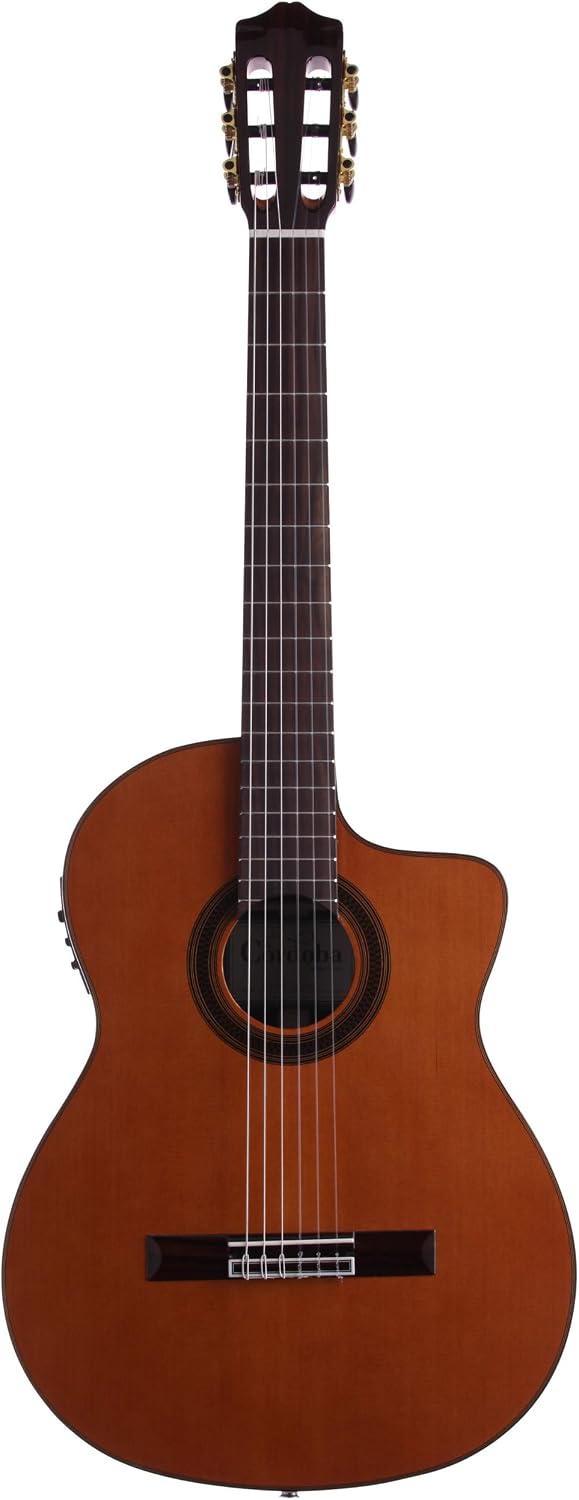
The C7-CE CD is the choice for a player who wants a more traditional classical layout while keeping a cutaway and a flexible amplified setup. Its solid cedar top and rosewood back and sides give it a clear construction identity, with fan bracing and a gloss finish carrying the design through in a familiar way.
The Fishman Presys Blend system combines an undersaddle pickup with an internal microphone. Blending the two gives more control over the amplified character than a pickup-only setup. The onboard tuner and EQ are useful for practical stage adjustments, while the microphone contribution needs care at higher stage volumes because it can make feedback harder to manage.
The cutaway helps with upper notes, but this is still closer to a traditional classical in feel than the 48mm crossover designs. Its strength is that combination of familiar nylon-string construction and a more flexible signal source. The trade-off is a more involved preamp setup: spend a little time finding a useful pickup/microphone balance rather than assuming the maximum microphone setting will suit every room.
Pros
- Solid cedar top with rosewood back and sides
- Pickup and internal microphone can be blended
- Cutaway, onboard tuner and adjustable neck relief
Cons
- Microphone blend requires attention to stage volume
- More controls to manage than a pickup-only preamp
La Patrie Presentation QI

The Presentation QI keeps a traditional, non-cutaway body while adding the option of amplified use. Its pressure-tested solid cedar top is the main construction feature, making it an interesting choice for someone who values an acoustic classical format more than easy access to the very highest frets.
The radiused fingerboard is a useful departure from the flat board commonly associated with classical guitars. It can feel more familiar under the fretting hand for a crossover player, while a double-function truss rod allows neck-relief adjustment. The Tusq nut and compensated saddle provide defined contact points and compensation for intonation; they do not remove the value of a comfortable setup.
This North American-built model is appealing for its solid top, radiused playing surface and understated classical body. The compromise is upper-fret access compared with the cutaway models here, and current availability is more limited than for the newer designs. Choose it for the guitar’s construction and feel, with amplification as a useful addition to that acoustic foundation.
Pros
- Pressure-tested solid cedar top
- Radiused fingerboard and adjustable neck relief
- Tusq nut and compensated saddle
Cons
- Non-cutaway body limits upper-fret access
- Older model with availability dependent on remaining stock
Best Classical Guitar Under $1000: Buying Guide
Craftsmanship and Construction
Look beyond decorative wood and a glossy finish. A comfortable setup, clean fretwork, a secure bridge and sensible construction matter more than a brand-name comparison. A solid top is a useful feature, but it does not make the entire body solid or guarantee a particular sound.
If a simpler instrument would meet your needs, the classical guitars under $500 are also worth comparing. Leave room for a suitable case and any setup work rather than automatically spending the whole budget on the guitar.
Strings and Neck
Traditional classical spacing and a narrower crossover neck serve different playing styles. The C5-CE’s 50mm nut sits between a broad classical layout and the 48mm designs here. A radiused fingerboard can also feel different from a flat one. Try the reach and string spacing rather than assuming that a narrower neck is easier for every player.
Use nylon-string sets intended for the instrument, and allow fresh strings time to settle. Action and neck relief affect comfort and buzzing; a truss rod is not a universal cure for every setup issue. Do not fit ordinary steel acoustic strings to a classical guitar simply because its neck feels familiar.
Electric Capability
A good acoustic classical guitar does not need electronics to justify its price. For amplified playing, compare the actual system: a straightforward undersaddle pickup, Yamaha’s A.R.T. arrangement and a pickup/microphone blend offer different kinds of control.
More microphone in a blended signal can bring a different amplified character, but also greater sensitivity to feedback. Set input gain first, then adjust EQ and blend for the room. An onboard tuner is convenient when fitted; it does not keep the guitar automatically in tune.
The Best Classical Guitar Under $1000: The Takeaway
The Córdoba C5-CE remains the overall pick for combining a solid cedar top, a useful cutaway and straightforward amplification. The Yamaha NTX1 is the current crossover choice for a narrower feel and flexible EQ, while the NTX900FM offers its own A.R.T. pickup design.
The Fusion 14 Rose stands out for its materials and fourteenth-fret joint, the C7-CE for its pickup/microphone blend, and the Presentation QI for a non-cutaway classical body with a radiused fingerboard. Choose around the neck, body and way the guitar will be used, then check the actual price against the budget.