Looking for the best cheap snare drums? A modestly priced snare can be a useful main drum, a contrasting side snare or a practical starting point for lessons. The right choice depends on the sound and setup you need, rather than the brand name alone.

A drum that works well live can also work in the studio, although tuning, heads and damping may change with the music and room. These six choices range from full-size birch and maple snares to a shallow steel piccolo and student-friendly sets.
Top 6 Best Cheap Snare Drums
Yamaha Stage Custom Birch Snare Drum (Editor’s Choice)

The Stage Custom Birch is the strongest all-round starting point here for a player who already has a stand and wants a full-size snare. Its 14 × 5.5-inch format and six-ply birch shell provide a useful middle ground between a shallow piccolo and a deeper drum. Yamaha describes the birch design in terms of a quick attack and short decay—an appealing combination when the backbeat needs definition rather than a long wash of sound.
Ten tuning positions around each head provide plenty of points for balancing tension. The steel triple-flange hoops and adjustable snare mechanism keep the design familiar, while the 20-strand wires provide the snare response beneath the note. Careful tuning matters more than simply tightening every rod as far as it will go.
This is a flexible foundation for rock, pop and funk, with head choice and damping helping shape the result for a room or recording. It keeps the overall recommendation because its conventional size and focused design suit a wider range of main-snare duties than the Pearl piccolo. The compromise is that it is a drum rather than a complete student setup, and its lively sound still needs tuning to taste.
Pros
- Six-ply birch shell in a versatile 14 × 5.5-inch size
- Ten tuning positions per head
- Conventional hoops and adjustable snare mechanism
Cons
- Stand and practice accessories require a separate setup
- An open sound may need damping for a very dry backbeat
Mapex MPX Snare Drum

The MPX MPML4550CNL offers a different wood-shell option in the same 14 × 5.5-inch size as the Yamaha. This version uses a 6.5 mm maple shell with a gloss natural finish, chrome hardware and Remo UX heads. The exposed wood gives it a clean, understated appearance without relying on a decorative wrap.
Mapex uses separate low-mass lugs for the batter and resonant heads, with ten tuning positions on each side. That arrangement allows each head to be adjusted independently; it does not eliminate the need to seat and balance the heads carefully. The fully adjustable throw-off lets the wire response be set for a looser character or a tighter backbeat.
The appeal is a straightforward maple snare that leaves room to shape the sound through tuning and heads. It is a sensible alternative to the birch Yamaha when a natural-finish maple shell is the priority. A very low, loose setup can lose definition and will need more attention than a moderate tension.
Pros
- 6.5 mm maple shell with gloss natural finish
- Ten tuning positions per head
- Adjustable throw-off and familiar head format
Cons
- No stand or practice pad in the drum-only setup
- Very loose tuning can reduce definition
Pearl S1330B Snare Drum
The S1330B is the most distinctive voice in this group. Its 13 × 3-inch piccolo format uses a 1 mm steel shell with a black powder-coated finish. The smaller diameter and shallow body make it an attractive choice for a crisp, compact backbeat or a contrasting side snare beside a fuller main drum.
Pearl fits 1.6 mm triple-flange hoops, eight tuning positions per head and an SR018 strainer. The design invites articulate accents and a lively, ringing character, especially when tuned up. That can work well for funk and other detailed rhythm parts, although musical style is not a hard restriction on where a piccolo can be used.
The trade-off is body and tonal character rather than an automatic loss of quality. A player wanting a deep, broad main-snare sound may prefer one of the 14-inch wood models. Damping can tame excess ring, but it will not turn this shallow steel drum into a deeper maple or birch snare. Choose it for the contrast it brings.
Pros
- Compact 13 × 3-inch steel piccolo design
- Useful as a contrasting side snare
- Adjustable strainer and triple-flange hoops
Cons
- Less deep-bodied than a conventional full-size snare
- Lively ring may need damping for a dry sound
GP Percussion SK22 Snare Drum
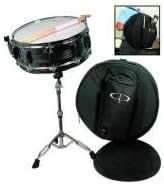
The SK22 is appealing because it addresses the practical side of starting snare lessons. The set pairs a 14 × 5.5-inch drum with a double-braced stand, a bag, a practice pad, sticks and a drum key. That is a more complete route to a basic practice station than buying a bare drum and assembling the rest separately.
Ten tuning positions around the head allow small, even tension adjustments. The pad provides a quieter surface for rudiments, while the stand makes seated practice more convenient. Those are tangible benefits for a student who will spend as much time on sticking and control as on choosing a particular snare voice.
The SK22 makes most sense when the starting setup is the priority. A player upgrading an established kit may get more value from choosing the drum alone and spending the budget on a preferred shell and heads. The included pad reduces volume, but its rebound and response will not feel identical to playing the uncovered head.
Pros
- Drum, double-braced stand and carry bag in one set
- Practice pad, sticks and key included
- Standard 14 × 5.5-inch drum with ten tuning positions
Cons
- Included accessories add less value to an existing setup
- Practice pad changes the playing feel
ADM Student Snare Drum
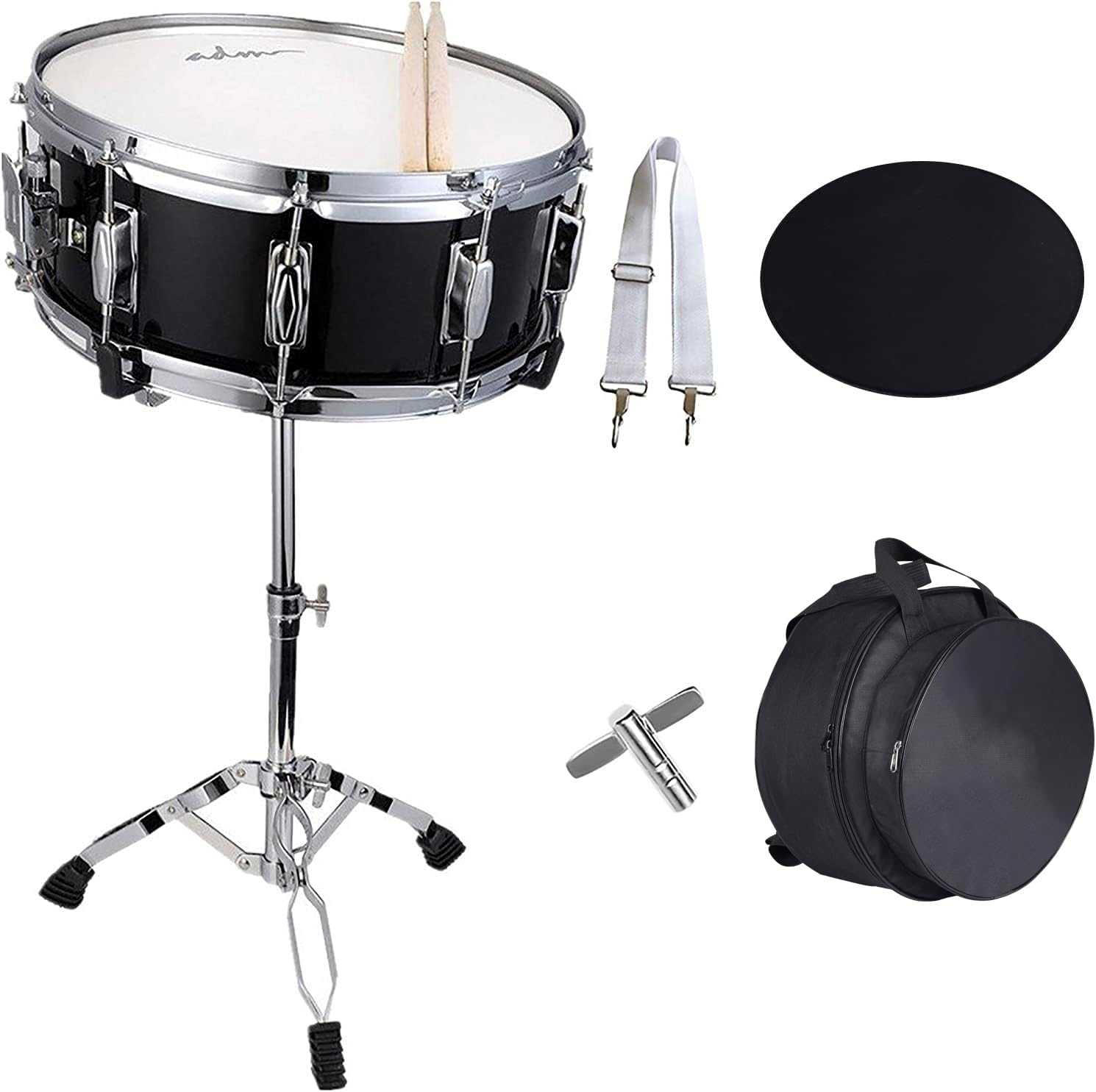
The ADM GS81 is another practical student set, built around a black 14 × 5.5-inch snare with ten tuning positions. Its bag, stand, sticks, mute pad, strap and drum key cover several of the small necessities that can otherwise be missed when a beginner buys only the drum.
The stand supports seated practice, while the strap adds a different carrying option. A mute pad is useful for working on patterns at a lower volume and can also serve as a tabletop practice surface. That flexibility is useful for lessons and school practice, especially when the drum travels between home and a rehearsal room.
Ten tuning points give plenty of adjustment, but they do not guarantee better tone than an eight-lug design. Even tension and sensible head tuning remain the important parts. This set is worth considering when easy transport and a ready-to-practice setup matter most; a drummer who already owns the accessories has less reason to choose a complete kit over a dedicated snare.
Pros
- 14 × 5.5-inch drum with ten tuning positions
- Stand, bag and strap support different practice arrangements
- Mute pad and basic playing accessories included
Cons
- Accessory set offers less benefit to an equipped drummer
- Mute pad reduces volume while changing the response
Griffin Snare Drum

The Griffin PoplarPro takes a simple wood-shell approach: a 14 × 5.5-inch drum with a three-ply, 7.5 mm poplar shell, black PVC wrap and chrome hardware. Eight tuning positions per head keep the layout straightforward, with a coated batter head and clear resonant head completing the basic setup.
Its throw-off controls the snare wires beneath the drum, allowing their tension and response to be adjusted. The conventional 14-inch size also leaves plenty of choice when a different head is wanted. A more controlled batter head can be a useful way to change the note without replacing the whole drum.
The starter head is the main limitation for harder playing. Griffin recommends a premium replacement head for extended hard-hitting use. Expect to spend time tuning the drum out of the box; it is a reasonable foundation for practice, with head choice and setup providing room to improve the result.
Pros
- Three-ply poplar shell in a standard 14 × 5.5-inch size
- Eight tuning positions and adjustable snare wires
- Conventional 14-inch replacement-head options
Cons
- Starter batter head may merit an upgrade for hard use
- Needs initial tuning and wire adjustment
The Best Budget Snare Drum: Our Verdict
The Yamaha Stage Custom Birch is the overall choice for a versatile main snare. The Mapex MPX offers a maple alternative, while the Pearl S1330B makes the most sense when a shallow, bright piccolo voice is the goal. The GP Percussion and ADM sets prioritize getting a student ready to practice; the Griffin is a straightforward wood-shell option with room for a head upgrade.
Before choosing, consider the budget for the whole setup, the sound required, transport and access to replacement heads and wires. A snare that feels right in a shop may still need different tuning or damping at home, on stage or in a recording room.
Heads, wire tension and tuning have a large influence on the result. Start by balancing the tension around each head, then adjust the wires and add a small amount of damping if needed. Gel, tape and different heads can all change the response, but too much damping can remove useful sensitivity along with the ring.
A well-chosen budget snare can serve both live playing and recording. Choose the character and practical setup that suit the job, rather than expecting one shell material, price or lug count to guarantee the best sound.