Looking for the best bass amp for metal? These five choices cover self-contained combos and compact heads, with useful ways to add grit, shape the mids and keep bass lines defined alongside distorted guitars and drums.
For a keyboard amplification setup, see our separate guide to bass Amp for Keyboard rather than assuming the same rig suits every instrument.

Power matters, but it is only part of the choice. A clear midrange, controlled low end and the right cabinet can be more useful than simply turning up the bass control. Clean low-frequency weight blended with some distortion can keep fast riffs audible without making every note indistinct.
The combos below include speakers; the Darkglass and Orange heads need a suitable separate bass cabinet. The Wattage column gives each amplifier’s maximum stated rating. Actual output depends on the speaker load, so the full rating is not always available through a combo’s internal speakers alone.
Best Bass Amps for Metal – Comparison Table
Ampeg Rocket Bass RB-210
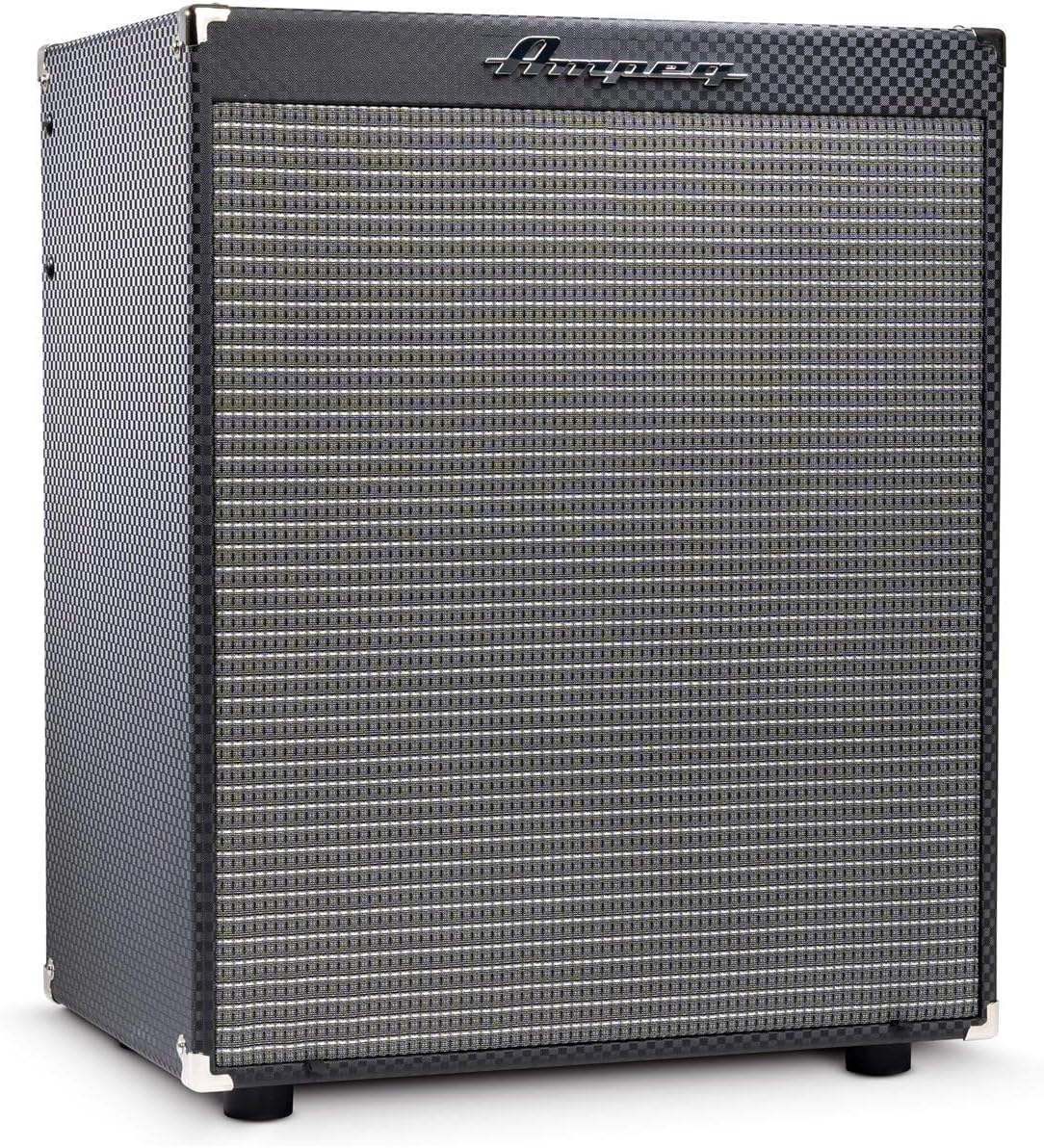
The RB-210 puts an Ampeg-style voice and onboard grit into a practical two-speaker combo. Its SGT overdrive has separate Grit and Level controls, making it easy to add texture without letting a louder distorted setting dictate the whole balance. For rock and metal, that is a useful route from a solid clean foundation to a more assertive edge.
Two 10-inch speakers and a high-frequency driver provide the self-contained format, with a three-band EQ and Ultra Hi/Ultra Lo switches for broader voicing changes. The XLR output and effects loop make it useful beyond a simple practice setup, while aux and headphone connections also accommodate quieter sessions.
Ampeg rates it at 250W into the internal 8-ohm speaker system and 500W with an appropriate extension cabinet producing a 4-ohm total load. It is worth keeping some midrange in the sound when competing with guitars: a deeply scooped setting can sound impressive alone yet disappear in a band. Choose the RB-210 for its convenient combo format and controllable grit, rather than treating the headline rating as an automatic guarantee of enough volume for every drummer.
Pros
- Two-speaker combo with SGT overdrive and separate level control.
- Three-band EQ plus Ultra Hi/Ultra Lo voicing.
- XLR output, effects loop and practice connections.
Cons
- Full 500W rating requires an appropriate extension cabinet.
- Three-band EQ is less detailed than the Darkglass graphic section.
Fender Rumble 500 V3
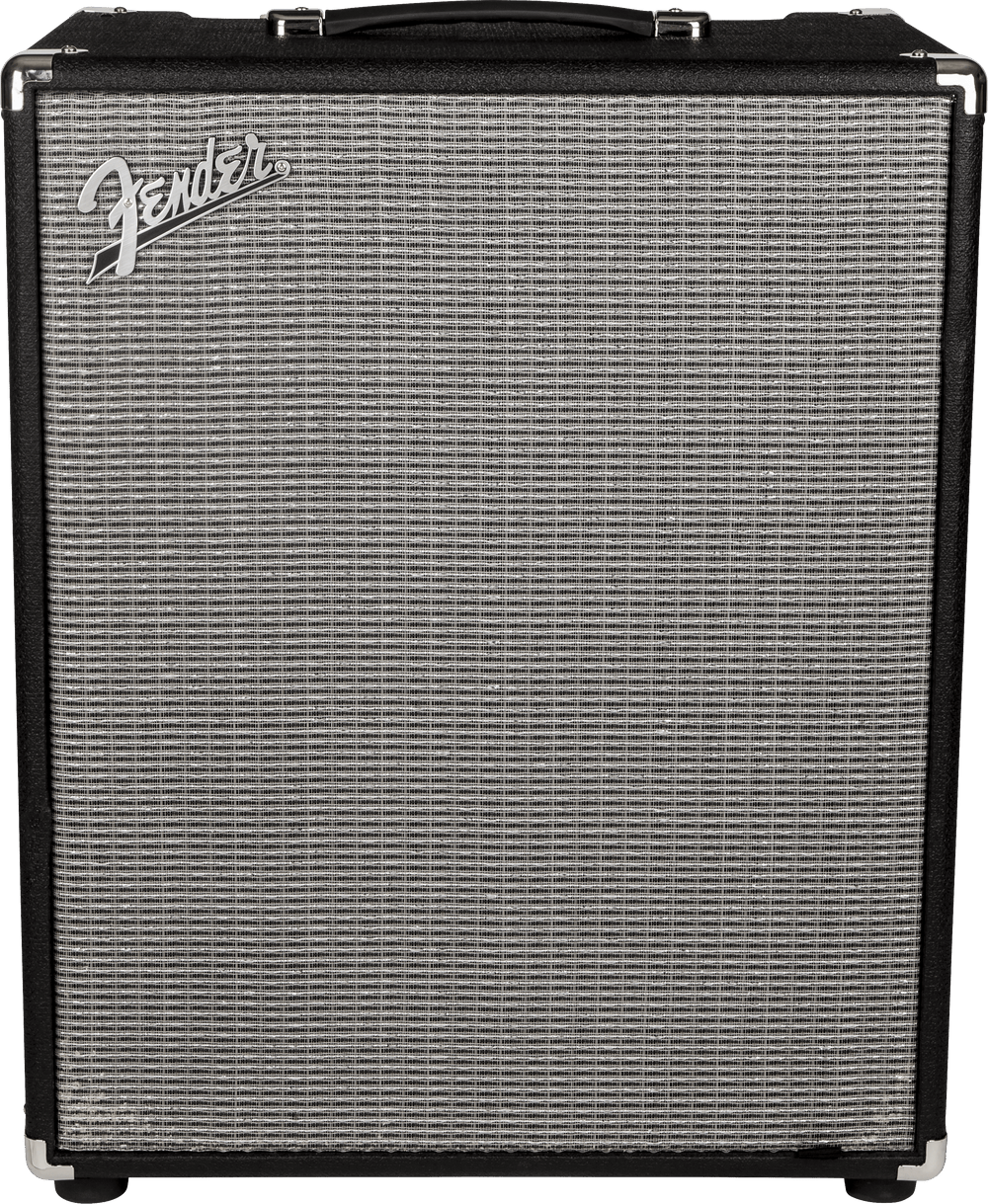
The Rumble 500 V3 is a versatile combo for players who want a clear foundation for pedals as well as built-in overdrive. Its low-mid and high-mid controls are especially useful in a dense metal arrangement, letting the bassist add definition without relying entirely on extra treble.
Two 10-inch Eminence speakers, a switchable compression horn and a relatively light plywood enclosure make the format practical for regular transport. Bright, Contour and Vintage switches provide broader voicing changes, while Drive and Level controls shape and balance the overdrive. An effects loop and an XLR output with ground lift support stage and recording use.
The combo delivers 350W into its internal 8-ohm speakers; the 500W rating requires a suitable extension speaker for a 4-ohm total load. It is a flexible all-rounder rather than a dedicated high-gain specialist. Players after more detailed distortion blending may prefer the Darkglass, while the Rumble makes sense for switching between clean, pedal-driven and moderately gritty bass sounds in one portable package.
Pros
- Four-band EQ gives separate low-mid and high-mid adjustment.
- Built-in overdrive and three useful voicing switches.
- Two-speaker combo with horn switch, effects loop and XLR output.
Cons
- Full 500W output requires a suitable extension cabinet.
- Less specialized distortion shaping than the Darkglass head.
Ampeg BA-210V2 (Editor’s Choice)
The BA-210V2 is the overall pick here for a self-contained metal bass rig with a straightforward control layout. Its Bass Scrambler circuit combines Drive with a clean/overdrive Blend control, giving riffs some bite while retaining a cleaner foundation underneath. That is a particularly useful feature when heavy guitar distortion is already filling much of the mix.
The 2×10 combo also has a genuine 60-degree monitor angle and front-facing controls, so it can be tilted toward the player instead of sending all its sound past the legs. A three-band EQ, Ultra Hi/Ultra Lo switches, effects loop and balanced line output provide practical flexibility. HF Mute lets the player turn off the high-frequency driver when a smoother top end works better.
The trade-off is bulk: at approximately 48 lb, it is a more substantial carry than the lighter combos here. Its 450W rating also requires an appropriate extension cabinet; output through the internal 8-ohm speaker system is lower. For a player who values a built-in clean/dirty blend and the monitor-style cabinet, the BA-210V2 remains a purposeful combo rather than an amp that needs a separate distortion pedal to add grit.
Pros
- Bass Scrambler blends clean weight with overdriven bite.
- 60-degree monitor angle and accessible front controls.
- Effects loop, balanced line output and HF Mute.
Cons
- Approximately 48 lb makes transport more demanding.
- Full 450W rating requires an appropriate extension cabinet.
Darkglass Microtubes 500 V2 (Best for High-Gain Shaping)
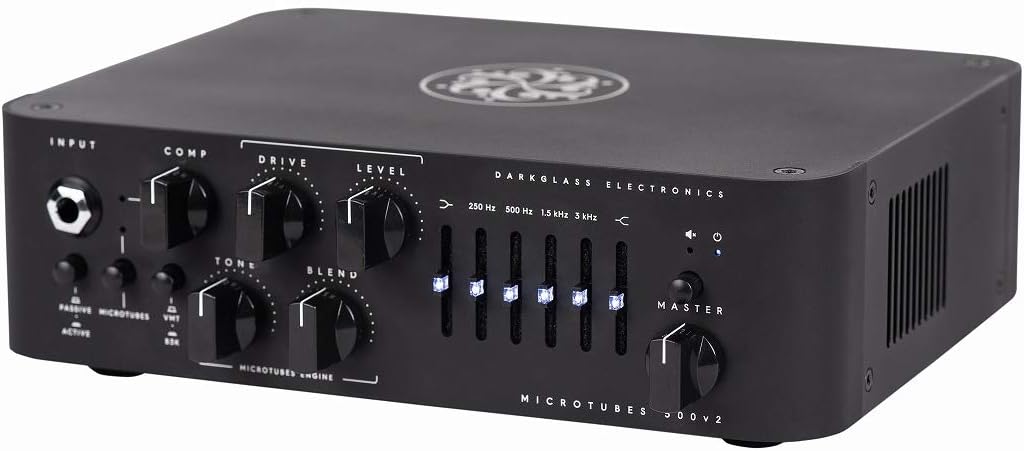
The Microtubes 500 V2 is the most focused choice here for sculpting a driven metal bass sound. Its B3K and Vintage Microtubes voicings cover a more aggressive, percussive character and a warmer midrange-led approach. A Blend control keeps the clean signal in the picture, helping preserve weight when the distortion is pushed.
The all-analog solid-state preamp feeds a Class D power section, with a six-band graphic EQ after the Microtubes engine. Separate drive-tone shaping and compression give the player more control than a simple distortion on/off switch. Cabinet-simulation impulse responses for the direct and headphone paths also make it useful for a consistent feed beyond the speaker cabinet.
The head is rated at 500W into 4 ohms or 250W into 8 ohms and needs a suitable separate bass cabinet. That is the main practical distinction from the combos: the head travels easily, but it is not a complete speaker rig on its own. Choose it when detailed high-gain shaping and clean/dirty blending are central to the sound, rather than paying for that flexibility only to leave the drive section unused.
Pros
- B3K and Vintage voicings with clean/dirty Blend.
- Six-band graphic EQ and compression.
- Cabinet-simulation options for direct and headphone use.
Cons
- Requires a separate suitable bass cabinet.
- More controls to balance than a straightforward combo.
Orange Terror Bass
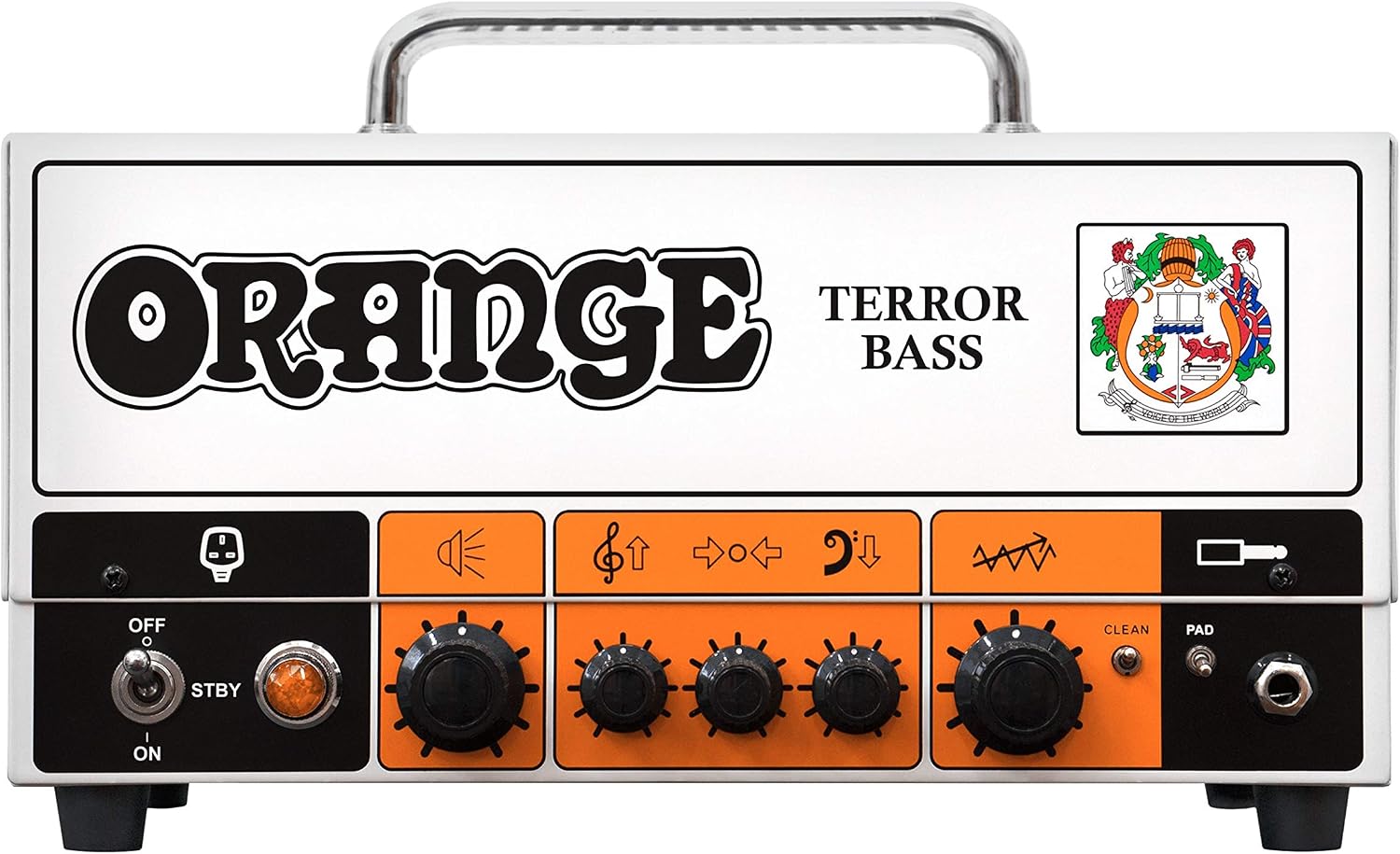
The Terror Bass takes a different route to a strong driven voice, combining a valve preamp with a compact Class D power section. It suits players who want a characterful, muscular response with a simple front panel rather than a graphic EQ and a collection of digital modes.
The current design uses a 12AX7 in the preamp and a 12AT7 for the effects-loop send. Gain, Bass, Middle, Treble and Volume provide the main shaping, while the Clean switch reduces the input-stage gain for smoother cleans and more headroom. A pad accommodates hotter bass signals, and the effects loop and balanced DI support a broader stage setup.
It delivers 500W into 4 ohms or 250W into 8 ohms, with a correctly matched separate cabinet required. Its appeal is the direct control of valve-driven character, not a built-in clean/dirty blend like the Darkglass or BA-210V2. The valves also add a service consideration absent from an entirely solid-state head. Choose the Orange when that simpler, distinctive voicing is the reason for the rig.
Pros
- Valve preamp character with a compact Class D power section.
- Clean switch and input pad broaden its usable range.
- Straightforward three-band EQ, effects loop and balanced DI.
Cons
- Needs a correctly matched separate cabinet.
- No dedicated clean/dirty Blend control; valves eventually need service.
How to Pick the Best Bass Amp for Metal
A useful metal bass sound needs both weight and definition. Distorted guitars can occupy much of the low-mid range, so adding ever more deep bass is not always the answer. The right bass amplifier should help place the instrument in the arrangement, not simply make it louder in isolation.
Attack and Definition
Keep enough midrange for the note to remain audible, and use distortion with purpose. A clean/dirty blend can retain a firmer low end beneath the grit. Too much treble can make fret noise dominant, while a large mid scoop may remove the detail needed to follow fast parts.
Power and Speaker Load
Choose output for the band and venue, not from a universal minimum wattage rule. Speaker sensitivity, cabinet size, clean-headroom needs and PA support all affect the result. A combo’s full rating may require an extension cabinet, while a head always needs an appropriate speaker system for ordinary amplified use.
For the separate heads here, compare suitable 4×10 bass cabinets and follow the amplifier’s load and power-handling requirements. Use proper speaker cables. Cabinet power handling is not the same thing as an amplifier’s output rating.
Budget and Practical Features
Consider the complete rig: a head may be convenient to carry, but a cabinet adds cost, size and weight. A combo can be simpler for rehearsals. These bass combo choices offer another comparison, while our practice bass amp guide focuses on smaller setups where competing with loud drums is not the main job.
If the comparison also includes a guitarist’s rig, these modeling guitar amps for metal serve a different role from a bass amplifier. A guitar amp should not be assumed a substitute for the low-frequency demands of a full-band bass setup.
Conclusion: The Best Bass Amp for Metal
The Ampeg BA-210V2 is the overall choice here for a self-contained combo with a useful clean/dirty blend and monitor angle. The RB-210 offers another Ampeg combo approach with SGT grit, while the Fender Rumble 500 V3 provides flexible EQ and a practical clean-to-overdriven platform.
For a separate head-and-cabinet rig, the Darkglass Microtubes 500 V2 puts detailed distortion shaping first, while the Orange Terror Bass favors a simpler valve-preamp character. Match the format and voicing to the band, with enough headroom and speaker capacity for the actual playing situation.