The best audio interface for Cubase depends on what needs to be recorded and how the studio is used. Two inputs can be enough for a singer and guitar, while a small group may need more separate channels. Direct monitoring, MIDI connections and useful hands-on control can matter more than the highest sample-rate figure.
The Scarlett 2i2 3rd Gen remains the overall choice for a straightforward two-input recording setup. PreSonus adds tactile DAW control, Behringer provides four mic inputs, Steinberg offers DSP monitoring, and the Alesis combines a small mixer with stereo USB recording. Cubase can play virtual instruments without an external interface; the benefit here is practical recording, monitoring and connections.
The 5 Best Audio Interfaces for Cubase
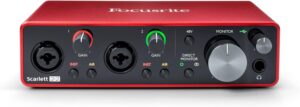
Focusrite Scarlett 2i2 3rd Gen (Editor’s Choice)
The Scarlett 2i2 is the straightforward all-round choice for recording one or two sources. This third-generation version has two combination mic/line/instrument inputs, balanced monitor outputs and a headphone output. It is a useful layout for a vocal and guitar, two microphones or a stereo line source, without unnecessary routing complexity.
Its Air mode changes the preamp’s response to add a brighter character, while the gain halos provide a quick visual guide to input level. Direct monitoring lets the performer hear the input without waiting for the signal to make a round trip through Cubase. USB bus power also keeps a small desktop setup tidy.
The limits are the channel count and connections. There are two simultaneous analog inputs, and this 2i2 has no five-pin MIDI ports. A USB MIDI keyboard can still connect directly to the computer. Choose it for a clear, manageable recording workflow; a larger session calls for more inputs rather than a higher sample rate.
Pros
- Two versatile inputs suit common solo recording tasks.
- Air mode, gain halos and direct monitoring.
- USB bus power keeps the desktop setup simple.
Cons
- Only two simultaneous analog input channels.
- No five-pin MIDI input or output.
PreSonus ioStation 24c (Best for Tactile Control)
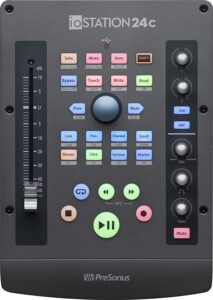
The ioStation 24c stands apart because it combines a two-input audio interface with a DAW controller. Its 100mm touch-sensitive motorized fader gives volume automation a physical control, while transport buttons and the Session Navigator reduce repeated trips to the mouse. That is useful for someone who records and mixes alone.
The audio side provides two XMAX preamps, balanced main outputs and a separately controlled headphone level. For Cubase, its Mackie Control mode supplies the controller connection; audio input/output selection is a separate part of the setup. The result is a compact way to add both recording connections and tactile navigation.
The compromise is that one physical fader serves the selected channel rather than showing an entire mixer at once. Cubase control mode and the relevant audio driver must also be configured correctly, especially on Windows. It is worth the additional setup when hands-on mixing is valuable, but a simpler interface may be enough if the keyboard and mouse already suit the workflow.
Pros
- Motorized touch-sensitive fader for the selected channel.
- Transport controls and Session Navigator.
- Two mic preamps and documented Cubase Mackie Control operation.
Cons
- Only one physical fader for navigating multiple tracks.
- Controller mode and audio-driver setup are separate tasks.
Behringer U-PHORIA UMC404HD (Best for Four Microphones)
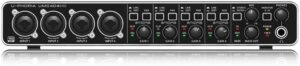
The UMC404HD is the choice when two inputs are not enough. Four combination inputs with Midas-designed preamps allow four sources to reach separate Cubase tracks. That is useful for a small ensemble, several microphones on one instrument or a session that needs to stay connected between takes.
Four analog insert points add another practical feature: external processors can be placed in the input paths. MIDI input and output also accommodate suitable five-pin hardware. Direct-monitor controls provide a way to balance incoming sound against computer playback, making the interface more useful than a simple input-count upgrade.
The trade-off is a larger set of cables and routing choices to manage. Its external power arrangement and the appropriate Windows driver need planning, and it has no ADAT expansion path for growing into a much larger system. Choose it for four useful analog channels and hardware connections, rather than treating 192kHz support as a guarantee of a better recording.
Pros
- Four mic preamps feed separate recording channels.
- Four analog insert points for external processing.
- MIDI input/output and direct-monitor controls.
Cons
- More cabling and routing than a two-input interface.
- No ADAT expansion for a larger channel count.
Steinberg UR22C
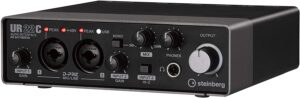
The UR22C is the monitoring-focused alternative for a compact Cubase studio. It provides two D-PRE preamps, a guitar-compatible high-impedance input and MIDI connections in a small interface. Its distinguishing feature is onboard DSP, which gives the performer another route to a comfortable monitoring sound.
The DSP monitoring system can add supported effects to the input monitoring path without relying on the full Cubase round trip. Control is available through the Steinberg integration or dspMixFx, depending on the setup. Its converters support up to 32-bit/192kHz operation, although a sensible session format and good input levels remain more important than the largest numbers.
The limit is still two analog inputs and a stereo output pair. DSP routing and driver settings take some initial attention, particularly when deciding how the performer will hear the signal during tracking. Choose it when low-delay monitoring with onboard effects is valuable, especially if the performer wants a more finished headphone sound.
Pros
- Onboard DSP supports effects in the monitoring path.
- Two D-PRE preamps and a high-impedance guitar input.
- MIDI connections and Steinberg monitoring integration.
Cons
- Two analog inputs limit larger recording sessions.
- DSP routing and driver setup add some complexity.
Alesis MultiMix 8 USB FX
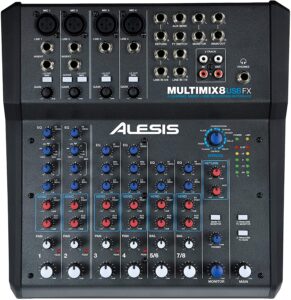
The MultiMix 8 USB FX is the mixer-first option. Four mic inputs, additional line inputs, channel controls and onboard effects let several sources be combined before they reach Cubase. That makes it useful for a live stereo submix, a small performance setup or a workspace that benefits from physical level controls.
Its USB connection records the stereo mix at 16-bit resolution and 44.1 or 48kHz. That is the important distinction: the eight-channel mixer does not send eight independent audio tracks to the computer. The channel controls and effects shape the mix as it is made, so the stereo result needs to be right at the recording stage.
The trade-off is reduced flexibility afterward. A vocal or instrument cannot be separately rebalanced in Cubase once it has been committed to the same stereo mix. It is therefore a different tool from the four-channel UMC404HD. Choose the Alesis when a practical mixer with straightforward stereo recording is the goal, rather than when every microphone needs its own editable track.
Pros
- Physical mixer controls for several connected sources.
- Four mic inputs and onboard effects.
- Straightforward stereo USB recording and playback.
Cons
- USB records a stereo mix, not eight separate tracks.
- Committed sources cannot be independently remixed afterward.
FAQ About Audio Interfaces for Cubase
How to Choose a Good Audio Interface?
Start with the actual recording task and the computer. A useful audio interface for recording should provide the required input types, enough independent channels and a workable monitoring route. Check the manufacturer’s current operating-system and driver support before choosing an older model.
What Would You Need the Audio Interface For?
Recording microphones or a guitar, feeding studio monitors and creating a comfortable headphone mix are common reasons to use one. Cubase virtual instruments and MIDI data do not inherently require an external interface: MIDI carries performance instructions, and the software generates audio. A USB MIDI controller can often connect directly to the computer.
Number and Types of I/Os You May Need
Count independent recording channels, not the number of possible connector uses. A two-input interface can accept different source types but still records only two analog channels at once. The UMC404HD provides four, while the Alesis mixer sends a stereo mix over USB. Use appropriate phantom power for microphones that require it, and check whether five-pin MIDI ports are needed.
Connectivity Options
Match the interface to the computer’s supported connection and driver, then select it in Cubase’s audio setup. USB-C describes a connector shape; it does not automatically mean Thunderbolt or one particular transfer speed. On Windows, use the manufacturer’s supported ASIO driver where provided. Buffer size affects latency and stability, while direct or DSP monitoring can help the performer without requiring a very small DAW buffer.
Your Budget Matters
Spend for the functions that solve a real problem: more inputs, useful monitoring, MIDI or tactile control. A higher maximum sample rate does not replace a good microphone position, appropriate gain or a quiet recording space. Software bundles and licenses can change, so judge the hardware first and confirm any included software separately.
So, The Best Cubase Audio Interface Is…
The Scarlett 2i2 3rd Gen remains the overall recommendation for a straightforward two-input studio. Choose the ioStation for tactile control, the UMC404HD for four microphones, the UR22C for DSP monitoring, or the MultiMix when a stereo mixer feed is the intended recording method.
Choose the input count and workflow before chasing specifications. A suitable driver, clear monitoring and the right connections make the interface a more useful part of the Cubase setup.
For the speaker side of a bass-focused recording setup, see Studio Monitors for Bass.
If the recording setup also needs a dedicated talkback microphone, see Talkback Mic.