Looking for the best locking tuners? A good set can make string changes quicker and reduce the number of wraps around each post. The right choice depends on the headstock layout and mounting pattern as much as the name on the housing.
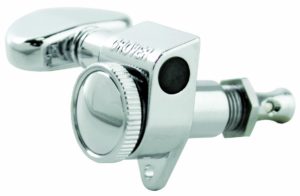
These five sets cover both three-per-side and six-in-line guitars. The Grover 502C remains the overall choice for a compatible three-per-side instrument, while the Sperzel and Fender sets offer practical options for suitable in-line headstocks. Locking tuners clamp the string; they do not lock the guitar at a fixed pitch.
The 5 Best Locking Tuners
Grover 502C Roto-Grip Locking Rotomatic Tuners (Editor’s Choice)
The 502C combines familiar Rotomatic styling with a rear thumbscrew that clamps the string. Its sealed, lubricated gears use an 18:1 ratio, giving the button a relatively gradual response for small pitch adjustments. The chrome finish and rounded kidney buttons keep the appearance traditional.
This is a three-per-side set. Grover specifies a single wrap before tightening the lock, so the benefit is a simpler, repeatable restringing routine rather than completely eliminating every turn around the post. Mounting bushings, washers and screws are included.
It remains the overall pick for a compatible guitar because it pairs a straightforward locking mechanism with clearly specified gearing and hardware. A Les Paul-style headstock is a sensible application to consider, but the existing bore and screw positions still determine fit. Choose it for that combination of familiar controls and easier string changes, rather than expecting the lock to cure a binding nut.
Pros
- 18:1 gearing and sealed, lubricated gears
- Rear locking thumbscrew with traditional kidney buttons
- Three-per-side set with mounting hardware
Cons
- Not a six-in-line set
- Bore and mounting-screw pattern must match the guitar
Sperzel 6 In-Line Locking Tuners
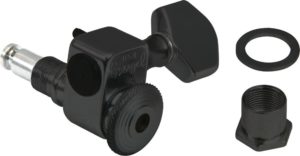
The black Sperzel set suits a guitar with six tuning machines in one row. Rear locking knobs hold the strings at the posts, keeping the restringing process straightforward. The finish also makes it a natural visual choice for a guitar already fitted with black hardware.
Sperzel uses a 12:1 gear ratio, so the pitch responds more quickly to a given turn than it does with an 18:1 mechanism. That is a difference in feel rather than proof of better or worse construction. Staggered post heights help establish the string angle over the nut on a suitable flat headstock.
The mounting system uses a locating pin, which can require a new hole when replacing a different tuner design. This is the set to consider for its locking convenience, black finish and staggered layout; it is not an automatic replacement for every Strat-style guitar. Nor should a six-in-line set be treated as interchangeable with three-per-side machines.
Pros
- Rear locking knobs for quick string changes
- Staggered posts for a suitable flat headstock
- Black finish to match dark hardware
Cons
- Locating-pin installation may require drilling
- 12:1 gearing has a quicker response than higher-ratio alternatives
D’Addario Planet Waves Auto-Trim Tuning Machines
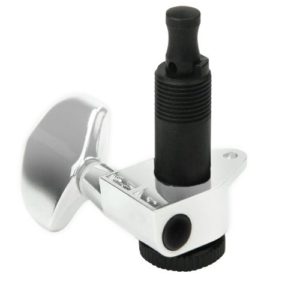
The Auto-Trim design tackles two restringing jobs together: holding the string and trimming its spare end. Once the string is fed through the correct side and clamped, tuning to pitch operates the cutter. That is a useful convenience when changing a complete set of strings.
This chrome version has a three-per-side layout and 18:1 gearing. Individual clamps avoid the need to build up several wraps, while the familiar geared action still handles the actual pitch adjustment. The attraction is a tidier routine without reaching for separate string cutters.
The extra cutting mechanism makes the correct stringing sequence more important than on a conventional tuner. Follow the instructions rather than treating it as a standard post with an added knob. Choose the Auto-Trim for its integrated cutting feature and three-per-side format; players who prefer simpler hardware may find an ordinary locking set easier to live with.
Pros
- Automatically trims excess string while tuning
- Individual string clamps and 18:1 gearing
- Chrome three-per-side set with mounting hardware
Cons
- Correct feeding and clamping sequence matters
- More elaborate mechanism than a basic locking tuner
Fender Locking Tuners
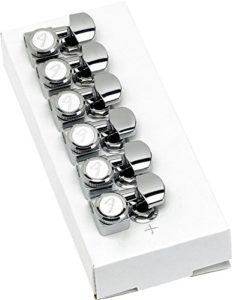
Fender’s polished-chrome set keeps the familiar look of a modern Stratocaster or Telecaster while adding rear locking knobs. Six right-handed machines use dual locating pins rather than the mounting-screw arrangement found on many vintage-style tuners. That distinction matters more than the Fender name alone when planning a swap.
The set combines three long posts for the wound strings with three shorter posts for the plain strings. This staggered arrangement helps provide the intended string angle over the nut. An 18:1 ratio gives a gradual tuning response, and the string locks reduce the winding needed during a change.
For a compatible modern Fender neck, the appeal is a tidy upgrade that preserves the instrument’s overall appearance. It is a strong option when the existing dual-pin mounting pattern already matches. Vintage-pattern holes, left-handed layouts and other manufacturers’ necks need a separate fit check; a locking mechanism does not make those differences disappear.
Pros
- 18:1 gearing with rear locking knobs
- Three long and three short posts
- Familiar polished-chrome Fender appearance
Cons
- Dual-pin mounting is not a universal replacement pattern
- This set is for a right-handed six-in-line layout
Schaller Locking Tuning Machine Heads
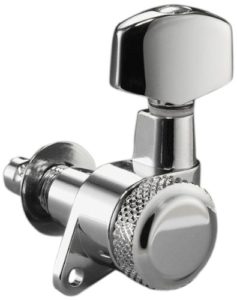
This chrome Schaller set pairs a three-per-side layout with a large rear locking wheel. The wheel clamps the string at the post, leaving the tuning button to make the normal pitch adjustment. It is a practical, traditional-looking alternative for a guitar that already uses a compatible M6-style mounting arrangement.
The older M6 Locking design uses 16:1 gearing, with the locking control beneath the housing rather than on top of the post. That makes the string clamp easy to distinguish from the tuning button. It also separates this version from Schaller’s other M6 and Toplocking designs, which should not be treated as identical hardware.
The appeal is a simple division of tasks: release the rear wheel for a string change, then use the button for tuning. The trade-off is the size of the locking hardware and the need for access behind the headstock. Choose it when that layout and the mounting pattern suit the guitar, rather than expecting any Schaller set to be a direct replacement.
Pros
- Rear locking wheels separate clamping from tuning
- 16:1 gearing on this M6 Locking design
- Chrome three-per-side layout
Cons
- Rear locking wheels need clearance
- Other M6 variants can have different mounting patterns
How to Find the Best Locking Tuners: Buyer’s Guide
A tuning machine changes pitch by adjusting string tension through a geared mechanism. A locking version adds a clamp at the post. The main practical benefit is a quicker string change with fewer wraps, not a promise that the instrument can never go out of tune.
Start with the Headstock Layout
Three-per-side and six-in-line sets are different. Handedness, post height, bore diameter and the position of mounting screws or locating pins all matter. A model that suits one Les Paul, Stratocaster or Telecaster is not automatically a direct replacement for every version of that guitar.
Compare the existing hardware and the manufacturer’s dimensions before arranging installation. If drilling or enlarging holes is needed, a qualified guitar technician can assess the work. The mounting pattern matters more than how similar two machines look from the front.
Gearing and the Locking Mechanism
A higher ratio generally gives a smaller post movement for the same turn of the button, making fine adjustment more gradual. A lower ratio responds more quickly. Neither number alone establishes build quality or how well the guitar will hold its tuning.
Rear thumbscrews and locking wheels keep the clamping control separate from the tuning button. Auto-Trim adds a cutter. The Grover 502C calls for a single wrap; other systems use a different stringing sequence. Follow the instructions for the actual mechanism rather than assuming every locking set works the same way.
What Locking Tuners Can and Cannot Fix
A secure clamp can reduce slippage at the post, but strings still need to settle and the rest of the guitar still needs a sound setup. A binding nut, worn bridge parts or an incorrectly adjusted tremolo can cause tuning problems that new machine heads will not solve. Locking tuners also differ from a locking nut on a double-locking tremolo system.
For tremolo use, the whole string path matters. A well-fitted locking set can make restringing more convenient, but it cannot remove friction elsewhere. Likewise, neck relief, action and electrical hum are separate issues rather than signs that a guitar needs locking tuners.
Choose Useful Features over Promises
Consider button clearance, access to the locking control and the mounting work involved. Staggered posts can help the string angle on a suitable headstock; whether a string tree remains useful depends on the actual geometry. A new set may also change headstock weight, so a lighter or heavier mechanism is not automatically an improvement.
Conclusion: What Are the Best Locking Tuners?
The Grover 502C remains the overall recommendation for a compatible three-per-side guitar, with 18:1 gearing, sealed gears and an uncomplicated rear clamp. The D’Addario Auto-Trim adds integrated cutting, while the Schaller offers a different rear-wheel mechanism.
For a suitable six-in-line instrument, compare the black Sperzel set with Fender’s polished-chrome dual-pin machines. The best choice is the one that combines the desired restringing routine with the correct dimensions and mounting layout. For a more specific Fender-style application, see the guide to tuners for a Squier Strat.