Sennheiser HD 558 vs. 598: how different are they, and which one makes more sense for home listening? Both are wired, open-back headphones from the same established family, with large earcups and a detachable cable. The differences are more specific than a simple list of higher numbers.
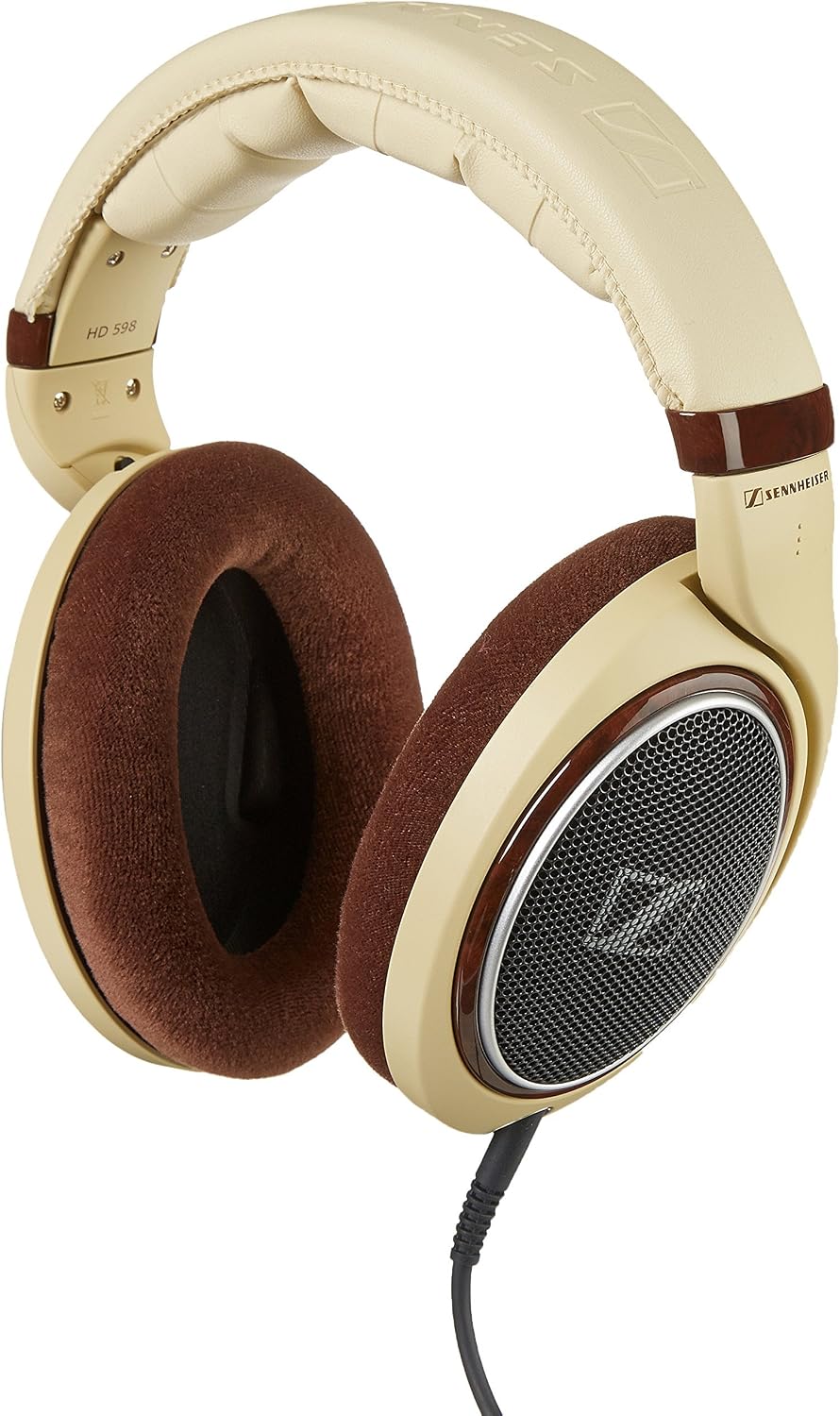
This comparison covers the HD 558 and the classic ivory-and-brown HD 598. They suit a quiet listening space rather than a commute or a noisy shared room. As older models, their condition and included accessories matter alongside the original specifications.
Sennheiser HD 558 vs. HD 598 – Comparison Table
| Image | Model | Price |
|---|---|---|
| Sennheiser HD 598 Headphones (Editor's Choice) | Check Price |
 | Sennheiser HD 558 Headphones | Check Price |
Sennheiser HD 558 Headphones
The HD 558 keeps the styling restrained: a black finish, large oval earcups and velour earpads. Its around-ear shape gives the ears room inside the cushions, while the adjustable headband helps set the position. The appeal is a familiar home-listening design without the bright colors or controls of a gaming headset.
The open-back construction is central to the experience. Sound can pass through the outside of the earcups, so the headphone does not create the sealed enclosure of a closed-back model. In a quiet room that is an appealing way to listen to music or a film; in a busy room it means outside sound remains audible and people nearby can hear some of the playback.
Sennheiser’s Eargonomic Acoustic Refinement, or E.A.R., guides sound toward the ears. The HD 558 also uses the company’s Surround Reflector arrangement. These acoustic features are intended to support a spatial listening presentation without relying on software processing.
The single-sided cable is detachable with a twist-lock connection, making replacement more practical than with a permanently attached lead. The original specification uses a 3-meter cable with a 6.3mm stereo plug and a 3.5mm adapter. That is convenient beside a hi-fi system or desktop amplifier, but the long cable and adapter are less tidy with a small portable device.
At 50 ohms, the HD 558 can work with a suitable headphone output without demanding a specialist high-impedance setup. Available volume and headroom still depend on the source. It has no integrated microphone, wireless connection or active noise cancellation, and the open design is a poor match for recording beside a live microphone when leakage matters.
The HD 558 makes the most sense as a straightforward, understated headphone for a quiet desk or home stereo. Its useful strengths are the open layout, velour cushions and replaceable cable. Fit and pad condition remain important on an older pair, so comfort is something to assess rather than a guaranteed number of hours.
Pros
- Open-back around-ear design with velour cushions
- Detachable twist-lock cable
- Understated black finish and standard analog connection
Cons
- Leaks sound and provides little isolation
- Long cable and adapter are less convenient for portable use
- No integrated microphone or wireless connection
Sennheiser HD 598 Headphones (Editor’s Choice)
The classic HD 598 has a more distinctive look than the HD 558. Its ivory body, brown trim and padded leatherette headband give it a warm, traditional hi-fi appearance, while velour ear cushions keep the contact surface soft. It is a design that makes a feature of being a home-listening headphone rather than trying to disappear into a travel bag.
Inside, Sennheiser combines an open dynamic design with E.A.R. sound channeling and Duofol diaphragm technology. The acoustic arrangement directs sound toward the ears and is intended for an expansive listening presentation. As with the HD 558, the open layout means that room noise remains audible and some playback escapes into the surroundings.
The classic model uses a detachable, single-sided 3-meter cable with a 6.3mm plug and a 3.5mm adapter. That suits a receiver, headphone amplifier or compatible desktop output. The 50-ohm impedance is moderate, but the output device still determines usable volume, and a device without an analog headphone socket needs an appropriate audio adapter.
The most persuasive everyday differences are the finish and headband treatment rather than a claim that one frequency-response number makes every recording clearer. The large cushions, adjustable fit and padded headband make the HD 598 an appealing headphone to settle down with, while the non-folding construction and long lead keep it firmly in the home-listening camp.
The HD 598 remains the overall choice in this comparison for its combination of classic styling, padded leatherette headband and open listening design. It is especially appealing when the headphone will live beside a stereo or desk. Someone who prefers the HD 558’s black finish and finds its fit comfortable may have little reason to choose purely by the model number; both need a quiet setting to show their strengths.
Pros
- Distinctive ivory-and-brown finish with a padded leatherette headband
- Open-back design, E.A.R. sound channeling and velour earpads
- Detachable single-sided cable with standard analog connections
Cons
- Sound leakage makes it unsuitable for private listening in a shared room
- Long cable and non-folding design are less convenient for travel
- No integrated microphone or wireless connection
Head to Head: Sennheiser HD 558 vs. Sennheiser HD 598
Build Quality
Both use a lightweight headphone framework with a detachable cable and padded around-ear cups. The replaceable lead is a practical strength, but age and condition matter more than a blanket promise that either model will last indefinitely. On an older pair, inspect the headband, cup adjustment, cable connection and cushion condition.
Design
The HD 558 is the quieter visual choice in black. The classic HD 598 uses ivory and brown with a more decorative finish and a leatherette-covered headband. That is a matter of preference rather than an acoustic advantage. This comparison uses the classic HD 598 configuration, with its original long cable and adapter.
Comfort
Both provide large around-ear cups and velour earpads. The HD 598’s headband treatment is a tangible difference, but padding material alone cannot predict the better fit for every person. Cup position, headband adjustment, glasses and the condition of the pads all affect comfort.
Sound Performance
Sennheiser specifies 15Hz–28kHz for the HD 558 and 12Hz–38.5kHz for the HD 598, with both rated at 50 ohms. Those range limits do not describe the shape of the audible response or prove that one has more detailed treble. The frequency-response guide explains how to read that type of specification. The manufacturer also lists lower distortion for the HD 598 under the stated 1kHz test condition, but that is not a substitute for comparing the sound at a similar listening level.
Both are open-back designs intended for home listening. Choose them for that application rather than expecting the isolation of a closed headphone or an electronic surround effect. Use familiar recordings from the genres you enjoy to judge the balance of bass, voices and detail.
Features
Both are simple wired headphones with detachable cables. Neither is a Bluetooth headset, and neither has a built-in voice microphone. For gaming or calls, a separate microphone is needed. For recording vocals, open-back sound leakage can reach the microphone; for editing or listening afterward, that may be less of a concern.
Price
Compare the current cost together with condition, the correct cable and adapter, and the state of the cushions. An older model’s original price difference does not establish value today. A complete pair in good condition is a more useful starting point than assuming the higher model number is automatically the better purchase.
Sennheiser HD 558 vs. 598: Final Verdict
The HD 598 retains the overall recommendation for its padded headband, velour cushions and distinctive classic finish, backed by Sennheiser’s open acoustic design. The HD 558 offers much of the same practical appeal in a more understated form. Choose the HD 598 when its fit and styling are the draw; choose the HD 558 when its simpler presentation and the condition of the available pair make it the better match. Both belong in a quiet listening space rather than a noisy commute.