Are you looking for the best Tube Screamer clones? This comparison puts three related alternatives alongside the genuine Ibanez Tube Screamer Mini, a useful reference for the focused overdrive sound that inspired them.

A Tube Screamer-style pedal can add a midrange push, bring a cleaner amp into crunch or tighten the signal feeding a higher-gain setup. These four options cover a compact original, a close historical relative, a more adjustable interpretation and a straightforward alternative with familiar controls.
Tube Screamer Clones and the Ibanez Mini: Comparison
Ibanez Tube Screamer Mini (Editor’s Choice)
The Ibanez Tube Screamer Mini remains the overall pick when the goal is the familiar Tube Screamer response in the least space. It is a genuine Ibanez model, not a third-party clone, and its appeal is the way a focused midrange and restrained low end help a guitar settle into a blues or rock arrangement.
The analog circuit uses the familiar Overdrive, Tone and Level controls, with true-bypass switching. Lower drive and a raised level can push the next gain stage, while more drive brings the pedal’s own clipping into the sound. The effect is not a perfectly neutral volume boost: the frequency balance remains part of its character even at modest gain settings.
Its small enclosure is the practical advantage, but the tiny Tone and Level controls are less convenient to adjust during a performance. It also needs an external 9V supply rather than an internal battery. For players who already want that core sound and do not need extra EQ modes, those are sensible compromises for the compact format.
Pros
- Genuine Ibanez Tube Screamer in a compact format
- Familiar Overdrive, Tone and Level controls
- True-bypass switching
Cons
- Small secondary controls are harder to adjust quickly
- External power required; no battery compartment
Maxon OD808 Overdrive

The Maxon OD808 Overdrive is the traditional choice with a particularly close connection to the circuit’s history. Maxon developed the original OD808 and supplied the design sold under the Ibanez name, so this reissue is more than a later pedal borrowing a familiar green finish.
Drive, Tone and Balance keep the operation direct, with Balance setting the output level. The characteristic mild compression and low-end reduction help make an overdriven sound more focused. That works for blues phrasing into a cleaner amp, but it also explains why the OD808 can be useful in front of a high-gain channel when low notes need a tighter attack.
The reissue uses the established 4558-based approach, with output-stage changes intended to reduce noise. Those details do not make every setting noiseless or guarantee an identical result through every amp. Choose it for the focused, smooth drive and conventional control layout; players who need a flatter EQ or several clipping voices will find the Moxie more adjustable.
Pros
- Direct historical connection to the original 808 design
- Focused drive works for blues and pushing higher-gain amps
- Conventional controls with battery or external-power operation
Cons
- No independent bass or midrange controls
- Its low-end reduction may not suit every clean sound
Wampler Moxie Overdrive (Best for Tone Shaping)
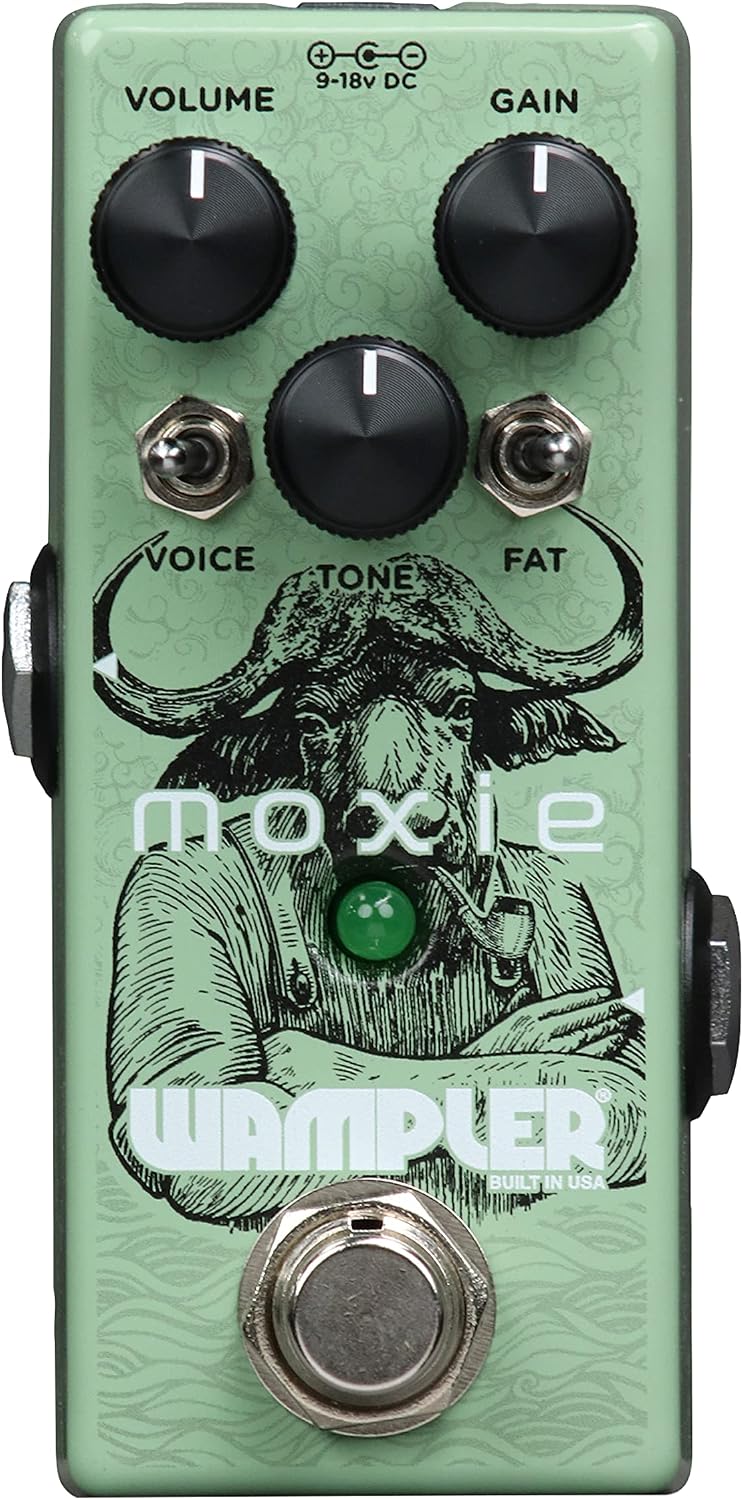
The Wampler Moxie Overdrive is the choice when the basic Screamer idea is appealing but one fixed voice is too limiting. It starts from a TS10-inspired analog design and adds Voice and Fat switches, giving it more ways to adapt to a guitar and amp than the other three pedals here.
Voice changes the EQ response, offering an alternative to the familiar mid-hump profile. Fat changes the clipping and gain behavior for a different driven texture. Together with Volume, Gain and Tone, those switches let the pedal move between a more traditional focused push and a fuller, less mid-dominated setting without changing pedals.
The extra flexibility is useful for players switching between cleaner rhythm work and more assertive lead sounds, but it is not a promise that every setting is a faithful vintage replica. The small enclosure also needs external power and gives the switches limited room. Choose it when control over the voicing is worth more than keeping the circuit’s behavior as simple as possible.
Pros
- Voice switch changes the EQ profile
- Fat switch changes clipping and gain behavior
- Compact TS10-inspired analog design
Cons
- More settings to balance than a basic three-knob overdrive
- No internal battery connection
Behringer TO800 Vintage Tube Overdrive

The Behringer TO800 Vintage Tube Overdrive keeps the idea straightforward. Drive, Tone and Level cover the core adjustments, making it easy to set up a separate crunch sound or a lower-gain push into an amp without learning another set of modes.
Behringer specifies a 4558 IC and MA150 clipping diodes for its vintage-style overdrive approach. Those components support the familiar soft-clipping brief, but the useful question is how the pedal’s gain and tone balance fit the actual rig. Keep the drive moderate for a clearer rhythmic edge, or raise it when a more sustained, rounded overdrive is wanted.
Battery operation is available alongside a suitable external supply, which gives it a practical advantage over the mini pedals when a powered board is not available. The limitations are its basic tone shaping and battery access beneath the pedal cover. Choose it for the essential drive sound and familiar controls, with no expectation of the Moxie’s extra voicing options.
Pros
- Simple Drive, Tone and Level interface
- Vintage-style soft-clipping design
- Battery or external-power operation
Cons
- No separate bass or mid controls or extra voicing switches
- Battery replacement requires opening the pedal cover
The Original Tube Screamers
The original OD808/TS808 design dates to the late 1970s, with Maxon’s development and production closely tied to the Ibanez Tube Screamer. Later versions and third-party interpretations changed controls, switching and other details while keeping a related overdrive approach.
The familiar character comes from the whole design: clipping, frequency shaping and the way it drives what follows. An op-amp part number alone does not guarantee that two pedals will sound identical. The Tube Screamer name also should not be used for every three-knob blues overdrive.
Use the Midrange Push Deliberately
The focused mids and reduced low end can help a guitar cut through a busy arrangement or keep a driven amp from becoming loose. Through a bright, clean rig, the same shaping may sound too narrow. Start with moderate gain and compare at similar volume before deciding how much boost or distortion is needed.
A Tube Screamer-style pedal does not require a tube amp, but the result changes with the amp’s headroom. Into a clean amp, more pedal drive supplies much of the clipping. Into an already overdriven channel, lower pedal drive and higher output can change the attack and saturation of the amp.
Choose Features That Fit the Board
The Ibanez Mini saves space and supplies the genuine compact reference sound. The OD808 offers the traditional control approach in a larger format, while the Moxie adds EQ and clipping variations. The TO800 keeps the operation simple and allows battery power.
For heavier sounds, use the pedal as part of the gain structure rather than expecting every low-gain overdrive to replace a dedicated metal distortion pedal. If a different boost/drive character is the goal, our Klon clone comparison covers another approach.
Conclusion: What’s the Best Tube Screamer Clone?
The Ibanez Tube Screamer Mini remains the overall compact reference choice, with the important distinction that it is a genuine Ibanez pedal. Among the related alternatives, the Maxon OD808 is the traditional option, the Wampler Moxie offers the most voicing adjustment and the Behringer TO800 keeps the controls and operation simple.
Choose the pedal whose EQ and gain behavior suit the guitar and amp. A familiar circuit, a smaller enclosure or more switches can each be useful, but none is a substitute for the response the musical part needs.