Looking for the best thin neck acoustic guitars? A comfortable neck can make chord changes and longer practice sessions more enjoyable, but neck depth, nut width and body depth are three different measurements. The right combination depends on how your fretting hand sits and how the guitar rests against your body.
For a separate budget comparison, see our guide to cheap Acoustic Guitars Under $200.
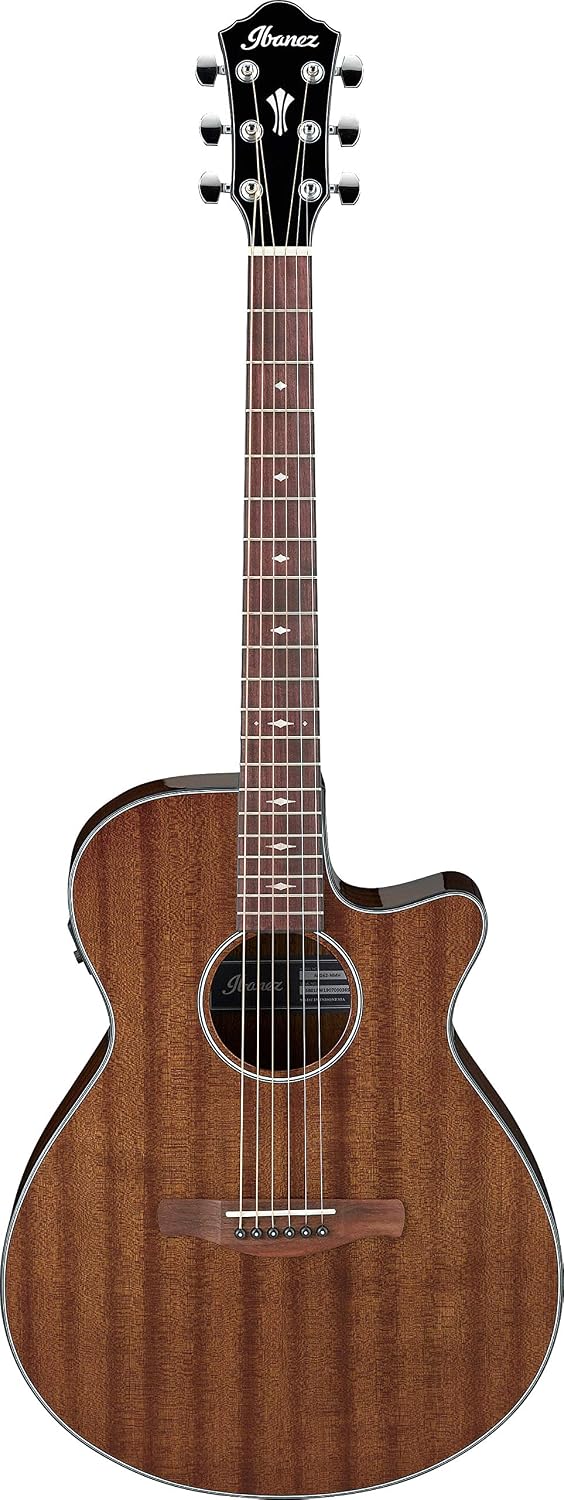
The guitars below approach comfort in different ways, from a documented slim neck to shallow bodies that reduce the reach around the instrument. The Ibanez AEG62 is the strongest starting point when neck thickness is the priority. The reviews explain what each design offers without assuming that a thinner body automatically means a thinner neck.
Best Thin Neck Acoustic Guitars: Comparison Table
Ibanez AEG62 Acoustic-Electric Guitar (Editor’s Choice)
The AEG62 gives this shortlist a useful reference point: Ibanez specifies a 20mm neck depth at the first fret and 21mm at the seventh, with a 43mm nut. Those measurements describe the fretting hand’s space more clearly than calling a guitar “thinline.” The 25-inch scale and cutaway also make this an appealing crossover from electric guitar.
Its sapele body has a warm, understated appearance, while the cutaway leaves more room for higher-position playing. This is a compact performance-minded acoustic-electric rather than a deep dreadnought built around a large soundbox.
The T-bar II undersaddle pickup feeds an AEQ-TTS preamp with volume, a shape control and an onboard tuner. That keeps adjustments simple between songs, although it offers less independent tone shaping than a three-band EQ.
The AEG62 earns the overall recommendation because its published neck dimensions directly address the brief, and its electronics make it useful beyond unplugged practice. Players who prefer a fuller handful of neck or more space between strings may prefer a different fit.
Pros
- Published 20mm first-fret neck depth and 43mm nut
- Cutaway body and 25-inch scale
- Onboard tuner and straightforward preamp controls
Cons
- Simple shape control offers limited independent EQ adjustment
- Compact body is a different experience from a deep dreadnought
Yamaha APX500III Acoustic-Electric Guitar

The APX500III is built around a shallow cutaway body and Yamaha’s recognizable oval soundhole. Its 43mm nut and full-length 650mm scale offer familiar steel-string spacing without turning it into a miniature guitar. The body measures 80–90mm deep, making it easier to reach around than many full-depth dreadnoughts.
The System66 electronics are its most persuasive feature. An undersaddle piezo pickup works with a three-band EQ, an adjustable midrange frequency and a chromatic tuner. That extra midrange control is useful when a room or amplification system makes the guitar sound boxy or overly sharp.
The spruce top and nato/okume body use Yamaha’s non-scalloped X bracing. The emphasis is on a practical stage guitar with accessible controls and upper-fret access. It is an especially appealing choice for a player who wants more tone adjustment than the Ibanez provides.
The longer scale may feel firmer than a shorter-scale instrument with equivalent strings. Its onboard controls make it a practical choice for rehearsals and small performances, while the shallow body reduces bulk against the player. Like other wooden acoustics, it still needs sensible humidity care.
Pros
- Shallow cutaway body and 43mm nut
- Three-band EQ with adjustable midrange frequency
- Onboard chromatic tuner
Cons
- Full 650mm scale may feel firm with heavier strings
- Active electronics require battery power
Jameson Thinline Acoustic-Electric Guitar

The Jameson keeps the appeal straightforward: a full-size acoustic-electric with a shallow body, cutaway and black finish. Its spruce top and basswood body give it a conventional acoustic layout in a less bulky shape. The cutaway leaves more room for the fretting hand as it moves toward the upper frets.
The 979 BLACK CSE has an onboard four-band pickup/EQ, with bass, midrange, treble and presence adjustment. This gives it more direct tone controls than a single-knob system and makes it useful for experimenting with amplified acoustic sound.
The included gig bag, strap, spare strings, picks and cable are helpful for getting started, though a suitable acoustic amplifier or PA is still needed for amplified playing. A basic setup can tailor action and string choice to the player.
The shallow body is the main ergonomic attraction, and the cutaway is useful for exploring beyond open chords. The four-band EQ adds flexibility, but it also rewards a little time spent finding a balanced amplified sound. This is a practical compact-body guitar for learning and everyday playing, with setup and neck fit best judged in the player’s hands.
Pros
- Shallow cutaway body
- Four-band onboard EQ
- Starter accessories include a gig bag and cable
Cons
- Full-size dimensions may still feel large for some players
- Amplification requires a separate suitable system
Kona K2 Acoustic-Electric Guitar

The Kona K2 combines a shallow dreadnought-style body with a cutaway and a distinctive bridge shape. The natural-gloss version keeps the wood grain on show, while cream binding outlines the body, neck and headstock. It is a more decorative take on the compact acoustic-electric formula.
The spruce top, nato back and sides, and bound rosewood fingerboard give the K2 a familiar steel-string foundation. Its rosewood bridge and enclosed die-cast tuning machines keep the design conventional where it matters, while the cream binding adds a little visual polish.
An active pickup system and three-band EQ make the K2 useful for plugged-in playing. Separate bass, middle and treble controls give more targeted adjustment than a broad shape control, especially when adapting to a small acoustic amp.
The K2 is most appealing when a compact body and straightforward amplified controls matter more than a large unamplified soundbox. The cutaway and shallow shape keep it manageable against the body. Its active electronics need a working battery, and on an older instrument the condition of the frets, neck and setup deserves attention.
Pros
- Thin-body cutaway design
- Active pickup with three-band EQ
- Spruce top and bound rosewood fingerboard
Cons
- Active electronics require battery power
- Older examples may need a setup or routine maintenance
How to Pick a Good Acoustic Guitar with a Slim Neck
Start with the part that feels uncomfortable on your current guitar. A thick neck fills more of the palm, a wide nut spreads the strings farther apart, and a deep body increases the reach around the instrument. Changing one does not necessarily change the others.
Comfort
Compare neck depth and profile as well as nut width. A shallow profile can leave more room around the back of the neck, while narrower string spacing may make some stretches easier and fingerstyle picking less spacious. Try open chords, barre chords and a few passages higher up the neck.
Action, neck relief and string gauge also affect fretting effort. Excessively low action can introduce buzzing; heavier strings can feel firmer. A competent setup is often more useful than choosing by the word “thin” alone. Body comfort matters separately: sit with the guitar and check the shoulder and wrist position rather than relying only on its dimensions.
Tone
Neck thickness alone cannot predict a guitar’s brightness, sustain or volume. The complete instrument, strings, setup and playing technique all contribute. Compare guitars using similar passages and, for acoustic-electric models, listen both unplugged and through a suitable amplification system.
A shallow body can be comfortable on stage, while a deeper soundbox may appeal for unamplified playing. Neither shape guarantees the better sound for every player. Keep the distinction between a slim neck and a slim body clear when comparing specifications.
Best Acoustic Guitar with a Thin Neck: Our Recommendation
The Ibanez AEG62 is the overall choice for a shopper prioritizing a slim neck: its published depth measurements give that recommendation a firm basis, and its cutaway and simple electronics add practical versatility. The Yamaha APX500III is particularly appealing for its more flexible onboard EQ. Jameson and Kona offer compact-body approaches, with the neck fit best assessed individually. Choose the guitar that stays comfortable through the chords and techniques you actually play.