When looking for the best student clarinet brands for beginners, focus on a comfortable instrument that makes daily practice inviting. A suitable mouthpiece, responsive keywork and a body that suits school use matter more than a long accessory list.

These three Bb clarinets offer different approaches to a first instrument. The Jean Paul CL-300 combines a practical accessory set with two barrels, the Yamaha YCL-255 adds thoughtful support and pad features, and the Etude ECL-100 keeps the design straightforward. Compare their strengths below, and involve the student’s teacher before choosing.
Top 3 Best Student Clarinet Brands:
| Image | Model | Price |
|---|---|---|
| Jean Paul CL-300 Student Clarinet (Editor's Choice) | Check Price |
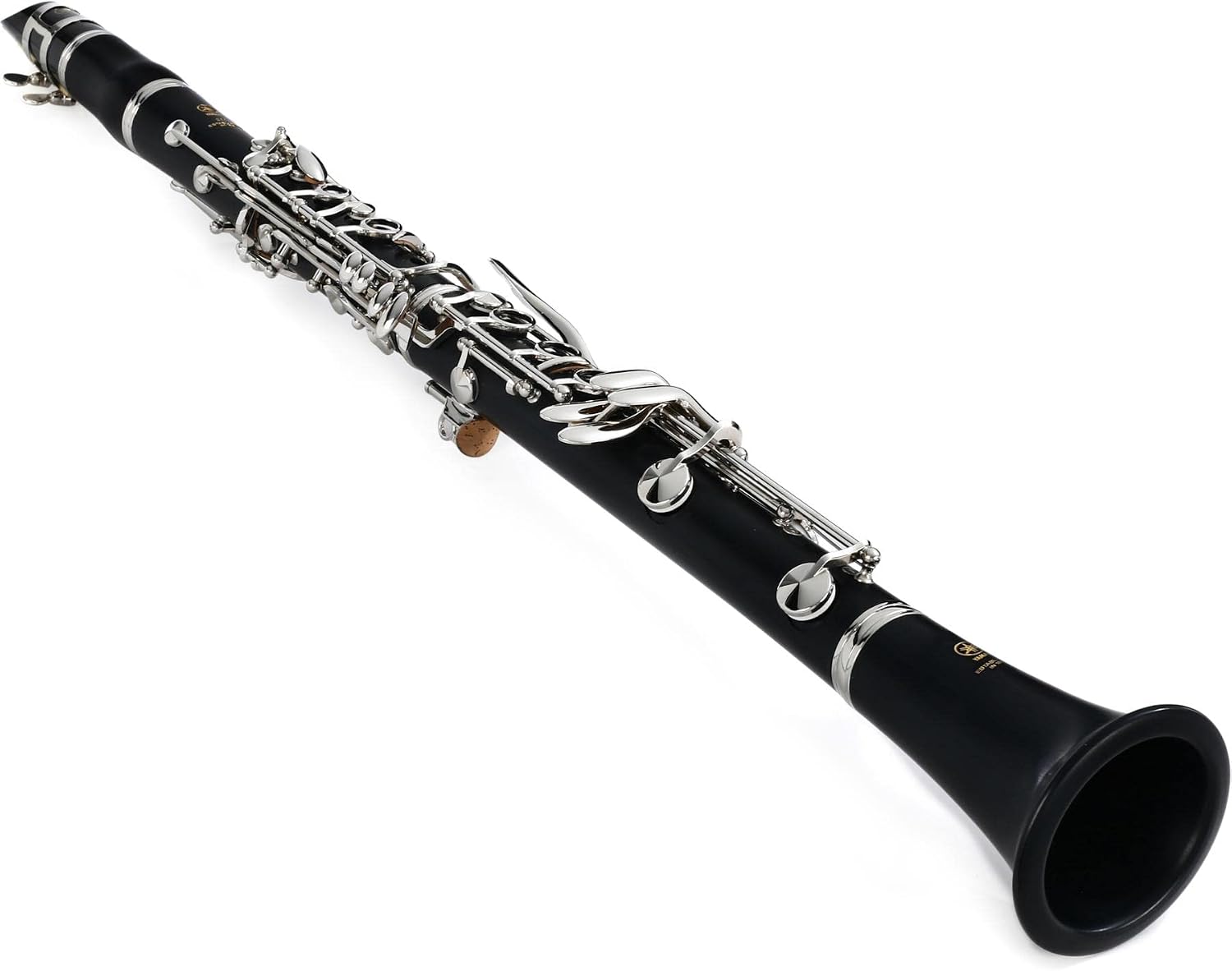 | Yamaha YCL-255 Student Clarinet | Check Price |
 | Etude ECL-100 Student Clarinet | Check Price |
Jean Paul CL-300 Student Clarinet (Editor’s Choice)
The CL-300 keeps the overall recommendation for its useful combination of student-focused features and practical accessories. Its Bb tuning and 17-key, six-ring Boehm system provide a conventional foundation for lessons, while the ABS body is a sensible choice for an instrument that travels between home and school.
Two supplied barrels, 62mm and 65mm, give it a distinctive advantage in this group. Barrel length provides another way to adjust overall tuning as the player develops a steadier embouchure. The longer barrel generally lowers pitch relative to the shorter one; a teacher can help decide which works best with the player and mouthpiece.
An adjustable thumb rest allows the support position to be tailored to the hand. Nickel-plated keys and fishskin pads complete a straightforward setup, while the included mouthpiece, ligature, reed, swab and cork grease cover the essentials for getting started. The semi-hard case is useful for routine transport.
The attraction is a well-rounded starting setup rather than a promise that every accessory will remain the player’s favorite. Reeds are consumables, and mouthpiece preferences can change with experience. The Yamaha adds a strap ring and synthetic pads; the Jean Paul answers with two barrel lengths and a practical set of essentials.
Pros
- Two barrel lengths for useful tuning flexibility
- Adjustable thumb rest
- ABS body and a practical set of starter accessories
Cons
- Fishskin pads still need careful drying and routine care
- Mouthpiece and reed preferences may change as technique develops
Yamaha YCL-255 Student Clarinet
The YCL-255 puts its most useful refinements where a beginner will notice them: hand support and everyday care. Its adjustable thumb rest includes a strap ring, giving the player the option of sharing the instrument’s weight with a suitable neck strap. That is a worthwhile distinction for anyone who finds sustained practice tiring on the supporting thumb.
The matte ABS body, barrel and bell provide a wood-like appearance in a resin instrument. A 65mm barrel is paired with the familiar Boehm layout of 17 keys and six rings. The nickel-plated keywork and supplied Yamaha 4C mouthpiece make this a conventional student setup rather than an instrument built around unusual fingering or specialist accessories.
Valentino synthetic pads are another distinguishing feature. They reduce one source of sensitivity to changing temperature compared with more traditional pad materials, although the instrument still needs swabbing and sensible storage. The bell also incorporates a resonance chamber as part of Yamaha’s design for the lower register.
This is the clearest choice here when the strap attachment and synthetic pads are priorities. It supplies one 65mm barrel rather than the Jean Paul’s two lengths, and the resin construction remains a student-oriented specification. Those trade-offs are easy to understand: choose it for practical design details, then let comfort and a teacher’s assessment settle the decision.
Pros
- Adjustable thumb rest with a neck-strap ring
- Valentino synthetic pads
- Matte ABS construction and a Yamaha 4C mouthpiece
Cons
- One supplied barrel length rather than two
- Strap support requires a suitable separate strap
Etude ECL-100 Student Clarinet
The ECL-100 takes the simplest approach of these three: an ABS student clarinet with nickel-plated keys, a mouthpiece and a carrying case. Its appeal lies in that uncomplicated format. For a family exploring a first instrument, it provides a conventional starting point without making extra controls or accessories the focus.
The resin body is practical for school use because it avoids the particular humidity-management demands of a wooden body. That does not make the instrument weatherproof or safe to drop. The keywork, pads and joints still deserve the same careful handling as those on a more elaborate clarinet.
A mouthpiece, cap and ligature are included, so the basic playing assembly is covered. A teacher can help choose suitable reeds and establish a cleaning routine from the start. The case is an important part of that routine: it gives the separate sections a proper place between practice sessions and during transport.
The ECL-100 makes most sense when a straightforward first clarinet is the priority and a teacher or local technician can assess its setup. The Jean Paul offers extra tuning flexibility through its two barrels, while the Yamaha stands out for its strap attachment and synthetic pads. The Etude keeps the focus on the essentials: a resin body, familiar keywork and the basic playing assembly.
Pros
- Straightforward ABS student-instrument design
- Mouthpiece, cap and ligature included
- Supplied carrying case for storage and transport
Cons
- Fewer support and pad refinements than the Yamaha
- A simple starter setup with fewer tuning options than the Jean Paul package
Tips for Finding the Best Student Clarinet: Plastic vs. Wood
What Is the Difference in Sound Quality?
Body material is only part of the picture. The bore, mouthpiece, reed, setup and player’s technique all influence the result. An ABS clarinet can be a perfectly useful concert-band instrument; a wooden body alone does not guarantee a warmer, more accurate or more attractive sound.
Which Is More Durable?
ABS avoids some of the humidity-related care demands of wood, which makes it practical for school use. It is not indestructible. Both types need protection from impacts, extreme temperatures and moisture left inside after playing. Pads and keywork can be damaged even when the body looks unharmed.
Which Would Be Best Suited for a Concert Band?
A responsive instrument with a suitable setup matters more than a rule about plastic or wood. Ask the teacher to assess tuning, key reach and how easily the student can produce a steady sound. There is no need to move to wood simply because a student joins an ensemble.
Which Would Be Best Suited for a Marching Band?
A resin instrument is often a practical choice for outdoor use, but it still needs protection from rain, direct heat and rough handling. Follow the band director’s advice about instrument choice and weather conditions. Do not assume that wood is always quieter or that plastic automatically projects better.
What Is the Price Difference?
Compare current prices alongside setup, servicing and accessories. Resin student models often provide a more accessible starting point, but material alone does not establish value. A teacher-approved rental can also be worth considering if the student is still deciding whether to continue.
Which Is the Best Student Clarinet?
The best student clarinet is one the player can hold comfortably, assemble safely and use consistently in lessons. A comfortable thumb position, working pads and a suitable mouthpiece-and-reed combination are useful priorities. Tone and tuning matter from the beginning; they are skills to develop, not concerns to postpone until an upgrade.
Nickel-Plated vs. Silver-Plated Clarinet Keys
How Does Plating Affect Durability?
Plating is the surface finish, not a reliable measure of how resistant the underlying keywork is to bending. Key design, adjustment and handling matter. Neither nickel nor silver plating makes it safe to force a joint together while gripping the keys. Clean the finish according to the maker’s instructions rather than using an abrasive household polish.
Which Plating Is Better for Beginners?
Prioritize comfortable keywork and a sound setup over the finish alone. All three clarinets here use nickel-plated keys, so their more useful differences are the barrels, thumb support, pads and supplied equipment. Have a teacher demonstrate assembly and use an appropriate amount of cork grease when needed; leave tight-joint adjustments to a qualified technician.
Conclusion: The Best Student Clarinet for Beginners
The Jean Paul CL-300 remains the overall recommendation for its two barrel lengths, adjustable thumb rest and useful starter accessories. It is a well-rounded option for beginning lessons without making the accessory bundle the whole story.
The Yamaha YCL-255 is particularly appealing for its strap ring and synthetic pads, while the Etude ECL-100 offers a simpler starting format. Compare current prices and let the student’s comfort, teacher’s advice and access to servicing guide the final choice.
For mouthpiece selection on a Buffet R13, see Mouthpiece for Buffet R13 Clarinet; the instrument and mouthpiece are separate buying decisions.