Looking for the best fingerstyle guitar? A responsive acoustic and a comfortable neck make it easier to bring out a melody while keeping a bass line moving underneath. The right choice depends on your reach, playing position and whether the guitar needs to work through an amplifier.
For the capo part of an acoustic-guitar setup, see Guitar Capos and check the fit for the neck and strings.
For the seated-playing side of a fingerstyle setup, compare Guitar Practice Chairs & Stools.

These six guitars offer different routes into fingerstyle, from the accessible Jasmine S34C to the stage-ready Martin GPC-X2E Ziricote. Cutaways, neck width and electronics matter, but none is a substitute for a comfortable setup. The comparison below leads into the strengths and trade-offs of each instrument.
Players such as Tommy Emmanuel, Andy McKee and Don Ross show how much musical ground fingerstyle can cover. A comfortable instrument is the starting point; the arrangement and touch do the rest.
The 6 Best Fingerstyle Guitars
Jasmine S34C
The Jasmine S34C is a straightforward place to start if fingerstyle appeals but a more elaborate acoustic-electric does not. Its orchestra-style body and Venetian cutaway give it a different feel from the full dreadnoughts below. The cutaway is useful when a melody travels up the neck; the rest of the guitar stays refreshingly simple.
A spruce top, sapele back and sides, and Jasmine’s Advanced X bracing form the acoustic package. The 25.5-inch scale provides full-size fret spacing, while the slim neck and 1-11/16-inch nut will feel familiar to players coming from many steel-string acoustics. That is a relatively compact nut width, rather than the spacious layout of a classical guitar.
The S34C makes most sense for learning arrangements, accompanying a voice and discovering which neck feel suits your technique. There is no onboard pickup or tuner, so amplification needs a microphone or a separate pickup. Players who want more room between the strings for intricate fretting should compare it with the wider-nut Martin before deciding.
Pros
- Cutaway gives access to the upper frets
- Slim neck with familiar steel-string dimensions
- Simple acoustic design without onboard controls
Cons
- No onboard electronics or tuner
- Narrower nut offers less fretting-hand space than the Martin
Taylor BBT Big Baby Taylor

The Big Baby Taylor is appealing because it makes the body a little smaller without shortening the playing scale. Its 15/16-size dreadnought is easier to tuck under the arm than a large dreadnought, but the 25.5-inch scale still gives the fretting hand full-size distances. That distinction matters if portability is welcome but closely spaced frets are not.
This BBT combines a solid Sitka spruce top with layered sapele back and sides. The solid soundboard is its central attraction for an acoustic player; the layered body keeps the construction practical for an instrument likely to travel between lessons, rehearsals and home. A gig bag is another useful part of that portable character.
For fingerstyle, the BBT is an uncluttered option: concentrate on touch and note balance rather than pickup controls. Its rounded, non-cutaway body is less convenient for high-register passages than the Jasmine or Martin, and this acoustic BBT has no onboard electronics. Choose it for a slightly smaller body and full-scale feel, rather than treating it as a short-scale travel guitar.
Pros
- Slightly smaller body with a full 25.5-inch scale
- Solid Sitka spruce top
- Gig bag supports its portable format
Cons
- No cutaway for easier high-fret access
- No onboard pickup or tuner
Martin GPC-X2E Ziricote (Editor’s Choice)
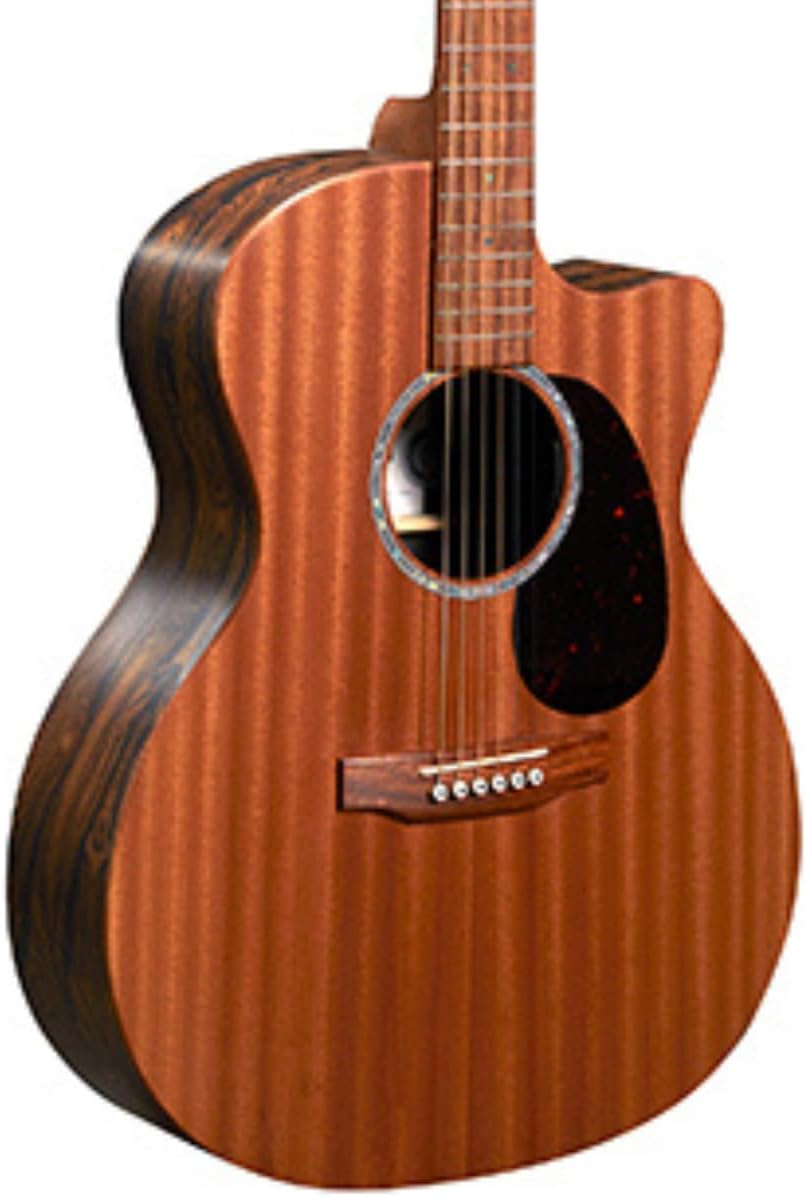
The GPC-X2E Ziricote earns the overall pick by bringing together three genuinely useful fingerstyle features: a 1-3/4-inch nut, a cutaway Grand Performance body and built-in electronics. The wider nut gives the fretting hand more room for detailed chord shapes, while the cutaway keeps upper-register melodies within easier reach. Those are practical advantages for an instrument expected to cover more than basic accompaniment.
This Ziricote version pairs a solid sapele top with ziricote-pattern high-pressure-laminate back and sides. The striking grain pattern is part of the laminate construction, not an all-solid-ziricote body. Its appeal is the combination of a solid soundboard, distinctive looks and a useful performance format, rather than an exotic-wood specification alone.
Martin’s E1 system adds volume and tone controls, a chromatic tuner and a phase switch for amplified use. That makes moving from practice to a suitable PA more straightforward than with a purely acoustic guitar. The wider neck will not suit everyone, especially players who prefer compact chord grips, and the laminate body is a compromise for buyers seeking all-solid construction. For this roundup, however, its playing space, access and stage features make the most complete combination.
Pros
- 1-3/4-inch nut provides useful fretting-hand space
- Cutaway Grand Performance body
- Solid sapele top and E1 electronics with a tuner
Cons
- Wider neck may not suit players who prefer a compact grip
- Back and sides are patterned HPL rather than solid ziricote
Fender CD-60 All Mahogany

The CD-60 All Mahogany offers a traditional dreadnought layout with a darker, understated appearance. Its appeal is straightforward: a full acoustic body, familiar neck and no electronics to distract from playing. The included case is useful for a guitar that needs to travel to lessons or occasional sessions.
The important construction detail is that this model uses laminated mahogany for the top, back and sides. The name describes the wood used in the laminates; it does not mean an all-solid-mahogany guitar. Scalloped X bracing and a compensated synthetic-bone saddle complete the acoustic design, while the dual-action truss rod allows neck-relief adjustment as part of a proper setup.
The full dreadnought body leaves plenty of space for a player who likes a substantial instrument, but it is a larger reach around the lower bout than the smaller-body choices here. There is no cutaway, built-in tuner or preamp on this CD-60. It is a sensible acoustic choice for chord-based fingerpicking and accompaniment, rather than the most flexible option for amplified or high-fret work.
Pros
- Traditional dreadnought shape with an all-mahogany appearance
- Case included with this model
- Dual-action truss rod and compensated saddle
Cons
- Laminated top rather than a solid soundboard
- Large non-cutaway body and no onboard electronics
Takamine GD20-NS

The GD20-NS takes a different route from the spruce-topped guitars in this selection. Its solid cedar top and mahogany back and sides make it an interesting acoustic for players who spend more time picking gently than driving heavy strummed chords. The attraction is a full dreadnought with a solid soundboard and a restrained natural-satin appearance.
Takamine’s split-saddle, pinless bridge is a distinctive practical feature. Separate saddle sections address intonation across the strings, and the pinless design removes the need to pull bridge pins during a string change. It does not eliminate the need for correct strings and setup, but it is a thoughtful piece of everyday hardware.
The slim neck has a 42.8mm nut, so this is closer to the compact steel-string feel of the Jasmine than to a wide-neck classical guitar. Its non-cutaway body and lack of electronics keep the focus on acoustic playing; a microphone or added pickup is needed for amplification. Consider the GD20-NS if a cedar-topped dreadnought and simple controls-free design sound more useful than built-in stage features.
Pros
- Solid cedar top
- Split-saddle pinless bridge
- Natural-satin finish and slim neck
Cons
- No cutaway or onboard electronics
- 42.8mm nut is less spacious than the Martin’s
Washburn WD7S

The Washburn WD7S is a traditional solid-top dreadnought with little to distract from the basic instrument. A solid spruce soundboard is the main reason to consider it: for a player developing control of individual bass and melody notes, it is a more relevant feature than decorative extras or a long list of onboard controls.
The Harvest Series WD7S combines that spruce top with mahogany back and sides and a natural-gloss finish. Its broad, non-cutaway body gives it the familiar playing position of a full-size acoustic. That format can suit alternating-bass accompaniment as well as strumming, although the body is a larger reach than the Big Baby or Jasmine.
This is the acoustic WD7S, not the cutaway electro-acoustic WD7SCE. There is no built-in pickup system to connect straight to a PA, and upper-fret access is less convenient than on the Martin. Its place in the selection is as a plain, solid-top acoustic for home practice and song accompaniment. Players who want a smaller instrument or regular amplified use will find a clearer match elsewhere in the roundup.
Pros
- Solid spruce top
- Traditional dreadnought with mahogany back and sides
- Simple acoustic design
Cons
- No onboard electronics
- Full-size non-cutaway body is less convenient for high-register work
How to Choose the Best Guitar for Fingerstyle
What Is Fingerstyle?
Fingerstyle uses the picking-hand thumb and fingers, sometimes with nails or fingerpicks, to play separate musical parts. An alternating bass line and a melody can happen together, with chord notes filling the spaces. Both steel-string and nylon-string guitars can work; they feel and sound different, and neither is compulsory for learning the technique.
Neck Width, Scale and Comfort
A wider nut can give the fretting hand more room for complex shapes, but it also asks the hand to span a little farther. Try to judge that trade-off alongside neck shape and string spacing. Body size and scale length are separate measurements: the Big Baby has a smaller body but a full-length scale. A guitar that sits comfortably is easier to practise on consistently than one chosen for specifications alone.
Action and Setup
Action is the height of the strings above the frets, commonly measured at the 12th fret. A comfortable setup can make light picking and stretches easier, but setting the strings too low can produce buzzing. Nut height, saddle height and neck relief all play a part; the truss rod is not a universal action control. A qualified technician can tailor the setup to your touch and preferred strings.
Do You Need a Cutaway?
A cutaway helps the fretting hand reach higher notes near the body joint. It is useful for arrangements that travel up the neck, but it is not a requirement for learning fingerstyle or progressing to more demanding music. If most of your playing stays in the lower positions, neck comfort and a good setup may matter more.
Tone: Balance Matters More Than a Label
A slightly mid-scooped sound can leave space around a vocal, while a stronger midrange can help a melody stand out. Neither is automatically the best fingerstyle tone. Listen for whether bass notes overwhelm the melody and whether light treble notes remain clear. Amplifier EQ can help shape an amplified sound, but it cannot make every acoustic feel the same under the fingers.
Electronics and Phase Controls
The Martin’s onboard pickup system is useful for connecting to a suitable acoustic amplifier or PA. The purely acoustic models need a microphone or an added pickup. A phase switch changes signal polarity and can sometimes help reduce amplified feedback in a particular room; it is not a guaranteed cure. Speaker position, stage volume and EQ still matter.
Which Fingerstyle Guitar Should You Choose?
The Martin GPC-X2E Ziricote is the overall choice for its wider nut, cutaway and E1 electronics: a useful combination for detailed arrangements and amplified playing. The Jasmine S34C keeps things simpler, while the Big Baby Taylor offers a slightly smaller body without a shortened scale. The Takamine GD20-NS stands out for its cedar top and pinless bridge; the Fender and Washburn suit players who prefer a traditional dreadnought. Choose the instrument whose neck and body make you want to keep playing.