Looking for the best Fender clean amp? These six combos cover quiet home practice, classic tube response and digital Fender tones, with different approaches to volume, effects and portability.
For another guitar-amp requirement, compare our separate guide to Fender Amp For Rock.
For another guitar-amp requirement, compare our separate guide to clean Amp Head.

A good clean sound keeps chords clear and lets picking dynamics come through without unwanted distortion. It does not have to be completely uncolored: the speaker, tone controls and amplifier circuit all help shape the result.
Choose for the volume at which the amp will actually be used. A compact practice combo and a tube amp pushed toward breakup serve different needs, even when both carry the Fender name.
Best Fender Clean Amps – Comparison Table
Fender Mustang LT25 (Editor’s Choice)
The Mustang LT25 is the overall pick for a home player who wants to explore clean Fender-style sounds without committing to one amp character. A preset can provide a useful starting point, while the separate gain, preset volume and master controls make it easier to balance the sound with a sensible practice level.
Its 25-watt output drives an 8-inch Fender Special Design speaker. The color display is 1.8 inches, and the encoder lets the player edit amp and effect settings and save the result. A built-in tuner, auxiliary input, speaker-muting headphone output and USB audio recording make it a practical small practice station.
The strength is flexibility: start with a clean model, reduce unnecessary effects and build a sound around the guitar. The trade-off is a smaller speaker and a menu-based approach to deeper editing. It is a home-practice choice first, rather than the most convincing answer to a loud drummer or a player who wants only traditional knobs.
Pros
- Editable amp and effect presets with separate master volume.
- Headphones, auxiliary input, tuner and USB recording.
- Compact 25-watt combo with an 8-inch speaker.
Cons
- Small speaker limits the sense of scale compared with larger combos.
- Deeper edits use the display and encoder.
Fender Tone Master Deluxe Reverb
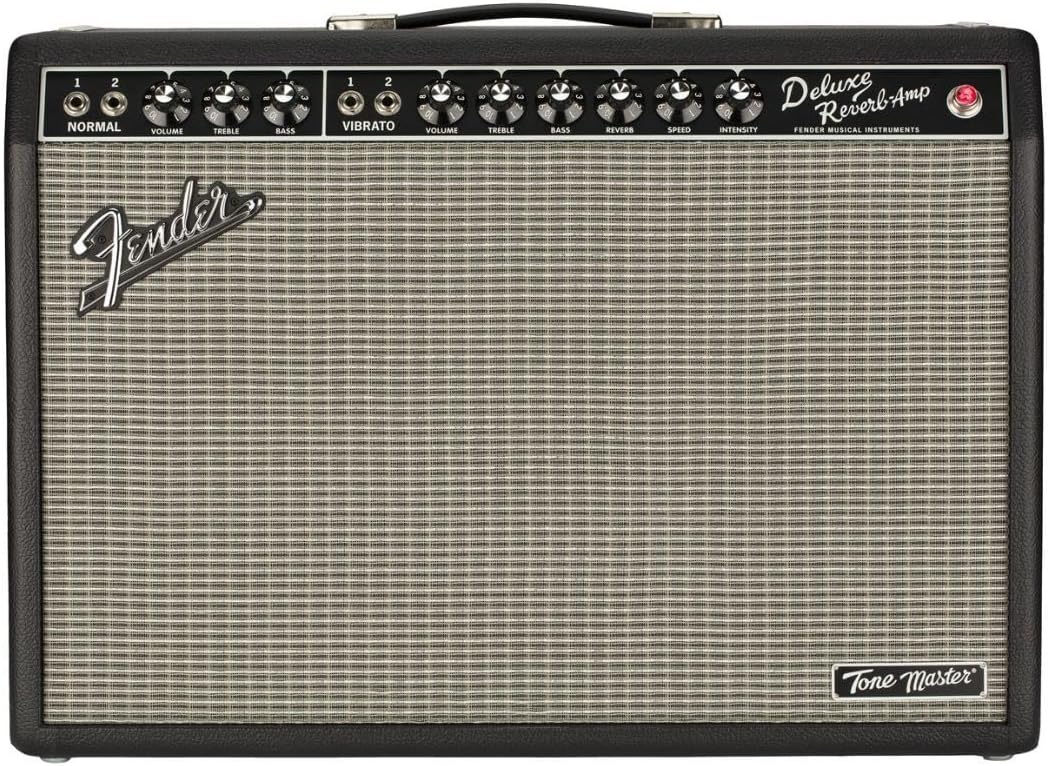
The Tone Master Deluxe Reverb is for the player who likes the familiar Deluxe control panel but wants a lighter, tubeless amp with useful volume options. Rather than offering a large collection of amp models, it concentrates on the response of a classic Deluxe Reverb, including modeled reverb and tremolo.
This black version pairs a 12-inch Jensen N-12K neodymium speaker with a pine cabinet. A 100-watt digital power stage is configured to reproduce the behavior of the 22-watt tube design; those figures describe different things. The rear output selector reduces the overall level, while a balanced XLR output with cabinet simulation and a speaker-muting mode make direct recording or PA connection practical.
At about 23 pounds, it is an appealing alternative to carrying a traditional tube combo. The limitation is focus: this is a specific Fender-voiced amp, not a broad multi-model practice system. There is no headphone jack or effects loop, so its direct output and front-of-amp pedal approach need to suit the intended setup.
Pros
- Focused Deluxe Reverb modeling with reverb and tremolo.
- Reduced-output settings and cabinet-simulated XLR output.
- Lightweight pine cabinet and Jensen neodymium speaker.
Cons
- No headphone jack or effects loop.
- One principal amp character rather than a large model library.
Fender ’65 Princeton Reverb

The ’65 Princeton Reverb is the traditional tube choice for clear, spacious playing that can move into a rounded edge of breakup as the volume rises. Its modest size suits recording and smaller rooms, while the spring reverb and tube tremolo give sustained chords and simple lines plenty of movement without needing a pedalboard.
Fender rates this model at 12 watts, with a 10-inch Jensen C10R speaker and a pair of 6V6 output tubes. Volume, treble and bass keep the basic sound straightforward; reverb, speed and intensity control the built-in effects. The two inputs share one channel, with the second input reducing sensitivity rather than providing a separate mix for another instrument.
The attraction is the uncomplicated relationship between the guitar and the amp. The compromise is clean headroom: turning it up far enough brings tube breakup, and there is no master volume to separate that behavior from loudness. For a loud, clean band sound, microphone support or a different amp may be the more useful choice.
Pros
- Classic tube circuit with spring reverb and tube tremolo.
- 12-watt format and 10-inch Jensen C10R speaker.
- Simple controls with a lower-sensitivity second input.
Cons
- Limited clean headroom alongside a loud band.
- No master volume for separating breakup from loudness.
Fender Champion 40

The Champion 40 is the straightforward choice for someone who wants a dedicated clean channel and a larger speaker without navigating preset menus. Channel 1 takes its cue from Fender black-panel sounds, making it a clear place to start for open chords, bright rhythm work and pedal-based textures.
The 40-watt combo uses a 12-inch Fender Special Design speaker. Its second channel adds selectable amp voices, while the effects section includes reverb, delay and modulation, with a tap button for timing. Auxiliary and headphone sockets support practice, and the headphone connection mutes the speaker.
The appeal is easy access: turn a voice or effect knob rather than building a complete signal chain on a screen. That simplicity also limits how independently effects can be combined, and it does not provide the LT25’s editable preset workflow. The optional two-button footswitch is useful for channel selection and effect switching, but is a separate accessory.
Pros
- Dedicated clean channel alongside selectable second-channel voices.
- 12-inch speaker and straightforward physical controls.
- Built-in effects, tap timing and headphone practice.
Cons
- Less flexible effect combinations than an editable modeling system.
- Two-button footswitch is optional.
Fender Frontman 10G

The Frontman 10G makes the most sense as a simple electric-guitar practice amp. It puts the essential controls in front of the player, without a screen or preset system, so finding a usable low-volume clean sound is a short process rather than a programming exercise.
Its 10-watt output and 6-inch speaker keep the combo compact. Bass and treble shape the sound, while an overdrive switch engages the distortion circuit and its gain control. An auxiliary input lets an external music player join in, and the headphone socket switches off the speaker for quiet practice.
Keep the overdrive disengaged when a clean sound is the goal. There are no built-in digital effects or reverb, so this is a deliberately basic option. The small speaker and limited output also make it less suitable for full-band clean playing. Choose it for convenience at home, rather than expecting the depth or projection of a larger Fender combo.
Pros
- Simple physical controls and switchable overdrive.
- Compact 10-watt practice format.
- Auxiliary input and speaker-muting headphones.
Cons
- No built-in reverb or digital effects.
- Small speaker and limited output restrict band use.
Fender Blues Junior IV

The Blues Junior IV is the tube combo for a player who wants a warm, responsive clean sound with an easy route into bluesy drive. It has more midrange control than the Princeton here, and its separate preamp volume and master make it easier to balance the amount of drive against the room.
The 15-watt design uses three 12AX7-family preamp tubes, two EL84 output tubes and a 12-inch Celestion A-Type speaker. Treble, middle and bass controls shape the response; spring reverb adds space. The FAT switch boosts preamp gain for a fuller, more driven sound and can be operated with the supplied single-button footswitch.
For cleaner playing, keep the preamp volume restrained and use the master to set the level. The practical strength is a compact, traditional control layout that works well with a modest pedal setup. It still has the headroom limits of a small tube combo, and it offers neither built-in tremolo nor an effects loop. A loud band may need the amp miked rather than simply turned higher.
Pros
- Separate preamp volume and master with three-band EQ.
- 12-inch Celestion A-Type speaker and spring reverb.
- FAT boost with supplied footswitch.
Cons
- Clean headroom is limited at louder band levels.
- No built-in tremolo or effects loop.
How to Get an Excellent Clean Tone From a Fender Amp
Start with the guitar, the room and the volume needed. Our guide to the best clean-sounding tube amps compares other options, but the basic approach is the same: establish a clear starting sound, then change one thing at a time.
Turn the Gain Down or Select the Clean Channel
On the Champion 40, start with channel 1. On the Frontman, leave overdrive disengaged. Choose a clean amp model on the Mustang. The Princeton has a single volume control, while the Blues Junior separates preamp volume from master volume; the same knob position will not mean the same thing on every design.
Start With Effects Bypassed
Bypass drive pedals and reduce effects while setting the basic tone. This makes it easier to hear where distortion is coming from. Reverb and delay do not inherently make a tone distorted, so add them back in once the dry sound is clear. A boost or compressor can also push the amp harder, depending on its output setting.
Use a Sensible Starting Point for EQ
Middle positions can be a convenient starting point, but noon is not a universally flat setting. Adjust bass and treble to suit the guitar and speaker, then the middle control where one is available. If low chords sound loose, try reducing bass before adding more treble.
Balance Volume and Clean Headroom
Play a few firm chords at the intended level. If the amp breaks up sooner than wanted, reduce preamp gain where available or lower the volume. A small tube amp cannot remain completely clean at every loudness. The Tone Master’s output selector changes overall level; it does not turn the amp into a different, higher-headroom model.
Try Each Pickup Position
A hot bridge humbucker can drive the input differently from a lower-output single coil. Test the sounds actually used in a song, including the strongest picking attack. Guitar volume and pickup selection are useful parts of the clean-tone setup, not just the amp controls.
Choose the Sound Before Adding More
For a bright rhythm sound, prioritize note separation; for warmer jazz-style chords, reduce the sharpest edge without losing definition. Make small adjustments and listen at the same playing level. A clean amp still has its own voice, and a speaker change can alter it substantially; our Princeton Reverb speaker guide explores that part of the system.
Conclusion: The Best Fender Clean Amp
The Mustang LT25 remains the overall home-practice choice for its editable sounds and useful practice connections. The Tone Master Deluxe Reverb offers a more focused classic Fender approach with flexible output levels and direct connection, while the ’65 Princeton Reverb supplies traditional tube character with spring reverb and tremolo.
Choose the Champion 40 for uncomplicated clean-channel access and built-in effects, the Frontman 10G for basic practice, or the Blues Junior IV for a compact tube combo with master-volume control. The best choice is the one that stays clear at the volume needed and makes the guitar enjoyable to play.