Looking for the best sounding 6SN7 tube for your amplifier or preamp? These six options range from conventional straight-sided replacements to larger hi-fi designs. Their useful differences include the valve designation, physical size, construction and suitability for a quiet driver stage.
The 6SN7 is a medium-gain, octal-base twin triode used in voltage-amplifier and driver circuits. Start with the type specified for your equipment, then compare the features that matter in that position. A larger bottle or gold pins do not, by themselves, establish better sound.

Best 6SN7 Tubes: Comparison
1. Tung-Sol 6SN7GTB (Editor’s Choice)
The Tung-Sol 6SN7GTB is the most straightforward all-round recommendation here for a suitable hi-fi driver or preamp position. It is a modern-production reissue with a conventional straight-sided envelope, so it makes a useful starting point when you want a familiar valve type rather than a large decorative bottle or vintage collectible.
Tung-Sol emphasises low noise and linearity in this design. Those are useful priorities in a driver stage, where the valve needs to handle the signal cleanly before passing it onward. The GTB designation is important: use the operating ratings specified for the actual valve and amplifier, rather than treating every 6SN7 suffix as identical. The manufacturer specifies a maximum glass diameter of 29.6mm, making it considerably easier to accommodate than a broad-shouldered hi-fi tube. Its combination of low-noise priorities and compact construction earns it the overall recommendation here.
Pros
- Manufacturer specifies a low-noise, linear driver design
- Conventional straight-sided envelope
- 29.6mm maximum glass diameter helps in tighter layouts
Cons
- GTB ratings do not automatically make every other 6SN7 version interchangeable
- Individual noise and section balance still matter in a sensitive position
2. LINLAI ZX-6SN7
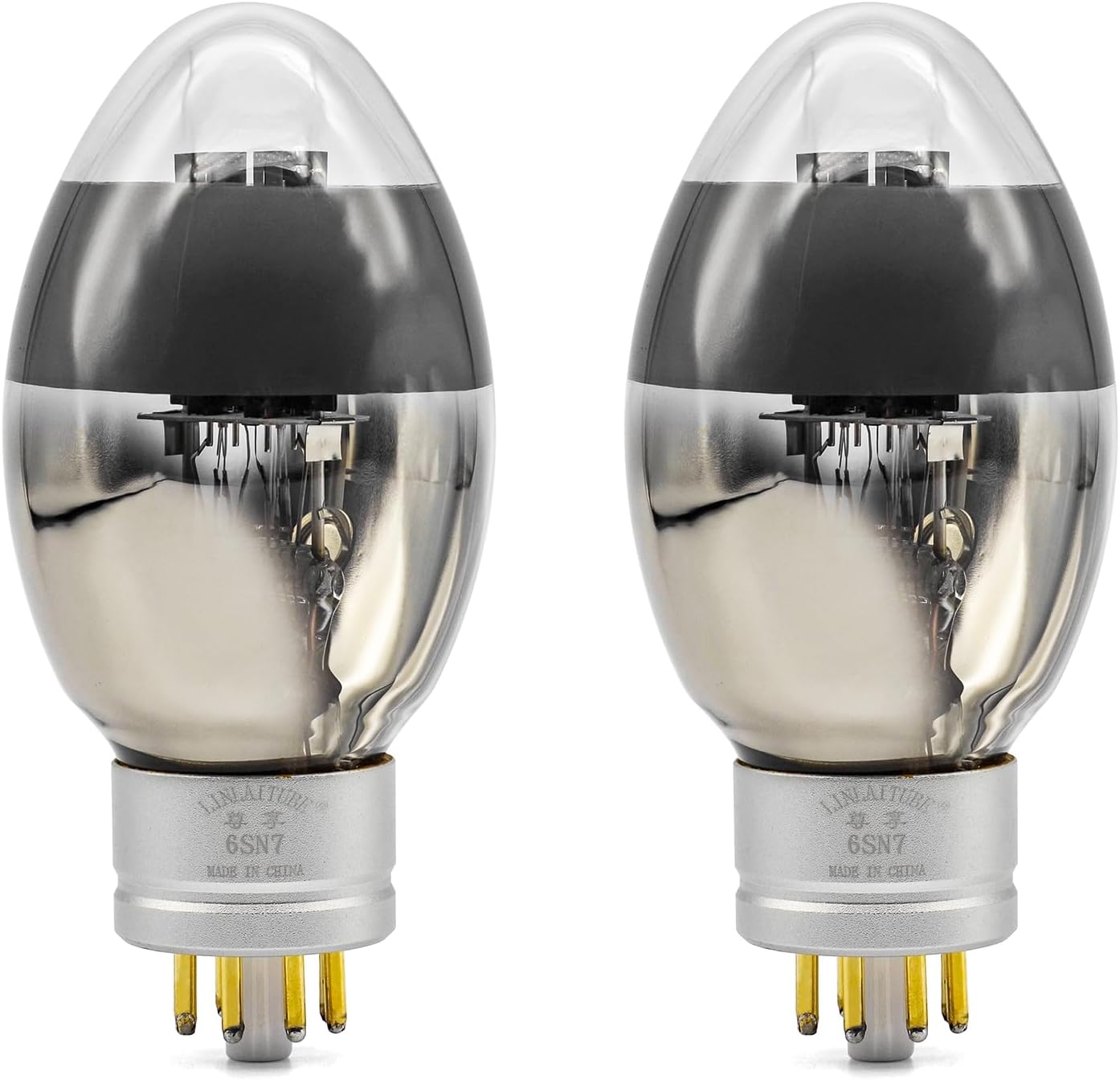
The LINLAI ZX-6SN7 is the visually distinctive choice in this group. Its broad, shaped glass envelope, coated section and metal base give it much more presence on an open-chassis amplifier than a conventional narrow glass tube. This is a current-production 6SN7-family dual triode, with gold-plated pins on the version compared here.
The attraction is that combination of a traditional large-bottle appearance and an audio-focused design. The wider envelope also has a practical cost: it needs room around neighbouring valves, covers and retainers. Gold plating provides a contact finish; it is not an EQ control or a reason to expect extra gain. Choose the ZX when the physical design suits your amplifier as well as your preferences.
Pros
- Distinctive coated, broad-shouldered glass design
- Metal base and gold-plated pins
- 6SN7-family voltage-amplifier role
Cons
- Large envelope needs more space than a narrow straight-sided valve
- Contact finish alone does not establish an audible advantage
3. Sovtek 6SN7GT

The Sovtek 6SN7GT keeps the design focused on the familiar medium-gain twin-triode role. Its straight-sided glass envelope is less bulky than the shaped bottles in this comparison, which is useful when the amplifier places sockets close together or uses a restrictive cover. It is a sensible candidate for maintaining equipment that specifies this version of the 6SN7 family.
This is the uncomplicated option to compare when a conventional replacement is more useful than a showpiece. The important designation is GT: the amplifier must be able to use the actual valve and its operating limits. The straightforward shape keeps the visual impact modest, which suits enclosed equipment particularly well. This is a workhorse-style replacement rather than the choice for someone who wants a dramatic large-bottle appearance.
Pros
- Conventional medium-gain 6SN7GT design
- Straight-sided envelope is easier to accommodate than a broad bottle
- Suitable replacement role for equipment specifying this type
Cons
- GT and higher-rated variants must not be assumed identical
- Plain appearance will not appeal to large-bottle enthusiasts
4. Psvane UK-6SN7

The Psvane UK-6SN7 offers another large-bottle approach, with a shouldered glass envelope and gold-plated pins. It suits a visible hi-fi installation where appearance and physical layout are part of the choice. Its medium-gain dual-triode design is intended for voltage-amplifier duties, rather than adding the much higher gain of a 6SL7.
There is a concrete application behind the name: Feliks Audio identifies the Psvane 6SN7 UK Audio family as driver valves in its Elise Mark II guide. That makes it a relevant model to compare for this kind of headphone-amplifier duty. The glass shape still calls for more clearance than a slim tube, and a stereo circuit may have its own requirements for matching and section balance.
Pros
- Large, shouldered glass envelope
- Gold-plated pin finish
- UK Audio family documented in the Feliks Audio Elise Mark II guide
Cons
- Needs sufficient room around the sockets
- Matching requirements depend on the amplifier circuit
5. Electro-Harmonix 6SN7 EH

The Electro-Harmonix 6SN7 EH is the plain, practical hi-fi option from this manufacturer. It uses a conventional octal-base twin-triode format, with low noise as a stated design priority. That makes it worth comparing for a preamp or headphone amplifier where an unobtrusive replacement is more useful than a large decorative envelope.
The standard EH also provides a useful reference point before choosing a gold-pin version. The task remains the same: handle a small audio signal in the gain, buffer or driver stage for which the amplifier was designed. Its specified maximum glass diameter is 29.6mm, so the physical format is also more restrained than the LINLAI or Psvane. The appeal is a low-noise audio design in a compact conventional bottle, with no decorative finish to make the decision more complicated.
Pros
- Manufacturer identifies a low-noise hi-fi design
- 29.6mm maximum glass diameter
- Straightforward alternative to the gold-pin model
Cons
- Noise and matching still vary between individual valves
- Does not remove noise caused by the rest of the system
6. Electro-Harmonix Gold 6SN7

The Electro-Harmonix Gold 6SN7 adds gold-plated pins to a 6SN7-family hi-fi valve. That is the concrete feature to focus on: gold plating is used for the electrical contact surface, while the valve remains a medium-gain twin triode intended for a compatible amplifier stage. It is not a separate high-gain family simply because the pins are gold.
Choose this version when you want that pin finish alongside the EH design. In use, socket condition, correct operating conditions and the behaviour of the individual valve remain important. The sensible comparison with the standard EH is the complete fit to your equipment and priorities, rather than a promise that plating automatically brings more detail or a larger soundstage.
Pros
- Gold-plated pin finish
- Medium-gain 6SN7 hi-fi design
- Clearly differentiated from the standard-pin EH model
Cons
- Gold plating alone does not prove superior sound
- A gold-pin label does not establish a matched pair or balanced sections
FAQ: The Best Sounding 6SN7 Tubes
What Is the Difference Between 6SL7 and 6SN7 Tubes?
The 6SN7 and 6SL7 are octal twin triodes with the same basic pin arrangement but different electrical characteristics. The 6SN7 has a nominal amplification factor of about 20, while the 6SL7 is a higher-gain type at about 70. Heater requirements also differ. Use substitutions approved for the actual circuit, rather than choosing by socket shape.
What Are 6SN7 Tubes Used For?
They appear in voltage-amplifier, buffer, phase-inverter and driver stages, depending on the design. Hi-fi preamps and headphone amplifiers are familiar applications. For equipment such as a Schiit Freya Plus preamp, follow the maker’s guidance on valve types and positions.
Do GT, GTA and GTB Mean the Same Thing?
These designations can indicate different operating ratings and other characteristics within the family. Check the required type and actual specifications, especially in a circuit running near a valve’s limits. A higher rating on one parameter does not establish suitability on every other parameter.
How Long Does a 6SN7 Tube Last?
There is no dependable replacement interval for every amplifier. Use, operating conditions and the individual valve affect service life. Persistent noise, microphonics or a channel problem can justify testing, but first rule out other causes. A healthy, quiet valve does not need replacing simply because a particular number of months has passed.
What Should You Compare First?
Confirm the required valve type and physical clearance, then the circuit’s needs for low noise, matched valves or balanced triode sections. Those are different requirements: matching two separate valves is not the same as balancing the two sections inside one valve.
Conclusion: Which 6SN7 Should You Choose?
The Tung-Sol 6SN7GTB remains the overall starting recommendation for a compatible driver or preamp stage. The Sovtek and standard Electro-Harmonix are conventional alternatives, while the LINLAI ZX and Psvane UK designs appeal when their larger envelopes suit the equipment. Choose the gold-pin EH if that particular finish is part of your preference.
The best sounding 6SN7 tube is one that works quietly and correctly in its intended circuit. It is not interchangeable with a nine-pin 12AX7, and comparisons are most useful at a similar listening level with the same equipment.
For another amplifier-specific comparison, see the guide to tubes for the Vox AC15C1.
Looking for a different tube type?
If your equipment calls for a different tube, see our separate guides to 300B tubes and 7591 tubes. These are different tube types and are not substitutes for a 6SN7; use the type specified by your equipment manufacturer.