Are you looking for the best sounding 6SL7 tubes? These four options range from straightforward JJ and Sovtek replacements to a Tung-Sol reissue and the current PSVANE Summit S6SL7. The useful differences include construction, heater requirements and how the valves are selected as singles or pairs.

A worn or noisy preamp valve can need replacing, but healthy tubes do not require frequent changes just to maintain good sound. Start with the type approved for the amplifier, then compare the features that matter in its circuit. Here is a closer look at these 6SL7 choices.
Best 6SL7 Tubes – 6SL7 Tube Comparison
| Image | Model | Price |
|---|---|---|
| JJ 6SL7 (Editor's Choice) | Check Price |
 | Tung-Sol 6SL7GT | Check Price |
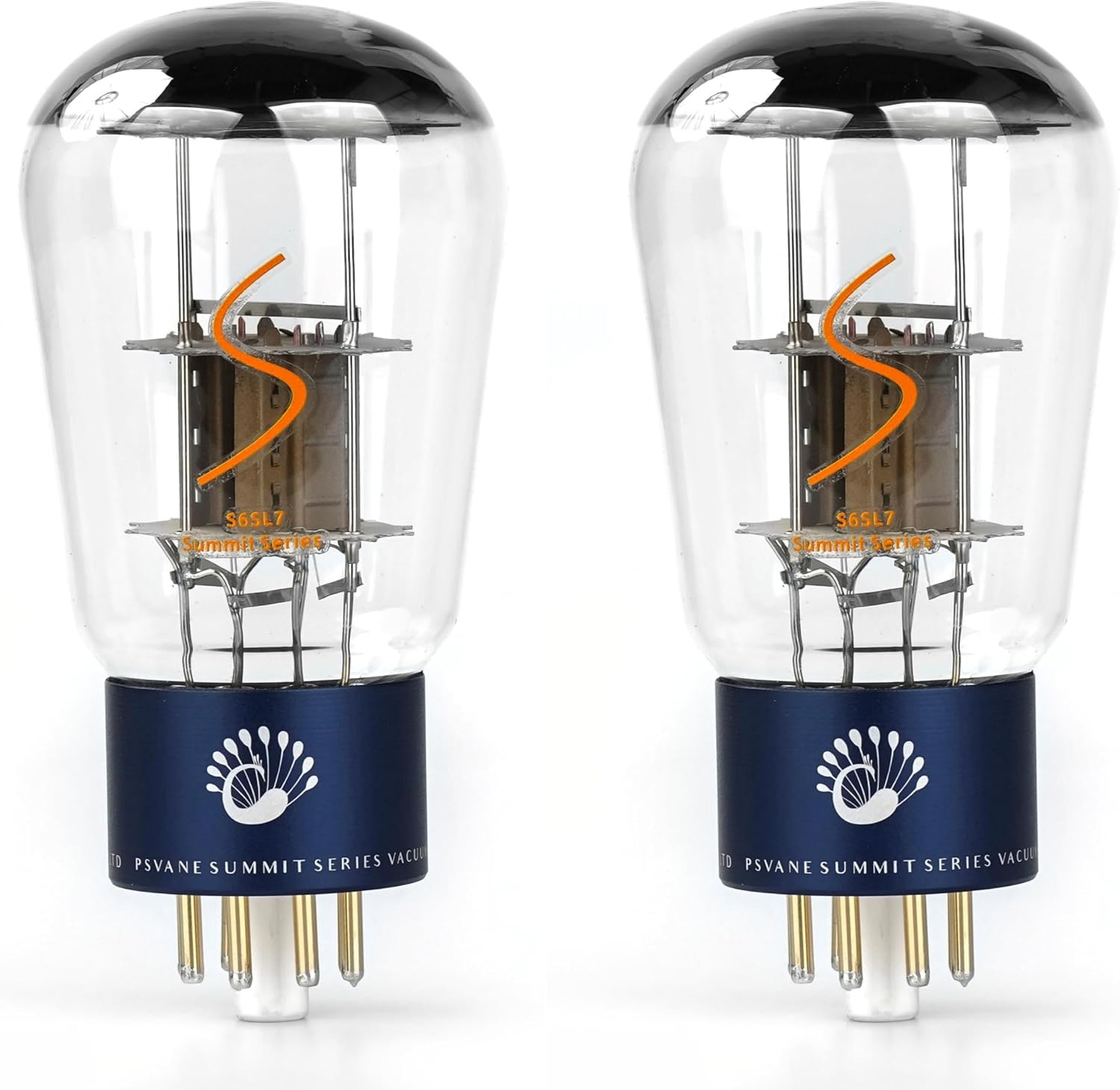 | PSVANE Summit S6SL7 | Check Price |
 | Sovtek 6SL7 / 6H9C | Check Price |
JJ 6SL7 (Editor’s Choice)
The JJ 6SL7 remains the overall starting recommendation for a conventional, clearly specified octal preamp valve. It contains two triode sections in one glass envelope, with a typical amplification factor of 70. That high-gain format makes it useful in suitable voltage-amplifying stages, while the actual circuit determines how much gain reaches the next stage.
JJ specifies a 6.3V, 300mA heater and a typical plate resistance of 44kΩ under its stated test conditions. Those are useful selection details for an amplifier designed around this type. The straightforward construction and published data are the main attractions: choose it to perform the intended role in the circuit, rather than expecting an automatic reduction in overdrive or a guaranteed change in bass.
The version compared here is a pair of JJ valves. A pair can be convenient when the equipment uses two 6SL7s, but quantity alone does not establish matched gain or balanced triode sections. If the amplifier has particular selection requirements, choose the appropriate version.
Pros
- Conventional high-gain octal dual-triode design
- Published 300mA heater requirement
- Two-valve pair for suitable equipment
Cons
- The pair format does not establish gain matching
- A healthy amplifier’s tonal change is circuit-dependent
Tung-Sol 6SL7GT
The Tung-Sol 6SL7GT is the modern reissue to shortlist for a vintage-style preamp application. The manufacturer specifically identifies the Ampeg B-15 as an example of its intended use, and the compact clear-glass envelope gives it a familiar, understated appearance. Its maximum specified bulb diameter is 29.6 mm, useful when space around the sockets is tight.
This version is sold as a gain-matched pair, a meaningful distinction from simply buying two valves together. Matching the gain of two valves can be useful in equipment that calls for it; it does not automatically mean the two triode sections inside each valve are balanced. Keep the selection method aligned with the circuit’s requirements.
One electrical detail deserves attention: Tung-Sol’s datasheet lists 400–450mA heater current at 6.3V. That differs from the 300mA figure in JJ’s sheet, so the heater supply must suit the actual model. The attraction is the reissue design, compact dimensions and specified pair selection.
Pros
- Modern reissue with an Ampeg B-15 application brief
- Gain-matched-pair version
- Compact, 29.6 mm maximum bulb diameter
Cons
- Heater-current specification needs to suit the equipment
- Gain matching does not establish internal-section balance
PSVANE Summit S6SL7
The PSVANE Summit S6SL7 is the current, more deliberately engineered alternative in this group. Its clear envelope, dark blue base and prominent Summit markings give it a distinctive appearance in an open hi-fi amplifier. The design emphasis is on electrode geometry, grid support and assembly consistency, with PSVANE positioning the series around low noise and resistance to vibration.
The manufacturer also identifies a newly developed anode coating and patented structural design for this model. Those are more useful reasons to compare it than a vague promise of better sound: mechanical consistency is relevant in a sensitive preamp stage. The extent of any audible difference still depends on the amplifier and the condition of the valves being replaced.
The matched pair here is specifically S6SL7, with a published 6.3V, 300mA heater and typical amplification factor of 70. It is worth comparing when an amplifier calls for this high-gain dual-triode format and the newer construction appeals. Check the required matching and available space before selecting the set.
Pros
- Current Summit S6SL7 design with a specified anode coating
- Manufacturer emphasizes electrode support and mechanical consistency
- Matched-pair version with published electrical parameters
Cons
- The construction does not establish a guaranteed audible improvement
- Set matching should suit the amplifier’s actual requirements
Sovtek 6SL7 / 6H9C
The Sovtek 6SL7 is the conventional, compact alternative with a particularly clear technical identity. Its manufacturer datasheet identifies the design as 6H9C, a dual triode for low-frequency voltage amplification with an octal base. That makes it a useful comparison for suitable preamp positions when the goal is a straightforward replacement with documented operating data.
The sheet specifies a nominal 6.3V, 300mA heater and an amplification factor around 70 under its stated conditions. The glass envelope and conventional base keep the design focused on the electrical job rather than an elaborate finish. Physical appearance and brand reputation alone do not establish whether an individual valve has low noise or balanced sections.
This version is a single valve. It is useful when one 6SL7 position needs a replacement, while equipment requiring a selected pair should use the appropriate set. Choose the Sovtek around its documented type and the amplifier’s needs; manufacturing date and remaining service life cannot be inferred from the model name.
Pros
- Documented 6SL7 / 6H9C dual-triode design
- 300mA nominal heater specification
- Single-valve option for a suitable preamp position
Cons
- The linked single valve does not provide a selected pair
- Model identity does not establish production date or noise selection
Are 6SL7 and 6SN7 Interchangeable?
6SL7 and 6SN7 are both octal dual-triode families, but they have different electrical characteristics and are not general-purpose substitutes. A conventional 6SL7 has an amplification factor around 70, compared with about 20 for a conventional 6SN7.
Amplification factor is a characteristic of the valve, not the guaranteed gain of the complete amplifier stage. Plate resistance, heater demand and the required operating point also matter. The shared socket shape does not establish that one type can be installed safely in the other’s position.
Use the family and specific replacement type approved by the amplifier manufacturer. Even models within one family can publish different heater-current figures, as the JJ and Tung-Sol sheets illustrate. If the equipment requires low-noise selection, matched gain or balanced triode sections, choose for that requirement explicitly.
Conclusion: The Best 6SL7 Tube Is…
The JJ 6SL7 remains the overall starting recommendation for a conventional replacement pair with clear published specifications. Tung-Sol offers a gain-matched reissue pair, PSVANE Summit S6SL7 adds a current construction-focused option, and Sovtek provides a documented conventional single valve.
Choose the correct type and selection for the amplifier first. With those requirements met, the best choice is the one whose construction, dimensions and practical features suit the system.