Looking for the best 7-string pickups for metal? The useful differences are attack, low-string definition, clean-tone range and how the pickup fits the guitar. A seventh string extends the available range, but it does not create extra gain by itself.
If you are choosing a complete guitar rather than only upgrading pickups, see Schecter Guitars for Metal.
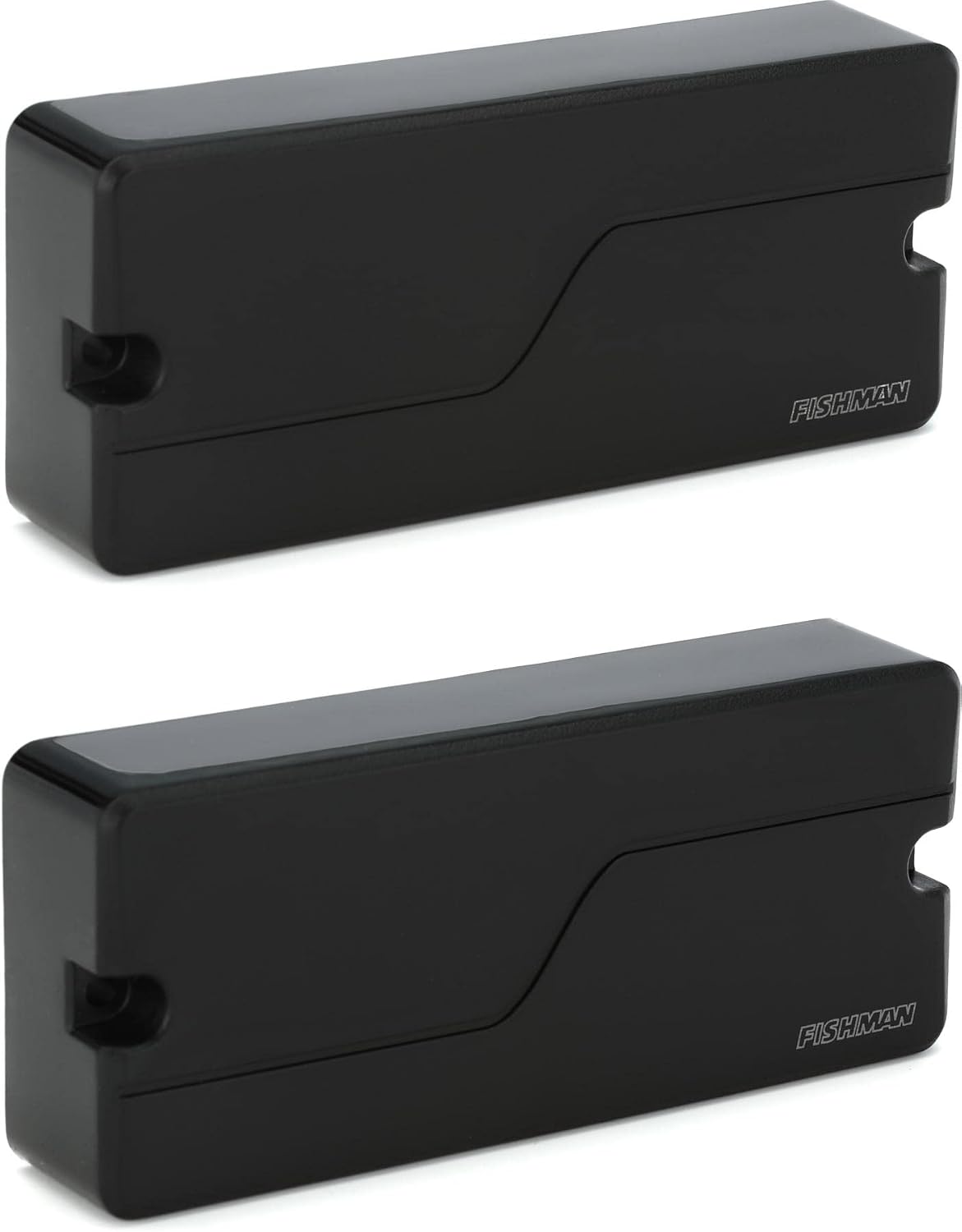
The Fishman Fluence Modern set remains the overall choice for its contrasting powered voices. Nazgûl and Sentient offer a passive set, Tosin Abasi’s Fluence set adds a broader voice palette, and the LiquiFire 7 and EMG 81-7 provide focused individual upgrades. Compare the exact housing and electronics before choosing between them.
Best 7-String Pickups for Metal (Comparison Table)
Fishman Fluence Modern 7-String Set (Editor’s Choice)
This two-voice Modern set earns the overall choice for combining a cutting ceramic bridge pickup with a fuller Alnico neck voice. The bridge offers an assertive active character alongside a more passive-inspired attack, while the neck can move toward a cleaner, more fluid response. That contrast suits a seven-string used for both heavy rhythm and clearer passages.
The attraction is the ability to change the pickup’s response through voice switching rather than relying only on amp EQ. Both pickups use powered Fluence circuitry, including when a voice is described as passive-inspired. The black covered set here is the two-voice version, so plan the controls around that specific system.
Installation is more involved than fitting a conventional passive pair: suitable controls, switching, power and housing clearance are needed. A rechargeable battery pack is optional, not built into the pickups. Choose the set for its defined modern voices and flexibility, accepting the additional electrical setup rather than treating it as a universal drop-in replacement.
Pros
- Contrasting ceramic bridge and Alnico neck voices.
- Two selectable voicings per pickup.
- Complete seven-string neck-and-bridge set.
Cons
- Requires powered electronics and suitable voice switching.
- Rechargeable battery pack is optional.
Seymour Duncan Nazgûl & Sentient Set (Best Passive Set)

Nazgûl and Sentient are the passive choice for players who want a forceful bridge voice without adding a battery system. The Nazgûl’s ceramic magnet and aggressive winding focus on a firm low end and a pronounced pick attack, making it well suited to heavily driven seven-string riffs.
The Sentient neck changes the emphasis. Its Alnico 5 magnet and vintage-output character bring more open cleans and smoother leads, giving the set a useful contrast between positions. It is the neck pickup that supplies the more restrained voice; the Nazgûl is deliberately the harder-edged partner.
The black seven-string set here uses passive-mount housings and four-conductor leads for additional switching. It needs the matching physical route rather than an assumption that every covered or soapbar-style seven-string pickup shares the same footprint. The trade-off is tonal aggression: a guitarist seeking a gentle vintage bridge response may prefer a less assertive winding.
Pros
- Passive set with no battery requirement.
- Aggressive ceramic bridge and more open Alnico 5 neck.
- Four-conductor wiring supports split or parallel options.
Cons
- Bridge voice may be too aggressive for a vintage-focused rig.
- Passive-mount dimensions must suit the guitar.
Fishman Fluence Tosin Abasi 7-String Set

The Tosin Abasi set is the broader-voiced powered option for a seven-string that moves between heavy riffs, articulate clean passages and more percussive playing. Three voices provide modern, passive-inspired and single-coil-style approaches, giving the player more than one heavy humbucker sound to build around.
Its strongest feature is the contrast between those responses. The fuller modern voice can handle driven parts, while the cleaner and single-coil-style options offer another texture for chords and rhythmic detail. The neck and bridge voices are tailored to their positions rather than behaving as identical copies.
Accessing that range requires the correct wiring and controls. The set needs a battery or suitable optional rechargeable supply, with room for the covered seven-string housings. Its extra options also add setup complexity compared with a passive pair. Choose it when those different textures will actually be used, rather than expecting a signature name alone to supply a particular player’s sound.
Pros
- Three voices for contrasting driven and cleaner textures.
- Coordinated seven-string neck-and-bridge set.
- Single-coil-style option broadens the tonal palette.
Cons
- Powered installation and voice controls need planning.
- More complex than a straightforward passive set.
DiMarzio LiquiFire 7 DP707 (Best Neck Option)

The LiquiFire 7 is the individual neck upgrade for a player who wants a smoother lead voice without losing chord clarity. Developed with John Petrucci, it combines fat highs with cleaner lows, giving sustained lines a singing quality while keeping the seventh string from overwhelming the neck position.
This seven-string model has a more focused attack than the six-string LiquiFire, with its voicing shifted lower to suit the extended range. It uses a ceramic magnet and four-conductor wiring in a passive humbucker design. That makes it a different proposition from the battery-powered Fishman and EMG options, without requiring an active-electronics conversion.
DiMarzio also permits bridge use, but the neck is the main reason to choose it here. It is one pickup, so the remaining bridge voice and output balance still need consideration. Choose it for smoother leads and clear neck chords rather than expecting it to duplicate the Nazgûl’s aggressive bridge attack.
Pros
- Smooth lead voice with clear low-string response.
- Passive ceramic design without a battery conversion.
- Four-conductor leads allow additional switching.
Cons
- Individual pickup rather than a complete set.
- Neck-focused response differs from a dedicated aggressive bridge model.
EMG 81-7

The 81-7 is the active bridge option for a player who wants the familiar 81 emphasis on sharp attack and high-end cut in a seven-string format. Ceramic magnets and close-aperture coils give driven notes a distinct edge, making it appealing for both fast rhythm work and leads that need to project.
Its powered design and solderless connection system fit naturally into a compatible active EMG setup. The model is traditionally used at the bridge, although EMG also supports other position combinations. The black enclosed housing is a specific seven-string format, not a guarantee of the same fit as an open-coil passive humbucker.
A passive guitar conversion still needs the appropriate controls, output jack, power wiring and battery space. Some installations also require soldering at existing switches or panel jacks. Its focused, assertive voice may be less attractive when a softer vintage response is the goal. Choose it for an active bridge sound and a planned installation rather than an instant universal upgrade.
Pros
- Sharp attack and strong high-end cut under gain.
- Active seven-string design based on the 81 voice.
- Solderless connections simplify compatible EMG systems.
Cons
- Needs suitable active controls, jack and battery space.
- Enclosed housing must match the pickup route.
7-String Humbuckers vs. Single-Coil Pickups for Metal
Humbuckers are popular for high-gain playing because their two-coil arrangement reduces the hum associated with a conventional single coil. Their voicing can also provide a fuller response, but humbuckers are not all dark, high-output or active. The passive Duncan set and LiquiFire 7 above are clear examples of different approaches.
Why Choose a Humbucker?
A humbucker can make a driven setup easier to manage, especially when electrical hum would otherwise become distracting. It does not remove every source of amplifier hiss, interference or feedback. The pickup’s voicing, height and the rest of the rig still determine how clearly low notes come through.
Can Single Coils Work for Metal?
Yes. A single-coil sound can provide useful attack and separation, and it is not disqualified simply by being passive. The practical limitation is often noise under heavy gain. A noise gate can control noise between notes, but it cannot turn a single coil into a hum-canceling design while a note is sounding.
How to Get a Clear Seven-String Metal Sound
Choose the Position for the Part
The bridge often gives rhythm parts a more defined attack, while the neck offers a rounder response for leads or cleans. That does not make one position mandatory for a genre. Try the part with both positions and balance pickup heights before changing hardware.
Use Gain and EQ Deliberately
More bass and gain can make low notes less distinct. Start with enough drive for the part, keep the low end controlled and adjust mids for the space the guitar needs in the mix. Tuning, string gauge, scale length and intonation also influence definition; a pickup cannot correct a poorly matched string setup.
Check the Exact Version and Installation
Match the string count, housing, mounting points and pole or blade coverage to the guitar. Passive-mount humbuckers and enclosed active-size housings are separate formats. Powered Fishman and EMG systems also need the correct controls and power arrangement, while a passive pickup still needs suitable wiring for any desired split or parallel sounds.
Voice names describe tonal character. A passive-inspired Fluence voice still uses powered circuitry, and single-coil-style switching should not be assumed to behave exactly like every traditional single coil. The two-voice Modern set and three-voice Tosin set should each be wired for their own functions.
Conclusion: The Best Pickup for a 7-String Guitar
The Fluence Modern set remains the overall choice for contrasting modern powered voices. Nazgûl and Sentient provide a forceful passive alternative, the Tosin Abasi set offers a wider voice palette, the LiquiFire 7 focuses on smooth neck tones, and the EMG 81-7 supplies a cutting active option. Choose the sound and installation that suit the actual guitar, rather than treating more gain or more strings as an automatic improvement.