Looking for the best amp for KEF Q150? These five choices cover a streaming-and-TV hub, a straightforward analog integrated amp and compact desktop designs. The Q150 is a passive bookshelf speaker, so it needs amplification; a DAC is useful for digital sources but is not mandatory for an analog-only system.
For Micca MB42X speakers rather than the KEF Q150, use our separate guide to Amp for Micca MB42X and check the specifications for that pairing.
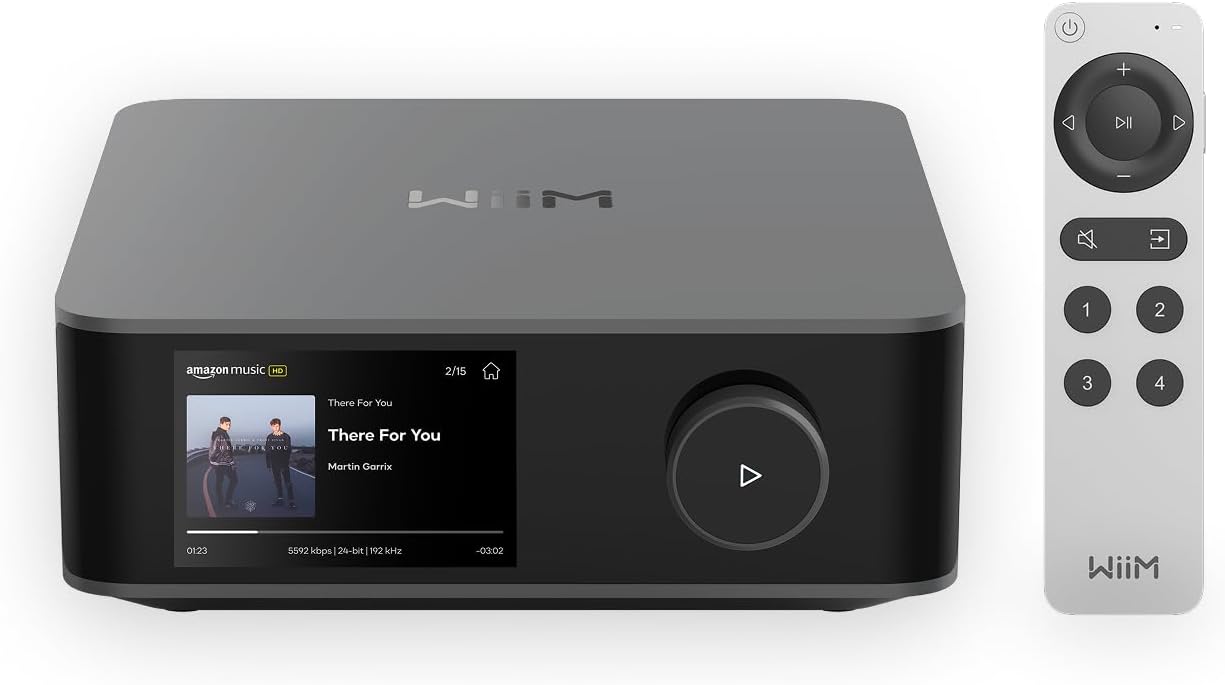
KEF specifies 86dB sensitivity, an 8-ohm nominal impedance with a 3.7-ohm minimum, and a recommended amplifier range of 10–100 watts. Match the amplifier to the actual load, listening distance and source connections. The WiiM Amp Ultra is the overall choice here for its power headroom, streaming features and room-adjustment tools.
The 5 Best Amplifiers for KEF Q150
| Image | Model | Price |
|---|---|---|
| WiiM Amp Ultra (Editor's Choice) | Check Price |
 | NAD C 316BEE V2 | Check Price |
 | S.M.S.L AO200 | Check Price |
 | ELAC EA101EQ-G | Check Price |
 | Audioengine N22 Gen 2 | Check Price |
WiiM Amp Ultra (Editor’s Choice)
The Amp Ultra is the most complete music-and-TV hub in this group. It combines speaker amplification with network streaming, so the Q150 pair does not need a separate streamer to play from supported services. A 3.5-inch touchscreen, physical volume knob, remote and WiiM Home app offer several ways to use it without turning the system into a stack of boxes.
WiiM specifies 100 watts per channel into 8 ohms and 200 watts into 4 ohms at 0.08% THD with both channels driven. HDMI ARC brings TV audio into the same setup, while optical and analog line inputs serve other equipment. RoomFit and adjustable EQ provide tools for dealing with the listening position, and a dedicated subwoofer output makes a later bass upgrade straightforward.
The main limitations are the absence of AirPlay 2 and a built-in phono stage. A turntable needs a suitable line output or external phono preamp, and initial setup depends on the app and network. Its available power also calls for sensible volume limits with small speakers. Choose it for a flexible everyday Q150 system, especially when streaming and TV sound are both important.
Pros
- Network streaming, HDMI ARC and optical/line inputs.
- Useful power headroom with load-specific ratings.
- RoomFit, EQ and a dedicated subwoofer output.
Cons
- No AirPlay 2 or built-in phono stage.
- App/network setup and sensible speaker-level management required.
NAD C 316BEE V2
The C 316BEE V2 is the analog-first choice for someone who wants a conventional amplifier with little setup overhead. A physical input selector, bass and treble controls and tone defeat keep the operation direct. Its restrained full-width design puts the emphasis on a useful stereo control center rather than a screen or streaming platform.
NAD rates it at 40 watts per channel into 4 or 8 ohms over 20Hz to 20kHz at 0.03% THD. An MM phono stage supports a compatible turntable, and line-level inputs accommodate a CD player or external streamer. The front input and headphone connection are handy for a simple living-room or desk-adjacent system.
There is no internal DAC, Bluetooth or network streaming, and no dedicated subwoofer output. Digital sources therefore need a suitable analog output or an external DAC. Choose it for a Q150 setup built around analog connections and moderate listening levels, where familiar controls matter more than adding every source format in one box.
Pros
- 40W-per-channel full-band rating into 4 or 8 ohms.
- MM phono stage and several analog inputs.
- Tone defeat, headphone connection and remote control.
Cons
- No DAC, Bluetooth or network streaming.
- No dedicated subwoofer output.
S.M.S.L AO200
The original AO200 is a compact choice for someone who already has a source or DAC and wants flexible analog connections. Balanced XLR and unbalanced RCA inputs are unusually useful in a small enclosure, while Bluetooth handles casual wireless playback. The display and remote make it practical when the amplifier sits away from the listening chair.
Its Class D output stage uses two Infineon MA12070 chips. SMSL lists 50 watts per channel into 8 ohms and 90 watts into 4 ohms; the larger 150-watt figure applies to 2 ohms. Bass and treble adjustment, preset EQ modes and subwoofer pre-outs provide ways to tailor a compact system without adding separate tone-control hardware.
A USB input is also provided, but optical and coaxial sources need an external converter. XLR, RCA and Bluetooth are the main attractions when those connections already serve the system. It is the original AO200, not the later AO200 MKII. Choose it for compact amplification around the connections already in the system.
Pros
- Balanced XLR and unbalanced RCA inputs.
- Compact Class D design with remote and display.
- Tone/EQ options and subwoofer pre-outs.
Cons
- No optical or coaxial digital input.
- No built-in phono stage or headphone output.
ELAC EA101EQ-G
The EA101EQ-G is the subwoofer-integration specialist in this selection. Its Auto Blend and AutoEQ design gives it more setup flexibility than an amplifier with only a volume knob and a subwoofer socket. That is useful when the aim is a compact Q150 system whose bass integrates well at the listening position.
The BASH tracking amplifier is specified at 80 watts per channel into 4 ohms at 1% THD, not 80 watts into every speaker load. USB audio, two optical inputs, coaxial, Bluetooth and analog line inputs cover a broad source collection. The headphone connection and dedicated subwoofer output add practical ways to use the same small unit.
The calibration functions rely on ELAC’s companion app and a compatible mobile device, so that part of a setup deserves checking before buying an older unit. There is no built-in phono stage or modern network-streaming platform. Choose the ELAC when its connections and app-based bass tools suit the system, rather than expecting calibration to remove every room-acoustic problem.
Pros
- Auto Blend and AutoEQ tools for speaker/subwoofer setup.
- USB, optical, coaxial, Bluetooth and analog inputs.
- Headphone and dedicated subwoofer connections.
Cons
- Calibration depends on the companion app and compatible device.
- No built-in phono stage or network-streaming platform.
Audioengine N22 Gen 2
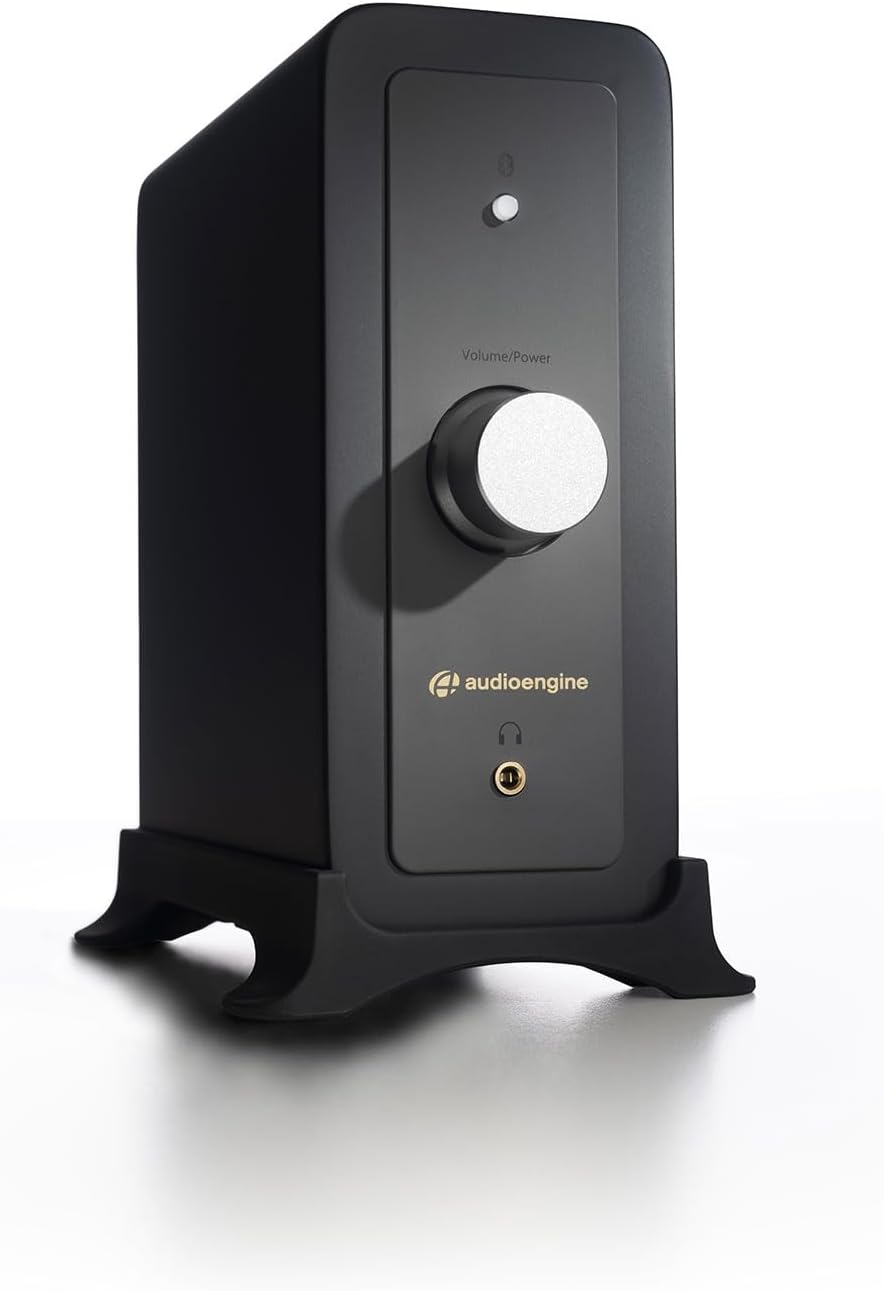
The N22 Gen 2 suits a Q150 pair on a desk where horizontal space is scarce. Its upright real-wood enclosure and integrated stand take up little room, and one front knob handles volume and power. A headphone output makes it easy to switch to private listening without moving to a different system.
This generation adds Bluetooth and USB-C audio alongside RCA and 3.5mm analog inputs. It uses a Class D speaker amplifier and an internal power supply, rather than the original N22’s Class AB arrangement. A variable RCA output can feed a powered subwoofer, giving the compact setup a route to more low-bass support.
It is still a desktop-oriented amplifier, with no HDMI, optical input or built-in network streamer. A turntable also needs its own phono stage or an external one. Choose the Gen 2 for a straightforward computer-and-speaker system with headphones nearby, keeping expectations tied to the room and listening distance rather than the largest advertised peak-power number.
Pros
- Narrow upright enclosure with an integrated stand.
- USB-C audio, Bluetooth and two analog input formats.
- Headphone and variable RCA/subwoofer output.
Cons
- No HDMI, optical input or network streaming.
- Turntables require a phono preamp.
How Much Difference Does an Amp Make for Q150?
The Q150 is passive, so an amplifier is necessary to drive it. What changes between amplifiers is the available headroom, source support, controls and integration with other equipment. A DAC is needed somewhere for a digital source, but not every amplifier needs one built in.
KEF Q150 Specifications
KEF’s Q Series manual lists the following figures for Q150:
- Two-way bass-reflex bookshelf design with a rear port.
- Uni-Q array with a 25mm aluminum-dome tweeter and 130mm aluminum mid/bass cone.
- Sensitivity: 86dB at 2.83V/1m.
- Nominal impedance: 8 ohms; minimum 3.7 ohms.
- Recommended amplifier power: 10–100 watts.
- Frequency response: 51Hz–28kHz within ±3dB.
Match Headroom to the Room
A close desk position at moderate volume requires less output than loud listening across a large room. The Q150’s sensitivity is a speaker specification, not an amplifier specification. Choose an amp comfortable with the speaker load and leave useful headroom, while remembering that excessive output can still damage the drivers.
Plan for the Sources You Use
A turntable with no built-in phono stage suits the NAD’s MM input, or an external phono stage with the other amplifiers. USB computer audio points toward the N22 Gen 2 or ELAC. Network streaming and HDMI ARC make the WiiM particularly convenient for a shared music-and-TV system. The AO200 is useful when balanced analog connections are already part of the setup.
Adding a Subwoofer
The Q150 itself has no powered-subwoofer output. Use a suitable amplifier output or a subwoofer’s supported speaker-level connection. A well-integrated sub can help with deep music bass as well as films; crossover, phase, placement and level all matter. Do not assume that every subwoofer output automatically high-pass filters the main speakers. If comparing the speakers themselves, the bookshelf speaker guide covers more options.
So, Which Is the Best Amplifier for KEF Q150?
The WiiM Amp Ultra is the overall choice here for a flexible streaming-and-TV system. The NAD keeps an analog setup simple, the AO200 accommodates balanced sources, and the ELAC adds app-based integration tools. The N22 Gen 2 favors a compact desktop arrangement. Choose the features that make the system easier to use, with enough controlled output for the room.